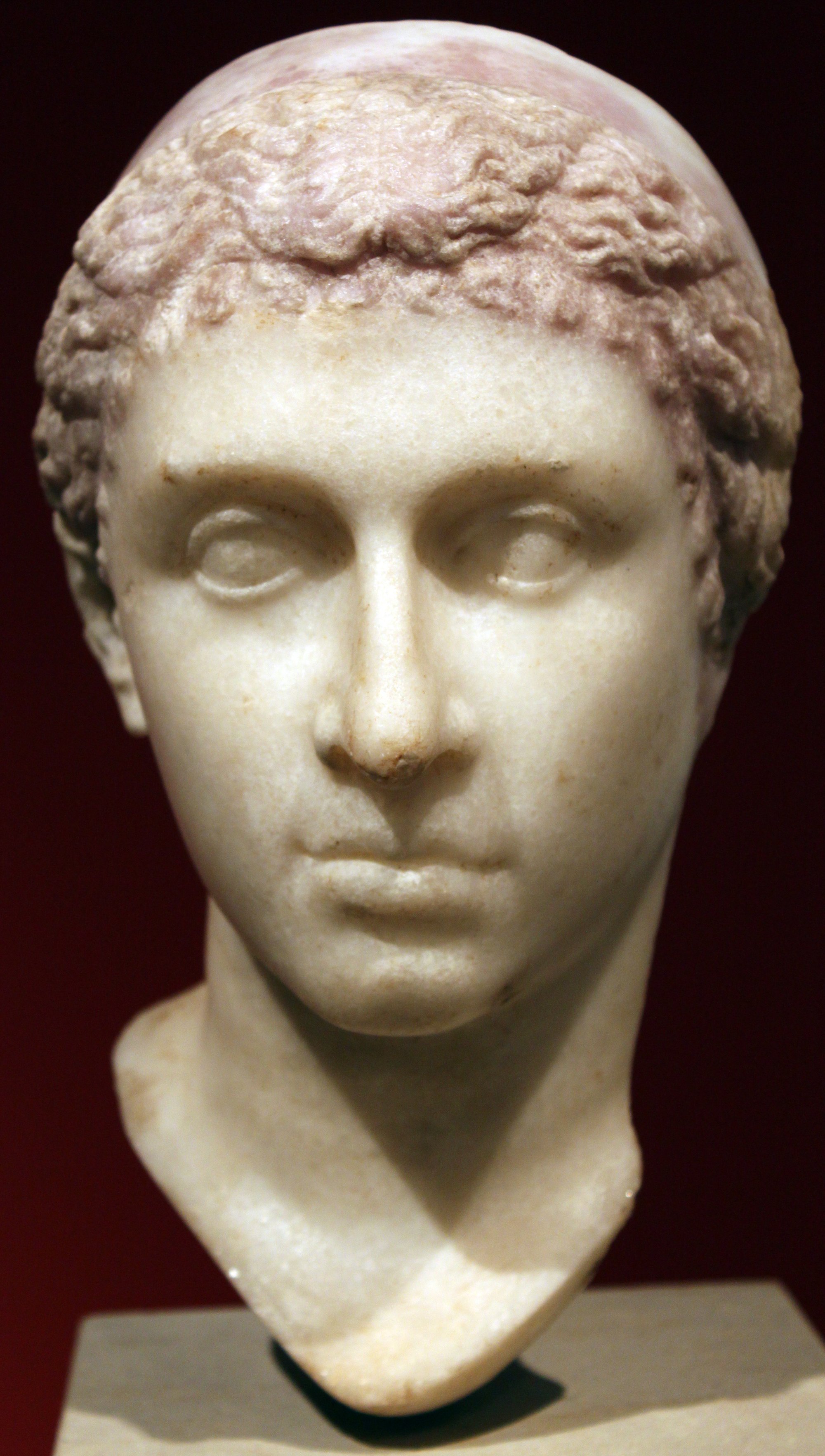
Smuggled to a Dictator
Caesar did not come to Egypt looking for a queen. He came chasing Pompey and found only a severed head and a fractured dynasty. Cleopatra, temporarily outmaneuvered by her brother Ptolemy XIII, needed more than sympathy—she needed a savior.
Ancient writers tell competing stories of how she reached Caesar in the palace at Alexandria: some say she slipped in dressed to dazzle him, others that she was smuggled inside a bed sack. In every version, her wit and presence won over the Roman dictator.
A Queen and Her Protector Under Siege
Ptolemy XIII, discovering Cleopatra with Caesar, tried to turn Alexandria against them. Arrested and displayed before the crowd as Caesar read out Ptolemy XII’s will naming Cleopatra co-heir, the young king soon escaped to rejoin the besiegers.
For months, Caesar and Cleopatra were trapped together in the royal quarter, ringed by an army that outnumbered Caesar’s 4,000 men. Reinforcements finally arrived; Ptolemy XIII drowned fleeing the Battle of the Nile, Arsinoe IV was captured, and Cleopatra regained her throne, now sharing nominal power with her younger brother Ptolemy XIV.

Nile Cruises and Roman Calculations
Cleopatra bore Caesar a son, Caesarion, and may have sailed with him up the Nile, touring temples in a floating palace-barge. Whether that journey was fact or later romance, their partnership was real enough: Caesar returned Cyprus to her, left legions to secure her crown, and in Rome placed a gilded statue of Cleopatra beside Venus Genetrix, linking her to Rome’s divine ancestress.
She lived openly in Caesar’s villa across the Tiber, a foreign queen and royal mistress right on Rome’s doorstep. Cicero grumbled about her arrogance; the public watched uneasily as Caesar tested the boundaries of kingship.
After the Ides
Caesar’s assassination shattered Cleopatra’s Roman shield. She lingered in Rome, hoping Caesarion would be named heir, only to learn that the will favored his grandnephew Octavian. Returning to Egypt, she soon elevated Caesarion as co-ruler and, after Ptolemy XIV’s suspicious death, pinned her dynasty’s future on a boy Rome barely recognized.
The union of Cleopatra and Caesar had redrawn the Mediterranean map. In its wake, Romans confronted a provocative question: could their city tolerate a king—and a queen—from the Nile?