Wiki Summaries · Cleopatra

Actium: The Battle That Ended an Age

Relive the desperate gambles at Actium, where Cleopatra and Antony’s fleet met Octavian’s—and history pivoted.

warhistory
XFacebook

Drums Before the Storm

By 32 BC, the conflict was no longer hidden behind senatorial speeches. Octavian had seized Antony’s will, paraded its contents—burial in Egypt, Caesarion as heir, the Donations of Alexandria—before outraged Romans, and engineered a formal declaration of war not on Antony, but on Cleopatra.

She sailed to Ephesus with 200 ships, bankrolling Antony’s war machine. Many of his own supporters urged him to send her home, but Cleopatra refused. Blocking Octavian in Greece, she argued, was the best defense of Egypt.

Checkmated on the Ambracian Gulf

Antony and Cleopatra wintered at Patrai, then shifted to Actium on the Ambracian Gulf. On paper, their fleet outmanned Octavian’s. In reality, many crews were hastily recruited, their allied kings wavering. Defections mounted through the summer: trusted lieutenants, Galatian and Paphlagonian monarchs, even Dellius, the envoy who had once courted Cleopatra at Tarsos, slipped away to Octavian.

Strategists in Antony’s camp urged an inland retreat, abandoning the sea where Agrippa excelled. Cleopatra insisted on a naval confrontation—ships, not roads, tied Egypt to the wider Mediterranean.

DeepSwipe app banner

Flight Through Purple Sails

On 2 September 31 BC, the fleets finally clashed. Cleopatra’s flagship, the Antonias, with its distinctive purple sails, commanded 60 ships toward the rear. Antony had ordered that his ships carry sails—unusual for a set-piece battle—perhaps to preserve the option of a breakout.

At the critical moment, Cleopatra hoisted sail and drove straight through the melee, escaping into open water with her squadron. Antony, seeing her flight, abandoned command and followed, boarding her vessel as they steered toward Tainaron. Behind them, the battle raged on, collapsing into rout by the next morning.

The End of Hellenistic Freedom

Roman writers later painted Cleopatra’s withdrawal as panic; others see a prearranged escape to salvage their core fleet and the queen’s own safety. Whatever the intention, Actium broke Antony’s power and shattered the illusion that Egypt could anchor an independent eastern bloc.

With that battle, an entire era died. The last great Hellenistic kingdom lost its shield, and the Mediterranean became, irrevocably, a Roman lake.
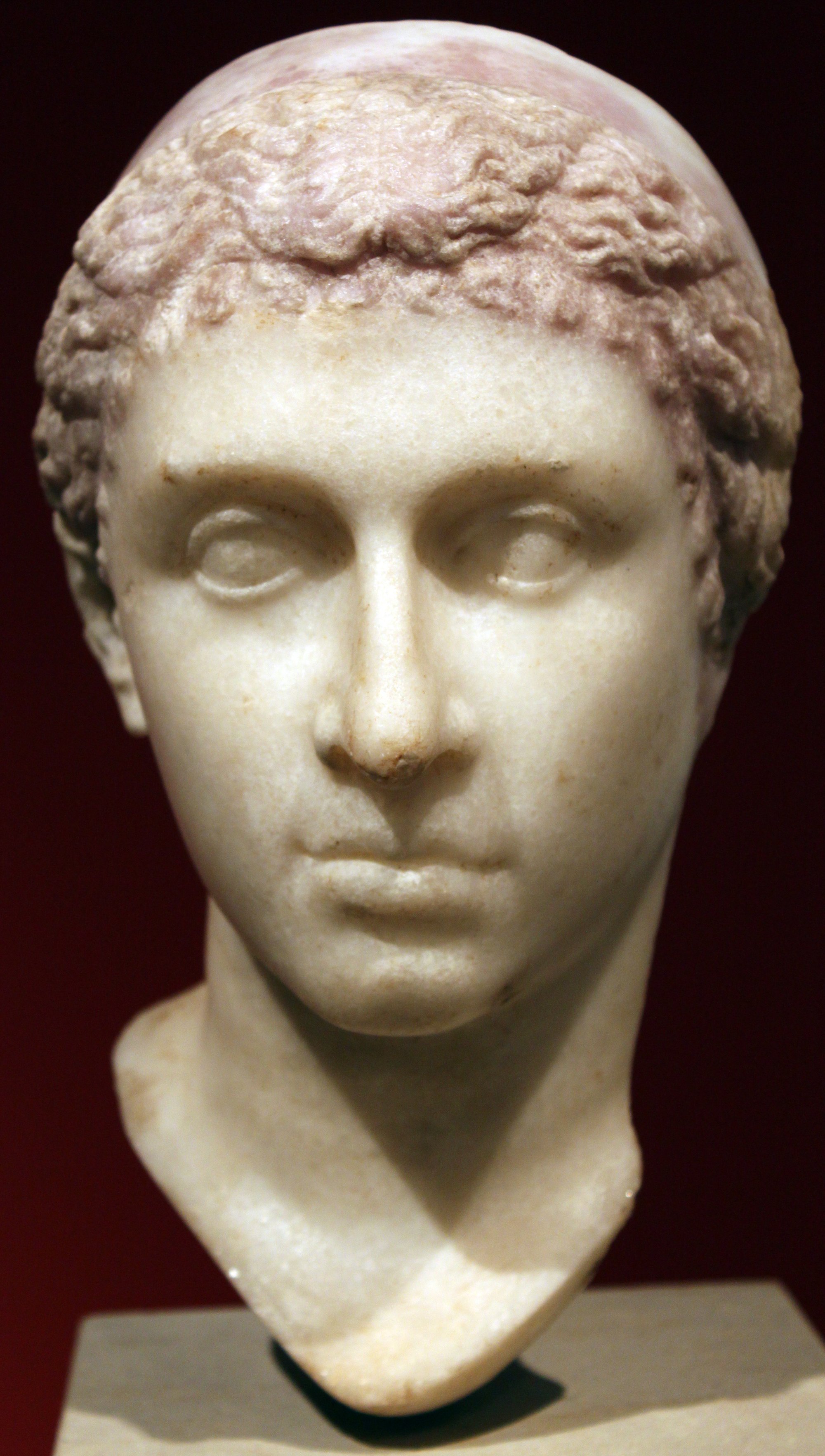
Based on Cleopatra on Wikipedia.

XFacebook

DeepSwipe Stories About Cleopatra

Cleopatra’s Fall: When Egypt Became Roman

Cleopatra’s Fall: When Egypt Became Roman

Summarize another article

More topics in Cleopatra

Cleopatra - 100 Word Summary

From multilingual pharaoh to legendary lover, Cleopatra’s life traces the fall of Hellenistic Egypt and the rise of Rome’s first emperor.

historypolitics
Read →

Cleopatra - 250 Word Summary

A sweeping portrait of Cleopatra’s rise, rule, romances, and reinvention from pharaoh to enduring cultural icon.

historypolitics
Read →

The Multilingual Queen of Two Worlds

Discover how Cleopatra turned languages and culture into weapons of power, ruling as both Greek monarch and Egyptian pharaoh.

historyculture
Read →

Cleopatra and Rome’s Civil Wars

Follow Cleopatra as she rides the shifting tides of Roman civil war, from Caesar and Pompey to Antony and Octavian.

historywarpolitics
Read →

Love, Power, and Propaganda: Cleopatra & Caesar

Step inside Cleopatra’s audacious partnership with Julius Caesar, from palace siege to political theatre in Rome.

historypolitics
Read →

Cleopatra & Mark Antony: Building an Eastern Dream

Witness Cleopatra and Antony’s attempt to forge a new eastern superpower—and why it terrified Rome.

historypoliticswar
Read →

Suicide, Spectacle, and the Birth of Empire

Explore Cleopatra’s final days—her failed negotiations, legendary death, and how Egypt’s fall forged the Roman Empire.

historypolitics
Read →

Cleopatra the Ruler: Temples, Taxes, and Famine

Look past the romance to see Cleopatra as a hard-headed monarch managing temples, money, and a fragile kingdom.

historypolitics
Read →

From Villain to Icon: Cleopatra’s Changing Image

Trace how Cleopatra morphed from Augustan villain into global icon, inspiring art, theatre, film, and fashion.

culturehistory
Read →

Cleopatra in Stone, Silver, and Paint

Walk through galleries of statues, coins, and frescoes to see how Cleopatra crafted—and lost control of—her own image.

culturehistory
Read →

Enjoy bite-sized learning? Try DeepSwipe.