Sculpting a Queen
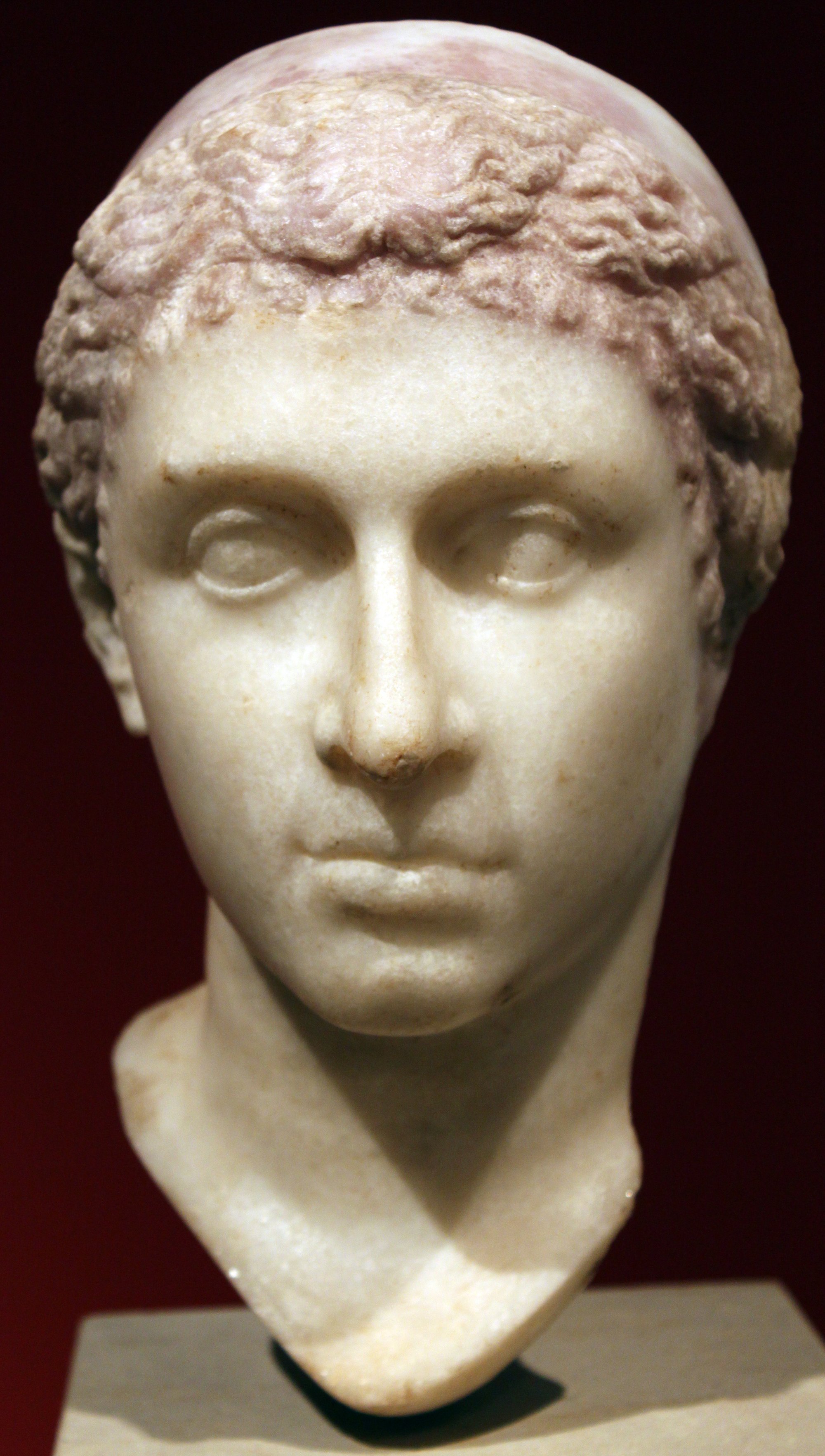
In life, Cleopatra enjoyed unprecedented visibility. Caesar placed a gilded bronze statue of her beside Venus Genetrix in a Roman temple—an extraordinary honor for a living foreign queen. In and beyond Egypt, sculptors carved her in both Egyptian and Hellenistic styles: as a pharaoh on temple walls, as a diademed Greek monarch in marble, perhaps as Venus or Isis in more intimate statuary.
Scholars see her likeness in the so‑called Berlin and Vatican Cleopatras, mid‑1st‑century BC heads with diadems, pulled‑back hair, and a strong profile. Other statues, from Rome to Cherchell in Algeria, echo the same features, while reliefs at Dendera show her and Caesarion making offerings as pharaonic co-rulers.
Messages in Metal
Her coins speak even more directly. Cleopatra was the only Ptolemaic queen to issue coinage in her own name, and the first foreign queen to appear on Roman money. Tetradrachms and other issues show her with a prominent nose and chin—features closer to her father Ptolemy XII than to later romantic ideals.
Joint coins with Mark Antony present them with strikingly similar profiles, a visual claim of harmony and shared rule. Inscriptions are Greek but use Roman nominative grammar and circular legends, fusing Mediterranean cultures and hinting at an emergent dual monarchy.

Painted Goddesses and Suicides
Wall paintings from Pompeii and Herculaneum may capture Cleopatra in color. One shows a diademed woman, likely Cleopatra as Venus Genetrix, with a child—probably Caesarion—before temple doors, echoing her statue near Venus in the Forum of Caesar. Another depicts a royal woman reclining with a diadem, taking poison: perhaps Cleopatra in her tomb, reimagined as tragic spectacle.
Later, a now-lost painting, probably carried to Hadrian’s Villa, portrayed her baring her breast to an asp—an image so powerful that Octavian used its likeness in his triumph instead of the living queen.
Losing—and Regaining—Control
In her lifetime, Cleopatra leveraged art and coinage to define herself: Greek and Egyptian, mother and monarch, Isis and Venus, partner of Caesar and Antony. After her death, others—Augustan propagandists, Renaissance sculptors, Hollywood designers—picked up her image and recast it for their own ends.
The result is a gallery where the historical Cleopatra stands just out of reach, glimpsed through a kaleidoscope of faces all claiming to be her.