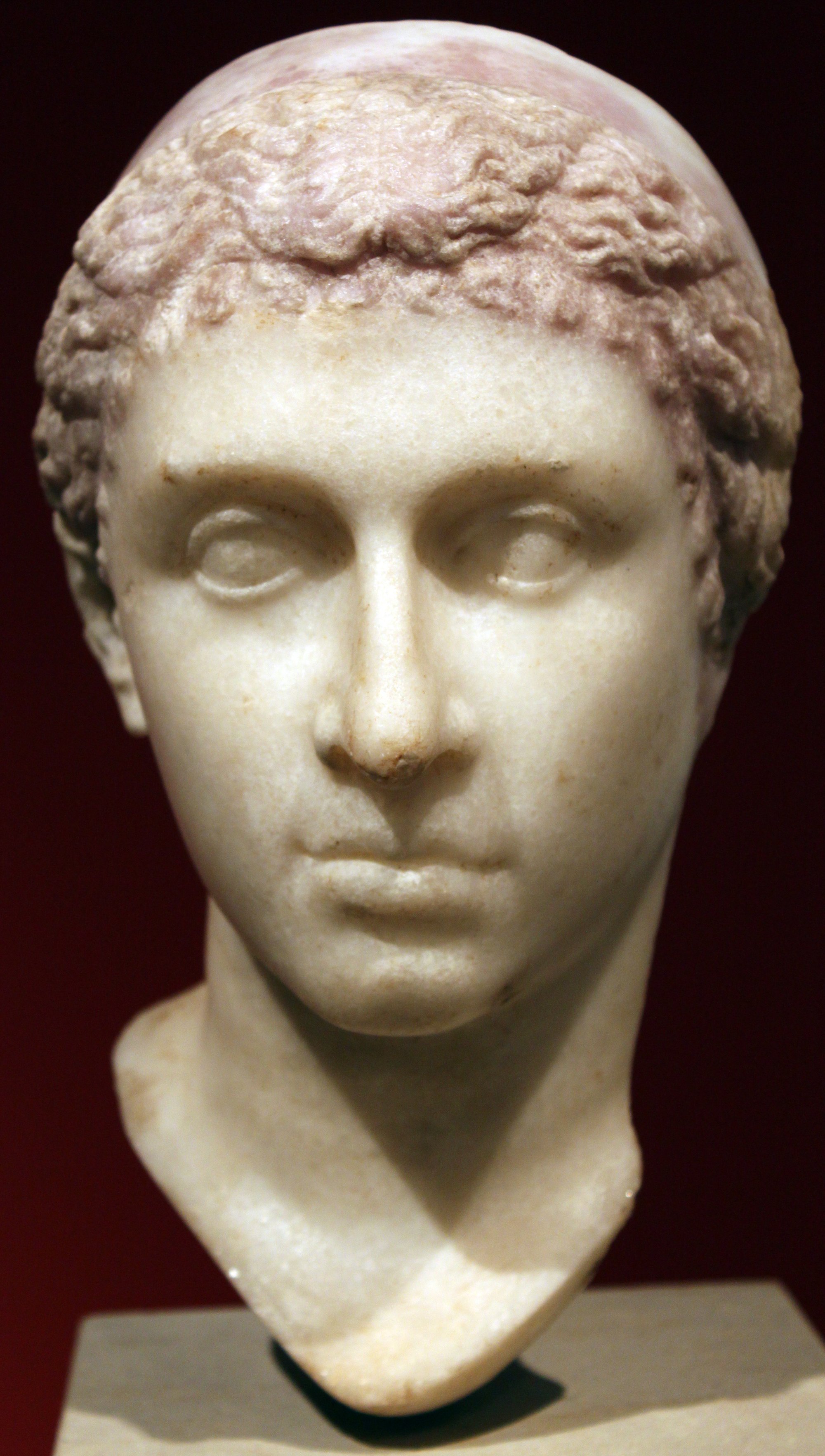
A Kingdom on the Fault Line
Cleopatra’s Egypt lay on the fracture between old Hellenistic powers and an ascendant Rome. Long before she took the throne, Roman generals argued over whether to annex Egypt outright. Her father Ptolemy XII stayed on his throne by showering Roman power brokers—Pompey, then Caesar—with money, even as he plunged his kingdom deep into debt.
Caesar, Pompey, and a Besieged Palace
When civil war erupted between Julius Caesar and Pompey, the fault line ran straight through Alexandria. Pompey, once an ally of Cleopatra’s father, fled to Egypt after his defeat at Pharsalus—only to be lured ashore and murdered on the orders of Cleopatra’s brother and co-ruler, Ptolemy XIII.
Caesar arrived days later, occupying the royal palace and attempting to mediate between the feuding siblings. Instead, he and Cleopatra found themselves besieged inside the palace by Ptolemy’s forces, including the battle-hardened Gabiniani. Reinforcements broke the siege; Ptolemy XIII drowned fleeing the Battle of the Nile, and Cleopatra emerged as queen, now backed by Rome’s most powerful man.

From Ides of March to the Second Triumvirate
Cleopatra followed Caesar to Rome as a client queen, only to see him cut down on the Ides of March. She returned to Egypt, installed Caesarion as co-ruler, and watched as Caesar’s heirs—Octavian and Mark Antony—formed the Second Triumvirate and hunted down the assassins in yet another civil war.
Choosing Sides—Again
When the dust settled after Philippi, Antony commanded Rome’s eastern provinces. Summoned to Tarsos, Cleopatra defended her record during the fighting and forged a new alliance—with Antony this time. For nearly a decade, Egyptian gold and ships fueled his campaigns against Parthia and Armenia.
Cleopatra’s fate, and Egypt’s independence, rose and fell with the fortunes of Rome’s civil conflicts. When Antony lost the final contest against Octavian, there would be no more civil wars to play off—only an emperor.
The Last Client Queen
By the time Octavian marched into Alexandria in 30 BC, Cleopatra’s strategy of riding Roman storms had reached its limit. Her death closed the era when an eastern monarch could still shape Rome’s destiny, and opened the age when Rome alone decided the fate of kings.