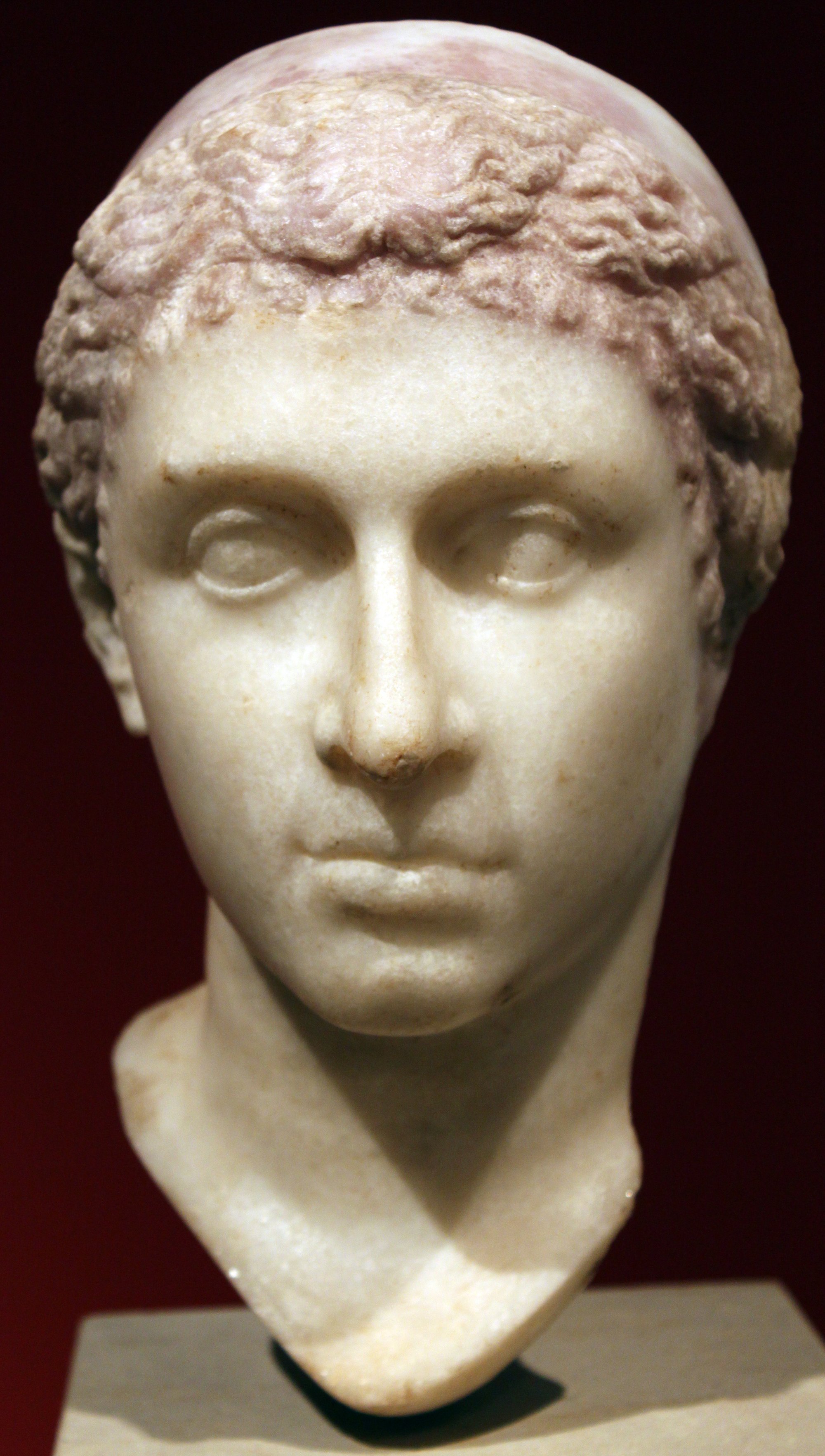
Cleopatra VII Thea Philopator, born in Alexandria in 70/69 BC, inherited a fragile Ptolemaic kingdom entangled in Roman power politics. Unlike her Hellenistic predecessors, she learned Egyptian and several other languages, ruled as an absolute monarch, and actively managed religion, economics, and crisis relief. After her father Ptolemy XII’s death, she faced famine, debt, and civil war with her brother Ptolemy XIII. Julius Caesar’s arrival in pursuit of Pompey drew her into Roman affairs; she gained Caesar’s support, regained her throne, and bore him a son, Caesarion, while serving as a powerful client queen and presence in Rome.
Following Caesar’s assassination, Cleopatra aligned with Mark Antony of the Second Triumvirate, bearing him three children and regaining swaths of former Ptolemaic territory. Their celebrated alliance, the lavish Donations of Alexandria, and Antony’s perceived submission to an “Oriental queen” fueled Octavian’s propaganda. The struggle ended with their naval defeat at Actium and Octavian’s invasion of Egypt. Facing capture and display in a Roman triumph, Antony and Cleopatra took their own lives in 30 BC; Caesarion was executed, and Egypt became a Roman province, closing the Hellenistic age and enabling Octavian’s transformation into Augustus.
Cleopatra’s image survived in coins, statues, temple reliefs, and Roman literature that often vilified her. Later Medieval, Renaissance, and modern works recast her variously as seductress, tragic heroine, political genius, or exotic icon. Her children’s line briefly continued through Cleopatra Selene II in Mauretania, and art and scholarship across centuries have debated her appearance, ancestry, and significance, while her legend has permeated opera, theatre, film, and commercial branding.