By mid-April 1945, Berlin was no longer simply a city under threat. It was a capital being methodically surrounded, bombarded, and broken apart as Soviet forces closed in from multiple directions. The Battle of Berlin was one of the final great offensives in the European theatre of World War II, and the city’s fall became the clearest symbol of Nazi Germany’s collapse.
Watch the story on DeepSwipe
Berlin was being closed off from every side
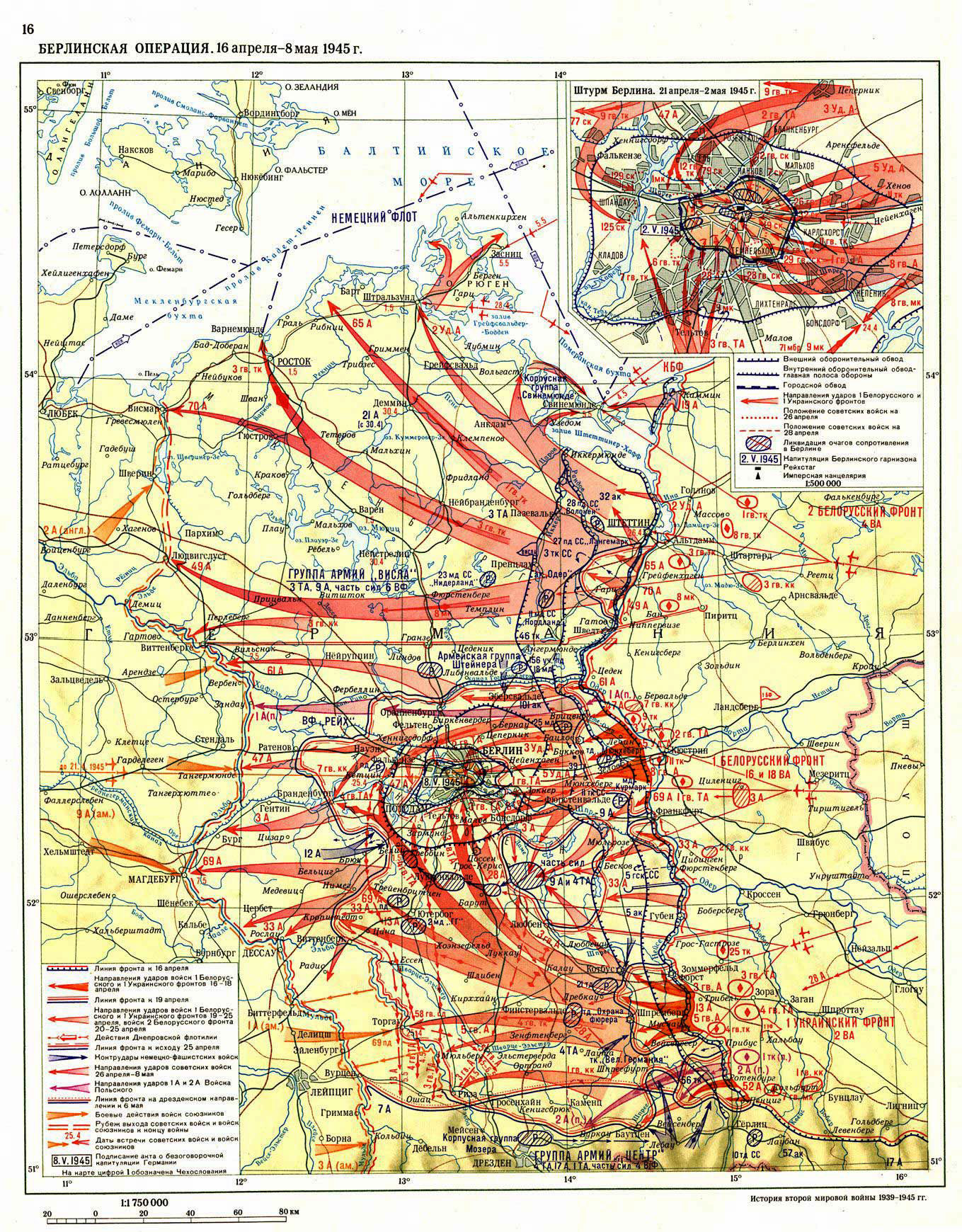
The road to Berlin had been opened by earlier Soviet advances. After the Vistula–Oder Offensive in January and February 1945, the Red Army had pushed to a line only about 60 kilometres east of Berlin along the Oder River. That left Germany’s capital dangerously exposed.
When the Soviet offensive resumed on 16 April, it was not a simple frontal assault on the city alone. Two Soviet fronts, meaning huge army group formations, attacked toward Berlin from the east and south, while a third attacked German forces north of the city. This mattered because Berlin’s defenders were not just facing an enemy trying to enter the city. They were facing an enemy trying to isolate it first.
Before the main urban fighting began, the Red Army won crucial battles at the Seelow Heights and Halbe. These victories allowed Soviet forces to encircle Berlin. Once that ring tightened, the city was effectively trapped.
On 20 April 1945, Soviet artillery from Marshal Georgy Zhukov’s 1st Belorussian Front began shelling Berlin’s centre. At the same time, Marshal Ivan Konev’s 1st Ukrainian Front pushed toward the southern suburbs. To the north, the 2nd Belorussian Front attacked the northern flank of Army Group Vistula. Berlin was being squeezed from multiple directions at once.

Why the Seelow Heights mattered so much
The Seelow Heights were the last major defensive line outside Berlin. They overlooked the Oder River and the main east–west Autobahn, giving the Germans a strong defensive position between the Soviets and the capital.
General Gotthard Heinrici, one of Germany’s best defensive tacticians, understood that the main Soviet thrust would likely come across the Oder and along this route. Instead of defending the riverbank heavily, he arranged for engineers to fortify the heights themselves. German engineers also turned the Oder flood plain into a swamp by releasing water from a reservoir upstream. Behind that came defensive belts of trenches, bunkers, anti-tank ditches, and anti-tank gun positions.
Even so, the Soviet attack was enormous. At the Seelow Heights, almost one million Red Army soldiers and more than 20,000 tanks and artillery pieces were deployed against about 100,000 German soldiers with 1,200 tanks and guns. After four days of fighting, from 16 to 19 April, Zhukov’s forces broke through. The German line outside Berlin was shattered.
That breakthrough was decisive. Once the heights fell, there was little left between the Soviet armies and Berlin except broken German formations.
Hitler still imagined Berlin could be saved
As the city was being boxed in, Adolf Hitler continued issuing unrealistic orders. He wanted forces to strike back, hold impossible positions, and somehow reverse a military disaster that had already gone too far.
On 22 April 1945, at his afternoon situation conference, Hitler finally understood that the plans he had demanded could not be carried out. He fell into what is described as a tearful rage, declared that the war was lost, blamed his generals, and said that he would remain in Berlin until the end and then kill himself.
This outburst came after repeated fantasy-like hopes that Berlin could still be rescued. Hitler had ordered attacks involving the 9th Army, the 12th Army under General Walther Wenck, and SS-General Felix Steiner’s forces, even though key commanders made clear that the available divisions were not capable of doing what he wanted. Heinrici warned that unless the 9th Army retreated immediately, it would be surrounded. The military reality was closing in much faster than Hitler’s orders could keep up with.
Berlin’s defenders were a desperate patchwork
Once the battle entered the city itself, Berlin’s defense rested on a mix of exhausted regular units and improvised last-ditch fighters.
When General Helmuth Weidling took command of the forces within Berlin on 23 April, the defenders included several severely depleted Heer and Waffen-SS divisions, the Berlin Police, boys from the compulsory Hitlerjugend, and the Volkssturm. The Volkssturm was a late-war militia made up largely of older men and boys, called up in desperation as Germany’s military situation collapsed. Many were poorly trained. Some of the 40,000 elderly Volkssturm members had military experience from their youth, and some were veterans of World War I, but that did not change the basic reality: Berlin was being defended by a force that was disorganized, understrength, and increasingly hopeless.
Weidling organized the city into eight defense sectors labeled A through H, but many of the men commanding those sectors had little combat experience. The garrison was trying to defend a capital under siege while Soviet armies were already breaking through rail lines, canals, roads, and defensive rings.
The fighting inside Berlin was savage
The battle within the city became a brutal struggle through suburbs, bridges, streets, government buildings, and transportation lines. This is what people mean by house-to-house combat: fighting not over broad front lines in open country, but building by building, room by room, often at very close range.
On 23 and 24 April, Soviet forces reached the Berlin S-Bahn ring railway after attacking from the south-east. The S-Bahn was part of Berlin’s urban rail system, and its ring line had defensive value because transport routes and embankments could be used as obstacles and firing positions.
By 26 April, Soviet forces attacked Tempelhof Airport inside the S-Bahn defensive ring. German divisions in the south-east were pushed back toward the city centre. The Soviet advance then drove inward along major routes including Frankfurter Allee, Sonnenallee, the area near Potsdamer Platz, and toward the Reichstag.
Some of the heaviest fighting took place at the Reichstag, the Moltke bridge, Alexanderplatz, and the Havel bridges at Spandau. Combat involved not only artillery and tanks, but also hand-to-hand fighting. The battle was no longer about maneuver. It was about grinding through each block.
The Reichstag became a symbol of the end
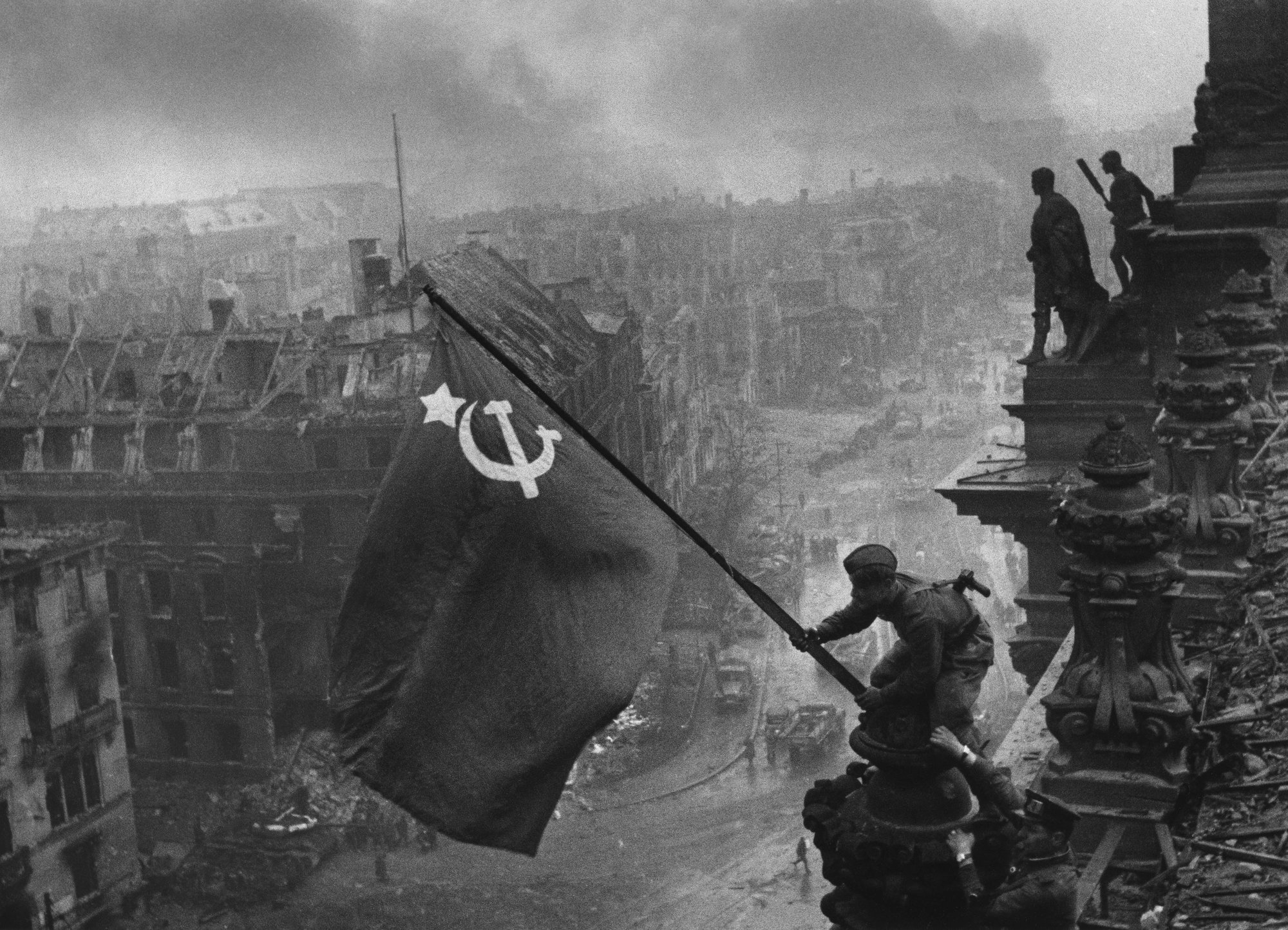
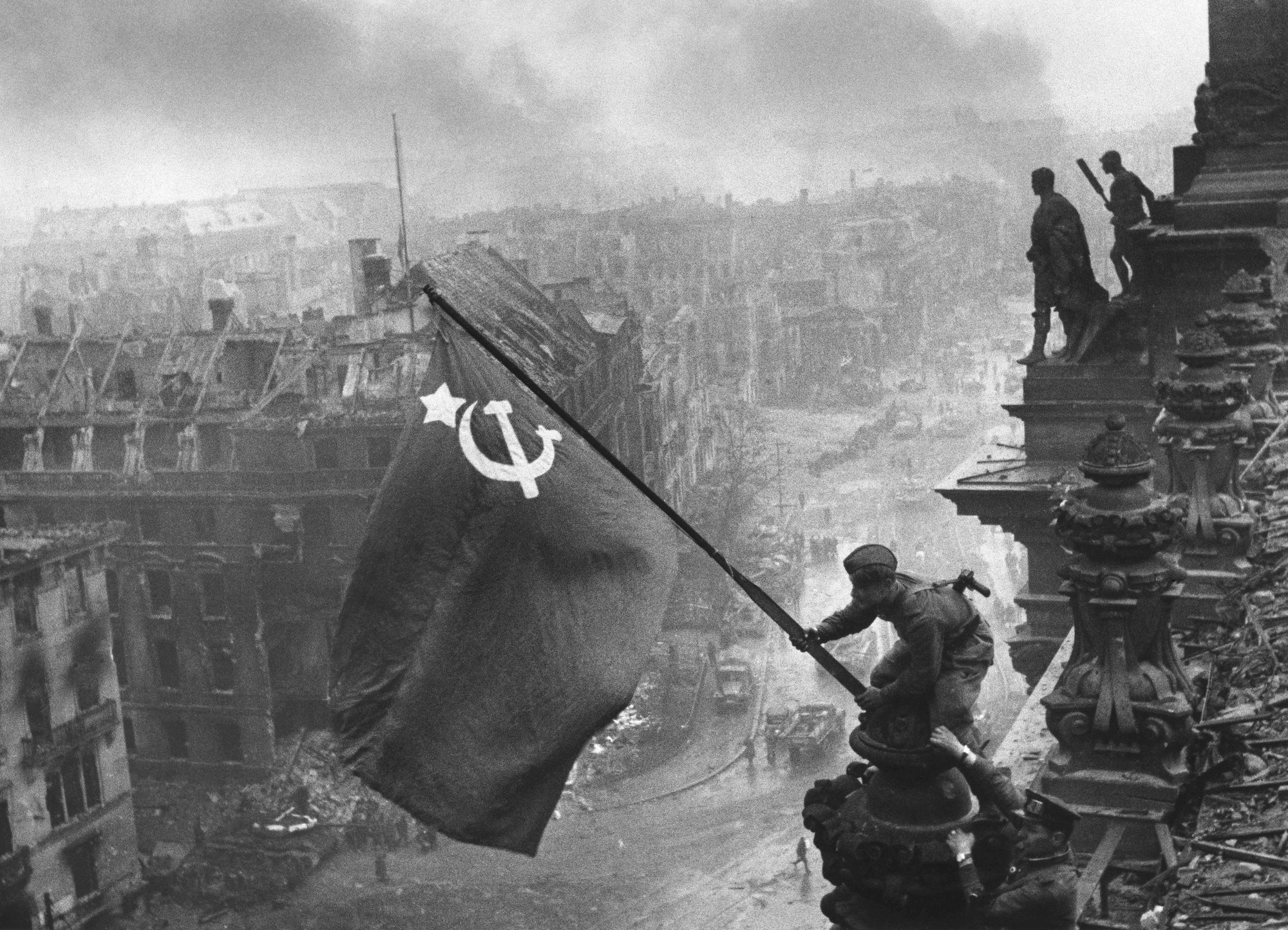
Although the Reichstag had not been in use since it burned in 1933 and had remained in ruins, the Soviets attached great importance to capturing it. For them, taking the building had powerful symbolic value.
In the early hours of 29 April, the Soviet 3rd Shock Army crossed the Moltke Bridge and attacked the surrounding area. Progress was slowed by the lack of supporting artillery until damaged bridges were repaired. On 30 April, with artillery support, Soviet troops launched another assault on the Reichstag. German defenders inside were deeply entrenched, and the fighting turned into fierce room-to-room combat. Counter-attacks came from German troops in the basement, but by 2 May the Red Army had complete control of the building.
The famous image of soldiers raising a flag over the Reichstag became one of the defining images of the war’s end in Europe, even though the well-known rooftop photograph was a re-enactment taken the day after the building was captured.
Hitler’s death and Berlin’s surrender
On 30 April, as the battle closed around the government district, Weidling informed Hitler that the defenders would probably run out of ammunition during the night. Hitler gave permission for a breakout attempt. Later that afternoon, Hitler and Eva Braun committed suicide, and their bodies were cremated near the bunker.
The surviving defenders were compressed into a shrinking central area of Berlin. By then, roughly 10,000 German soldiers remained in the city centre, under attack from all sides. The first day of May saw less close-quarters fighting in some areas, but artillery and sniper fire continued.
Early on 1 May, General Hans Krebs informed Soviet General Vasily Chuikov of Hitler’s death and indicated a willingness to negotiate surrender, but Soviet forces insisted on unconditional surrender. Joseph Goebbels opposed surrender and later that day he and his wife killed their children and then themselves. With that final barrier removed, Weidling eventually accepted the inevitable.
During the night of 1 to 2 May, much of the Berlin garrison tried to break out. Only some who went west through the Tiergarten and crossed into Spandau managed to get through Soviet lines. Most were killed or captured.
On the morning of 2 May, General Weidling surrendered. He was taken to General Chuikov and ordered the city’s defenders to lay down their arms. Berlin had fallen.
The fall of Berlin marked the final collapse
Fighting continued outside the city for a few more days, but Berlin’s surrender was the political and military end point everyone could recognize. Hitler was dead, the capital was gone, and the last illusions of saving Nazi Germany had collapsed.
The human cost was enormous. Declassified archival data cited for the operation gives 81,116 Soviet dead and 280,251 wounded or sick. The Soviets also claimed to have captured nearly 480,000 German soldiers. German research put German dead between 92,000 and 100,000. Some 125,000 civilians are estimated to have died during the entire operation.
Berlin’s final battle was not just the capture of a city. It was the destruction of a regime in its own capital, street by street, bunker by bunker, until nothing remained but surrender.