Look up on a clear day and the sky appears blue almost everywhere you turn. Wait until evening, and that same sky can shift into oranges and reds. It feels dramatic, but the basic reason is surprisingly simple: sunlight changes as it travels through Earth’s atmosphere.
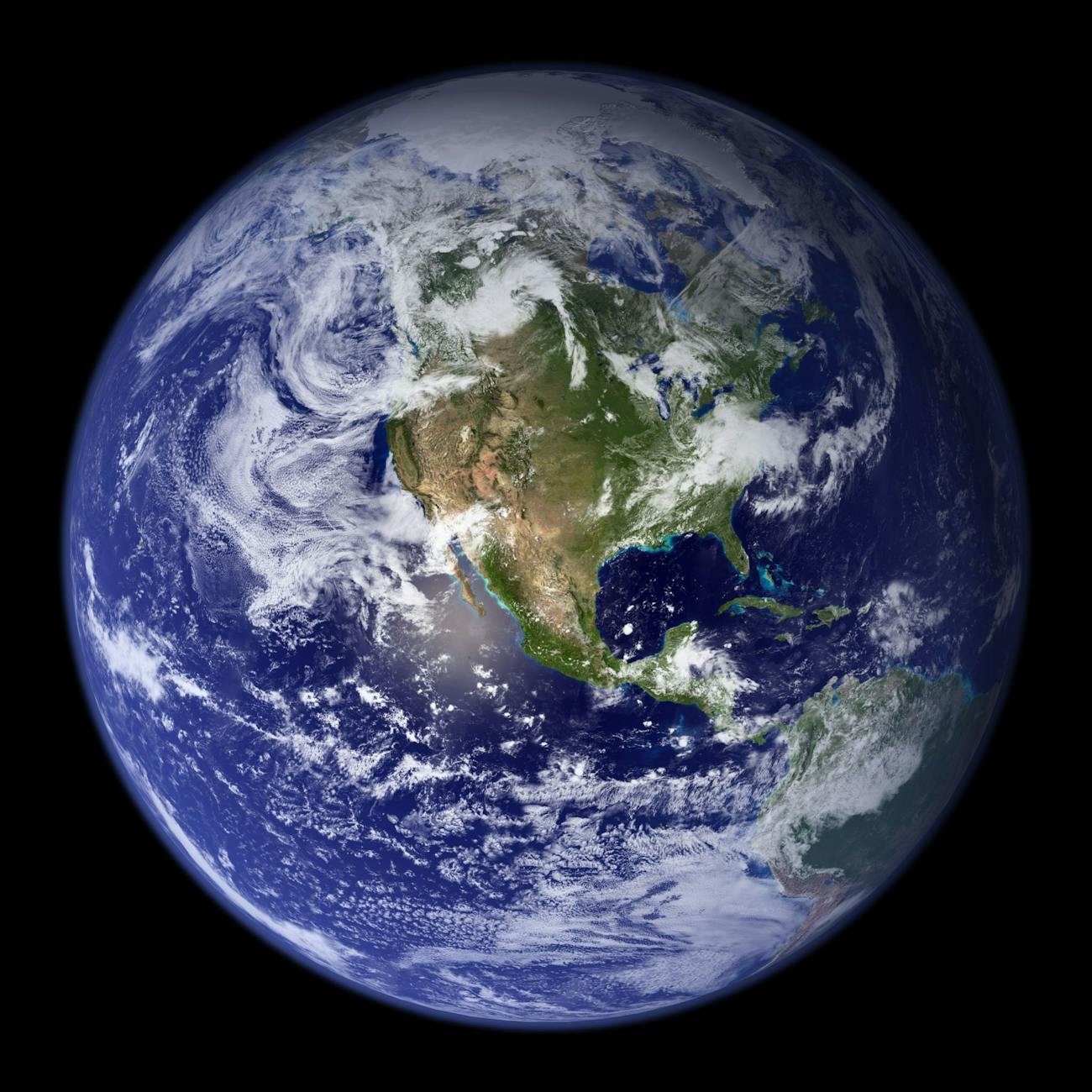
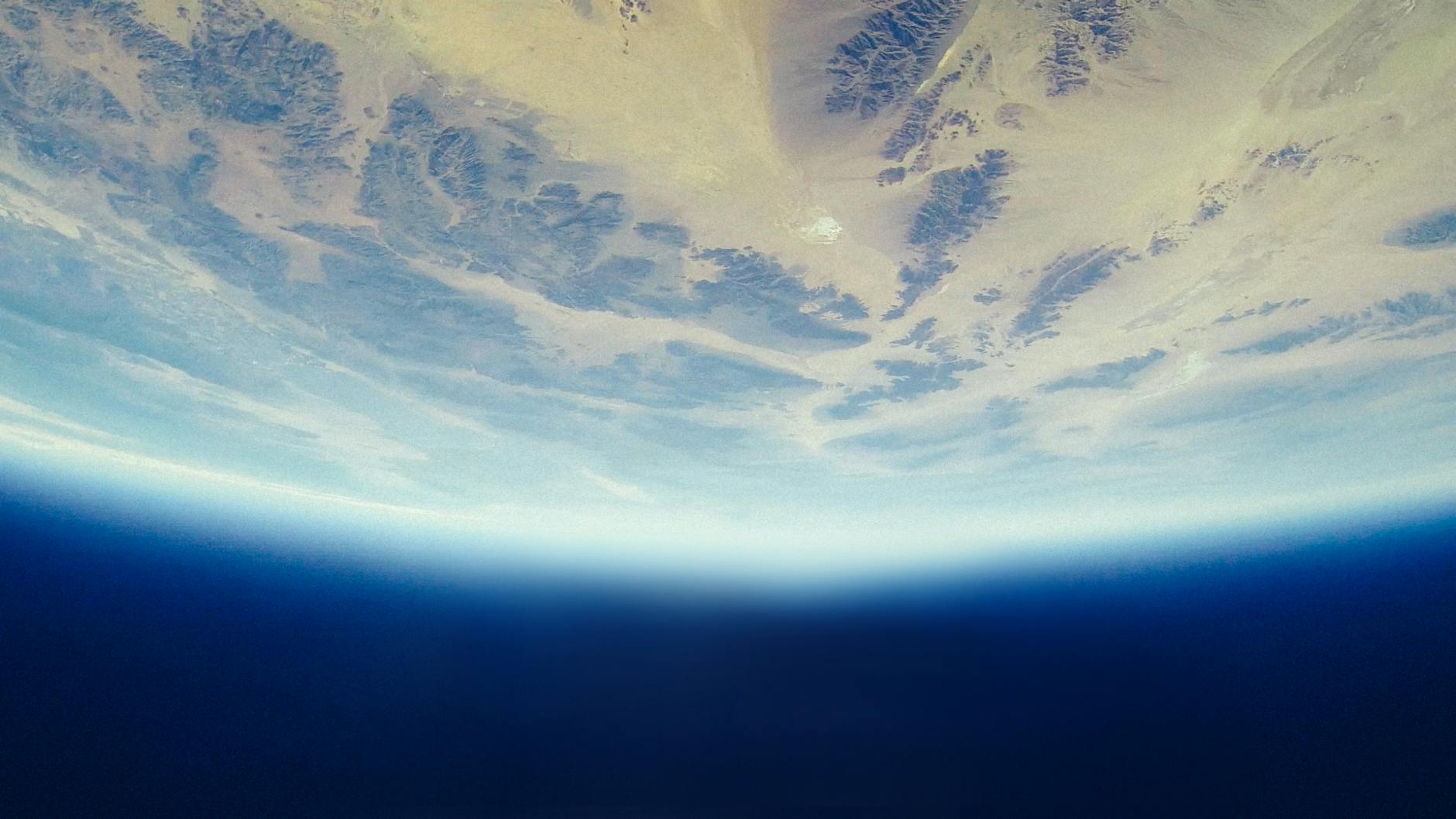
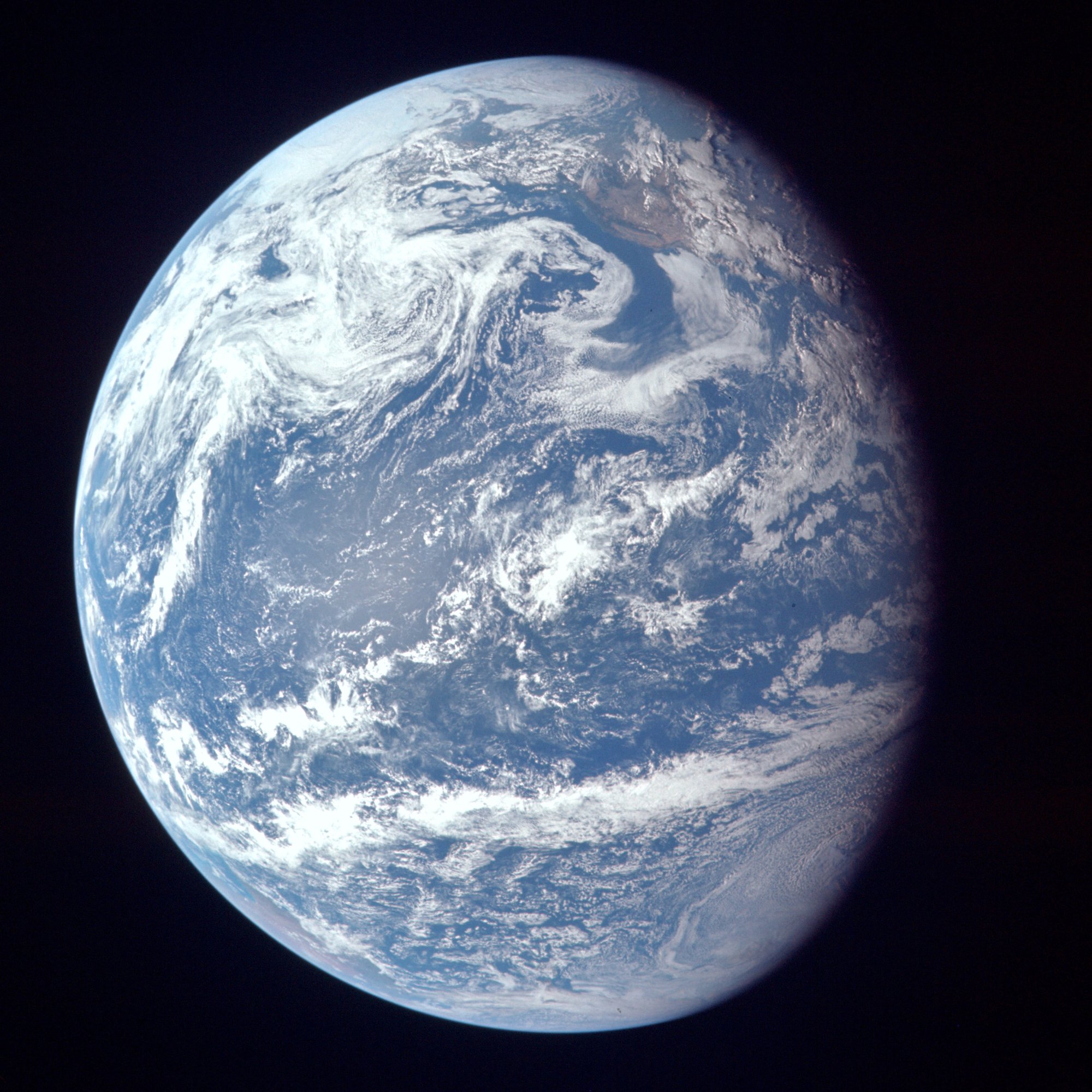
Earth’s atmosphere is a layer of mixed gases surrounding the planet, held in place by gravity. It is more than just “air” to breathe. It helps protect the surface from ultraviolet solar radiation, reduces the temperature extremes between day and night, and creates the conditions that allow weather and life to exist. It also affects how light moves, scatters, and reflects. That is why the atmosphere is responsible not only for clouds and hazes, but also for blue skies and red sunsets.
Watch the story on DeepSwipe

Sunlight Does Not Pass Through Air Unchanged
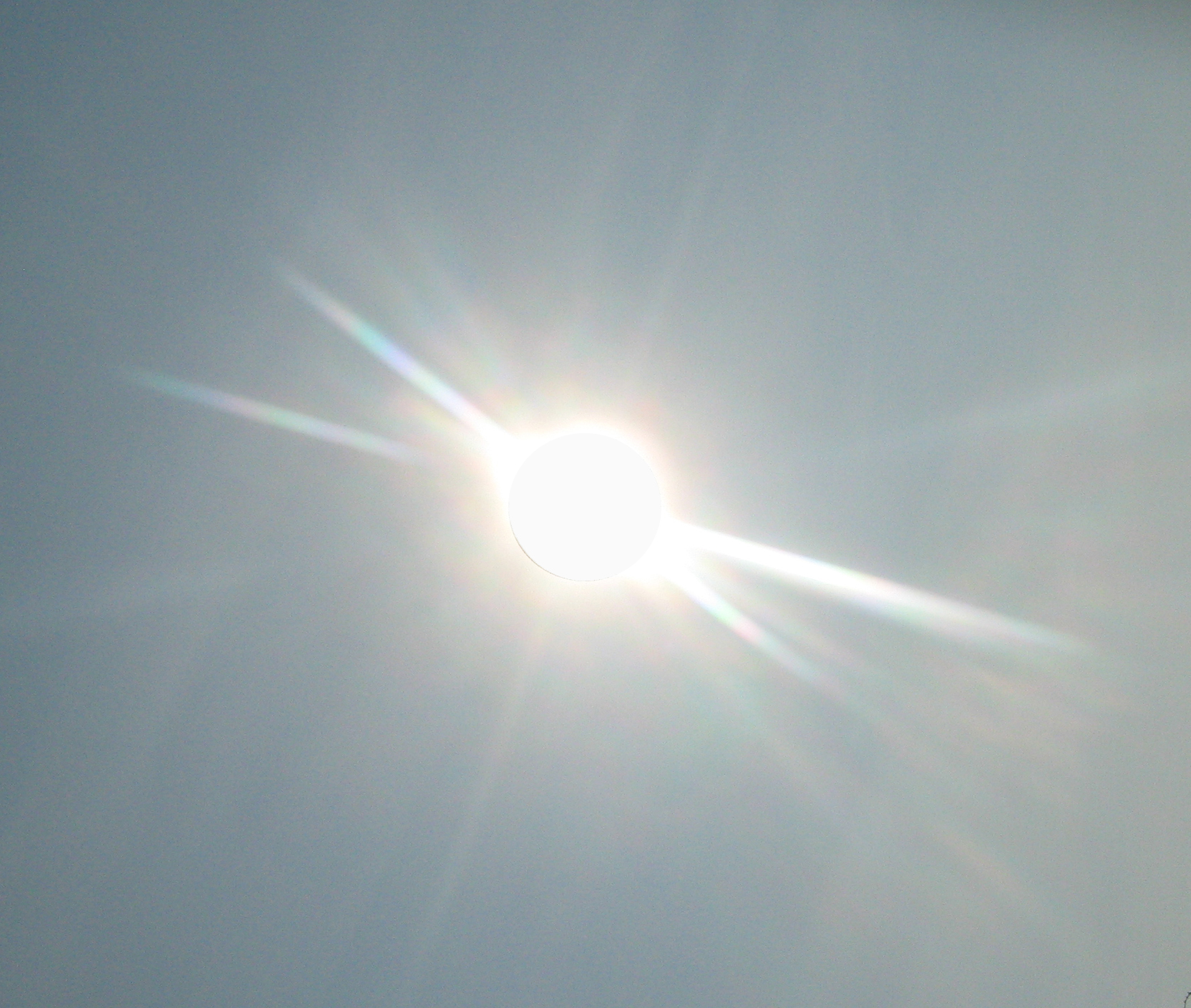
When light passes through the atmosphere, it can either travel straight to your eyes or interact with the gases and particles in the air. Light that reaches you without interacting is called direct radiation. Light that has been redirected is indirect radiation, meaning it has been scattered in the atmosphere.
This scattering is the key to daytime sky color. A process called Rayleigh scattering makes shorter wavelengths of light scatter more easily than longer wavelengths. Blue light has a shorter wavelength than red light, so blue is scattered much more strongly as sunlight moves through the air. Instead of only coming straight from the Sun, blue light gets redirected in many directions across the sky. When you look away from the Sun on a clear day, much of what you are seeing is this scattered blue light.
That is why the sky looks blue.

Why Sunsets Become Red
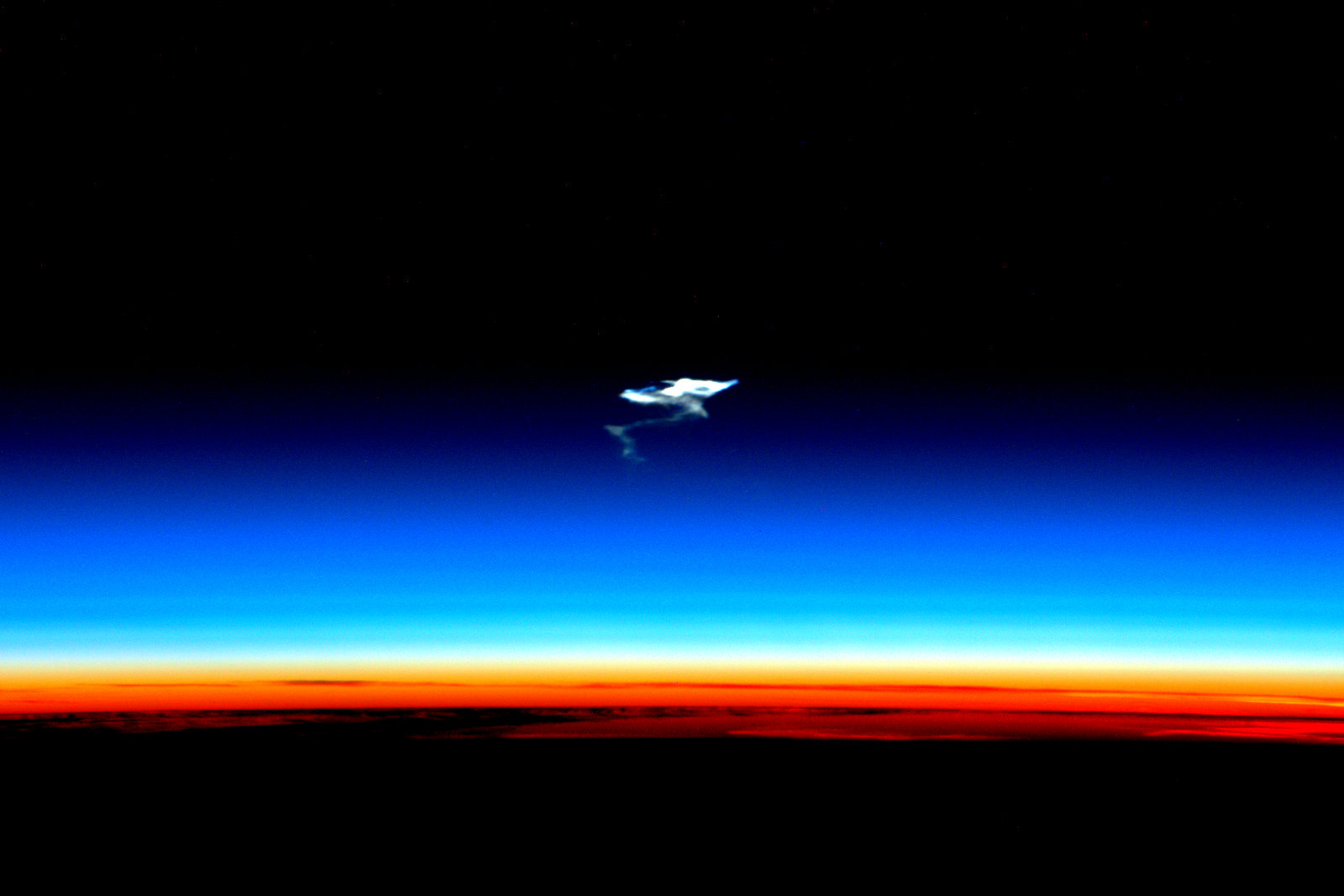
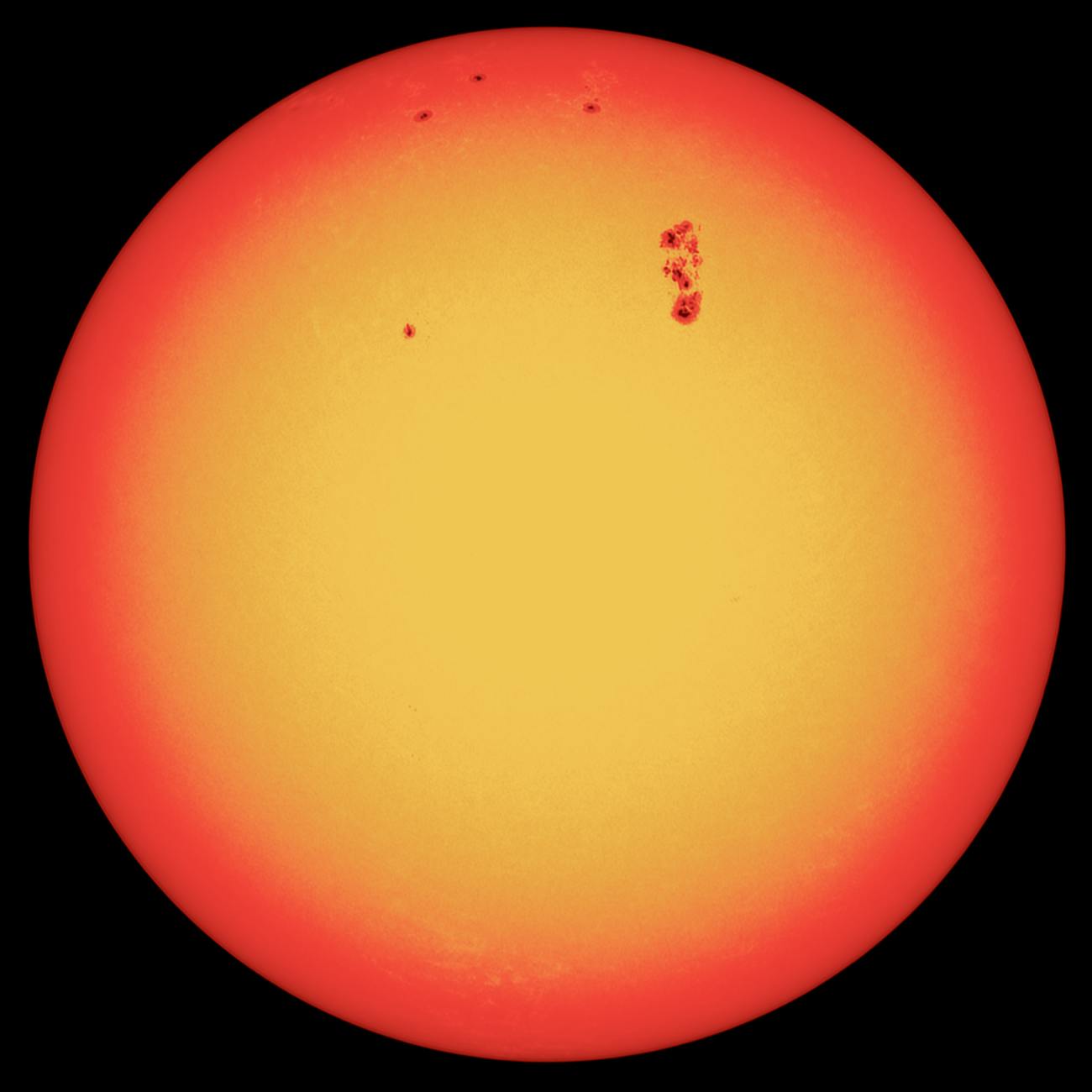
At sunset, the Sun is close to the horizon. That means its rays must travel through more of the atmosphere than they do when the Sun is high overhead. Along this longer path, much more of the blue light is scattered out before the sunlight reaches your eyes.
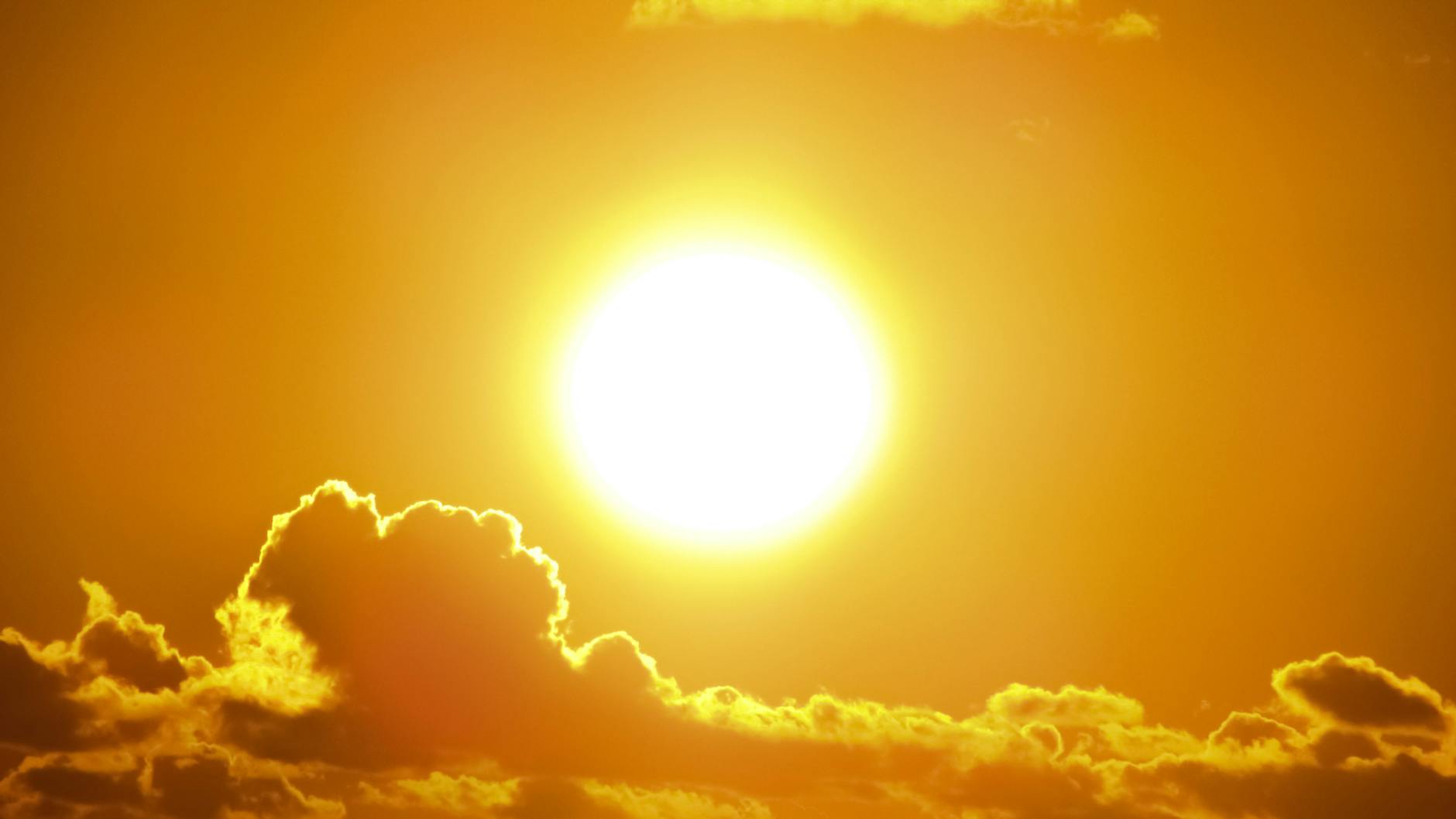
What remains is light richer in longer wavelengths, especially red. So the Sun and the surrounding sky can take on red and orange tones near sunset.
The same basic effect can happen around sunrise as well. The crucial idea is not the time of day itself, but the length of the path that sunlight must take through the atmosphere.
What the Atmosphere Is Made Of
The colors of the sky begin with the material sunlight passes through. Dry air is made mostly of nitrogen and oxygen, with argon and carbon dioxide making up smaller amounts, plus tiny amounts of other trace gases. Air also contains variable amounts of water vapor, and unfiltered air may include aerosols and particulates such as dust, pollen, spores, sea spray, and volcanic ash.
An aerosol is a tiny solid or liquid particle suspended in air. These particles matter because they can influence visibility, weather features such as hazes and clouds, and the way radiation is reflected or scattered.
Up to around 100 kilometers above Earth, atmospheric turbulence keeps the gases relatively well mixed. In simpler terms, constant churning motions in the lower and middle atmosphere prevent the main gases from sorting themselves neatly by weight. This helps make the optical behavior of the atmosphere more consistent on a global scale, even though local conditions such as humidity, clouds, and pollution can change what you see.
Most of the Sky Show Happens in the Troposphere
The lowest layer of the atmosphere is the troposphere, which extends from the surface to an average height of about 12 kilometers. It contains roughly 80% of the atmosphere’s mass and nearly all of its water vapor. Most weather also happens there.
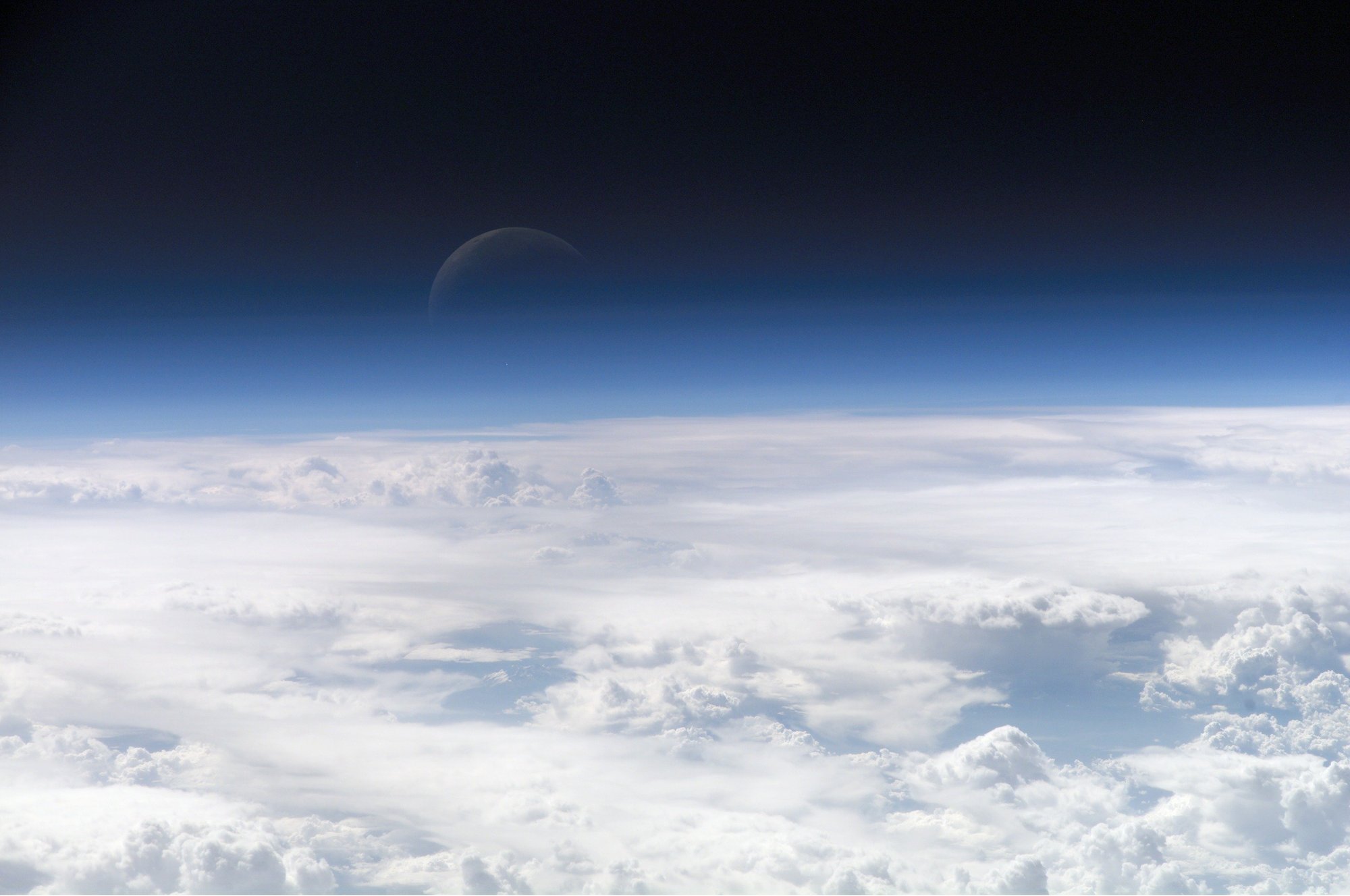
This matters for what you see in the sky. Clouds, moisture, haze, and active air circulation are concentrated in the troposphere, so this is the layer most responsible for the everyday appearance of the sky. Very tall thunderclouds can even push upward toward the boundary above it, called the tropopause.
Because the troposphere contains most atmospheric moisture, it strongly affects whether sunlight reaches you directly or after being scattered, reflected, or absorbed. On an overcast day, for example, direct radiation may be largely blocked, and the light you receive is mainly scattered light. That is why shadows can disappear under a thick cloud layer.
Clouds Reflect a Huge Amount of Energy
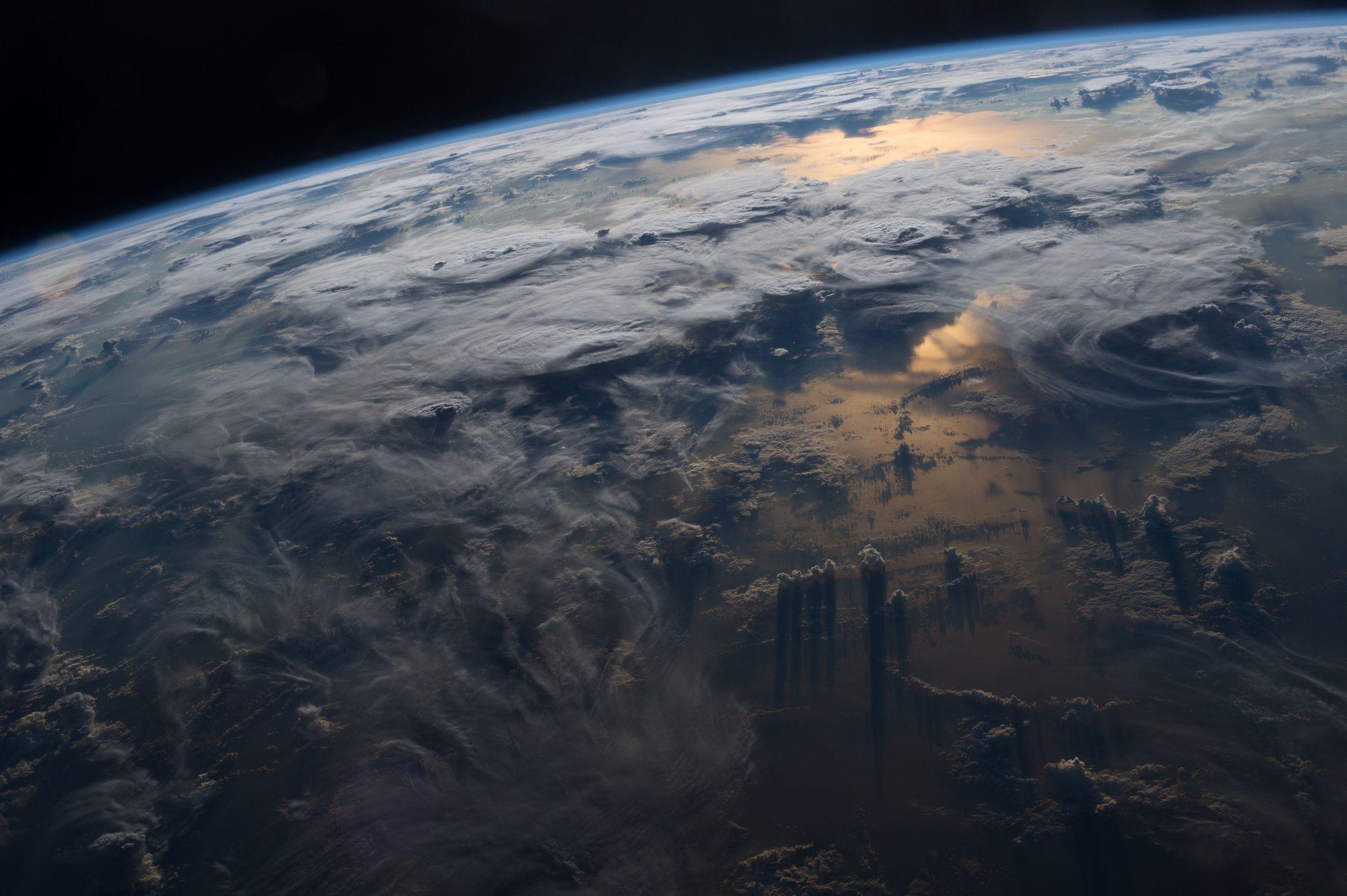
Clouds do much more than decorate the sky. They are among the atmosphere’s most important reflectors of incoming solar energy. Depending on their properties, clouds can reflect up to 70% of the incoming radiation. Globally, clouds reflect about 20% of the incoming energy, contributing about two thirds of Earth’s total albedo.
Albedo is a measure of how much incoming radiation a surface or planet reflects back rather than absorbs. A higher albedo means more reflection.
Dust also plays an important role in atmospheric reflection, but clouds are especially significant because of their large coverage and strong influence on how bright or dim the planet appears from space. In fact, reflected glints seen from far away have been linked to light bouncing off ice crystals in the troposphere.
So while blue skies and red sunsets are driven by scattering, the brightness and energy balance of the planet are also heavily shaped by cloud reflection.
Scattering, Reflection, and Absorption Are Different
It helps to separate three related ideas:
Scattering
Scattering happens when light is redirected. This is what gives us the blue sky and helps create red sunsets.
Reflection
Reflection happens when radiation bounces off something, such as clouds or dust. This sends energy back toward space and affects Earth’s overall brightness.
Absorption
Absorption happens when molecules take in radiation. Different molecules absorb different wavelengths. For example, oxygen and ozone absorb almost all radiation with wavelengths shorter than 300 nanometres, while water absorbs at many wavelengths above 700 nanometres.
When molecules absorb radiation, they gain energy, which can heat the atmosphere. The atmosphere also emits radiation, especially in the infrared. These absorption and emission processes are central to the greenhouse effect, which helps keep Earth’s average surface temperature far warmer than it would be otherwise.
Why the Atmosphere Is Such an Effective Light Filter
The atmosphere is not equally transparent to all forms of radiation. Its gases leave certain “windows” of relatively low opacity, meaning some bands of radiation pass through more easily than others. The optical window stretches from around 300 nanometres into the visible range of about 400 to 700 nanometres and continues into part of the infrared.
Visible light falls right inside this important transmission range, which is one reason sunlight can illuminate the surface so effectively. But even within the visible range, the atmosphere does not treat every color equally. Shorter blue wavelengths are scattered more efficiently than longer red wavelengths, which is exactly what paints the sky blue in daytime and shifts sunsets toward red.
The Atmosphere Is Thin, but Powerful
Even though the atmosphere extends very far upward, most of its mass is concentrated close to the ground. About half of the atmosphere’s total mass lies below 5.6 kilometers, and about 90% lies below 16 kilometers. That concentration near the surface helps explain why so much of the visible sky drama happens relatively low down, where the air is densest.
Air pressure and density decrease with altitude, but the lower atmosphere remains thick enough to strongly influence incoming sunlight. This is also why the Sun’s low angle near the horizon has such a noticeable visual effect: the light must travel through a much deeper slice of the dense lower atmosphere.
More Than Beautiful Colors
Blue skies and red sunsets are beautiful, but they also reveal something profound about the planet. Earth’s atmosphere is not just a passive shell. It protects the surface, moves heat and moisture around the globe, shapes weather, filters radiation, and controls how light reaches our eyes.
The next time the sky turns blue overhead or red at dusk, you are watching sunlight interact with a complex envelope of gas, water vapor, clouds, and particles that makes Earth habitable in the first place.