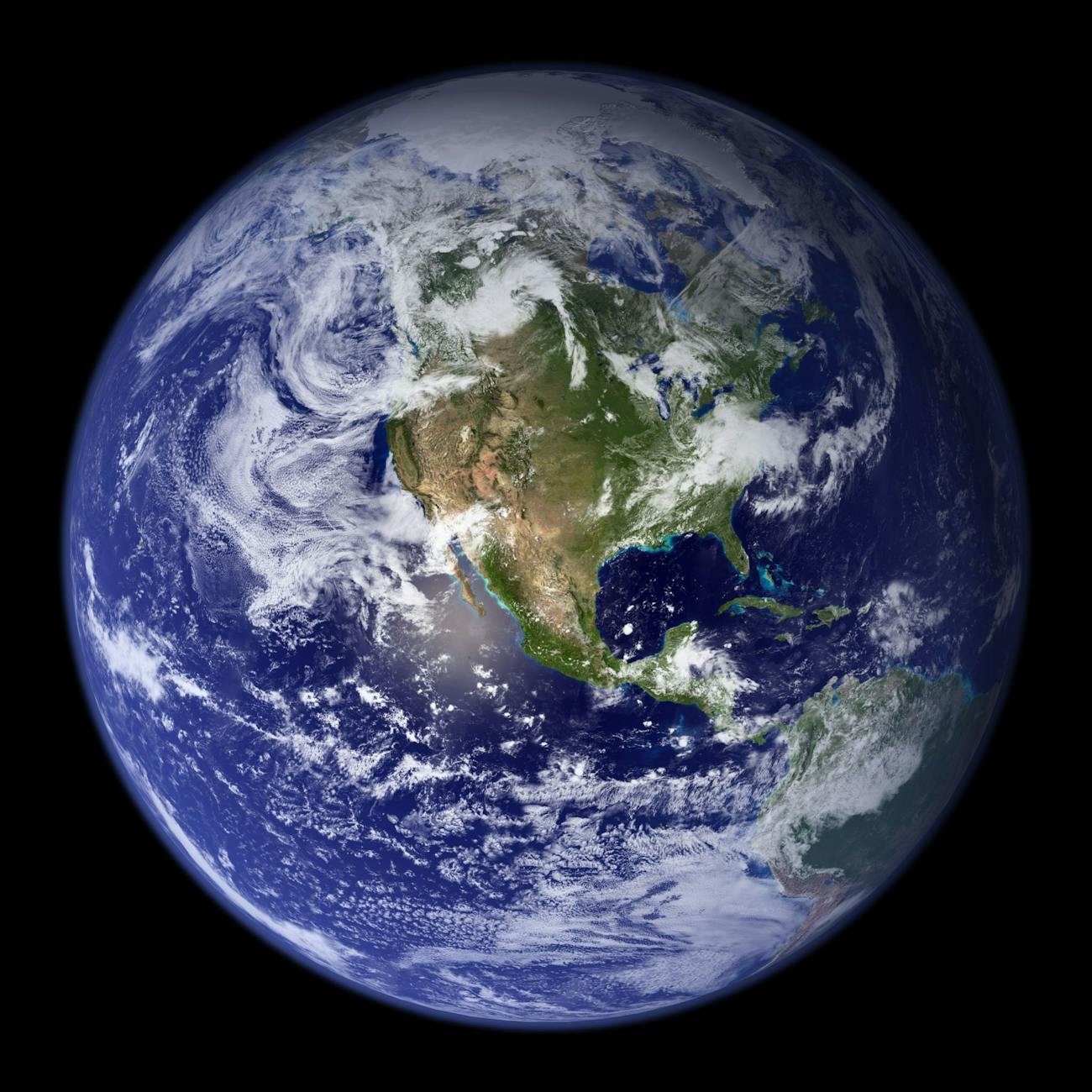
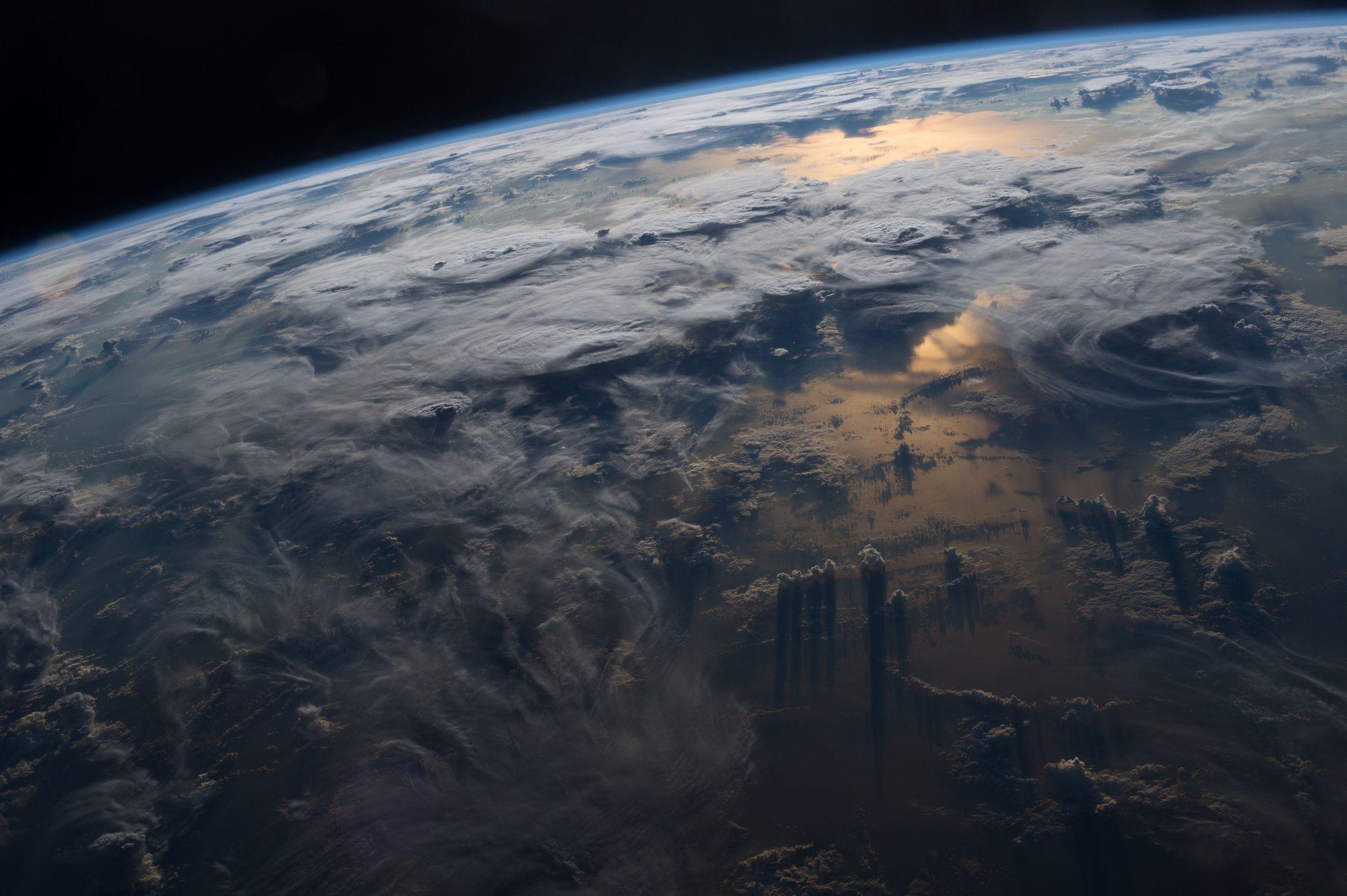
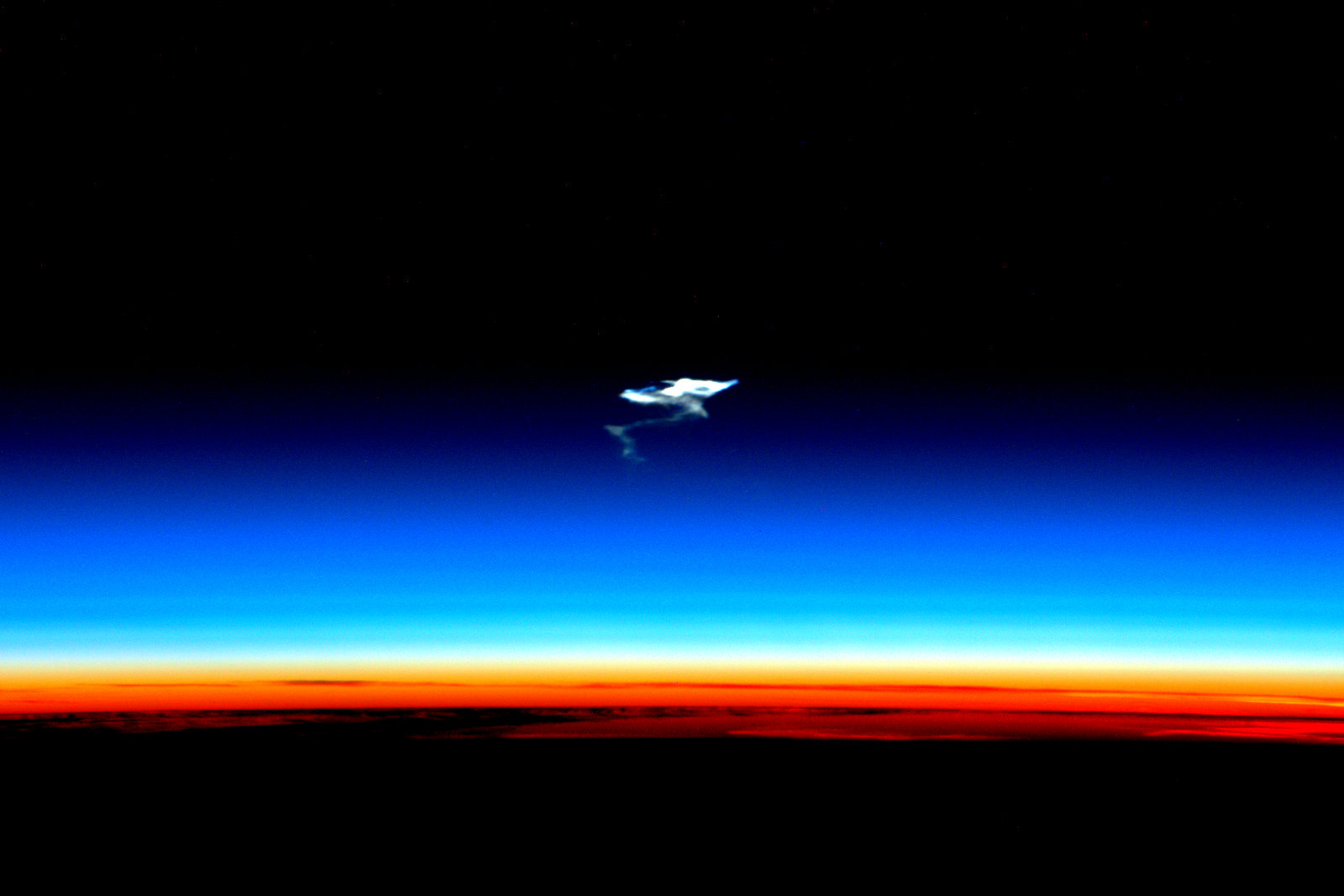
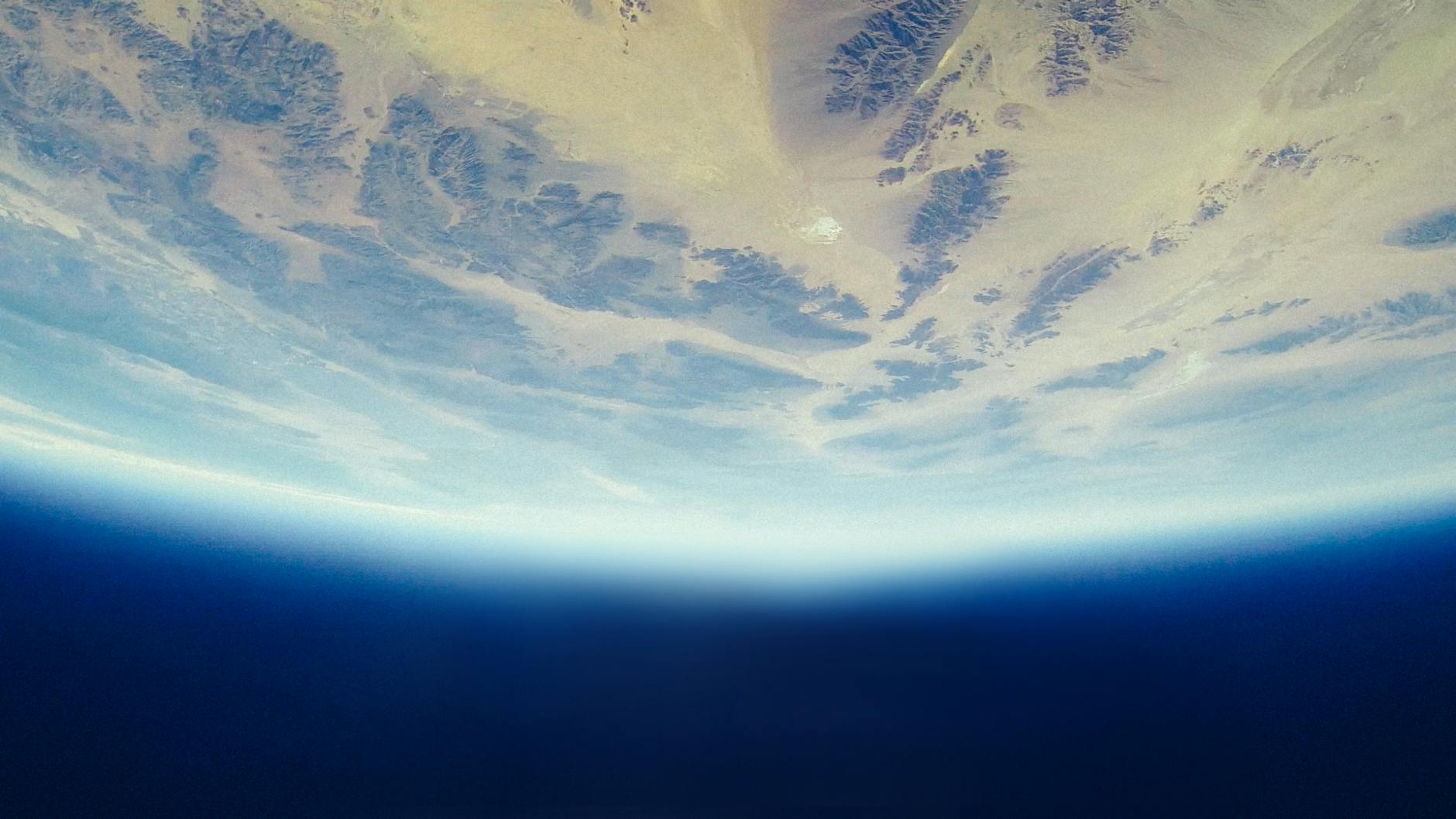
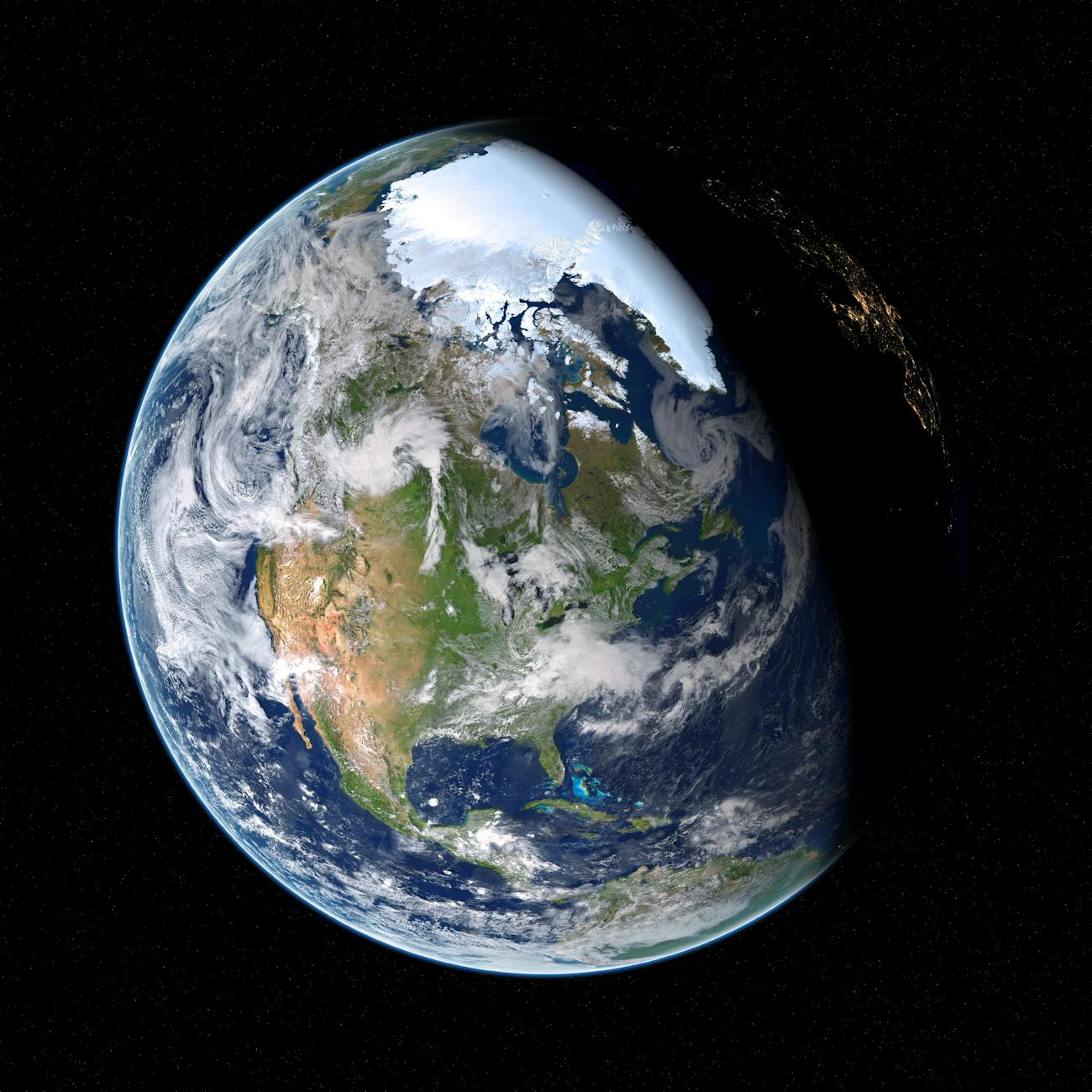
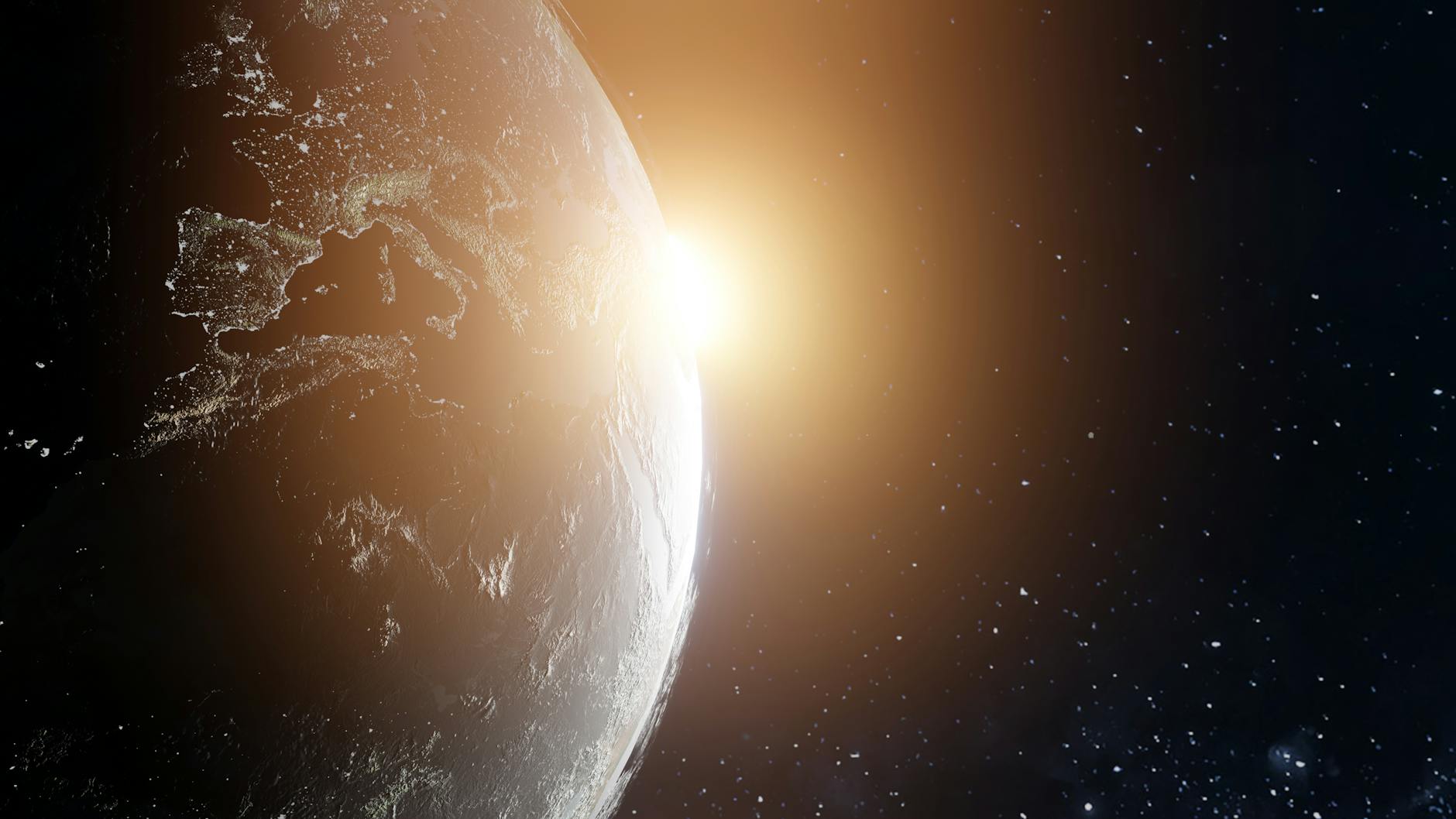
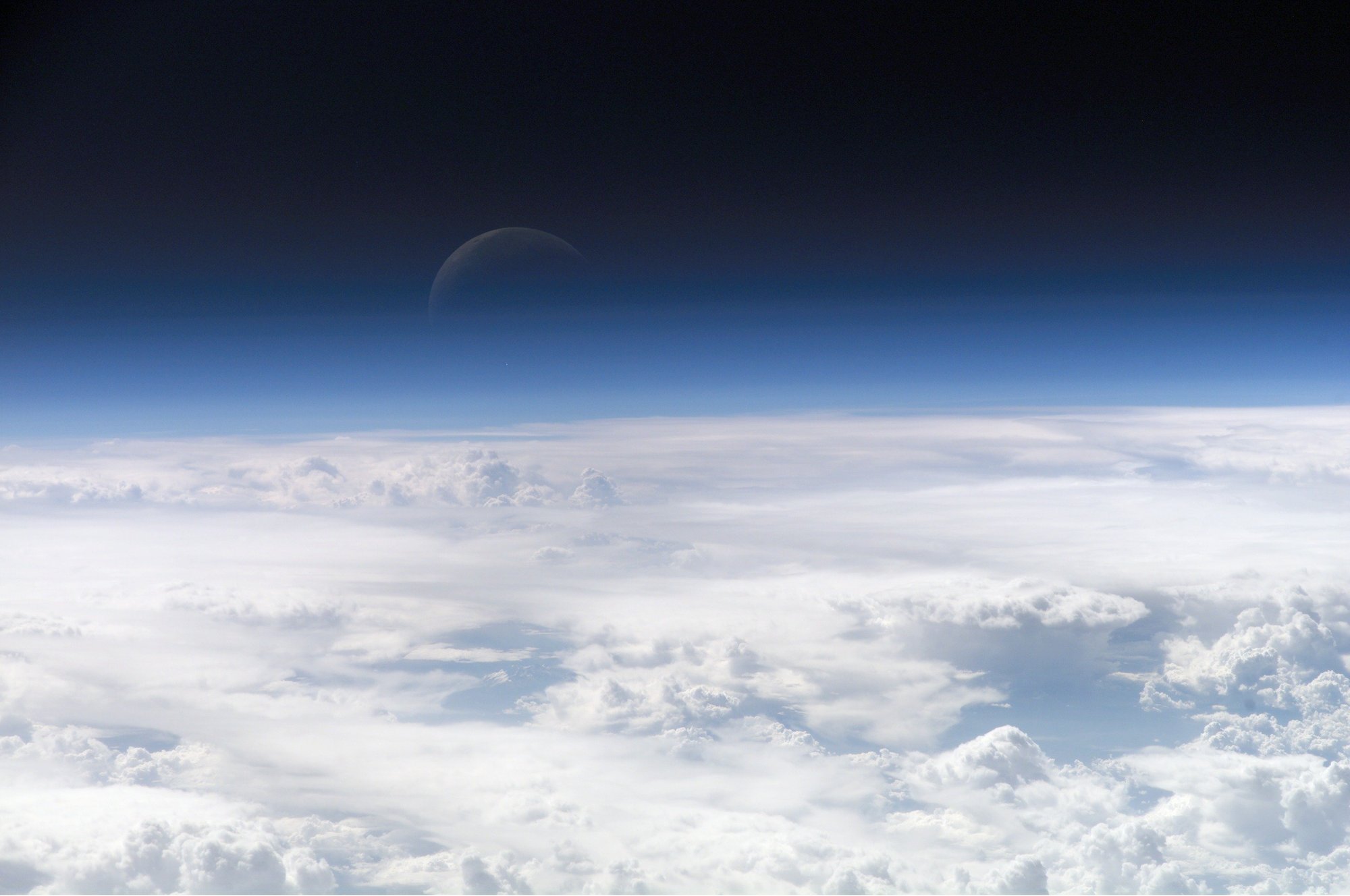
It is tempting to imagine Earth’s atmosphere ending like the shoreline of an ocean: one step farther and you are suddenly in space. But that is not how it works. The atmosphere is a vast layer of mixed gas held to Earth by gravity, and instead of stopping at a crisp border, it gradually thins out with height.
That makes the “edge of space” a surprisingly slippery idea. A commonly used marker is the Kármán line, set at 100 kilometers above Earth. It is often treated as the beginning of space, but it is really a convention rather than a physical wall. Above that height, atmospheric effects still matter.
Watch the story on DeepSwipe
Why the atmosphere doesn’t just stop
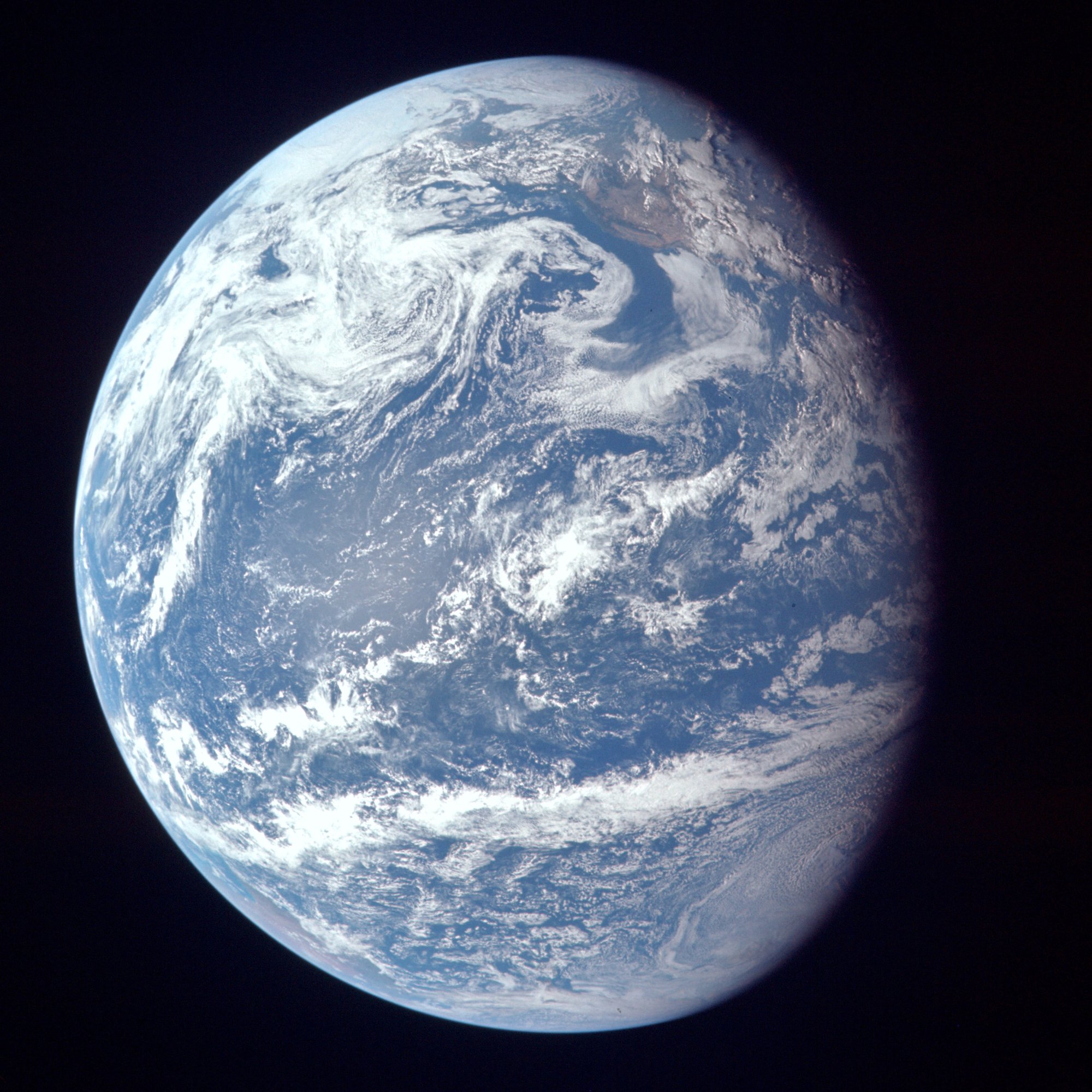
Earth’s atmosphere surrounds the planet as a protective buffer between the surface and outer space. It shields the ground from most meteoroids and much of the Sun’s ultraviolet radiation, reduces the swing between day and night temperatures, and helps keep the planet warm through the greenhouse effect. It also redistributes heat and moisture through air currents and provides the chemical and climate conditions that allow life to exist and evolve.
Because gravity holds the atmosphere in place, the gases are compressed much more strongly near the surface than higher up. That means pressure and density generally decrease with altitude. Instead of an ending, the atmosphere fades. The higher you go, the thinner it gets.
This is why there is no definite boundary between atmosphere and space. The upper layers become so tenuous that some scientists even treat the outermost part, the exosphere, as closer to interplanetary space than to a normal atmospheric layer.

The Kármán line: a useful marker, not a hard border
The Kármán line at 100 km is widely used as a conventional definition of where space begins. By international convention, it marks the point above which human travelers are considered astronauts. But physically, the atmosphere does not vanish there.
In fact, 99.99997% of the atmosphere’s mass lies below 100 km. That makes the Kármán line a useful boundary for law, engineering, and classification. Still, “space” at that height is not empty. Significant atmospheric effects remain, including auroras and the lower portions of the ionosphere, a region ionized by solar radiation that affects things like radio propagation.
The Kármán line is therefore best understood as a practical dividing line. It tells us when we are in a realm where ordinary flight gives way to spaceflight, while also reminding us that Earth’s atmosphere extends well beyond it.
Most of the atmosphere stays close to the ground
The atmosphere may stretch outward for thousands of kilometers, but almost all of its mass is concentrated near Earth’s surface. About three quarters of it lies within roughly 11 km of the ground. Half of the atmosphere’s total mass is packed into the lower 5.6 km.
That concentration matters. It explains why weather, clouds, and nearly all atmospheric water vapor are found in the troposphere, the lowest layer of the atmosphere. The troposphere extends from the surface to an average height of about 12 km, though it is lower near the poles and higher near the Equator.
This low layer contains roughly 80% of the atmosphere’s mass. It is denser than the layers above because all that air overhead compresses it. Most conventional aviation also happens here. In other words, the part of the atmosphere that humans know best is only a thin skin at the bottom of a much taller structure.
The atmosphere is layered, but the layers blur into one another
Earth’s atmosphere is commonly divided into five main layers based on temperature patterns and composition: the troposphere, stratosphere, mesosphere, thermosphere, and exosphere.
The troposphere is the weather layer. Nearly all water vapor is found there, and most clouds and storms form within it. Above that sits the stratosphere, which contains the ozone layer. The stratosphere is unusually stable because ozone absorbs ultraviolet radiation, causing temperature to rise with altitude and limiting turbulence.
Above the stratosphere lies the mesosphere, where temperatures drop again. It is the coldest part of Earth’s atmosphere, averaging around −85 °C near its upper boundary. Most meteors burn up in this region.
Then comes the thermosphere, beginning around 80 km up and extending hundreds of kilometers farther. Temperatures here can rise very high because the sparse gas absorbs ionizing ultraviolet and X-ray radiation from the Sun. But the gas is so thin that it would not feel hot in the ordinary sense.
Finally, the exosphere forms the outermost layer. Here, atoms and molecules are so far apart that they can travel hundreds of kilometers without colliding. Some of these particles escape into space altogether.
These layers are real and scientifically useful, but they are not stacked like rigid shells. Their boundaries are gradual transitions, not hard walls.
Above 100 km, the atmosphere still has a job to do
One of the most surprising things about the edge of space is how much atmosphere is still “in play” above 100 km.
Auroras can appear in the thermosphere at around 100 km altitude. The familiar green aurora is linked to atomic oxygen and is commonly seen at altitudes from 120 to 400 km. So even in a region many people would simply call “space,” Earth’s atmosphere is still interacting with solar radiation in spectacular ways.
The ionosphere also overlaps these heights. This region of enhanced plasma density stretches by day from about 50 to 1,000 km and includes parts of the mesosphere, thermosphere, and exosphere. It has practical importance because it influences radio propagation on Earth.
So although the Kármán line is a recognized threshold, it does not mark the end of atmospheric physics. It marks the beginning of a thinner, stranger atmosphere.
Why satellites still feel air in “space”
The idea of atmospheric drag surprises many people. Drag is the resistive force that happens when an object moves through gas. Near the ground, drag is obvious: it slows cars, aircraft, and falling objects. High above Earth, it is much weaker, but it is not zero.
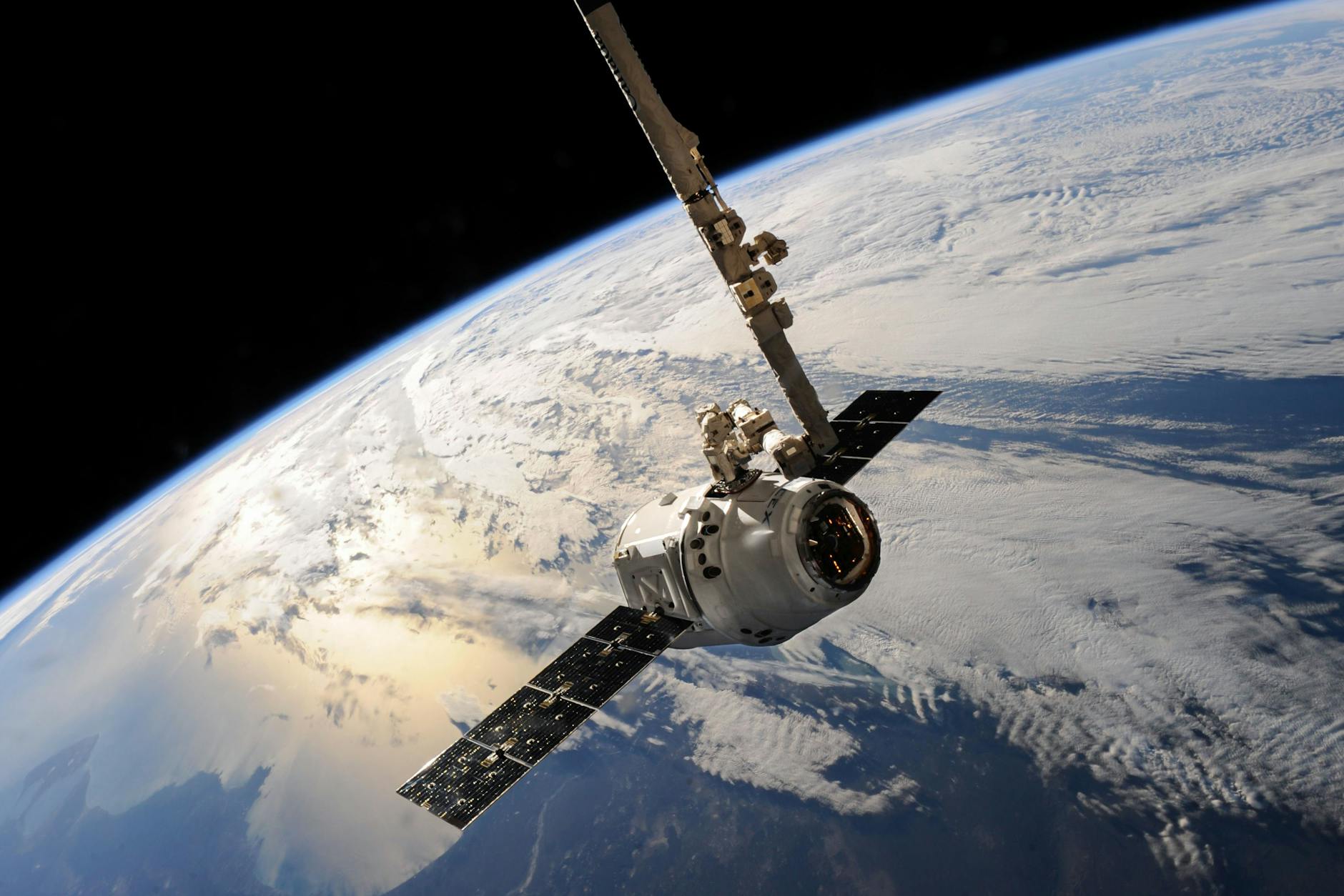
The International Space Station orbits in the thermosphere, between 370 and 460 km above Earth. Even there, the station encounters enough atmospheric drag to require periodic reboosts. Without those boosts, orbital decay would gradually lower its orbit and eventually bring it back toward Earth.
Other satellites also feel atmospheric effects. Depending on solar activity, noticeable drag can occur even at altitudes as high as 600 to 800 km. That happens because the upper atmosphere changes with solar conditions, altering its density.
This is one of the clearest reminders that space near Earth is not a perfect vacuum. The atmosphere becomes incredibly thin, but for fast-moving spacecraft, even that trace gas matters.
The exosphere: where the atmosphere fades into space
The exosphere is the most extreme example of the atmosphere’s gradual disappearance. It begins above the thermosphere, at a boundary known as the exobase, and extends outward to a poorly defined meeting with the solar wind and interplanetary medium.
Its upper limit depends on how you define it. Some sources place it near 10,000 km, while others extend it much farther. The geocorona, visible in far ultraviolet light and caused by neutral hydrogen, reaches to at least 100,000 km.
This region is made mostly of extremely low densities of hydrogen, with some helium, carbon dioxide, and nascent oxygen closer to the exobase. Because particles are so widely spaced, the exosphere no longer behaves like a normal gas. Particles can move on ballistic paths and may drift in and out of the magnetosphere or the solar wind.
Earth even loses material from this outer fringe every second: about 3 kg of hydrogen and 50 g of helium, plus much smaller amounts of other constituents.
That is about as close as nature gets to an atmosphere without an edge.
A thin planet-wide shield
Thinking about the edge of space also changes how we see the atmosphere below. It is not just air above our heads. It is a very thin, very important envelope that protects life, shapes weather, and controls the near-space environment around Earth.
At sea level, average atmospheric pressure is 101,325 pascals, and air density is about 1.29 kg per cubic meter. But those familiar conditions exist only near the bottom of the atmospheric column. Pressure falls exponentially with altitude, and the atmosphere quickly becomes too thin for the kinds of breathing, weather, and flight that define surface life.
Yet even when it thins to the point where spacecraft circle Earth, it still matters. The atmosphere does not stop. It stretches, fades, glows, drags, and finally blends into the space beyond.
That is what makes Earth’s edge so fascinating: the boundary between planet and cosmos is not a line, but a long transition.