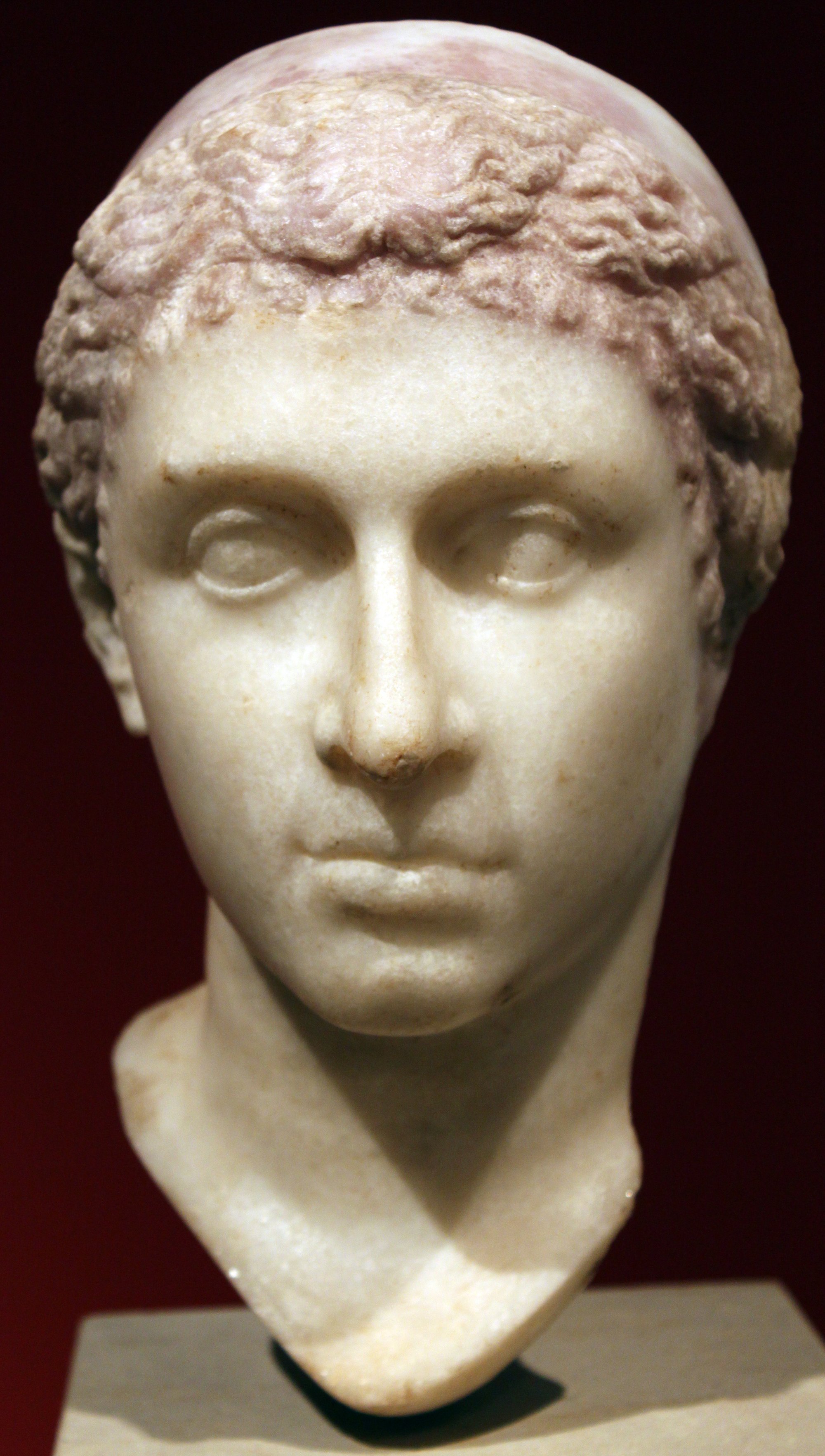
A Pharaoh Who Spoke Back
In an age when most rulers let translators carry their thoughts, Cleopatra answered the world in its own tongue. Born into a Macedonian Greek dynasty that treated Egypt as a possession, she did something her Ptolemaic ancestors had refused to do: she learned to speak Egyptian.
Between Memphis and Alexandria
The Ptolemaic pharaohs were crowned in traditional fashion by the high priest of Ptah at Memphis, yet they lived as Greek monarchs in Alexandria—a cosmopolitan city founded by Alexander the Great. They governed in Greek, worshipped Greek gods alongside Egyptian ones, and kept the local language at arm’s length.
Cleopatra broke that pattern. By adulthood, she spoke not only Greek and Egyptian, but also, according to Plutarch, Ethiopian, the tongue of the "Troglodytes", Hebrew or Aramaic, Arabic, a "Syrian" language, Median, Parthian, and probably Latin. Roman elites still preferred to converse with her in Koine Greek, their language of diplomacy.

Language as Strategy
These languages were not a party trick; they were a policy. They mapped almost perfectly onto the lands Cleopatra hoped to bind to Egypt: North Africa, the Levant, and the great kingdoms of West Asia that had once formed part of the Ptolemaic sphere. Speaking to envoys and vassals directly, she needed no interpreters to filter her promises or threats.
A Queen of Many Voices
Cleopatra’s fluency let her cross the invisible borders that usually divided court from subject, Greek from Egyptian, and monarch from foreigner. Remembered as a seductress, she was first a communicator—someone who understood that in politics, the sharpest sword may be the human voice spoken in exactly the right language.