Full article · 9 min read
Language Change: How Linguists Recover Vanished Sounds
How can anyone know what a language sounded like before microphones, phonographs, or radio? It seems impossible at first. Ancient speakers left no audio files behind, and for most of human history there was no way to record a voice at all. Yet historical linguists can still make careful, evidence-based guesses about older pronunciation.
The key idea is that sound change is often not treated as random chaos. Instead, linguists have long worked with the principle that many sound changes are regular: when a pronunciation shift happens, it tends to affect all words that contain the same relevant sound pattern, rather than changing one word in total isolation. That regularity gives researchers something precious: patterns.
Once patterns are visible, older stages of a language stop looking like a total mystery. Even without direct recordings, written documents, poetic structure, and comparisons among related languages can preserve traces of voices that disappeared centuries ago.
Why vanished sounds can still be studied
Language is always changing. Pronunciation, vocabulary, meaning, spelling, and sentence structure all shift over time. These changes usually do not happen overnight. Instead, old and new forms often coexist for a long time before one becomes accepted as normal.
That slow process matters for reconstructing older sounds. If language change happened in a completely unpredictable way, the past would be almost unreadable. But because change often leaves systematic evidence, linguists can study it scientifically.
A central assumption behind this work is the uniformitarian principle. In simple terms, that means linguists assume the kinds of language changes happening today are broadly the same kinds that happened in the past. So if modern languages show regular sound shifts, variation, borrowing, and analogy, those same general processes can be used to think about earlier periods too.
The idea of regular sound change
One of the most important tools in historical linguistics is the notion that sound change is regular. In this context, “regular” does not mean “without exceptions” in everyday life. It means that a particular sound shift is expected to apply across the board wherever the relevant sound appears in the relevant conditions.
So instead of saying one word changed because speakers felt like it, and another similar word changed for a completely different reason, linguists look for a single pattern that explains many words at once. If one phoneme changes in pronunciation, all words containing that phoneme in the same environment may be affected.
A phoneme is a basic sound category in a language, the kind of sound distinction that can separate words. Historical linguistics pays close attention to how phonemes change over time, because those changes can reshape the whole sound system of a language.
Sometimes a sound change can even cause two originally distinct phonemes to merge. If two sounds end up being pronounced identically, the language may lose one contrast from its sound inventory. That is not just a matter of accent; it changes the structure of the language itself.
The claim that sound change is regular was strongly associated with the Neogrammarian school of the 19th century. Whether that idea is a perfect description of every real-world case remains debated, but it has been extremely useful. It helped make historical linguistics more systematic and gave researchers methods for reasoning backward from known evidence.
The biggest problem: no audio before the 19th century
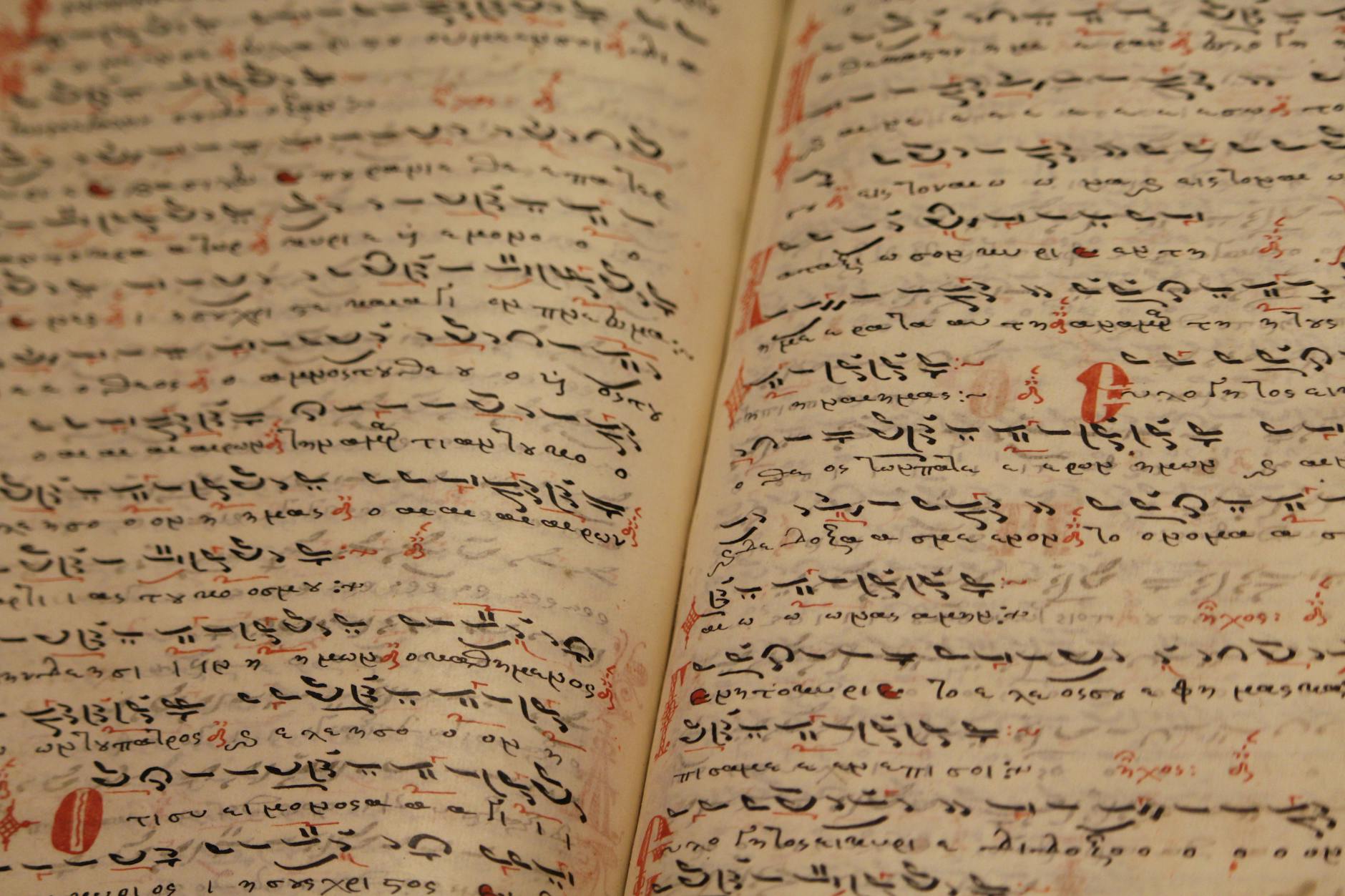
The main obstacle is obvious: sound recording technology only dates from the 19th century. For earlier periods, linguists cannot simply press play and listen.
That means pronunciation from older stages of language has to be inferred. To infer something is to work it out indirectly from clues. In this case, the clues come mainly from written texts and from formal features of literature.
Written texts are indirect evidence, not perfect evidence. Spelling does not always match pronunciation exactly, and historical writers did not all follow one standard system. In earlier periods, spelling could reflect regional pronunciation or even personal preference. That makes the job harder.
Still, old writing preserves patterns. If a certain sound was consistently represented in a certain way, or if spellings begin to shift over time, that can suggest a pronunciation change. Orthography, meaning spelling conventions, may not tell the whole story, but it often leaves useful fingerprints.
How rhyme and rhythm preserve pronunciation clues
Poetry can act like a fossil bed for sound.
Rhyme is especially valuable because it shows which word endings sounded alike to writers and audiences at a given time. If two words were treated as a rhyme in older verse, that suggests their pronunciation was closer then than it may be now.
Rhythm can help too. Patterns of meter and stress may reveal how syllables were counted or emphasized. A syllable is a beat-like unit in a word, and shifts in pronunciation can affect how many syllables a word seems to have, or where the stress falls.
These are not magical shortcuts. Poets can bend language, and writing conventions can mislead. But when rhyme and rhythm line up with other evidence from spelling or related languages, they become powerful indicators of earlier sound patterns.
Comparative reconstruction: working backward through related languages
One major method for recovering lost sounds is comparative reconstruction. This means comparing related languages and using their similarities and differences to infer features of an earlier ancestor language.
If several languages belong to the same language family, they are understood to descend from a common ancestor. A language family is a group of languages that are genetically related, meaning they developed from the same earlier language, not that they are biologically inherited.
By comparing corresponding words across related languages, linguists can identify recurring sound relationships. If the same correspondence appears again and again, it may point to an older sound from which the newer forms developed.
This method does not produce a recording of the past. It produces a hypothesis: a carefully reasoned model of what an earlier system may have looked like. The power of the method comes from repeated patterns, not isolated guesses.
Comparative reconstruction became possible in part because the regularity of sound change gave linguists confidence that these repeated correspondences meant something real. If related languages differ in systematic ways, those differences can be traced backward.
Internal reconstruction: finding older stages inside one language
A second method is internal reconstruction. Instead of comparing several related languages, this approach looks at patterns within a single language and uses irregularities or alternations to infer an older form.
An alternation is a recurring difference in form, such as one sound appearing in one version of a word and a different sound appearing in another related version. When a language contains these patterned mismatches, they can suggest that an earlier stage was more regular and later changes disrupted the surface pattern.
Internal reconstruction is especially valuable when there is little comparative evidence available, or when researchers want to refine a picture already suggested by comparison with related languages.
Like comparative reconstruction, it does not claim certainty. It proposes the most economical explanation for the patterns visible in the language as it survives.
Why these methods work at all
Both comparative reconstruction and internal reconstruction depend on the idea that language change leaves tracks. Even if the original speech is gone, later forms often preserve structured evidence of earlier forms.
This is one reason historical linguistics is more than educated guesswork. Researchers are not imagining ancient sounds freely. They are using methodologies built to extrapolate backward from known languages to unattested ones.
An unattested language is a language for which there is no direct written record. It may be completely lost in documentary terms, yet still partially recoverable through the descendants it left behind.
That does not mean every detail can be recovered. The exact course of a sound change can be hard to determine, and in many cases there is genuine uncertainty. But uncertainty is not the same as helplessness. The evidence is indirect, yet often surprisingly rich.
Sound change as part of broader language change
The recovery of vanished sounds makes more sense when placed in the bigger story of language change. Pronunciation shifts are only one type of change. Languages also borrow words and constructions from one another, create new expressions for greater expressiveness, reshape forms by analogy, and alter meanings over time.
Some changes are encouraged by economy, the tendency for speech communities to balance efficiency and effort while still communicating successfully. That pressure can lead to phonetic reduction, where speech forms become shorter or less fully articulated.
Other changes emerge through language contact, migration, social prestige, or imperfect learning. Sociolinguistics emphasizes that change happens in communities, not in a vacuum. A new form may begin in one subgroup and spread until it becomes accepted as the norm.
All of this helps explain why reconstructing older pronunciation requires care. Sound change is patterned, but it unfolds in real societies shaped by variation, status, and contact.
Why old spellings can mislead modern readers
Many people assume spelling is a stable mirror of speech. Historical linguistics shows that this is often false. Standardized spelling developed gradually, and before widespread standardization there was much more visible variation.
That is why texts from earlier centuries may look strange to modern readers. The differences are not always signs of carelessness. They may reflect local pronunciation, the absence of fixed orthographic rules, or individual habit.
For linguists, that inconsistency is both a challenge and a clue. A single spelling variant may prove little, but repeated spellings across texts and regions can reveal broader patterns of pronunciation.
Reconstructing voices without pretending certainty
The most impressive thing about this field is not that it claims perfect access to the past. It is that it can recover so much while openly working with incomplete evidence.
Historical linguists cannot hear ancient speakers directly. But they can examine regular sound correspondences, old spellings, poetic rhyme and rhythm, and structural patterns within and across languages. With those tools, they can formulate serious hypotheses about sounds that were never recorded.
In that sense, vanished speech is not entirely gone. The voices themselves have disappeared, but their patterns still echo through writing, through descendants, and through the systematic nature of language change.
Why it matters
Recovering lost sounds is about more than pronunciation trivia. It shows that language has a history, that change is normal, and that even deeply vanished stages of speech can leave evidence behind.
It also challenges the idea that language change is decay or corruption. Modern linguistics does not treat new forms as inherently good or bad. Change is simply part of what living languages do. Over time, enough changes can accumulate that a descendant language becomes very different from its ancestor.
That long arc is exactly what makes reconstruction possible. Every shift leaves traces, and when those traces are studied carefully, linguists can do something remarkable: they can listen, indirectly, to languages no one has heard for centuries.
Sources
Based on information from Language change.
More like this
More about history
More about language
Hear the echoes of lost languages — download DeepSwipe and let your daily scroll reconstruct your brain, one smart swipe at a time.