Full article · 7 min read
Visual Arts: How Drawing Began
Drawing is one of humanity’s oldest image-making tools
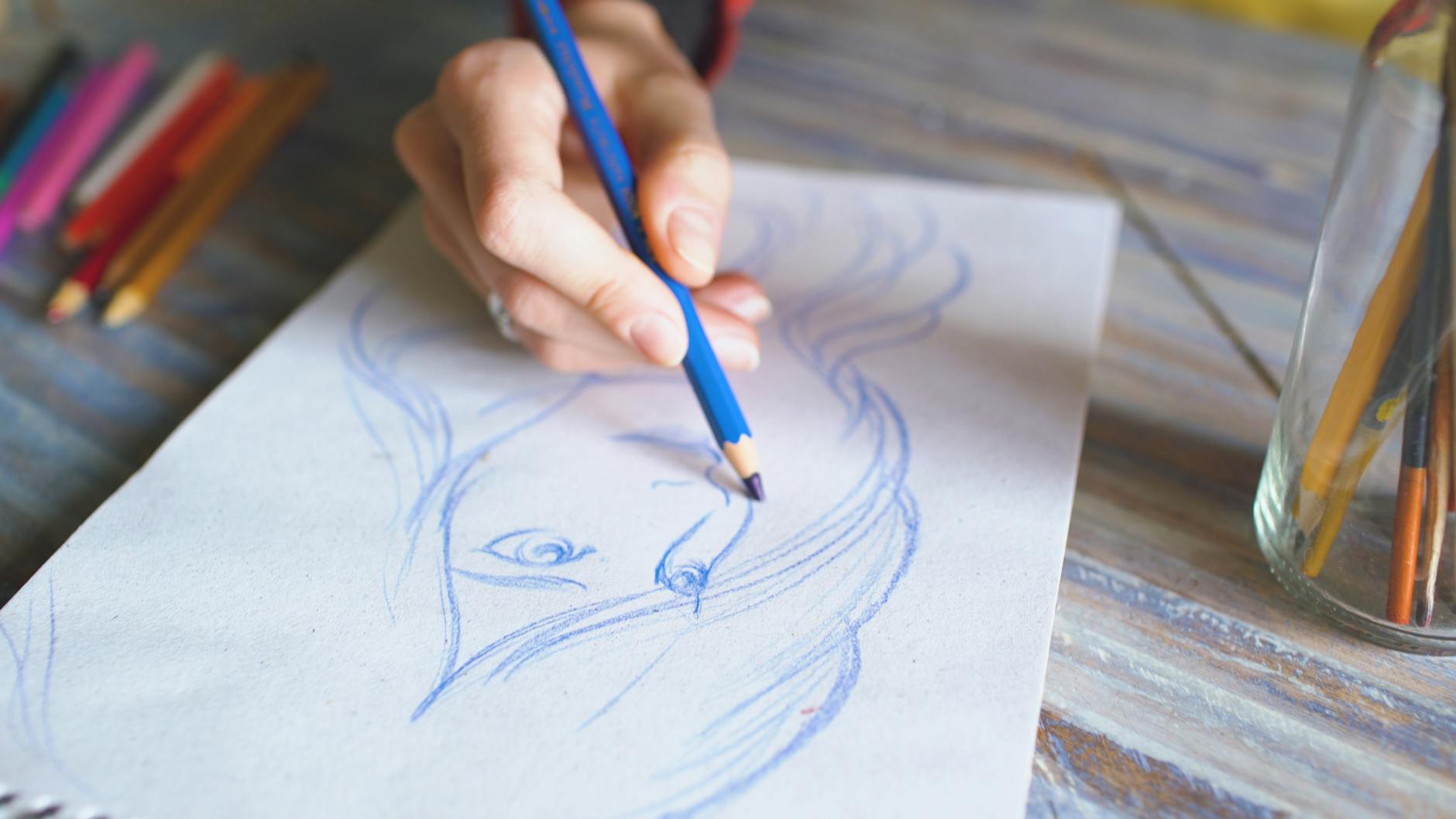
Drawing feels simple: make a mark on a surface and turn that mark into an image. But that simple act reaches back tens of thousands of years. Among the visual arts, drawing stands out as one of the oldest and most direct ways people have represented the world around them.
Drawing generally means making an image, illustration, or graphic by applying pressure with a tool or moving a tool across a surface. That can include dry media such as graphite pencils, pen and ink, inked brushes, wax color pencils, crayons, charcoals, pastels, and markers. Today, digital pens and styluses can also simulate these effects, showing how the basic idea of drawing has remained stable even as technology changes.
An artist especially skilled in drawing is sometimes called a draftsman or draughtsman. The term may sound old-fashioned, but it points to a long tradition of valuing precise, expressive mark-making as a distinct skill.
The earliest drawings were far older than writing
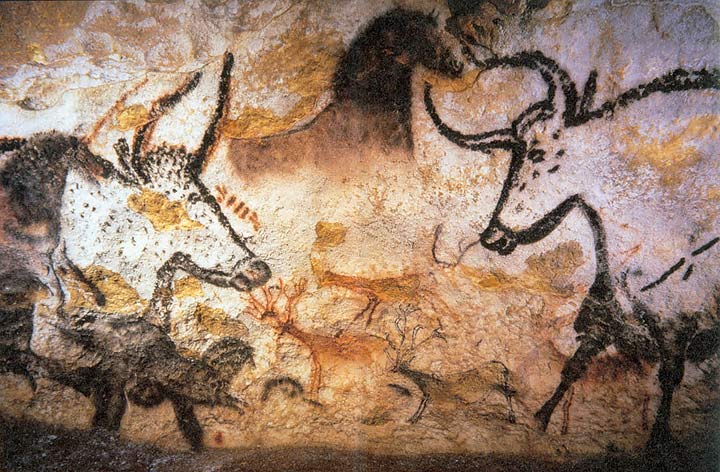
The history of drawing begins long before paper, museums, or formal art training. Art from the Upper Paleolithic includes figurative art beginning at least 40,000 years ago. “Figurative” means art that represents recognizable subjects, such as animals or people, rather than only abstract forms.
Even older are non-figurative cave paintings made from hand stencils and simple geometric shapes. A hand stencil is created by placing a hand against a surface and applying pigment around it, leaving behind the outline or negative shape of the hand. Geometric shapes are simple forms such as lines, circles, angles, or repeated patterns. These early images suggest that the urge to leave marks, signs, and visual traces is deeply rooted in human history.
Paleolithic cave representations of animals have been found in places including Lascaux in France, Altamira in Spain, Maros in Sulawesi in Asia, and Gabarnmung in Australia. These sites show that early image-making was not limited to one region. Long before the modern idea of “art” existed, people were already using lines, forms, and surfaces to record what they saw or imagined.
Early drawing was often practical as well as creative
One of the most interesting things about the beginnings of drawing is that it was not always treated as a separate, elevated art form. In ancient Egypt, ink drawings on papyrus often depicted people and were used as models for painting or sculpture. Papyrus was a writing material used in ancient Egypt, made into sheets that could carry text or images.
This means drawing often had a planning function. Before a sculpture was carved or a painting completed, a drawn image could guide the process. In that sense, drawing was both a creative act and a practical one. It helped artists test forms, organize scenes, and communicate visual ideas.
Ancient Greek vase drawing followed a different path. Drawings on Greek vases began as geometric decoration and later developed into human figures, especially with black-figure pottery during the 6th century BC. This shift from abstract pattern to the human form reveals something important about drawing’s power: a few controlled lines can move from pure design into storytelling and representation.
What a drawing can do with just a line
A drawing may look minimal compared with painting or sculpture, but it can achieve a surprising amount. The main techniques named for drawing include line drawing, hatching, crosshatching, random hatching, shading, scribbling, stippling, and blending.
These terms describe different ways of creating depth, texture, tone, and energy:
Line drawing
Line drawing relies mainly on outlines and contours. It is one of the clearest and most fundamental forms of drawing, making it ideal for showing shape and structure.
Hatching and crosshatching
Hatching uses parallel lines to suggest shade or volume. Crosshatching layers lines in different directions to deepen shadow and create richer tonal variation.
Shading and blending
Shading builds the illusion of light and shadow, helping flat marks appear three-dimensional. Blending softens transitions between tones.
Stippling and scribbling
Stippling uses dots to build image and tone. Scribbling may sound casual, but it can be a deliberate way to create movement, energy, or texture.
What all of these methods share is the ability to make a flat surface feel alive. A line can describe an edge, suggest motion, create pattern, or imply weight. That is part of why drawing has remained so central across time.
Paper changed drawing’s place in art history
As paper became more common in Europe by the 14th century, drawing was increasingly adopted by major artists. This was a turning point. Once suitable surfaces became more available, drawing could flourish not only as preparation for other artworks but also as a valued practice in itself.
Masters such as Sandro Botticelli, Raphael, Michelangelo, and Leonardo da Vinci used drawing extensively. Some of them treated drawing as an art in its own right rather than merely a preparatory stage for painting or sculpture. That shift matters because it changed how people understood the act of drawing. A sketch was no longer only a step on the way to something else. It could be the finished expression.
Leonardo da Vinci is especially associated with this elevated view of drawing. His name often symbolizes the moment when drawn observation, invention, and design were recognized as major artistic achievements.
Drawing sits at the foundation of the visual arts
The visual arts include many forms, from painting and sculpture to photography, printmaking, filmmaking, design, crafts, and architecture. Even within that wide field, drawing has a special role because it often underlies the others.
A painter may begin with a drawn composition. A sculptor may sketch an idea before shaping clay, stone, metal, glass, or wood. Architects plan structures through drawn designs. Printmakers create images on a matrix before transferring them to paper or another flat surface. In many cases, drawing is not just one art form among many; it is a basic visual language shared across them.
That helps explain why drawing has lasted so long. It is adaptable. It can be monumental, as in cave imagery on rock surfaces, or intimate, as in ink on papyrus or pencil on paper. It can be loose and exploratory or exact and formal.
Training the hand and the eye
For much of history, training in the visual arts happened through apprentice and workshop systems. In Europe, the Renaissance helped increase the prestige of the artist and contributed to the rise of the academy system for training artists. Today, many people who pursue careers in the arts study in art schools at tertiary levels, and visual arts have become an elective subject in most education systems.
This educational history matters for drawing because drawing is often one of the first ways artists learn to see carefully. It develops observation, control, and visual understanding. Even in traditions where other practices were emphasized, mark-making remained central. In East Asia, for example, arts education for nonprofessional artists often focused on brushwork, and calligraphy held a highly respected place.
Brushwork and calligraphy are not identical to drawing, but they share key qualities with it: the importance of the hand, the expressive power of a mark, and the ability of a stroke to communicate far more than its size might suggest.
From caves to digital tablets
One of the most remarkable things about drawing is how recognizable it remains across very different eras. The tools have changed dramatically, but the basic action has not. Early people used cave walls. Ancient Egyptians used papyrus. European masters drew on paper. Today, artists may use a digital pen or stylus on a screen.
Yet across all of these shifts, drawing still means forming an image through marks. The support changes. The instrument changes. The texture, speed, and convenience change. But the core act stays familiar.
This continuity also helps explain why drawing still feels immediate. Compared with many other visual arts, it often requires very little equipment to begin. A surface, a tool, and a hand are enough to create something meaningful.
Why drawing still matters
Drawing has survived because it combines simplicity with endless flexibility. It can record what is seen, plan what will be made, or stand alone as a finished work. It can be figurative, showing animals or people, or non-figurative, using stencils and geometric forms. It can serve religion, design, storytelling, study, or pure expression.
From Paleolithic cave images to Renaissance masters and modern digital tools, drawing has remained one of the clearest examples of how a human mark can become an idea, an object, or a work of art. One line can define a body, map a thought, or suggest a whole world.
That is the enduring magic of drawing: one simple act, repeated across tens of thousands of years, with endless results.
Sources
Based on information from Visual arts.
More like this
From cave walls to touchscreens, drawing never stopped evolving—download DeepSwipe and sketch out your daily dose of knowledge.