Full article · 8 min read
World War I: Why Trenches Ruled the Western Front
When people picture World War I, they often imagine a scar across Europe: miles of mud, barbed wire, shell craters, and men packed into trenches. That image is so powerful because it captures the central problem of the Western Front. The war began in 1914 with plans for swift movement and decisive victories, but it hardened into a brutal deadlock stretching from the English Channel to Switzerland.
What made trenches so dominant was not one invention alone, but a deadly combination of defensive technologies and battlefield conditions. Open warfare, with soldiers advancing across exposed ground, became catastrophically costly. The result was a new kind of industrialized stalemate that shaped some of the most infamous battles in history.
Why armies went underground
Before the trench system fully formed, both sides still hoped for quick success. Germany launched a major offensive through Belgium and France, and by the end of August 1914 the Allied left was retreating. But after the First Battle of the Marne in September, exhausted armies failed to land a decisive blow. They then tried to outflank one another in a series of moves later called the “Race to the Sea.”
By the end of 1914, that contest had produced an almost uninterrupted line of entrenched positions from the Channel to the Swiss border.
The reason was grimly simple: modern firepower had made exposed movement too dangerous. Barbed wire slowed advancing infantry and funneled them into killing zones. Machine guns allowed defenders to fire rapidly at attacking troops. Artillery battered formations before they could even reach enemy lines. Together, these tools made mass infantry assaults extraordinarily difficult.
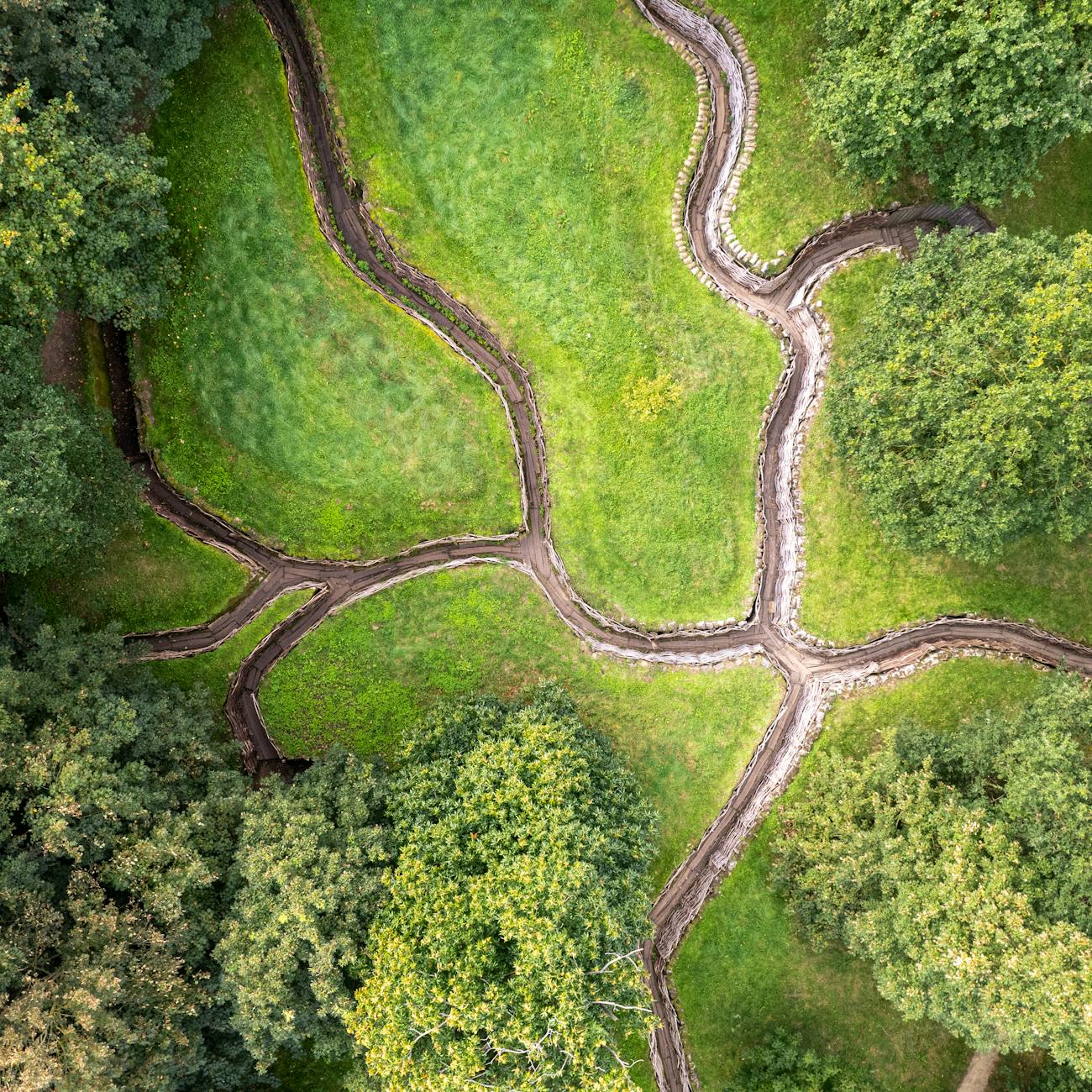
Because of this, trenches were not just shelters. They became the backbone of entire defensive systems. Once armies dug in, they could survive bombardment better, hold ground more effectively, and force attackers to cross open land under devastating fire.
The geography of stalemate
The Western Front was especially suited to trench warfare. Once the lines stabilized, defenders could improve their positions over time. The Germans generally held the high ground, and their trenches tended to be better built. French and British trenches, by contrast, were initially seen as temporary positions, because their commanders still hoped an offensive would soon smash through German defenses.
That breakthrough never came easily.
The basic problem was that attacking armies had to reveal themselves, while defenders could remain protected and prepared. Even when attackers gained ground, they often lacked the strength to exploit it before the enemy reinforced the line. This is why so many offensives won yards or miles at such staggering cost.
The technology that made trench warfare so lethal
Several technologies worked together to make trench warfare dominant.
Barbed wire
Barbed wire was cheap, simple, and cruelly effective. It blocked or slowed infantry attacks, leaving soldiers trapped in front of enemy positions. A force that could not move quickly became an easy target for rifle fire, machine guns, and artillery.
Machine guns
Machine guns transformed defense. Instead of relying only on lines of riflemen, defenders could pour rapid fire into advancing troops. Tactics that had emphasized open battle and individual riflemen were suddenly obsolete.
Artillery
Artillery became one of the defining weapons of the war. It was capable of smashing ground, fortifications, and human bodies on a huge scale. By 1917, artillery fire was commonly directed indirectly using new methods for spotting and ranging, including aircraft and the field telephone. On the Western Front, artillery was central to both defense and attack, but it did not automatically restore mobility.
Chemical weapons
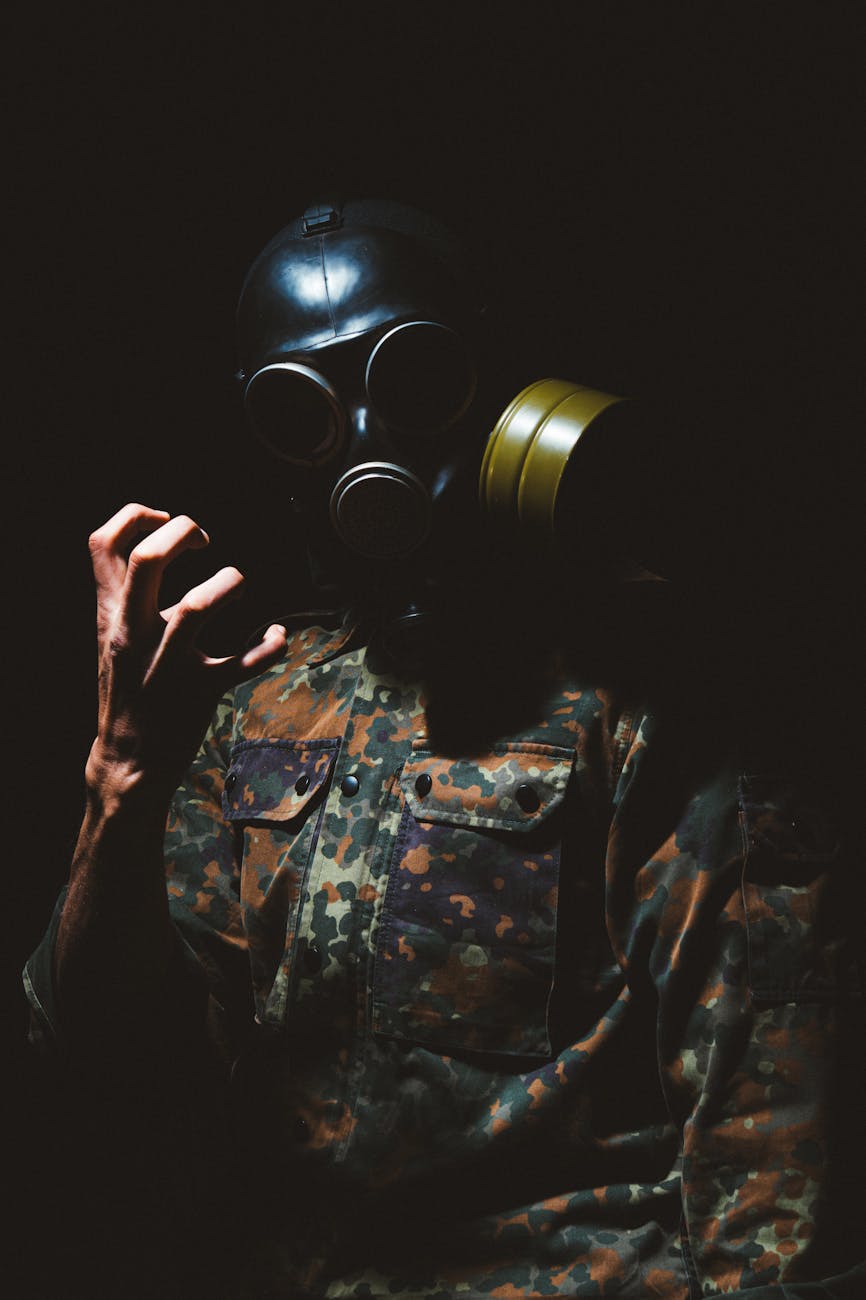
On 22 April 1915, at the Second Battle of Ypres, the Germans used chlorine gas for the first time on the Western Front, violating international agreements made at The Hague. Chlorine is a poisonous gas that attacks the lungs and can cause choking and suffocation. Its use shocked contemporaries and showed how science was being turned toward increasingly terrifying methods of war.
Chemical weapons were later deployed by all major belligerents during the war, inflicting about 1.3 million casualties, around 90,000 of them fatal. Yet gas, for all its horror, did not break the trench deadlock by itself.
Tanks
Eventually, the tank helped make the front more mobile. Tanks were armored fighting vehicles designed to cross difficult ground and help breach entrenched positions. But they were only one part of a larger tactical evolution. New tools alone could not instantly solve the enormous defensive advantage built into trench systems.
Ypres: when science turned poisonous
The Second Battle of Ypres became one of the war’s defining moments because it showed how far the conflict had moved beyond older rules of warfare. The German release of chlorine gas was not just a tactical innovation; it was a symbol of escalation.
The Hague rules were international agreements intended to set laws for war. The use of chlorine gas on the Western Front violated those rules. That mattered because it revealed a harsh reality of World War I: once the war became a struggle for survival and advantage, restraints often gave way.
Ypres also captured the broader truth of trench warfare. Even shocking new weapons did not necessarily produce decisive victories. Instead, they often made the battlefield even more nightmarish while preserving the same underlying stalemate.
Verdun: a symbol of endurance and slaughter
In February 1916, the Germans attacked French defensive positions at Verdun. The battle lasted until December 1916 and became one of the most famous and devastating clashes of the war.
Verdun turned into a symbol of French determination and self-sacrifice. Casualties for the two sides together are given as somewhere between 700,000 and 975,000. The sheer scale of the losses explains why Verdun has become shorthand for attrition, a form of warfare in which victory is sought by wearing down the enemy through continuous losses rather than through a dramatic breakthrough.
This is one reason trenches ruled the Western Front: they encouraged battles of endurance instead of swift campaigns of movement. Armies could defend stubbornly, absorb terrible punishment, and still remain in the field.
The Somme: the cost of attacking entrenched lines
If Verdun became a symbol of endurance, the Somme became a symbol of the price of attack. The Battle of the Somme was an Anglo-French offensive fought from July to November 1916.
Its opening day, 1 July 1916, remains the bloodiest single day in the history of the British Army. Britain suffered 57,500 casualties, including 19,200 dead, in just that first day.
Overall, the Somme caused an estimated 420,000 British casualties, 200,000 French casualties, and 500,000 German casualties.
Those numbers reflect the central logic of trench warfare. Defenders in prepared positions could inflict massive losses. Attackers, even when supported by artillery and large troop numbers, often struggled to translate sacrifice into decisive success.
Life in the trenches: the unseen killer
The trench system did not only kill through bullets and shells. It also created perfect conditions for disease and infection.
The living conditions were filthy, cramped, and exhausting. Men stood in mud, endured poor sanitation, and lived close together for long periods. In such an environment, disease spread easily. Among the illnesses associated with trench life were trench foot, lice, typhus, trench fever, and the Spanish flu.
Trench foot was a painful condition caused by prolonged exposure of the feet to cold and wet conditions. Lice are tiny parasitic insects that live on the body and clothing and can spread disease. Typhus is a serious infectious disease often associated with lice. Trench fever was another disease linked to lice-infested conditions among troops.
These were not minor discomforts. Disease was a major killer on both sides.
The Spanish flu and the war’s crowded world
The Spanish flu pandemic spread in the final year of the war and was accelerated by the movement of large numbers of soldiers, often crowded together in camps and transport ships with poor sanitation. That made the war itself a major factor in the pandemic’s deadly reach.
The Spanish flu killed at least 17 to 25 million people worldwide, including an estimated 2.64 million Europeans and as many as 675,000 Americans.
This helps explain why trench warfare cannot be understood only through battles. The Western Front was also part of a wider wartime system of mass mobilization, mass transport, and mass suffering.
Why trenches lasted so long
The trench deadlock endured because neither side could easily combine enough firepower, protection, speed, and coordination to break through and stay through. Defenders had the advantage. Attackers could batter the line, but once they moved forward, they became vulnerable themselves.
Both sides searched constantly for answers through science and technology. Artillery methods improved. Chemical weapons were introduced. Tanks appeared. Aircraft developed from reconnaissance tools into more active weapons of war. But for years, none of these was enough on its own to end the logic of entrenched defense.
That is why the Western Front became the defining image of World War I: a place where industrial power, modern weapons, and human endurance collided in a landscape of mud and wire.
The legacy of the trench war
The trench battles of World War I left more than wrecked land and casualty lists. They changed how people thought about war itself. The conflict became associated with mechanized slaughter, exhaustion, and the collapse of older heroic ideas of battle.
Verdun, the Somme, and Ypres endure in memory because they reveal the essence of the Western Front. Trenches ruled not because generals loved them, but because the battlefield made them necessary. In a world of machine guns, artillery, barbed wire, poison gas, and constant bombardment, digging in was often the only way to survive.
And survival, on the Western Front, was never guaranteed.
Sources
Based on information from World War I.
More like this
Dig deeper than the trenches—download DeepSwipe and march through history one brilliant swipe at a time.