Hunting What Cannot Be Seen
Black holes themselves emit almost no light. To prove they exist, astronomers must infer their presence from the havoc they wreak on their surroundings and from the faint ripples they send through spacetime.
X‑Ray Binaries: Eating Companions in the Dark
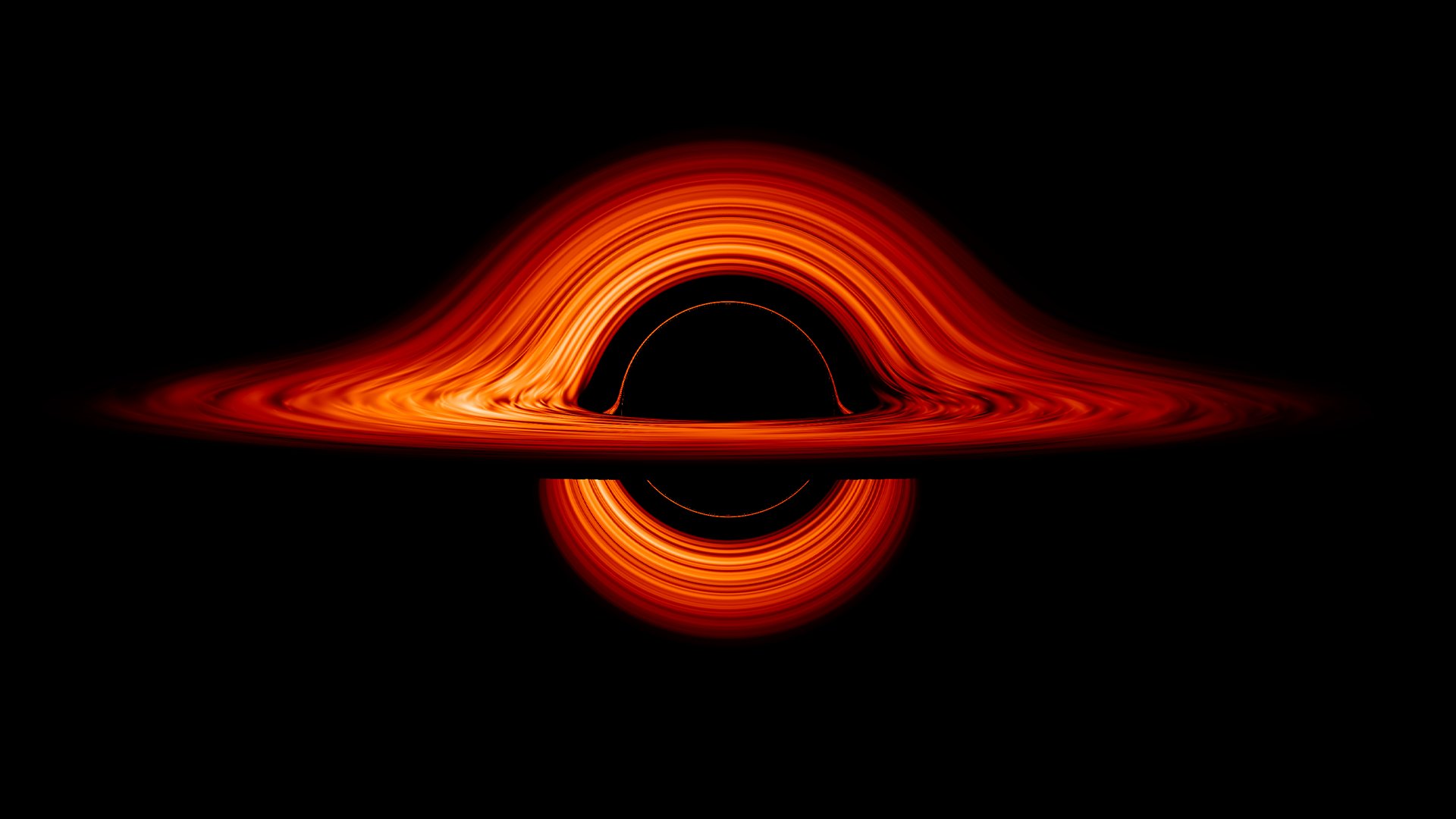
One key clue comes from X‑ray binaries: systems where a normal star orbits an unseen compact object. Gas pulled from the star forms an accretion disk around the dark companion, heating up and shining in X‑rays.
By measuring the companion star’s motion—its orbital period, distance, and mass—astronomers can estimate the mass of the invisible partner. If this mass exceeds the maximum possible for a neutron star (set by the Tolman–Oppenheimer–Volkoff limit), the object is almost certainly a black hole. Cygnus X‑1, with a compact object about 14 times the Sun’s mass, became the first widely accepted example.

Stars Dancing Around Sagittarius A*
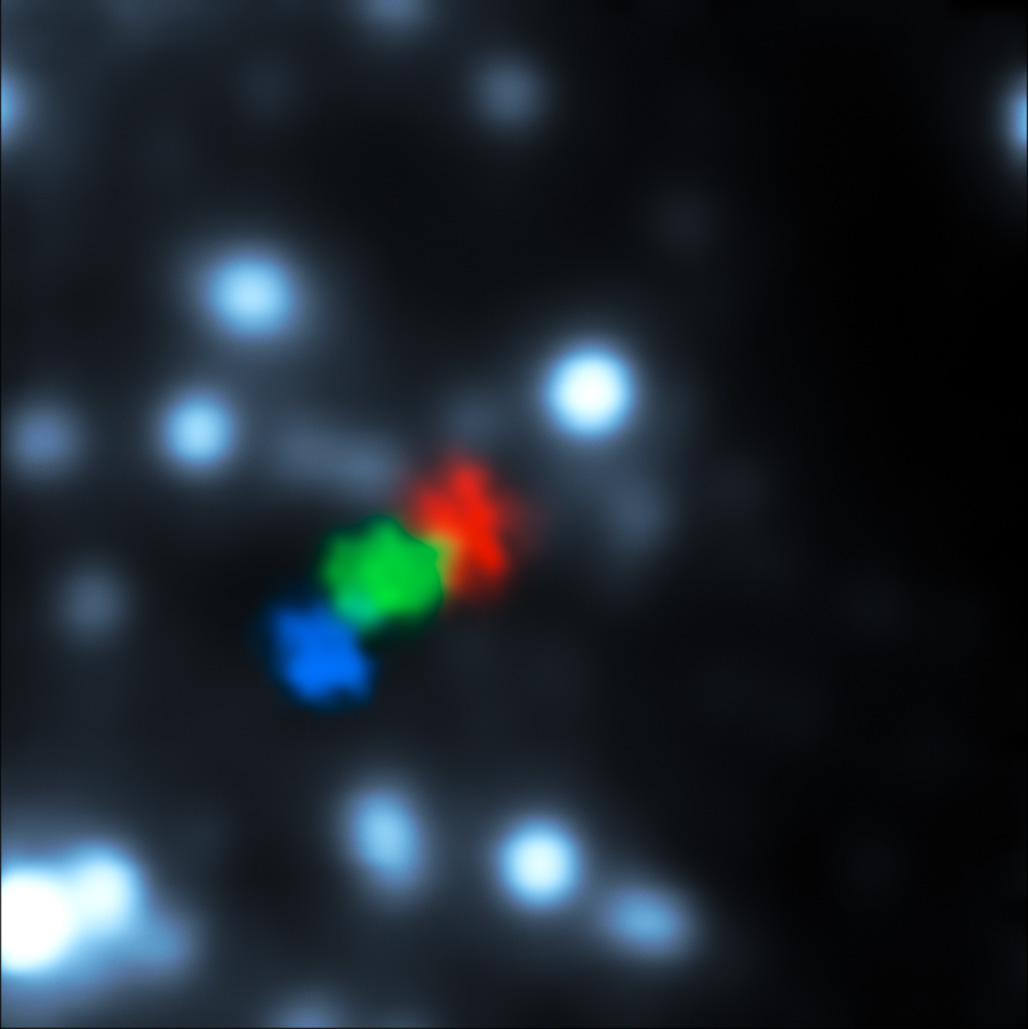
At the heart of the Milky Way, dozens of stars whip around an invisible point coincident with the radio source Sagittarius A*. One star, S2, has been tracked through a complete orbit. By fitting these motions to Keplerian orbits, astronomers deduce an unseen mass of about 4.3 million Suns packed into a region smaller than 0.002 light‑years.
No known cluster of ordinary objects can be that dense and dark without collapsing. Combined with the extremely low luminosity of the source and, more recently, horizon‑scale imaging, this makes a supermassive black hole the only plausible explanation.
Seeing the Shadow: Earth as a Telescope
To directly glimpse the immediate surroundings of a black hole, astronomers built the Event Horizon Telescope (EHT), a global network of radio dishes that together create an Earth‑sized virtual telescope. This instrument has captured the shadow of the supermassive black holes in galaxy M87 and at the centre of our own galaxy.
These images show a dark patch—the black hole shadow—ringed by glowing emission from hot gas just outside the photon sphere. Their size and shape match predictions from general relativity for black holes of the masses inferred by other methods.
Listening to Mergers with Gravitational Waves
Another line of evidence comes from gravitational‑wave observatories like LIGO and Virgo. They send laser beams down kilometre‑long arms and measure minute changes in arm length as passing gravitational waves stretch and squeeze spacetime.
In 2015, they detected a signal—GW150914—that matched the merger of two black holes about 30 and 35 times the Sun’s mass, 1.4 billion light‑years away. Since then, hundreds of similar events have been observed, revealing a population of stellar‑mass black holes and confirming that they collide and merge as predicted.
Microlensing: The Invisible Lens
Even isolated black holes can betray themselves. When such a compact mass passes in front of a distant star, its gravity acts as a lens, briefly brightening the star in a phenomenon called microlensing. In 2022, astronomers reported the first confirmed isolated stellar black hole using this method and measured its mass.
A Converging Case
Each technique—stellar orbits, X‑ray binaries, gravitational waves, direct imaging, microlensing—has its own assumptions and uncertainties. Yet they all point in the same direction: the universe is filled with invisible objects whose properties match black holes astonishingly well.