Generals in the Driver’s Seat
By the late 1920s, Japan’s democratic experiment was faltering. Left‑wing groups had been crushed, and radical right‑wing nationalists—especially within the army—were on the rise.
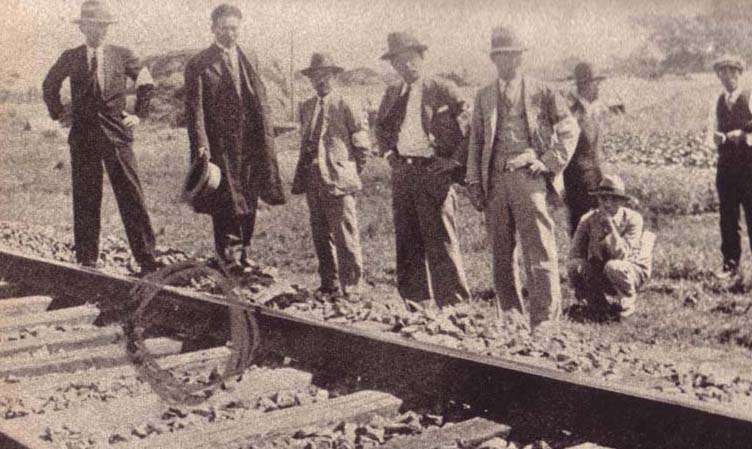
In 1931, officers of the Kwantung Army staged the Manchurian Incident, bombing their own South Manchuria Railroad and blaming Chinese saboteurs. Using this as a pretext, they invaded and conquered Manchuria, setting up the puppet state of Manchukuo—without permission from Tokyo.
International outrage pushed Japan out of the League of Nations, but the army’s prestige soared. When Prime Minister Inukai Tsuyoshi tried to curb the military, extremists assassinated him in 1932. By 1940, most political parties were folded into the Imperial Rule Assistance Association. Civilian party government was effectively dead.
War Without End in China
In 1937, Japan escalated its conflicts in China into full‑scale war. Japanese forces captured Nanjing, then carried out one of the century’s most notorious atrocities: the Nanjing Massacre.
Yet despite early victories, Japan failed to break the Chinese government of Chiang Kai‑shek. The conflict bogged down into a brutal stalemate, even as Tokyo proclaimed a lofty goal: the Greater East Asia Co‑Prosperity Sphere, a pan‑Asian union under Japanese leadership.

Sanctions and Alliances
The United States recoiled at Japan’s aggression, tightening economic sanctions designed to choke off vital resources. Japan responded by signing the Tripartite Pact with Nazi Germany and Fascist Italy in 1940, deepening the divide with Washington.
In 1941, after Japan occupied the remainder of French Indochina, the U.S., Britain, and the Netherlands froze Japanese assets. Oil supplies were at stake. Within the Japanese government, led by Prime Minister Tojo Hideki, the choice narrowed: retreat—or war.
Pearl Harbor and Rapid Conquest
On 7 December 1941, Japanese carriers launched a surprise attack on Pearl Harbor, crippling much of the U.S. Pacific Fleet and bringing America into World War II.
Japanese forces surged across Asia and the Pacific, capturing the Philippines, British Malaya, Singapore, Burma, Hong Kong, and the Dutch East Indies. For a brief moment, the empire’s expansion seemed unstoppable.
Turning Tides and Fanatic Resistance
The illusion shattered at Midway in June 1942, when U.S. forces sank four Japanese carriers. Brutal campaigns like Guadalcanal followed, with Japan steadily losing ground.
On land and sea, Japanese forces became infamous for their ferocity. War crimes multiplied: systematic mistreatment of prisoners, massacres, human experimentation, forced sexual slavery, and use of chemical and biological weapons. Units often fought to near annihilation, launching banzai charges and, by 1944, deploying kamikaze suicide pilots against Allied ships.
At home, rationing, blackouts, and censorship tightened. When the U.S. captured Saipan in 1944, America gained bases close enough to launch massive bombing raids. Firebombing campaigns burned out over half the area of Japan’s major cities.
The Battle of Okinawa in 1945 was apocalyptic: 115,000 soldiers and 150,000 Okinawan civilians died. The super‑battleship Yamato was sunk in a desperate suicide mission.
Atomic Endings
On 6 August 1945, a single American bomber dropped an atomic bomb over Hiroshima, killing over 70,000 people instantly. Three days later, the Soviet Union declared war on Japan and invaded Manchukuo, and a second atomic bomb leveled Nagasaki, killing around 40,000.
Faced with nuclear devastation and Soviet advance, Emperor Hirohito intervened. On 15 August 1945, in a historic radio broadcast, he announced Japan’s surrender.
The dream of a vast Japanese empire dissolved in ruins—leaving behind shattered cities, millions of dead across Asia, and a reckoning that would reshape Japan’s politics, memory, and place in the world.