A Tent Government by the Sea
After the Minamoto victory in 1185, Minamoto no Yoritomo chose not to rule from Kyoto’s palaces but from Kamakura, a rugged coastal stronghold in eastern Japan. In 1192, the emperor granted him the title seii tai‑shōgun—shōgun for short.
Yoritomo’s bakufu—literally “tent government”—signaled a new order: military rule. The court in Kyoto remained, but as a weakened ceremonial center; real power rested with the shogun and his samurai vassals.
Puppet Shoguns and Quiet Regents
Yoritomo’s own family soon lost their grip. After his death in 1199, his widow, Hōjō Masako, and her father Hōjō Tokimasa turned Minamoto shoguns into puppets. In 1203, Tokimasa became regent, and from then on, the Hōjō clan ruled through figurehead shoguns.
They appointed loyal vassals as provincial governors—shugo and jitō—creating a decentralized but durable feudal framework. Samurai were empowered to administer justice and maintain order, tying their fortunes to the shogunate.

Typhoons Against an Empire
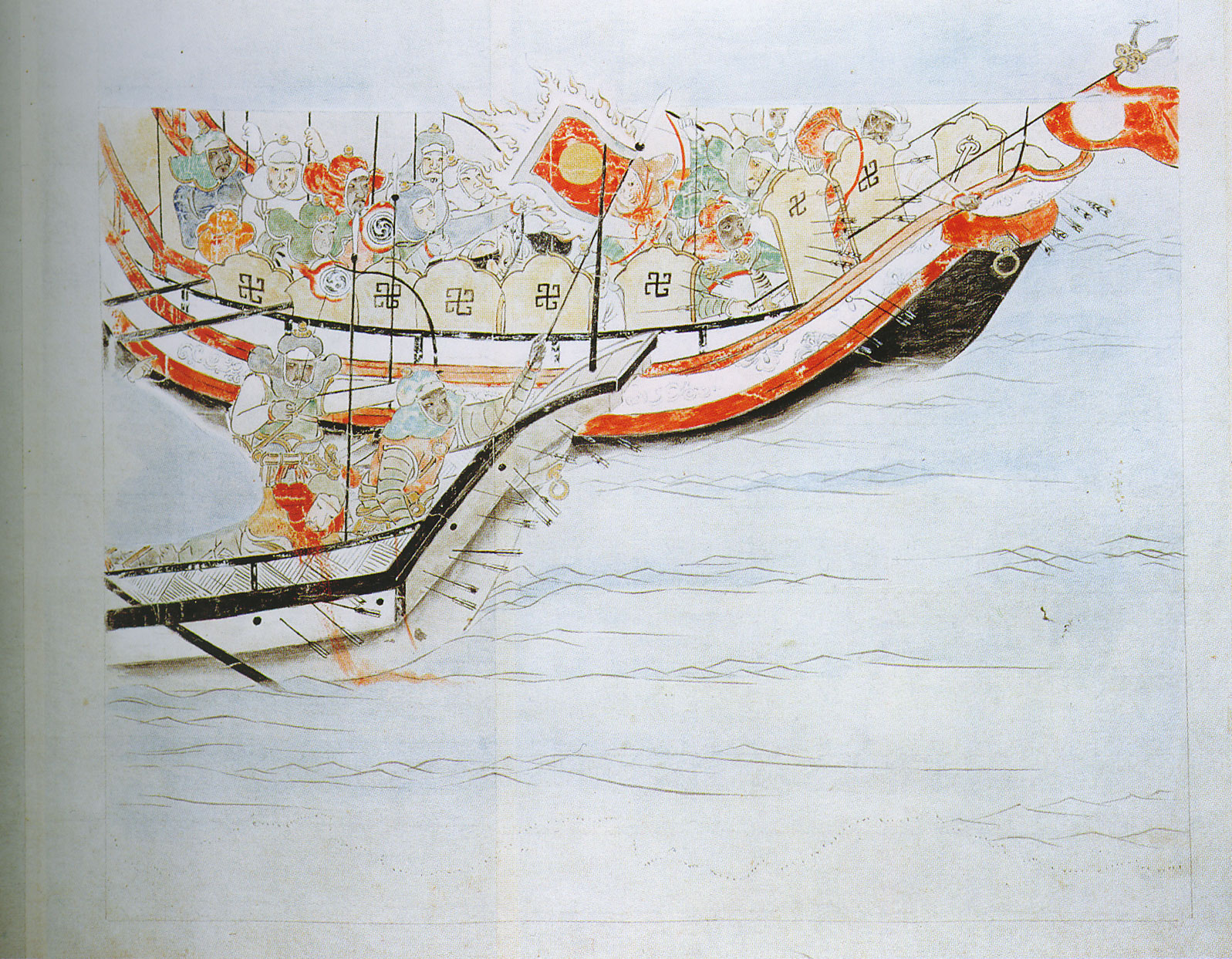
In 1274 and 1281, Kublai Khan’s Mongol Empire launched massive invasions of Japan. Equipped with superior weaponry and vast fleets, Mongol armies clashed with Japanese defenders in Kyushu.
Both times, typhoons smashed the invasion fleets. The storms were hailed as kamikaze—“divine winds”—sent by the gods to protect Japan. The shogunate survived, but victory came at a cost: defense drained its coffers, and with no conquered territory to distribute, the regime could not adequately reward its warriors.
Discontent simmered among the samurai, undermining loyalty to Kamakura.
Restoration that Failed, War that Didn’t
In 1333, Emperor Go‑Daigo tried to seize back power in the Kenmu Restoration. The shogunate dispatched Ashikaga Takauji to suppress him—but Takauji switched sides, helping topple Kamakura.
Go‑Daigo’s attempt at direct imperial rule soon alienated many samurai. When he refused to name Takauji shōgun, Ashikaga forces captured Kyoto in 1338 and installed a rival emperor, Kōmyō, inaugurating a Northern Court. Go‑Daigo fled to Yoshino to maintain a Southern Court. Japan now had two emperors and a new shogunate in Kyoto’s Muromachi district.
Daimyō and the Slide into Anarchy
The Ashikaga shogunate faced a permanent balancing act: crush the Southern Court while keeping ambitious regional governors in line. Over time, these governors began to see themselves as daimyō—feudal lords in their own right—often ignoring Kyoto’s orders.
Ashikaga Yoshimitsu (rising in 1368) came closest to reunifying power, even brokering peace between the Northern and Southern Courts in 1392. But after his death, control slipped. In 1467, a succession dispute sparked the Ōnin War. Rival daimyō turned Kyoto into ashes.
By 1477, the war’s original stakes were almost irrelevant. The shogun was powerless; hundreds of independent domains, led by warlords like Uesugi Kenshin and Takeda Shingen, jostled for dominance. Rebellious peasants and militant Buddhist “warrior monks” fielded their own armies. The Sengoku—Warring States—era had begun.
Shadows in the Night
Amid constant conflict, daimyōs turned to every tool available, including covert agents. The era’s most enduring symbol is the ninja: spies and assassins whose secretive lives left few hard facts but countless legends.
Behind the myths lies a brutal reality: a fractured country where survival could depend as much on stealth and information as on armies in the field.
From Kamakura’s seaside tents to the burning streets of Kyoto, these centuries saw the samurai rise from hired muscle to the uncontested rulers of Japan—until their own rivalries shattered the land they had conquered.