A Landscape of Giants
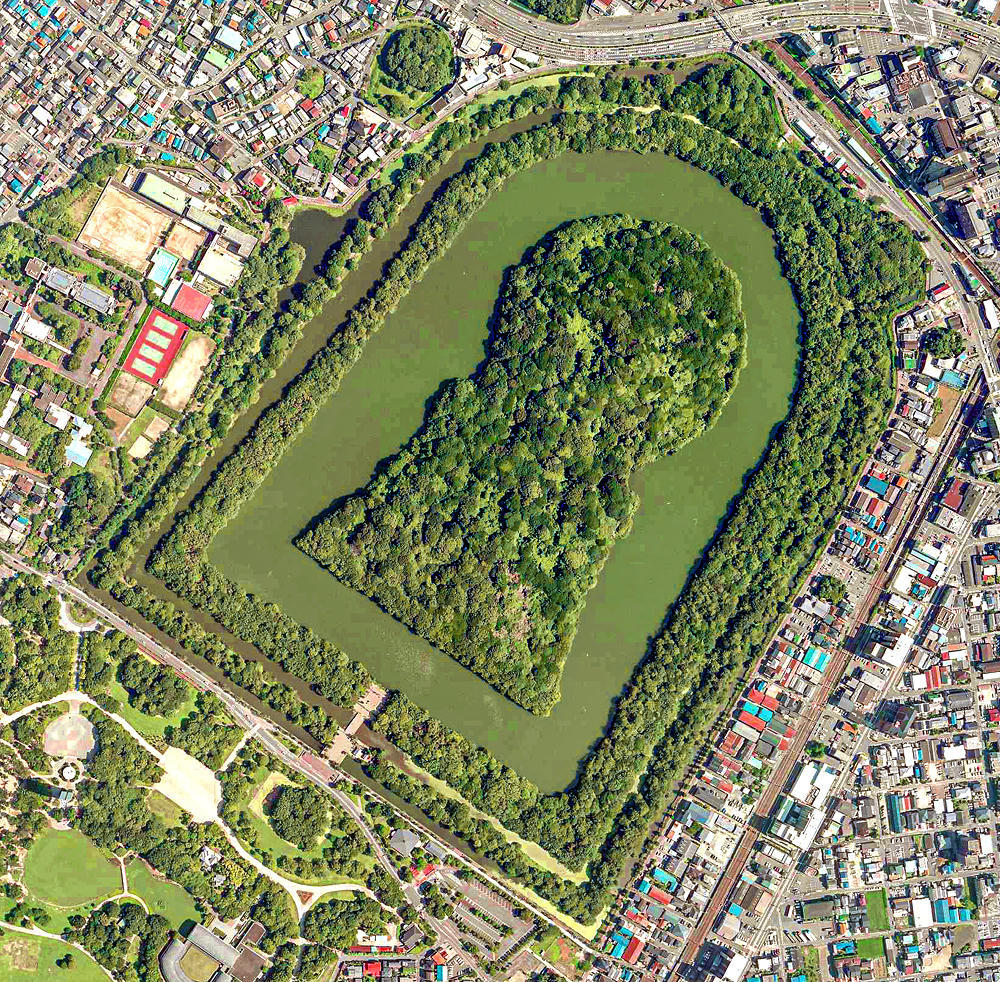
Around the 3rd century AD, enormous mounds began to rise from the Japanese plains. These kofun—earthen burial tumuli—were not subtle. Some stretched nearly half a kilometer, keyhole‑shaped silhouettes carved into the land itself. Building one could take thousands of laborers fifteen years.
The Daisenryō Kofun, commonly associated with Emperor Nintoku, is among the largest. Even today it dominates its surroundings, an artificial hill so vast it forces you to imagine the power of whoever lay within.
Clay Figures in Silent Ranks
Guarding and surrounding many kofun were ranks of haniwa: hollow clay sculptures in the shapes of warriors, horses, houses, and more. They watched over the dead, but they also silently advertise what mattered to the living—mounted warfare, social roles, material wealth.
Such funerary displays tell of elites whose authority and resources dwarfed those of the Yayoi chieftains before them. This was no longer a patchwork of little tribes; something larger was taking shape.

Yamato: A Dynasty Emerges
The political heart of this new order lay in Yamato, in the Kinai region of central Japan. There, a hereditary line of rulers consolidated power, extending their influence across much of the archipelago. This line, identifying as emperors, still reigns in Japan—the longest continuous dynasty in the world.
Conquest played its part, but Yamato’s preferred tool was co‑optation. Local leaders were persuaded to accept Yamato authority in exchange for posts in a growing central government. These allied clans became known as uji, folding regional power into the emerging state.
Looking Across the Sea
Yamato’s rulers understood the value of recognition from established empires. They sought and obtained formal acknowledgment from China; chronicles mention the “Five kings of Wa” sending envoys to the Chinese court.
In return, China and the kingdoms of Korea supplied more than prestige. Craftsmen and scholars brought with them technologies and administrative techniques from the continent. Written records, bureaucratic models, and new crafts filtered into Yamato, accelerating state formation.
A Hidden Civil War
Behind the monumental calm of the kofun age lurked conflict. Historians agree there was intense struggle between the Yamato federation and the Izumo federation centuries before full unification. Though details are murky in later legend, it suggests a Japan where multiple regional powers vied for dominance before Yamato prevailed.
From Tombs to Statecraft
By the end of the Kofun period, Japan had crossed another threshold: from clustered agrarian chiefdoms into a recognizable state, with a central ruling house, a network of subordinate elites, international diplomacy, and a visual language of power carved into the landscape itself.
The keyhole tombs and their clay guardians remain, vast and mute, but they mark the moment when Japan’s rulers began to think in centuries—and to anchor their authority in stone and earth.