Muskets on a Windblown Island
In 1543, a storm‑tossed trading ship landed on Tanegashima, south of Kyushu. Three Portuguese traders stepped ashore—the first Europeans in Japan—and brought with them a weapon that would transform war: the musket.
Within a decade, Japanese daimyōs had incorporated firearms into their armies. By 1556, some 300,000 muskets bristled on Japanese battlefields, radically changing tactics in the age of civil war.
Missionaries and New Believers
Guns were not all the Portuguese carried. In 1549, the Jesuit missionary Francis Xavier arrived in Kyushu, preaching Christianity in a land rich with Shinto shrines and Buddhist temples.
Conversions spread quickly, reaching about 350,000 believers. Some daimyō, like Ōmura Sumitada, even converted and took Christian names—Sumitada became Dom Bartolomeu—and offered harbors to Portuguese traders. Nagasaki grew from a fishing village into a bustling port under Jesuit influence, complete with a chapel and school.

Trade, Treachery, and First Naval Clashes
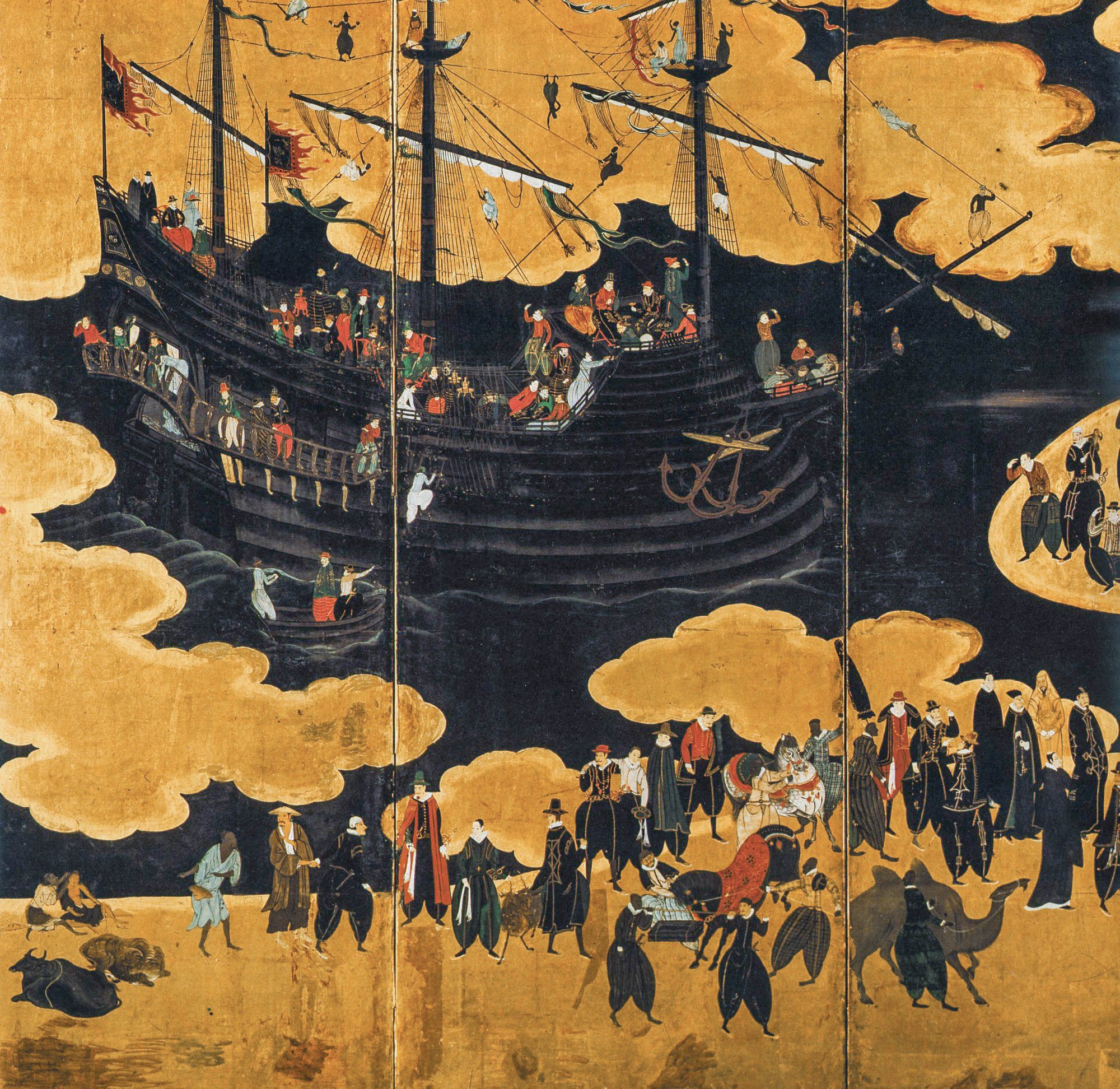
European ships became valuable prizes and partners. Daimyōs vied to host the lucrative “black ships,” sometimes turning foreign cannons on their rivals. In 1561, Ōtomo Sōrin allied with the Portuguese to bombard Moji Castle from the sea—the first recorded foreign naval bombardment of Japan.
Tensions flared too. In 1565, Matsura Takanobu attacked Portuguese vessels at Fukuda Bay in the first known naval battle between Japanese and Europeans, prompting traders to seek safer haven in Nagasaki.
Tokugawa Order—and Closing the Door
By 1600, Tokugawa Ieyasu had unified Japan and would soon become shōgun. The new Tokugawa regime valued stability above all and grew wary of foreign influence—especially Christianity, which now had a history of rebellion and powerful overseas patrons.
The Shimabara Rebellion of 1638, led largely by Christian peasants and samurai, hardened attitudes. The shogunate outlawed Christianity, brutally persecuting believers.
Then came sakoku—literally “closed country.” Under this isolationist policy, Japanese were forbidden to travel abroad or return from overseas; building ocean‑going ships was banned. Most European powers were expelled. Only the Dutch, carefully restricted to the artificial island of Dejima in Nagasaki, were allowed limited trade from 1634 to 1854. China and Korea remained as the other tightly controlled trading partners.
Foreign books and ideas were sharply restricted, though some filtered through in the form of rangaku—“Dutch learning”—which quietly introduced Western medical and scientific knowledge.
An Island That Wasn’t Asleep
Inside the closed gates, Japan was anything but frozen. Under the Tokugawa, the population doubled to about thirty million, then stabilized. Roads improved, tolls were eliminated, and coinage standardized, spurring commerce. Literacy and numeracy soared; private schools proliferated.
Urban culture flourished in the so‑called ukiyo, the “floating world” of theater, pleasure districts, and popular prints. Kabuki, bunraku puppet theater, haiku poetry, and woodblock art blossomed, even as the government suppressed unrest with harsh punishments.
The Black Ships on the Horizon
By the early 19th century, famine, samurai poverty, and Western pressure were straining the Tokugawa system. When Commodore Matthew C. Perry’s steam‑powered “black ships” arrived in 1853, demanding Japan open its ports, the shogunate had no real means to resist.
What had begun with windblown Portuguese traders and Jesuit schools ended in American gunboats and “unequal treaties.” Japan’s long, controlled dance with the West was over. A far more turbulent embrace was about to begin.