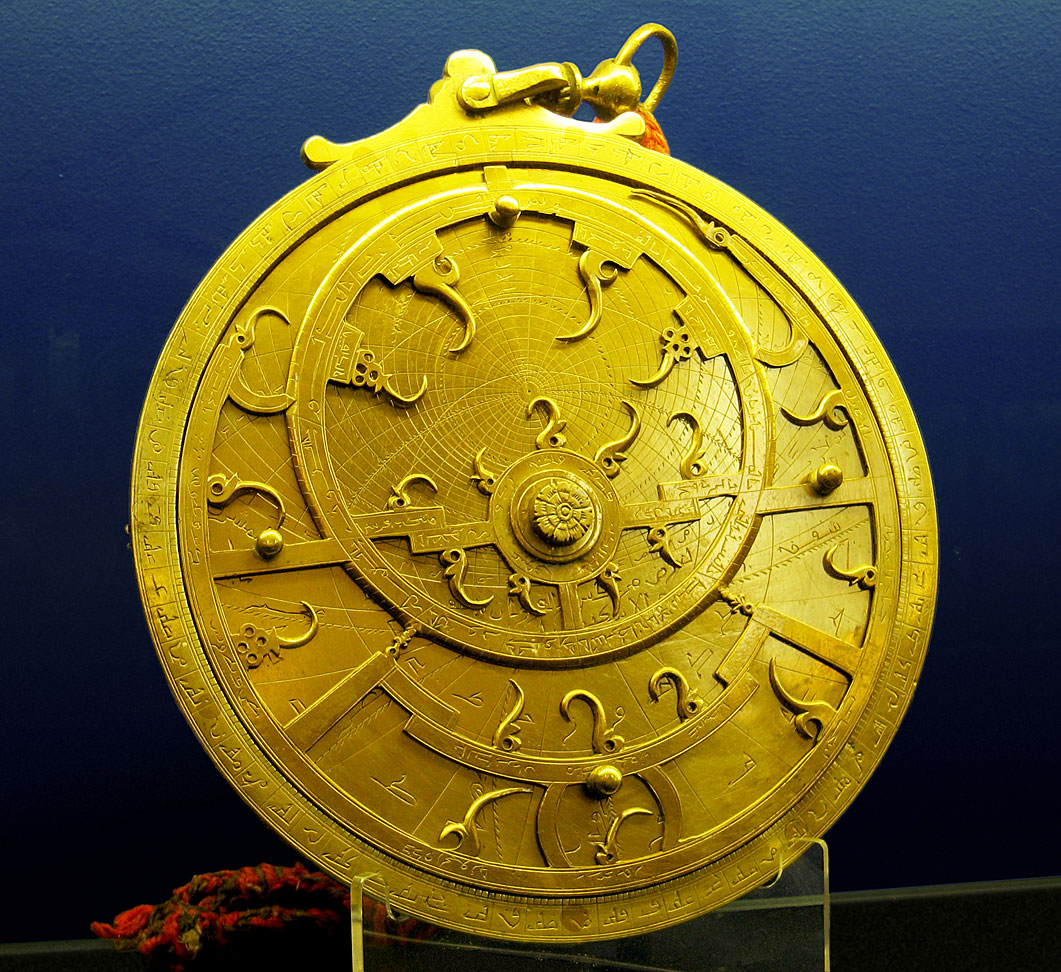
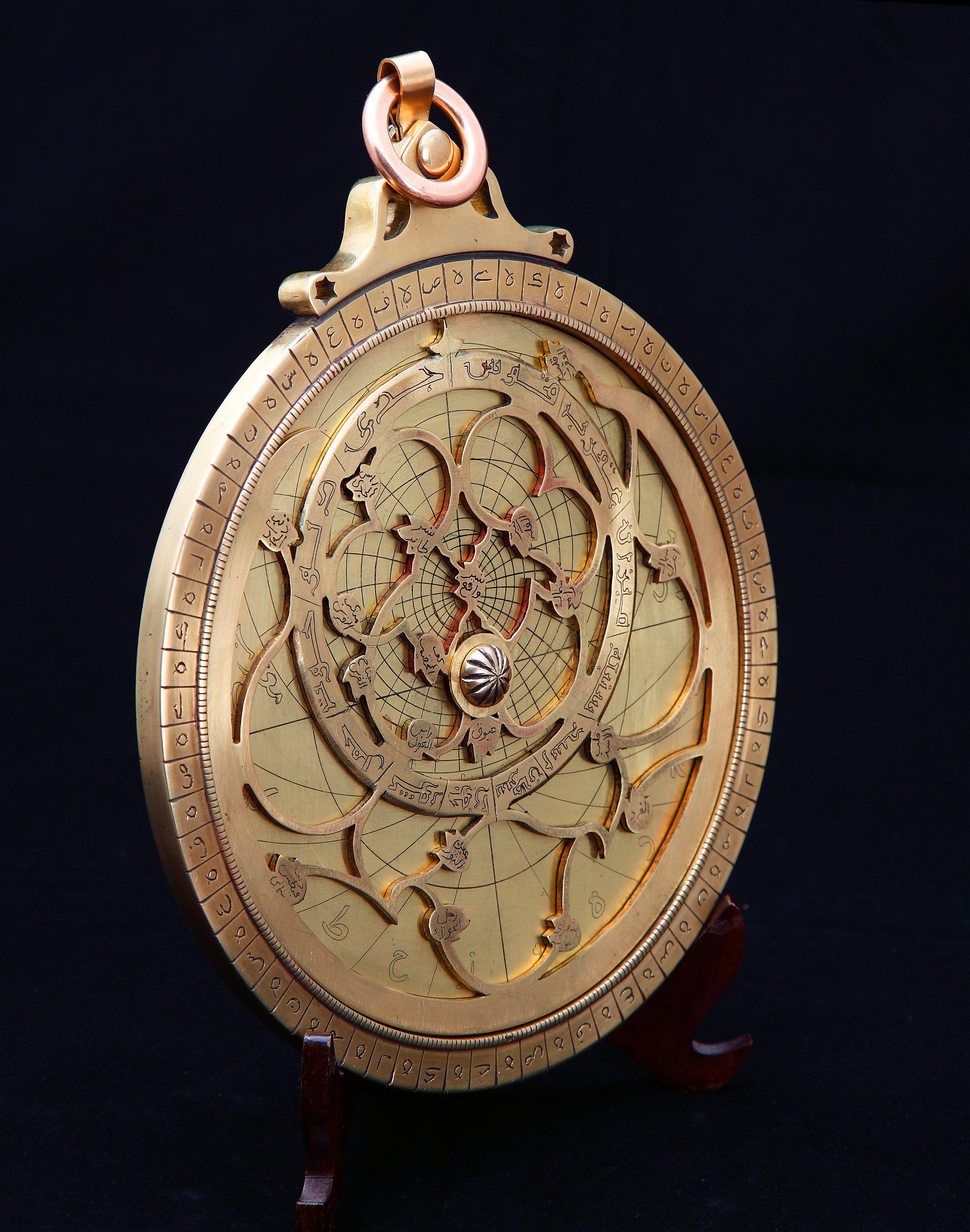
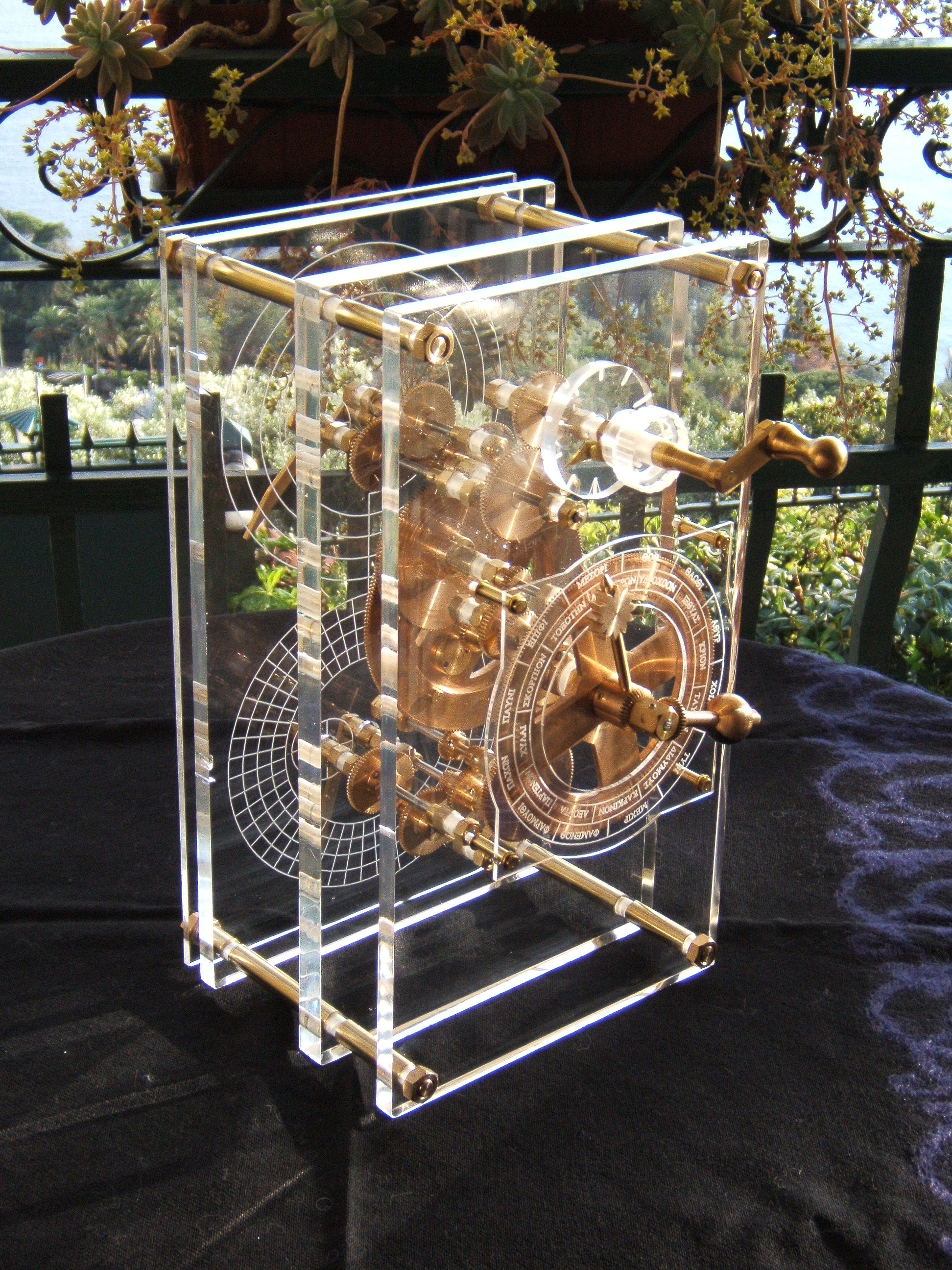
At first glance, the Antikythera mechanism looked like little more than a corroded lump hauled up from an ancient shipwreck. But inside that crusted bronze was something astonishing: a hand-powered machine from ancient Greece that could track the heavens with gears.
It is widely regarded as the oldest known analogue computer. In simple terms, an analogue computer is a device that represents real-world processes through physical movement rather than digital code. In this case, turning a small crank set a network of bronze gears in motion so the machine could model astronomical cycles, predict eclipses, and follow recurring calendars. For a device built in the 2nd century BC, that level of sophistication is extraordinary.
Even more startling, machines of similar complexity did not appear again in western Europe until the 14th century. That long gap is one reason the mechanism still feels almost unbelievable today.
Watch the story on DeepSwipe
The shipwreck discovery that changed the history of technology
The story begins near the Greek island of Antikythera, where a wreck of a Roman cargo ship was discovered by sponge divers from Symi in the early 1900s. The wreck lay at a depth of about 45 metres, and the recovery brought up statues, pottery, glassware, jewellery, coins, and one mysterious object that did not initially stand out.
The mechanism itself was retrieved in 1901 and taken to the National Archaeological Museum in Athens along with the rest of the finds. For a while, it attracted little attention. It appeared to be a damaged mass of bronze and wood, heavily corroded after centuries underwater.
The breakthrough came in 1902, when Spyridon Stais noticed a gear embedded in one fragment during a visit to the museum. That single visible gear changed everything. Ancient Greek statues were expected from a shipwreck. A precision gear mechanism was not.
The artefact had originally been enclosed in a wooden-framed case of uncertain overall size, about 34 by 18 by 9 centimetres. What survived was later separated into three main fragments and eventually into 82 pieces after conservation efforts. Four fragments contain gears, while many others preserve inscriptions that helped researchers work out what the machine did.

What the mechanism actually did
The Antikythera mechanism was not a toy and not just a decorative curiosity. It was a functional calculating instrument built to model cycles in the sky.
By turning its hand crank, an operator could set the mechanism in motion and make its interlocked bronze gears calculate the positions of the Sun and Moon along the zodiac. The zodiac here means the band of the sky through which the Sun and Moon appear to move over the course of the year. On the front, dials marked the zodiac signs and calendar divisions, allowing the user to connect dates with celestial positions.
The machine could also predict eclipses. That is especially impressive because eclipses depend on repeating long-term cycles rather than on the simple monthly rising and setting of the Moon. On the rear of the mechanism, one of the major dials tracked the Saros cycle, a period of 223 synodic months. A synodic month is the interval from one new moon to the next. Because this cycle closely matches the recurrence of eclipse conditions, it allowed the device to indicate when solar and lunar eclipses were due.
Another rear dial tracked the exeligmos, a longer cycle of 54 years that helped refine eclipse timing by accounting for the fact that the Saros cycle is about eight hours longer than a whole number of days.
The mechanism also tracked the Metonic cycle, which links 235 synodic months with 19 years. This cycle was useful because it helped reconcile lunar and solar calendars. A smaller dial also followed the Callippic cycle, a longer period related to calendar correction.
And there was one more surprising feature: the machine could follow a four-year cycle of athletic games. Inscriptions show that it tracked panhellenic games, including the cycle most closely related to the Olympiad. This means the mechanism was not only an astronomical device but also a calendar tool connected to civic and cultural life.
A machine that modeled the Moon in a remarkably subtle way
One of the most fascinating aspects of the Antikythera mechanism is that it did not simply move everything at a constant rate. Research showed that it modeled the irregular motion of the Moon, whose speed changes over the course of its orbit.
To do this, the mechanism used a sophisticated arrangement of gears, including an epicyclic system. An epicyclic gear system is one in which a gear moves around another gear instead of staying fixed in one place. In the Antikythera mechanism, this helped imitate the Moon’s changing speed.
The machine also displayed lunar phases. That means it could indicate whether the Moon would appear new, half, or full. A small half-white, half-black ball embedded in the lunar pointer has been identified as the phase indicator. The display worked by comparing the positions of the Sun and Moon.
This is one reason the mechanism is often described with such awe. It was not just counting days. It was physically encoding an astronomical model.
How modern researchers unlocked its secrets
For decades, the mechanism remained deeply puzzling. Much of it was broken, many parts were missing, and the surviving bronze was encased in corrosion. Early X-ray work by Derek J. de Solla Price and Charalampos Karakalos in 1971 marked a major step forward.
A much bigger leap came in 2005, when a team led by Mike Edmunds at Cardiff University used computer X-ray tomography and high-resolution scanning to look inside the fragments and read faint inscriptions. Tomography is a method of creating detailed internal images without cutting an object open. These scans revealed hidden gears, internal structures, and text that had not been legible before.
The imaging suggested the mechanism had 37 meshing bronze gears. It also showed that the machine followed the movements of the Sun and Moon through the zodiac, predicted eclipses, and modeled the Moon’s irregular orbit.
Inscriptions deciphered later added even more detail. Results published in 2016 revealed numbers connected with the synodic cycles of Venus and Saturn, strengthening the view that the mechanism may originally have included calculations for the five classical planets. Some parts of the device are thought to be missing, so not every question has been settled.
Why it feels so far ahead of its time
The Antikythera mechanism is often called startlingly advanced because its miniaturized gearing and overall complexity are comparable to medieval astronomical clocks. Yet it was built more than a thousand years earlier.
That does not mean it appeared from nowhere. Its quality suggests earlier traditions of mechanical craftsmanship and astronomical theory in the Hellenistic world. Scholars have linked it with advanced Greek knowledge of astronomy and mathematics during the second century BC.
The exact place of origin remains debated. Proposals have connected it with Corinthian traditions, Epirus, Pergamon, and Rhodes. Rhodes in particular has drawn attention because it was a center of astronomy and mechanical engineering, and because the mechanism’s lunar theory suggests a link to Hipparchus.
The dating is also debated. It has been variously dated to about 87 BC, between 150 and 100 BC, or as early as 205 BC, while the shipwreck itself dates to about 70–60 BC. Researchers have also proposed calibration dates such as 23 December 178 BC or 204 BC. A calibration date refers to the starting point from which the machine’s cycles were set.
More than an ancient curiosity
The Antikythera mechanism matters because it changes the story of ancient technology. It shows that Hellenistic scientists and craftsmen were capable of building compact gear-driven instruments that encoded sophisticated astronomical knowledge into metal.
It was recovered as wreckage from a lost ship, split into fragments, and nearly ignored as a crusted lump. Yet it turned out to be one of the most astonishing devices ever found from the ancient world: a hand-powered machine that let its user explore time, calendars, eclipses, and the moving sky.
That is why the Antikythera mechanism still captures the imagination. It is not just old. It reveals a level of invention that seems to leap across centuries.