Watch the story on DeepSwipe
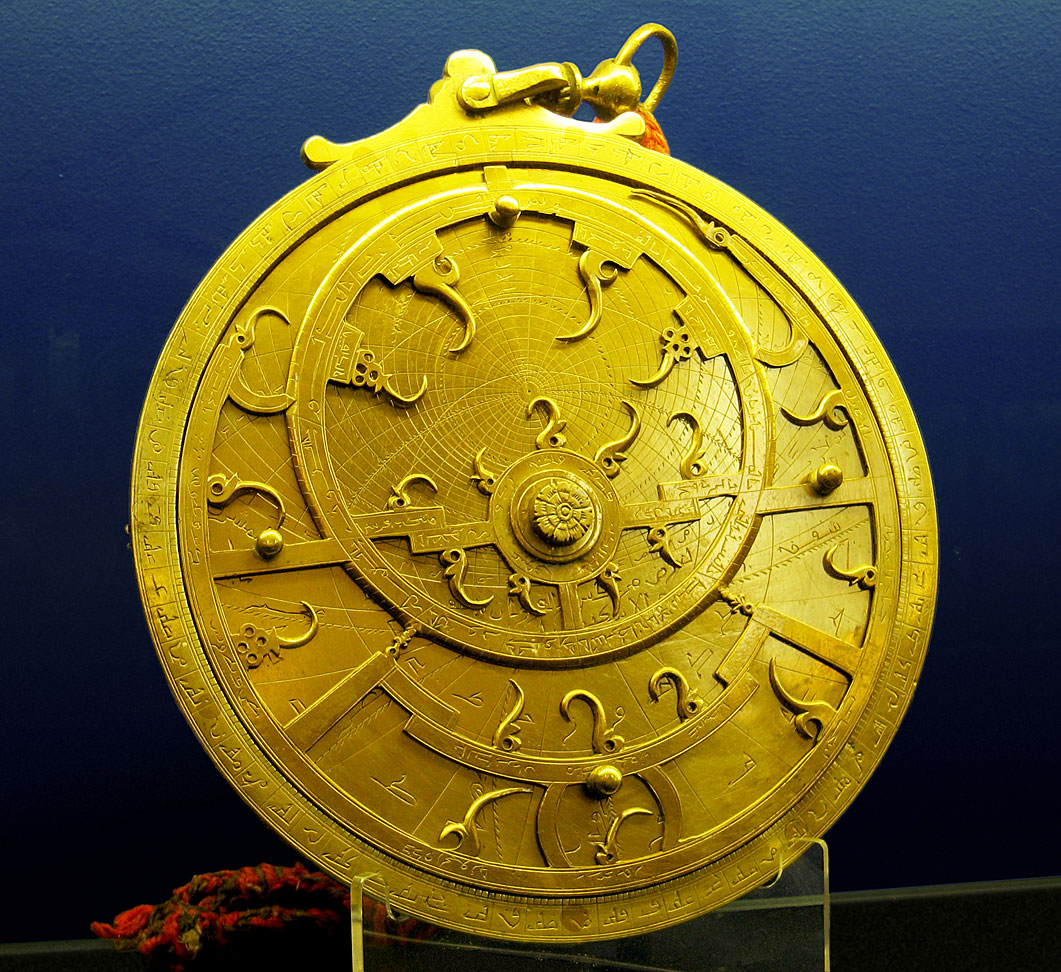
A handheld model of the sky
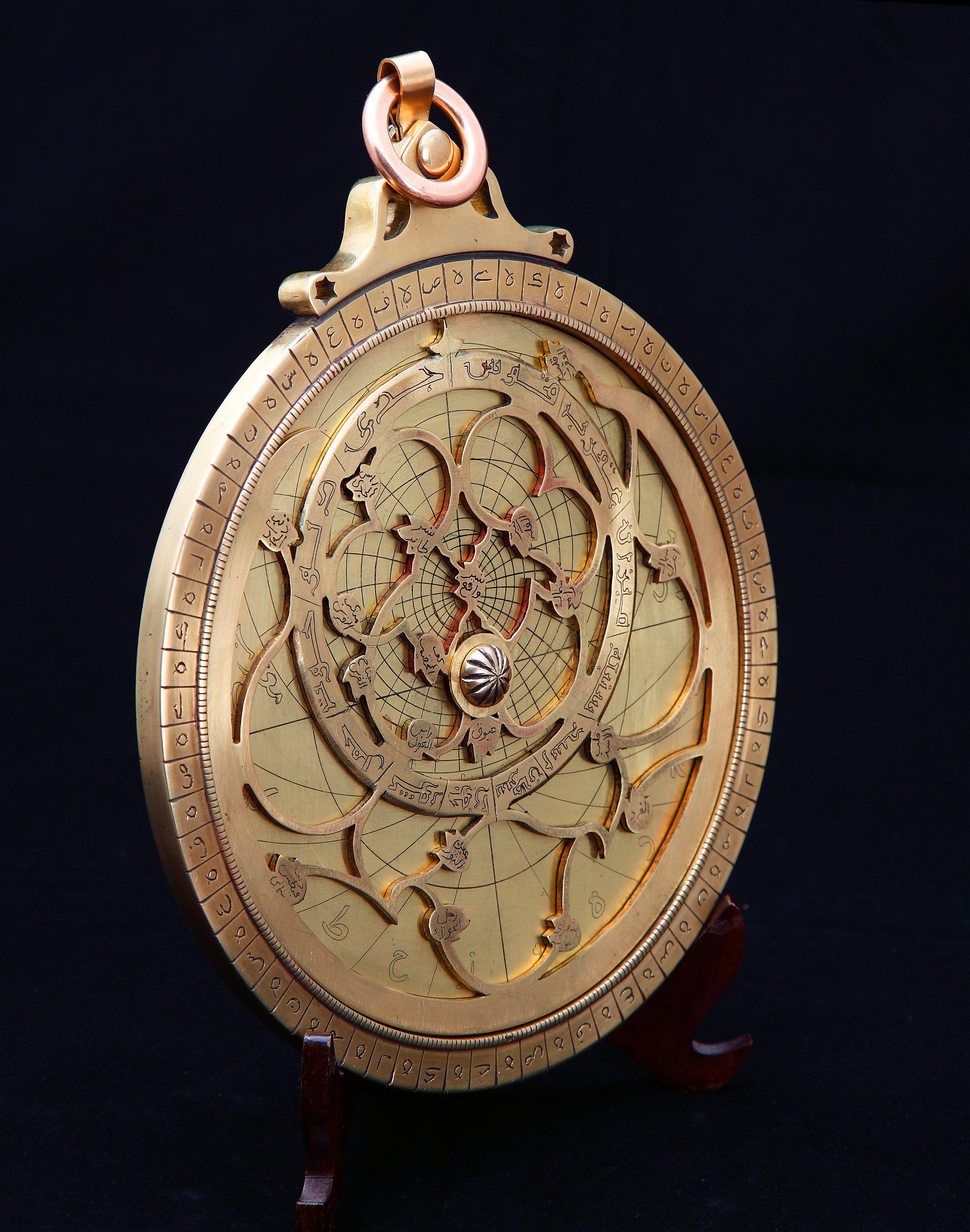
The astrolabe was one of the most versatile scientific instruments of the ancient and medieval world. At first glance, it could look like a beautifully crafted metal disc. In practice, it was far more than that: a star chart, a measuring device, a calculator, and a compact model of the visible sky.
Its name has roots in Greek and is often translated as “star-taker,” which fits its function remarkably well. With an astrolabe, a user could “take” the position of a star or the Sun by measuring its altitude, meaning how high it appears above the horizon. From that single observation, many other questions could be worked out, including local time, latitude, and the identity of celestial objects.
That is why the astrolabe is often described as a kind of analog computer. It did not run on electricity or code. Instead, it used geometry, engraved scales, and rotating parts to turn observations of the sky into practical answers.

What made the astrolabe so useful?
In its simplest form, the astrolabe was a metal disc with cutouts, markings, and moving parts. It could be used by day or night. A person might sight the Sun or a star, read off its altitude, and then use the front and back of the instrument to solve problems in astronomy, timekeeping, surveying, or navigation.
Among its known uses were:
- measuring the altitude of a celestial body above the horizon
- identifying stars or planets
- determining local latitude from local time, or the reverse
- helping with surveying and triangulation
- telling time through astronomical observation
Latitude, one of the most important ideas tied to the astrolabe, means how far north or south a place is on Earth. Before modern navigation tools, being able to estimate latitude was enormously valuable. The astrolabe was effective for determining latitude on land or on calm seas, though it was less reliable on a ship’s deck in rough water. That limitation led to the development of the mariner’s astrolabe, a version designed to address the problem.
Why it mattered beyond astronomy
The astrolabe was not only an instrument for scholars studying the heavens. It had practical, cultural, and religious importance too.
In the medieval Islamic world, it became especially significant. Muslim astronomers expanded the design by adding angular scales and circles showing azimuths on the horizon. Azimuth is the direction of an object along the horizon, usually understood as an angle measured around the observer. Together, altitude and azimuth let a user pinpoint where something appears in the sky.
The astrolabe was widely used to determine prayer times with precision. It was also used to find the qibla, the direction of Mecca toward which Muslims pray. In addition, calculations connected with the lunar calendar were important because they helped determine the dates of religious observances such as Ramadan.
This wide range of uses helps explain a remarkable claim associated with the 10th-century astronomer al-Sufi. He reportedly wrote a massive text of 386 chapters on the astrolabe and described more than 1,000 applications for it. These uses ranged across astronomy, astrology, navigation, timekeeping, surveying, religious practice, and even tide tables.
A long journey across civilizations
The astrolabe was used across an enormous span of history. It appeared in classical antiquity, continued in the Byzantine Empire, flourished in the Islamic Golden Age, spread through medieval Europe, and remained important into the Age of Discovery.
The instrument is essentially a two-dimensional version of an armillary sphere, an earlier device from the Hellenistic period. A detailed treatise on the astrolabe was written by Theon of Alexandria. Later, John Philoponus wrote what is the earliest extant treatise on the instrument in Greek, around 550. In the mid-7th century, the Mesopotamian bishop Severus Sebokht also wrote about it in Syriac and referred to astrolabes made of brass, showing that metal examples were known in the Christian East very early.
In the Islamic world, the astrolabe was further developed and widely adopted. Muhammad al-Fazari is the first person credited with building the astrolabe there, and the earliest Arabic treatise on astrolabes dates to around 815 CE. Over time, astronomers and instrument makers created new forms, including the spherical astrolabe, the linear astrolabe, and even a geared mechanical astrolabe invented by Abi Bakr of Isfahan in 1235.
From there, the astrolabe also became part of European scientific culture. It was almost certainly brought north of the Pyrenees by Gerbert of Aurillac, later Pope Sylvester II, and integrated into learning at Reims before the 11th century. Geoffrey Chaucer later compiled a treatise on the astrolabe for his son, showing how deeply the instrument had entered medieval intellectual life.
How the instrument was built
An astrolabe’s design was both practical and elegant. The main body was a disk with a raised rim called the mater, or “mother.” Inside it sat one or more plates called tympans, also known as climates. Each tympan was made for a specific latitude and engraved with a stereographic projection.
A stereographic projection is a way of representing a sphere on a flat surface. In the case of the astrolabe, it allowed the curved sky to be mapped onto a plate. On the tympan were circles showing altitude and azimuth, along with other lines needed to represent the portion of the celestial sphere visible above the local horizon.
Over the tympan sat the rete, a rotating framework marked with the ecliptic plane and pointers for bright stars. The ecliptic is the apparent path of the Sun across the sky over the course of the year. As the rete turned, it simulated the movement of the sky. One full rotation corresponded to the passage of a day.
The back of the astrolabe often carried additional scales. These might include time-conversion curves, a calendar relating dates to the Sun’s place on the ecliptic, trigonometric scales, and a full 360-degree division around the edge.
Attached to the back was the alidade, a rotating sighting rule. By holding the astrolabe vertically and sighting the Sun or a star along the alidade, the user could measure its altitude in degrees. Some astrolabes also had a shadow square, used for converting shadow lengths and the Sun’s altitude for practical tasks such as surveying or measuring inaccessible heights.
Precision, craftsmanship, and art
Astrolabes were scientific tools, but they were also crafted objects. Star pointers on the rete could be simple or highly decorative, shaped like balls, stars, snakes, hands, dogs’ heads, or leaves. Names of stars were sometimes engraved in Arabic or Latin. Makers often signed their instruments, and patrons’ names or dates of construction could also be inscribed.
These inscriptions reveal something important: astronomers often made their own astrolabes, but many were also made to order and even kept in stock for sale. In other words, there was a real market for them.
Metal astrolabes became especially important in Western Europe because they resisted the warping that affected large wooden versions. That made larger, more accurate instruments possible, although metal ones were also heavier and therefore less convenient for navigation.
More than a tool, a way of thinking
The astrolabe mattered because it turned the sky into something people could carry, read, and use. It connected observation with calculation. It brought together astronomy, geometry, craft, religion, and navigation in a single object.
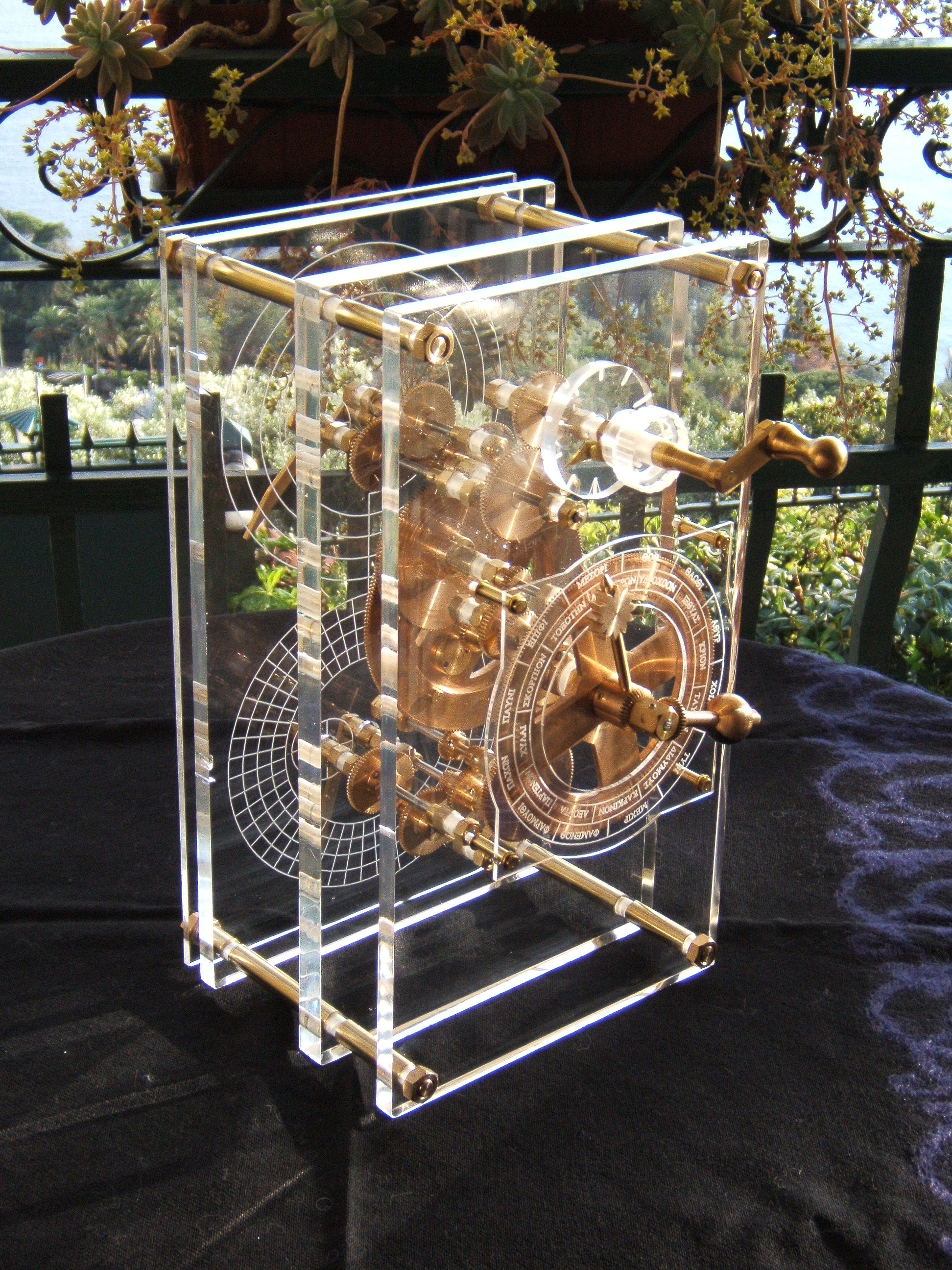
It also influenced later technology. Mechanical astronomical clocks were shaped by the astrolabe’s design and can be thought of in some ways as clockwork astrolabes, continuously displaying the positions of the Sun, stars, and planets. Even in recent times, astrolabe watches have been made, showing the lasting fascination of this ancient instrument.
Long before digital screens, the astrolabe offered people a portable cosmos. It was not just a device for experts. It was a practical machine for solving real problems, and one of history’s clearest examples of how much could be achieved with clever design, mathematics, and a careful reading of the sky.