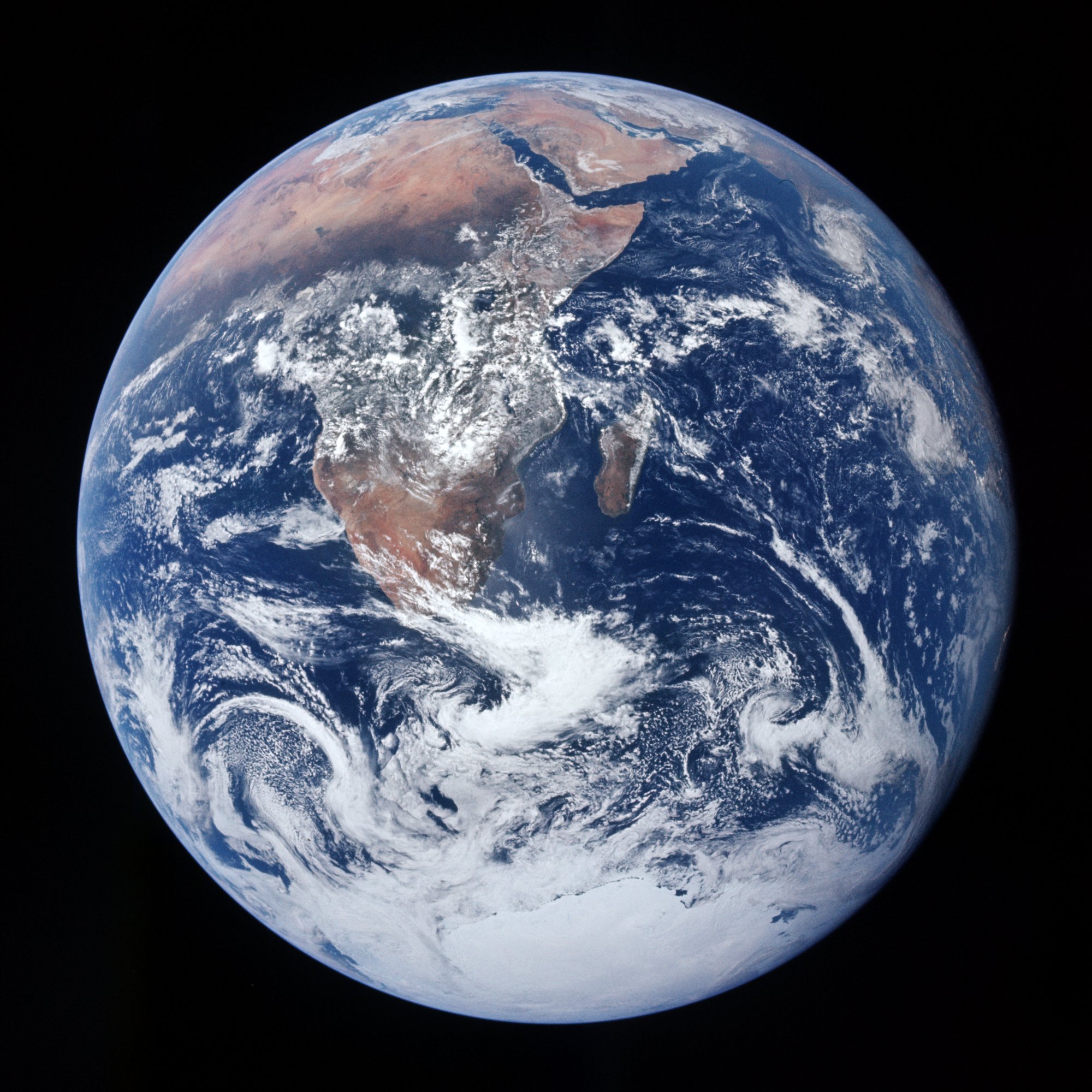
Africa is often described as the world’s youngest continent, and that phrase points to one of the most important demographic stories on Earth. While Africa is already the world’s second-most populous continent after Asia, what truly sets it apart is the age of its people. Its population is younger than that of any other continent, giving Africa a demographic profile unlike anywhere else.
This youthfulness matters far beyond statistics. It shapes schools, cities, jobs, health systems, politics, and the global economy. It also helps explain why Africa is increasingly seen as one of the most important regions for the future.
Watch the story on DeepSwipe
A continent defined by youth
One of the clearest ways to measure how young a population is comes from the median age. The median age is the point where half the population is younger and half is older. In Africa, the median age in 2012 was 19.7, compared with a worldwide median age of 30.4. That is a dramatic difference.
In simple terms, Africa has an unusually large share of children, teenagers, and young adults. The continent’s population is not just big; it is remarkably young relative to the rest of the world.
That youthfulness can also be seen in country-level patterns. In some African states, more than half the population is under 25 years of age. Across the continent as a whole, population growth over recent decades has made Africa relatively young compared with other world regions.
As of 2021, Africa had nearly 1.4 billion people, accounting for about 18% of the world’s human population. That means nearly one in five people on Earth already lives in Africa. When such a large population is also very young, the long-term consequences are enormous.

Why Africa’s share of global births is rising
A major reason Africa is so young is that birth rates remain high in much of the continent, especially in sub-Saharan Africa. The total fertility rate is a common demographic measure meaning the average number of children per woman. In sub-Saharan Africa, that figure was 4.7 in 2018, the highest in the world.
All countries in sub-Saharan Africa had fertility rates above replacement level in 2019. Replacement level refers to the birth rate needed for a population to replace itself from one generation to the next without shrinking.
This helps explain why Africa’s share of global births has been rising so quickly. In 1990, sub-Saharan Africa accounted for only 16% of the world’s births. By 2021, that share had climbed to 29%. The trend is expected to continue, with the number of babies born in Africa compared with the rest of the world projected to reach about 37% by 2050.
That is a huge demographic shift. It means that more and more of the world’s new generation will be born in Africa.
The population boom in numbers
Africa’s population growth over the last several decades has been striking. The total number of people on the continent rose from 229 million in 1950 to 630 million in 1990. By 2021, it had reached an estimated 1.4 billion.
This growth has changed Africa’s place in the world. Africa’s population surpassed Europe’s in the 1990s. It also overtook the population of the Americas sometime around the year 2000.
And this is only part of the story. Based on 2024 projections, Africa’s population is expected to exceed 3.8 billion people by 2100.
That projected increase is one of the most significant demographic developments of the century. A continent that is already the second-most populous in the world is likely to become vastly more important in global population trends, consumption, labor, and urban life.
A young population means a different future
A very young population changes the way a continent develops. When large numbers of people are entering childhood, adolescence, and adulthood, demand rises for education, housing, transportation, health care, and employment.
Africa’s recent economic expansion and its large and young population are part of why it is seen as an important economic market in the broader global context. A young population can mean a growing workforce, rising consumer demand, and long-term economic potential.
The continent also has a large quantity of natural resources. The scale of those resources is notable: Africa is believed to hold 90% of the world’s cobalt, 90% of its platinum, 50% of its gold, 98% of its chromium, 70% of its tantalite, 64% of its manganese, and one-third of its uranium. The Democratic Republic of the Congo alone has 70% of the world’s coltan and more than 30% of the world’s diamond reserves, while Guinea is the world’s largest exporter of bauxite.
This combination of a youthful population and major natural resources gives Africa a distinctive position in the world economy. At the same time, resources and youth do not automatically translate into shared prosperity.
The opportunities and pressures of being young
Africa’s demographic strength exists alongside major social and economic pressures. Despite its abundant natural resources, Africa is described as the least wealthy inhabited continent per capita and the second-least wealthy by total wealth, ahead of Oceania.
A number of factors have been cited for this, including geography, climate, corruption, colonialism, the Cold War, and neocolonialism. Large numbers of Africans have also lived in poverty, with poverty, malnutrition, poor health, inadequate water supply and sanitation, and illiteracy affecting a significant share of the population.
This matters because a youthful population creates both momentum and urgency. More children and young adults mean greater potential, but also greater pressure on institutions. Jobs, infrastructure, and services have to keep pace.
The continent has at times seen strong economic performance. Between 2000 and 2014, annual GDP growth in sub-Saharan Africa averaged 5.02%, doubling total GDP from $811 billion to $1.63 trillion in constant 2015 U.S. dollars. North Africa experienced comparable growth rates. Improved stability and economic reforms also helped drive an increase in foreign investment into many African nations.
Still, overall growth has slowed since 2014, due in part to falling commodity prices, lack of industrialisation, and epidemics including Ebola and COVID-19. The growth that did occur was driven mainly by services rather than manufacturing or agriculture, and it often did not produce enough jobs or reduce poverty enough.
For a young continent, that challenge is central: how to turn demographic expansion into broad-based improvement in living standards.
Africa is not one story
Calling Africa the world’s youngest continent is useful, but it should not erase the continent’s immense diversity. Africa contains 54 sovereign countries and a population that is culturally, linguistically, historically, and socially varied.
It is the most multilingual continent in the world, with well over a thousand languages spoken, and UNESCO has estimated around two thousand. African culture is rich and diverse within and between regions, encompassing art, cuisine, music, dance, religion, and dress.
Demographic trends also vary. Sub-Saharan Africa is the region most strongly associated with high fertility and rapid population growth, while North Africa has its own distinct historical and social patterns. Even so, the overall continental picture remains clear: Africa’s age structure is younger than anywhere else on Earth.
Why the world is watching Africa’s demographic wave
Demography is not destiny, but it is powerful. A continent with nearly 1.4 billion people, the youngest population in the world, and a projected population of more than 3.8 billion by 2100 will inevitably play a larger role in global affairs.
Its future will matter for labor markets, migration, urban growth, education systems, food security, and international trade. It will also matter for technology adoption. Part of Africa’s economic growth in recent decades has been linked to the facilitated diffusion of information technologies, especially the mobile telephone.
At the same time, Africa faces serious vulnerabilities. Environmental problems such as desertification, deforestation, water scarcity, and pollution are already significant, and climate change is expected to worsen them. The UN Intergovernmental Panel on Climate Change has identified Africa as the continent most vulnerable to climate change.
That makes Africa’s demographic rise even more consequential. The continent’s future will be shaped not only by how many people it has, but by how well societies can support those people in a changing environmental and economic landscape.
The meaning of “youngest continent”
So what does it really mean to call Africa the world’s youngest continent?
It means the continent has the lowest median age of any continent. It means births are a growing share of the global total. It means many African societies are being shaped by children and young adults in ways that older regions are not. And it means the future of the world will increasingly be tied to the future of Africa.
Africa is already home to about 18% of humanity. Its population is growing fast, its share of global births is rising, and projections suggest a demographic wave that could reshape the century.
In that sense, Africa’s youth is not just a statistic. It is one of the biggest stories in the modern world.