Long before there was an England, there were people living, hunting, building, and reshaping the land that would one day bear that name. The story of prehistoric England stretches back astonishingly far: more than 800,000 years ago, humans were already present in what is now Norfolk.
That immense span of time can be hard to imagine. It covers eras before writing, before cities, before metal tools, and even before Britain was an island in the modern sense. Yet archaeology has revealed a vivid outline of this lost world through stone tools, footprints, tombs, monuments, and ancient trackways.
Watch the story on DeepSwipe
England Before England
One of the most striking facts about early human history in Britain comes from Happisburgh in Norfolk. Discoveries there, including stone tools and footprints, show that humans were in this landscape more than 800,000 years ago. These are among the oldest signs of human presence in Britain.
During this remote period, the climate and geography were very different from today. What would later become England was often more hospitable than other parts of the British Isles, helping explain why it was inhabited so early. These first inhabitants were hunter-gatherers, meaning they lived by hunting animals and gathering wild plants rather than farming.
For much of this early age, Britain was attached to the European continent because sea levels were lower. That meant people and animals could move across land that is now underwater. But this connection did not remain constant. Temperatures changed over tens of thousands of years, and the land was not always inhabited continuously.
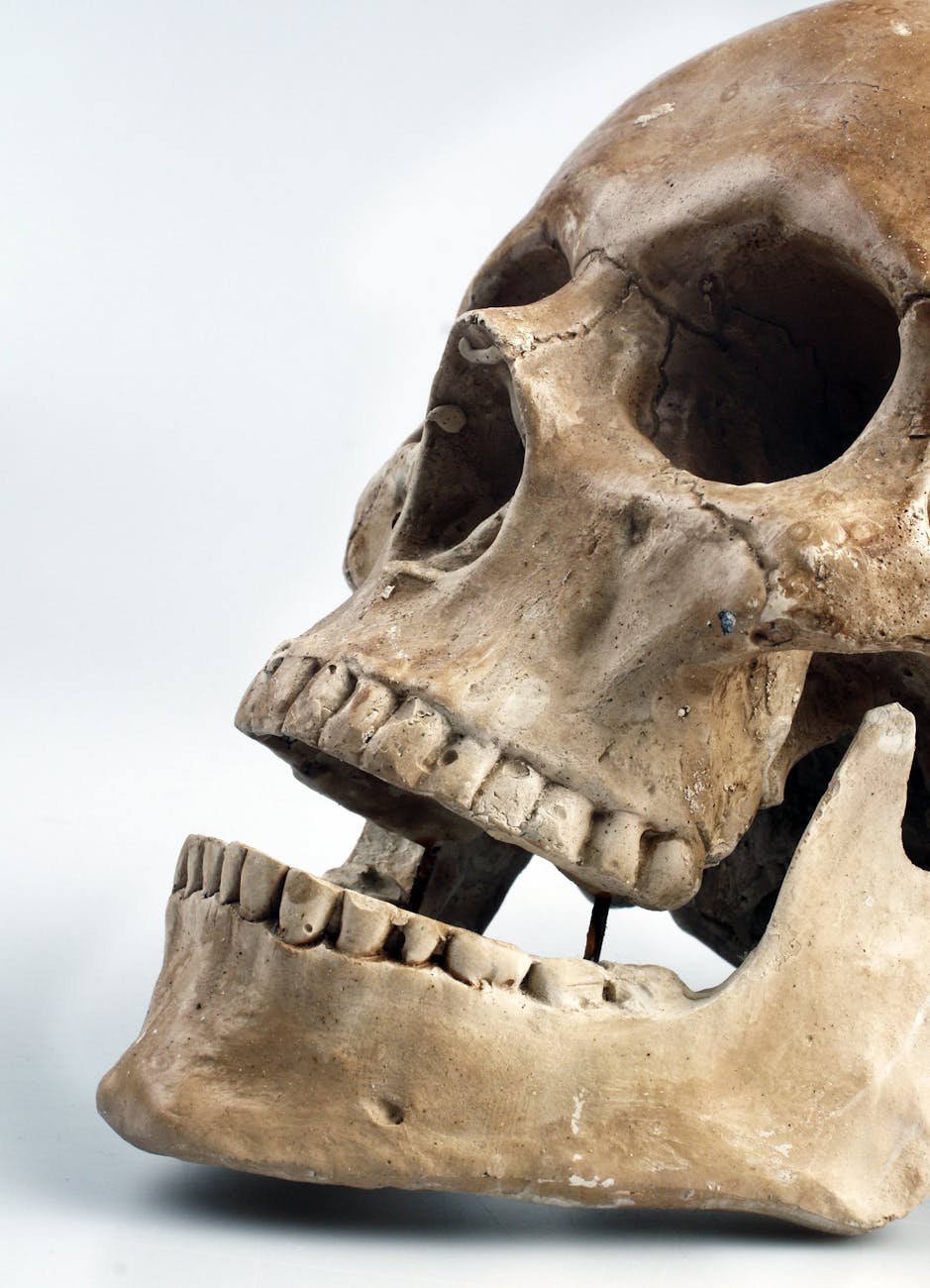
The earliest evidence for early modern humans in northwestern Europe was found in Devon at Kents Cavern, where a jawbone discovered in 1927 was later re-dated to between 41,000 and 44,000 years old. Continuous human habitation in England dates from around 13,000 years ago, near the end of the Last Glacial Period, the final phase of the last Ice Age.

When Britain Became an Island
A major turning point in prehistoric England came with rising sea levels. Around 6500 BC, Britain was cut off from the continent for the last time. From then on, the people living there were separated by water from mainland Europe.
This happened during the Mesolithic, or Middle Stone Age. In this era, people were still hunter-gatherers, but their societies were becoming more complex. Archaeological evidence suggests they were not simply surviving in nature but actively managing it. One possible technique was selective burning of woodland to create clearings where herds could gather and be hunted more easily.
The tools of this period were simple but effective. Hunting was mainly done with projectile weapons such as the javelin, and possibly the sling. The bow and arrow was also known in Western Europe by at least 9000 BC. As the climate warmed, populations likely increased.
This was a world of forests, changing coastlines, and mobile communities adapting to a land in transformation.
Farming Changes Everything
Around 4000 BC, the Neolithic, or New Stone Age, began in Britain with the introduction of farming, ultimately from the Middle East. A 2019 study described this shift as tied to a mass migration into the British Isles around 4100 BC by Neolithic farmers closely related to Neolithic peoples of Iberia.
Farming changed life profoundly. Instead of moving constantly in search of food, people began to live more settled lives. They cleared more woodland for fields and pastures, shaping the landscape more intensively than before.
This new way of life also changed how people treated the dead. Monumental collective tombs were built in forms such as chambered cairns and long barrows. A cairn is a mound of stones, while a barrow is a burial mound made of earth or stone. Their large scale shows organized communities capable of major construction projects.
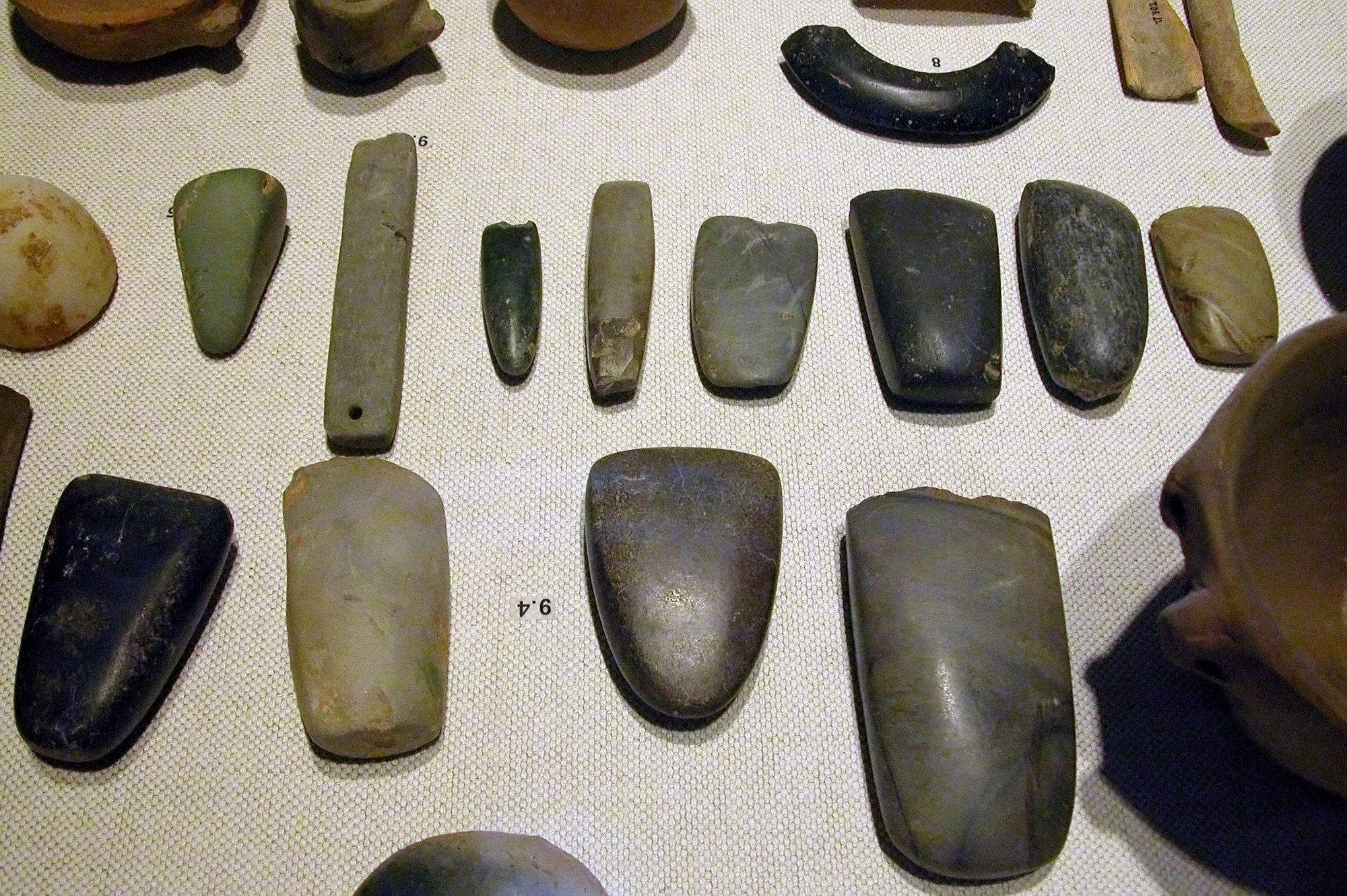
The Neolithic also produced highly skilled flint technology. Flint is a hard stone that can be shaped into sharp tools and weapons. Some objects were practical, while others were strikingly artistic.
Archaeological evidence from North Yorkshire even shows that salt was being manufactured in the Neolithic, revealing that prehistoric communities were developing specialized activities beyond simple subsistence.
Monuments Before Kingdoms
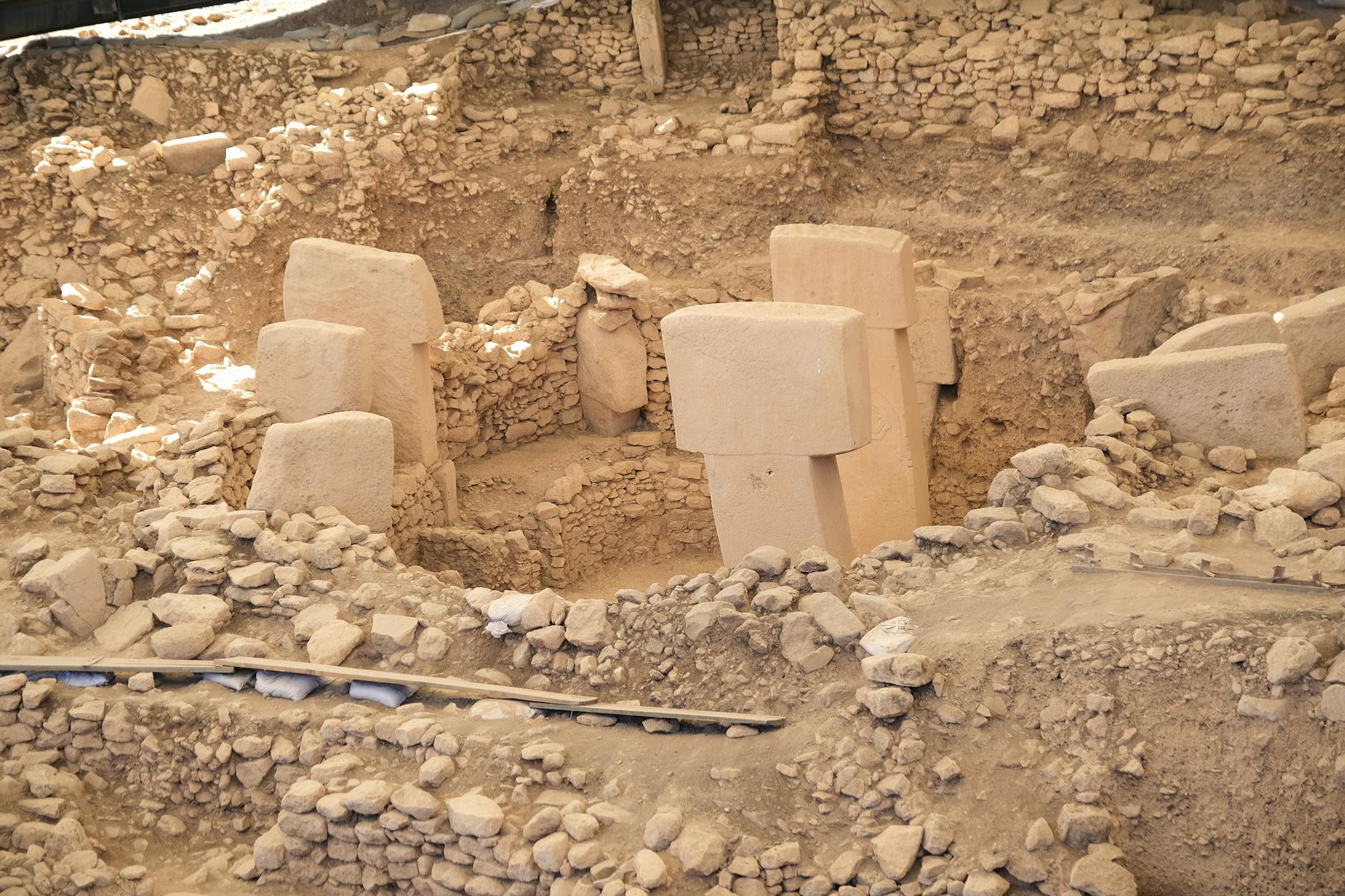
Among the most famous remains of prehistoric England are Stonehenge and Avebury. These monuments belong to a world that existed long before written history recorded rulers and wars.
Toward the end of the Neolithic, monumental stone alignments became more common. Their arrangement suggests a strong interest in the sky and planets. In other words, these were not just piles of stone: their placement likely reflected observation of celestial patterns and a concern with cosmic order.
That makes these monuments especially fascinating. They show that prehistoric communities were not only practical farmers and builders, but also people thinking deeply about time, seasons, and the heavens. The landscape of prehistoric England was already being filled with places of meaning.
The Sweet Track: A Road Older Than History Books
One of the most remarkable structures from prehistoric England is the Sweet Track in the Somerset Levels. It is one of the oldest timber trackways known in Northern Europe and among the oldest roads in the world.
Its date is unusually precise because it was dated by dendrochronology to the winter of 3807–3806 BC. Dendrochronology is tree-ring dating, a method that uses patterns in the growth rings of wood to determine when trees were cut down.
The Sweet Track was built across wet ground in the Somerset Levels, and it is thought to have been primarily a religious structure. That possibility makes it even more intriguing. Modern people often think of roads as purely practical, but in prehistoric England, movement through the landscape may also have had ritual meaning.
The existence of such a trackway reveals technical skill, planning, and a society capable of organizing labor for purposes that may have gone beyond everyday transport.
Bronze, Trade, and New Peoples
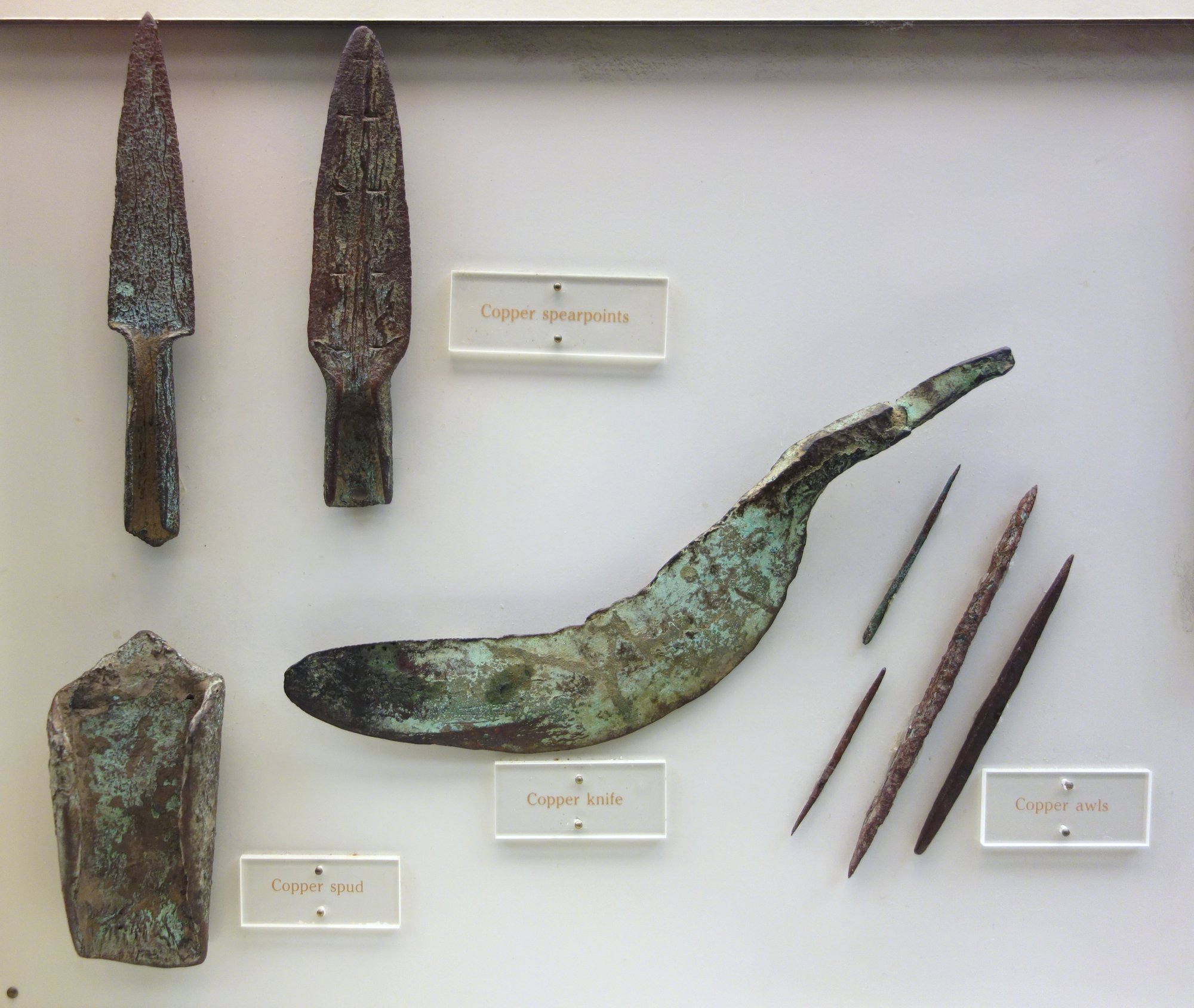
The Bronze Age began around 2500 BC with the appearance of bronze objects. Bronze is a metal alloy, usually made by combining copper and tin, and it allowed the creation of tools and weapons such as swords and axes.
This period coincided with the appearance of the Bell Beaker culture, following migration from the continent. According to a 2018 study, Britain’s Neolithic population was largely replaced after 2500 BC by this new Bell Beaker population, which was genetically related to groups from central and eastern Europe and the Pontic-Caspian Steppe.
The Bronze Age brought social changes as well as technological ones. Power shifted away from communal structures and toward increasingly powerful elites. Their status seems to have come from hunting and warfare, and from controlling valuable resources used to make bronze.
Settlement became more permanent and more intensive. Fine metalwork was often deposited in rivers, probably for ritual reasons. Archaeologists see this as part of a broader shift in emphasis from the sky to the earth as population pressure on the land increased.
England also became tied into the Atlantic trade system, connecting it culturally with much of Western Europe.
Iron Age England
The Iron Age is conventionally said to begin around 800 BC. By then, Britain south of the Firth of Forth was inhabited by Celtic people known as the Britons. In England, the Britons formed the majority of the population.
They spoke the Brittonic language, a Celtic language ancestral to the modern Brittonic languages. Over time, Celtic Britons diverged into distinct groups such as the Welsh, Cornish and Breton, though they remained connected by language, religion and culture.
This era saw the rise of hillforts, especially between about 600 and 400 BC. Hillforts are fortified settlements, usually built on high ground. Many were constructed in southern England. Later, fewer new forts were built, and some ceased to be regularly inhabited, while others became more intensively occupied, suggesting a degree of regional centralisation.
Burials largely disappear across England in this period, meaning many of the dead were treated in ways that left little archaeological trace. One widely cited possibility is excarnation, the exposure of bodies so that flesh decays or is removed before the bones are dealt with.
England still maintained contacts across the Channel with France, even after the older Atlantic trade system had largely collapsed.
The Edge of Recorded History
Around the Iron Age, Britain begins to appear faintly in written tradition. The earliest historical mention is said to come from the Massaliote Periplus, a sailing manual for merchants thought to date to the 6th century BC. Pytheas of Massilia also wrote about his voyage to the island around 325 BC. These texts are lost, and only fragments survive through later quotations, but they mark the moment when prehistoric Britain began to emerge into the view of literate societies.
There were also movements of people from the continent. Around 300 BC, a group from the Gaulish Parisii tribe seems to have taken over East Yorkshire and established the Arras culture. Later, from around 150 to 100 BC, groups of Belgae began to control significant parts of southern England. These invasions appear to have involved relatively small warrior elites rather than total replacement of the existing population.
In the south, proto-urban settlements known as oppida began to eclipse the old hillforts. An oppidum was a large, important settlement, something between a fortified center and an early town.
Why Prehistoric England Still Matters
Prehistoric England is not just a prologue to “real” history. It is the foundation of everything that followed. The first hunters, the communities cut off from Europe by rising seas, the farmers who built tombs, the monument builders watching the sky, and the people who laid ancient wooden trackways across marshland all shaped the land long before kingdoms appeared.
Their world had no England in the political sense, but it already had human drama on an epic scale: migration, environmental change, innovation, belief, trade, and monumental ambition. From Happisburgh’s ancient footprints to the Sweet Track’s preserved timbers, prehistoric England shows that the story of this land began unimaginably early—and was already extraordinary thousands of years before the first king ever wore a crown.