Full article · 7 min read
Livestock’s Footprint: How Animal Farming Reshapes Land, Climate, and Forests
Livestock do far more than fill barns and pastures. They shape landscapes, influence greenhouse gas emissions, and play a major role in how agricultural land is used across the planet. Animal agriculture is deeply woven into human history, providing meat, milk, eggs, wool, and even work and transport. But its scale also gives it an outsized environmental footprint.
When people talk about agriculture’s impact on the Earth, livestock often sits at the center of the conversation. That is because raising animals is not just about the animals themselves. It includes the land needed for grazing, the cropland used to grow feed, the gases produced by animals and manure, and the forests and ecosystems transformed along the way.
A huge share of the world’s land
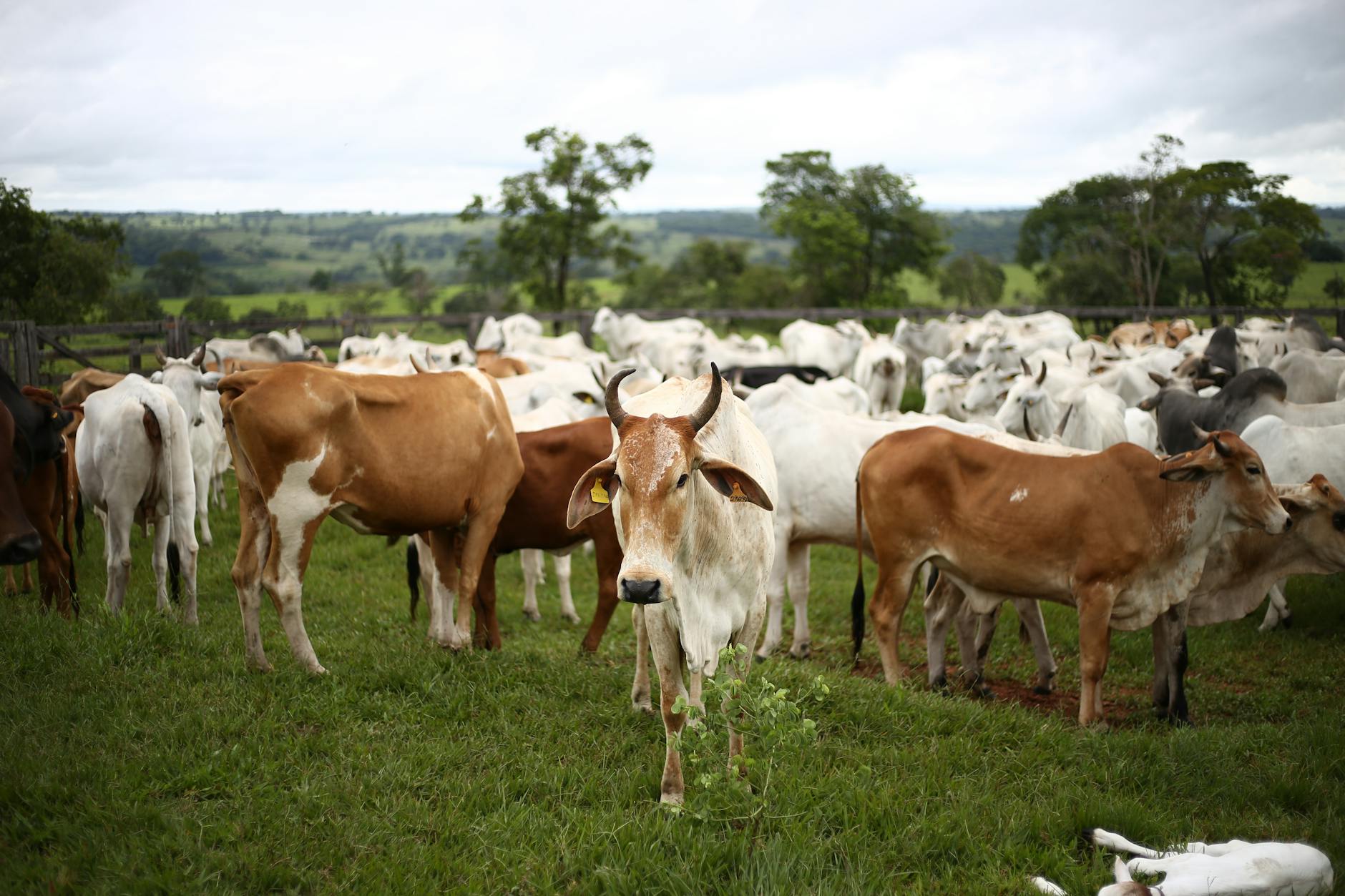
One of the most striking facts about livestock is how much space it uses. Livestock production occupies 70% of all land used for agriculture, which is about 30% of the planet’s land surface. That makes it one of the biggest ways humans physically reshape the Earth.
Livestock systems vary. Some are grassland-based, meaning animals feed mainly on shrubland, rangeland, or pastures. Others are mixed systems, where livestock eat a combination of grassland plants, fodder crops, and grain feed crops. There are also landless systems, where feed comes from outside the farm and crop and livestock production are more separated.
This matters because land use is one of the main ways agriculture affects nature. Transforming land to produce goods and services is described as the most substantial way humans alter Earth’s ecosystems, and it is a major driver of biodiversity loss. Biodiversity means the variety of life in an area, including different plants, animals, and microorganisms. When land is converted into pasture or feed-producing cropland, habitats can shrink or disappear.
Why livestock has such a large footprint
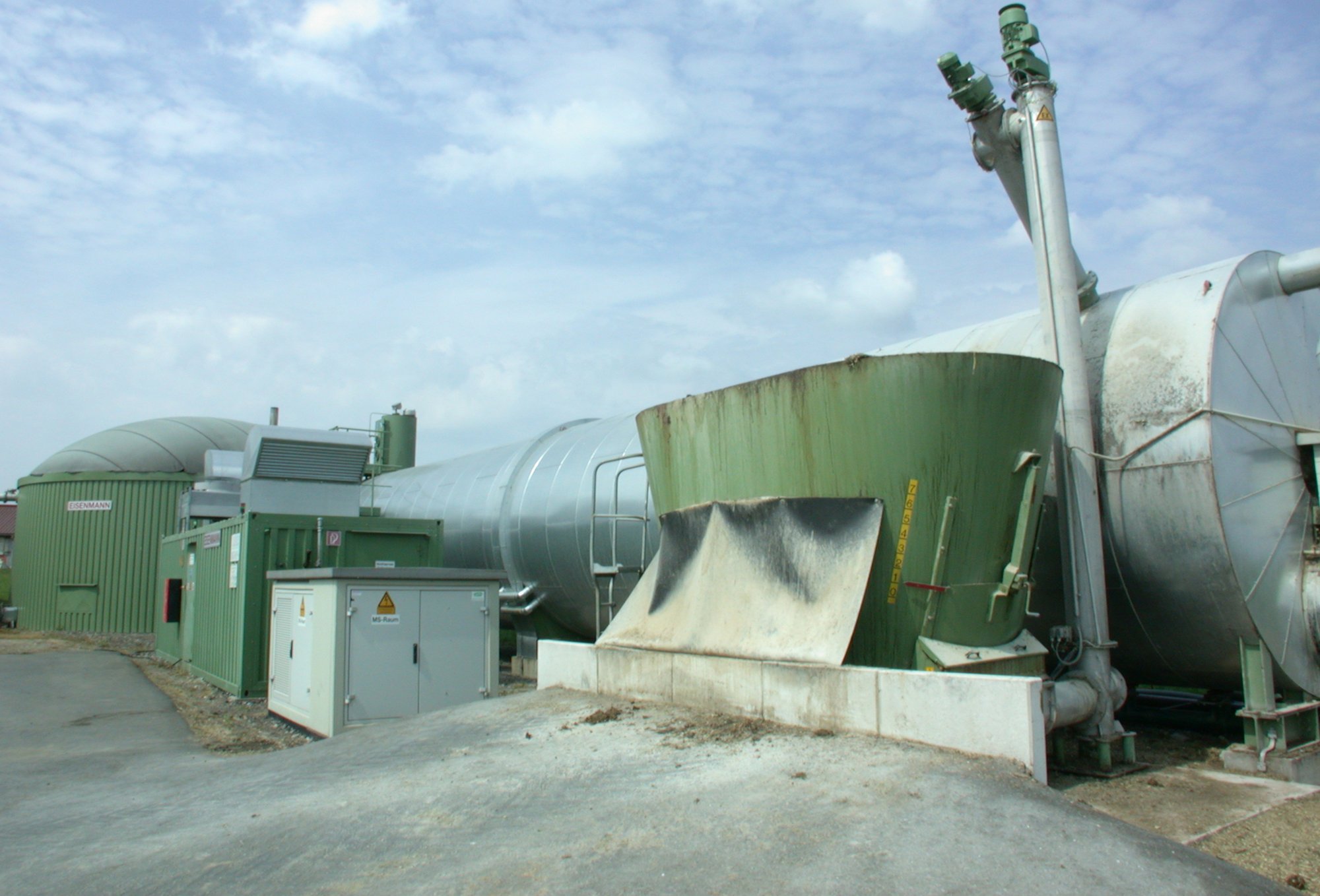
Animals require more than shelter. They need feed, water, and space. In grassland-based systems, manure often returns directly to the land as a nutrient source. In mixed systems, manure may be recycled as fertilizer for crops. In landless and industrialized systems, however, manure can become a pollution challenge.
Scientists estimate that much of the growth in livestock production between 2003 and 2030 will occur in confined animal feeding operations, often called factory farming. These are systems where large numbers of animals are kept in confined spaces and fed externally supplied feed rather than grazing. According to the article, industrialized countries use such systems to produce much of the global supply of poultry and pork.
As livestock production has expanded, it has also intensified. Between the 1960s and the 2000s, production increased significantly in both animal numbers and carcass weight, especially for beef, pigs, and chickens. Chickens saw an especially dramatic rise, with production increasing by almost a factor of 10. Non-meat animals such as milk cows and egg-laying chickens also experienced large production increases.
Livestock and greenhouse gases
Livestock are identified as one of the most significant contributors to major environmental problems, especially through greenhouse gas emissions. Greenhouse gases are atmospheric gases that trap heat and contribute to global warming.
The livestock sector is responsible for 18% of the world’s greenhouse gas emissions as measured in carbon dioxide equivalents. Carbon dioxide equivalent is a way of comparing different greenhouse gases by expressing their warming effect in a common unit.
Two gases stand out in particular:
- Livestock produce 65% of human-related nitrous oxide.
- They produce 37% of all human-induced methane.
Nitrous oxide and methane are especially important because they are powerful greenhouse gases. The article notes that nitrous oxide has 296 times the global warming potential of carbon dioxide, while methane is 23 times as warming as carbon dioxide. In simple terms, even smaller amounts of these gases can have a large effect on warming.
Livestock also generate 64% of ammonia emissions. Ammonia is a nitrogen-containing compound that can contribute to environmental pollution.
More broadly, agriculture, forestry, and land use together contribute between 13% and 21% of global greenhouse gas emissions. Within agriculture, animal husbandry is a major source. Animal husbandry refers to the breeding and raising of animals for products such as meat, milk, eggs, and wool.
Methane could rise even further
The future trend is worrying. Under current practices and consumption patterns, methane emissions from global livestock are projected to increase by 60% by 2030.
That projection matters because climate change and agriculture influence each other. Agriculture contributes to climate change, but it is also vulnerable to it. Changes in temperature, rainfall, weather extremes, pests, and diseases can all affect agricultural productivity. The article notes that human-induced warming has already slowed the growth of agricultural productivity over the past 50 years in mid and low latitudes.
In other words, the same sector helping drive climate pressures is also exposed to the consequences.
Forests turned into pasture and feed land
One of the clearest examples of livestock’s footprint is in the Amazon basin. About 70% of previously forested area there is now occupied by pastures, and much of the rest is used for feed crops.
This links livestock expansion directly to deforestation. Deforestation means the clearing or removal of forests, often to make way for another land use. Forest loss matters not only because trees store carbon, but also because forests support biodiversity and help regulate water and climate systems.
The article specifically cites livestock expansion as a key factor driving deforestation. Through deforestation and land degradation, livestock is also driving reductions in biodiversity. Land degradation is the long-term decline in ecosystem function and productivity. It can involve erosion, desertification, acidification, salinization, or the depletion of soil minerals.
Another effect connected to grazing pressure is woody plant encroachment, a phenomenon caused by overgrazing in rangelands. Overgrazing happens when animals feed on vegetation faster than it can recover, changing the structure of the landscape.
The connection between animals and feed
Livestock’s environmental impact is not limited to where animals stand. It also includes what they eat. Large areas of cropland are used to grow feed, especially in intensive systems.
This is why the footprint of livestock often extends beyond pastureland. In some regions, forest is cleared not only for grazing but also for feed production. That creates a double land demand: one for the animals, another for the crops that sustain them.
In industrialized systems, synthetic fertilizers are relied on more heavily for crop production, while manure management can become difficult and polluting. Excessive manure application and high livestock stocking densities can contribute to nutrient runoff and leaching. Runoff is water that carries nutrients away from land into rivers, lakes, or groundwater. This can lead to eutrophication, which is excessive nutrient enrichment in water. Eutrophication can trigger algal blooms, reduce oxygen in water, cause fish kills, and harm biodiversity.
Livestock in the broader agricultural system
Despite these impacts, livestock remains an enormous part of the global food and farming economy. Animal husbandry has for centuries also included working animals such as horses, mules, oxen, water buffalo, camels, llamas, alpacas, donkeys, and dogs. These animals have helped cultivate fields, harvest crops, move other animals, and transport farm products.
The livestock sector also employs vast numbers of people. As of 2010, livestock production used 30% of Earth’s ice- and water-free area and employed approximately 1.3 billion people. That makes the issue more complex than a simple environmental scorecard. Livestock is tied to livelihoods, food systems, and rural societies around the world.
At the same time, agriculture as a whole is under mounting pressure. It faces water scarcity, land degradation, biodiversity loss, and climate change. Current farming methods have already resulted in over-stretched water resources, high levels of erosion, and reduced soil fertility in many places.
Why this topic matters
Livestock’s footprint is so important because it sits at the intersection of land, climate, food, and ecosystems. It affects how much forest remains standing, how much methane enters the atmosphere, and how agricultural land is divided between grazing and crop production.
The scale is difficult to ignore:
- 70% of agricultural land is tied to livestock.
- That equals about 30% of Earth’s land surface.
- Livestock produce 65% of human-related nitrous oxide.
- They account for 37% of human-induced methane.
- In the Amazon basin, around 70% of formerly forested land has become pasture.
- Under current patterns, methane from livestock is projected to rise 60% by 2030.
Those numbers explain why livestock remains central to debates about sustainability. Agriculture can increase yields and reduce costs, but often by simplifying ecosystems, cutting biodiversity, and increasing pressure on land and water. In the case of livestock, those tradeoffs become especially visible.
Understanding livestock’s footprint is really about understanding scale. Animal agriculture is not a side issue within farming. It is one of the main forces shaping agricultural land use and one of the most important contributors to agriculture’s environmental impact.
Sources
Based on information from Agriculture.
More like this
Got beef with boring facts? Download DeepSwipe and graze through big ideas, one swipe at a time.