Full article · 8 min read
Earth's Atmosphere Through Deep Time
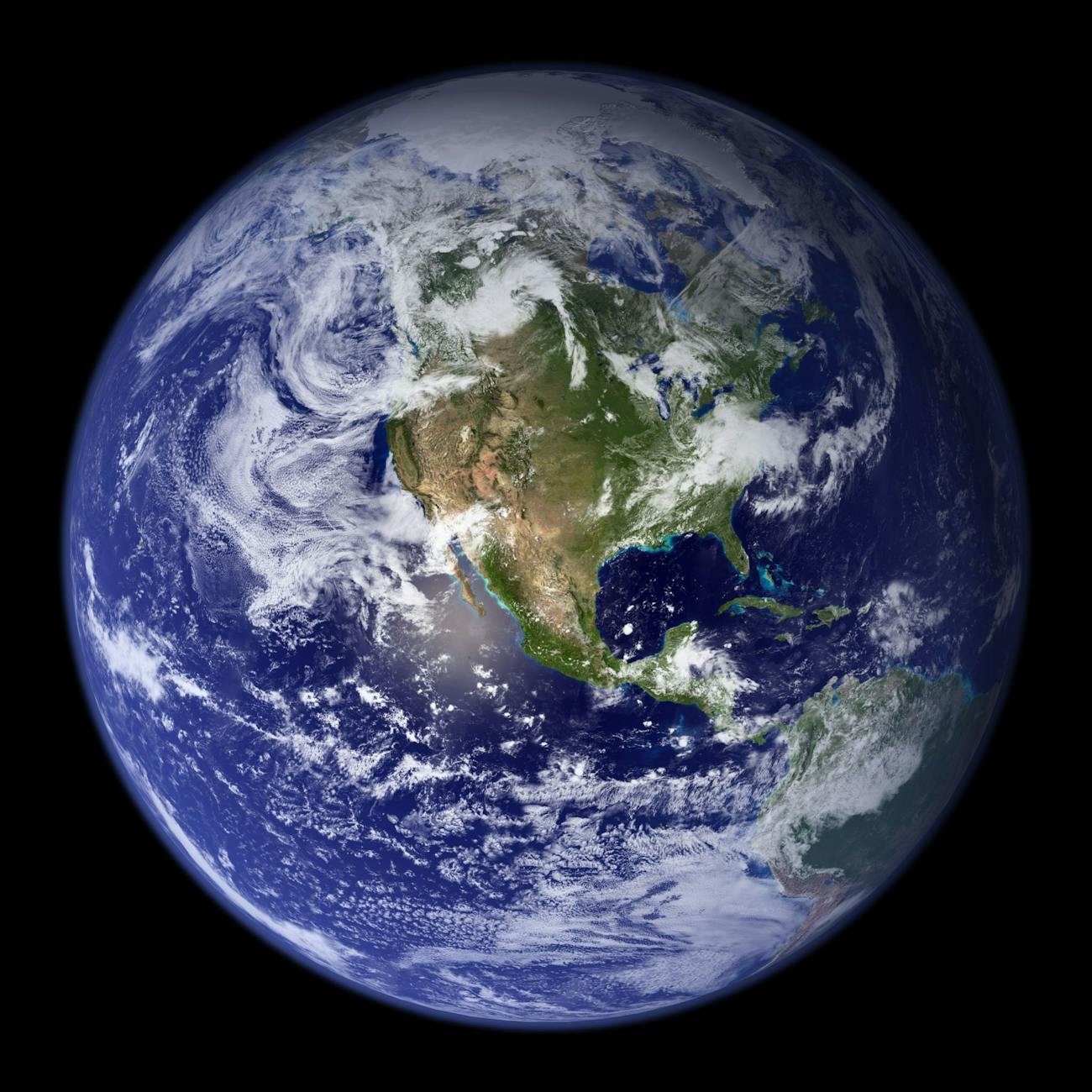
The air around Earth feels permanent, but it has a long and turbulent history. The atmosphere did not begin as the oxygen-rich mix familiar today. Over immense spans of time, it was reshaped by gases from space, violent impacts, volcanism, chemical reactions with rocks, and eventually by life itself.
That story is one of the biggest transformations in Earth history: a planet that began with an atmosphere dominated by very different gases eventually developed one containing abundant free oxygen. Even then, oxygen did not simply appear and stay fixed. It rose, fell, and changed over hundreds of millions of years.
The first atmosphere: borrowed from the solar nebula
Earth’s earliest atmosphere formed from gases in the solar nebula, the cloud of gas and dust from which the Sun and planets formed. This first atmosphere was primarily hydrogen and likely included simple hydrides such as water vapor, methane, and ammonia.
A hydride is a compound made of hydrogen and another element. In this early stage, these hydrogen-rich gases resembled the kinds of simple compounds associated with the giant planets.
But that earliest atmosphere did not last in its original form. Early Earth was an extremely violent place. Numerous impacts with large meteorites heated the atmosphere and drove off the most volatile gases. One especially dramatic event, the collision with Theia that is associated with the Moon’s formation, melted and ejected large portions of Earth’s mantle and crust. It also released large amounts of steam. That steam later cooled and condensed, contributing to ocean water by the end of the Hadean eon.
Outgassing, volcanism, and the rise of a second atmosphere
As Earth’s crust increasingly solidified near the end of the Hadean, the atmosphere cooled. Much of the water vapor condensed out of the air and precipitated into a superocean. At the same time, new gases continued to enter the atmosphere.
A key process here was outgassing, the release of gases from Earth’s interior, often through volcanic activity. Volcanism, along with gases added by huge asteroids during the Late Heavy Bombardment, built a later atmosphere in the Archean. This second atmosphere consisted largely of nitrogen along with carbon dioxide, methane, and inert gases.
This was already a major departure from the first atmosphere. By about 3.4 billion years ago, nitrogen had become the major component of this then-stable second atmosphere.
Not all of the carbon dioxide remained in the air. A major part dissolved in water and reacted with metals such as calcium and magnesium during the weathering of crustal rocks. Weathering is the breakdown and chemical alteration of rocks at Earth’s surface. These reactions formed carbonates, which were then deposited as sediments. Water-related sediments dating from as early as 3.8 billion years ago preserve evidence of these ancient processes.
A warm world under a fainter Sun
One of the great puzzles of early Earth is how the planet maintained a climate warm enough for liquid water and life even though the early Sun produced about 30% less solar radiance than today. This is known as the faint young Sun paradox.
Despite the weaker Sun, the geological record shows a relatively warm surface through the complete early temperature record of Earth, apart from one cold glacial phase about 2.4 billion years ago. That means the atmosphere and surface system must have operated in ways that kept the planet from freezing over completely.
Life begins to change the sky
The history of the atmosphere cannot be separated from the history of life. Hints of the earliest life forms appear as early as 3.5 billion years ago, and life soon became a planetary force.
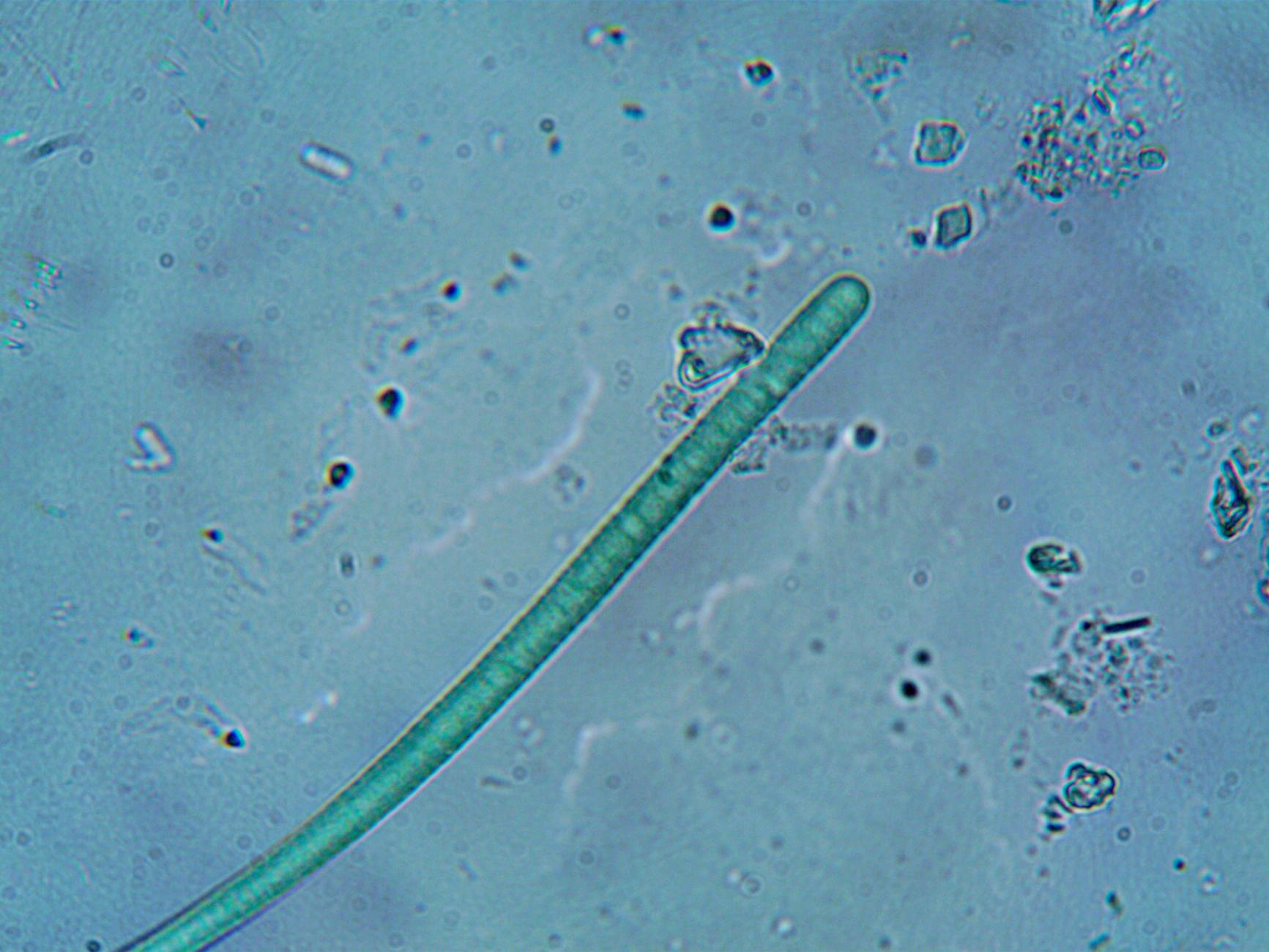
One especially important group was the photoautotrophs. These are organisms that use sunlight to make food. In doing so, they altered atmospheric chemistry. In the late Neoarchean, an oxygen-containing atmosphere began to develop, apparently because of a billion years of cyanobacterial photosynthesis. Cyanobacteria are photosynthetic microbes, and stromatolite fossils from 2.7 billion years ago preserve evidence of their ancient presence.
This did not mean that oxygen suddenly flooded the sky. At first, any oxygen produced by photosynthesis was quickly removed by reactions with reducing substances on Earth’s surface. These included ferrous iron, sulfur, and atmospheric methane. A reducing substance is one that readily reacts with oxygen, preventing oxygen from accumulating as free gas in the air.
The Great Oxygenation Event: oxygen arrives late
Free oxygen did not exist in Earth’s atmosphere until about 2.4 billion years ago, during the Great Oxygenation Event. This was a major turning point in planetary history.
The key change was not merely that oxygen was being produced. Oxygen had likely been produced earlier by cyanobacterial photosynthesis. The breakthrough came when oxygen production finally exceeded the supply of reactive materials that removed it. Once those oxygen-consuming materials could no longer keep up, free oxygen molecules began to accumulate in the atmosphere.
This marked a shift from a reducing atmosphere to an oxidizing atmosphere. An oxidizing atmosphere is one in which free oxygen is available in significant quantities and can drive new kinds of chemical reactions.
A geological clue to this shift is the end of banded iron formations during the early Proterozoic. Their disappearance signals the depletion of materials that had been reacting with oxygen to form ferric deposits.
Ancient sediments in Gabon, dating from about 2.15 to 2.08 billion years ago, record dynamic fluctuations in Earth’s oxygenation. These shifts were likely driven by the Lomagundi-Jatuli Carbon Isotope Excursion, a major disturbance in the carbon cycle.
Oxygen did not rise smoothly
It is tempting to imagine oxygen steadily climbing from zero to modern levels, but the real story was much messier. Oxygen showed major variations during the Proterozoic, including a billion-year period of euxinia.
Euxinia refers to conditions in which environments are both oxygen-poor and rich in hydrogen sulfide. That kind of chemistry points to a world where oxygen was still far from stable or uniformly abundant.
Only by the end of the Precambrian did oxygen reach a steady state of more than 15%.
Later, more robust eukaryotic photoautotrophs, including green and red algae, added further oxygenation to the atmosphere. This intensification came especially after the end of the Cryogenian global glaciation. It was followed by an evolutionary radiation in the Ediacaran period known as the Avalon explosion, when complex metazoan life forms first proliferated. Metazoans are multicellular animals. These early forms included the earliest cnidarians, placozoans, and bilaterians.
In the Phanerozoic eon, beginning 539 million years ago, more actively moving animal life appeared and rapidly diversified during the Cambrian explosion. Their locomotive metabolism was fueled by rising oxygen levels.
Why oxygen kept changing
Even after oxygen became established, it was not stable. Over the last 600 million years, atmospheric oxygen fluctuated significantly. Around 280 million years ago, during the Carboniferous period, it reached about 35%, far above today’s roughly 21%.
The exact cause of these long swings is not precisely understood.
Still, several major influences are known. Two main processes govern changes in atmospheric oxygen: the evolution of plants and their increasing role in carbon fixation, and the consumption of oxygen by rapidly diversifying animal life as well as by plants themselves through photorespiration and nighttime metabolism.
Other processes mattered too. Breakdown of pyrite and volcanic eruptions release sulfur into the atmosphere, and that sulfur reacts in ways that reduce oxygen. At the same time, volcanic eruptions also release carbon dioxide, which can fuel oxygenic photosynthesis by terrestrial and aquatic plants.
Periods with more oxygen in the atmosphere were often associated with more rapid development of animals.
Continents, rocks, and the long carbon cycle
Life was not the only agent reshaping the atmosphere. Plate tectonics, the constant rearrangement of continents, influenced atmospheric evolution over long timescales by transferring carbon dioxide to and from large continental carbonate stores.
This connection between air, oceans, rocks, and life is one reason the atmosphere changed so profoundly over time. Carbon moved between the atmosphere, water, sediments, and crust, while biological activity altered both carbon and oxygen chemistry.
The early basic carbon isotopy record strongly suggests that fundamental features of the carbon cycle were already established as early as 4 billion years ago. Carbon isotopy refers to the proportions of different carbon isotopes preserved in rocks and sediments, which can reveal how carbon moved through Earth’s systems.
The atmosphere we know is the result of deep history
Today, dry air is made up mostly of nitrogen and oxygen, with argon, carbon dioxide, and trace gases making up the rest. But this familiar mixture is the product of an extraordinarily long evolution.
Earth’s atmosphere began with gases gathered from the solar nebula. It was then altered by impacts, stripped of volatile gases, replenished by outgassing and volcanism, modified by weathering and sediment formation, and eventually transformed by life. Free oxygen arrived late, only after billions of years of planetary and biological change. And even after it arrived, it continued to fluctuate dramatically.
The sky above us is not a static backdrop. It is a record of collisions, volcanoes, oceans, microbes, continents, and deep time itself.
Sources
Based on information from Atmosphere of Earth.
More like this
Take a deep breath of deep time — download DeepSwipe and explore how worlds, skies, and life reshape each other one swipe at a time.