Full article · 7 min read
Earth's Stratosphere and the Ozone Layer
Most of us grow up with a simple rule about the atmosphere: the higher you go, the colder it gets. That is true in the troposphere, the lowest layer of the atmosphere where nearly all weather happens. But above it sits a region that flips that pattern on its head.
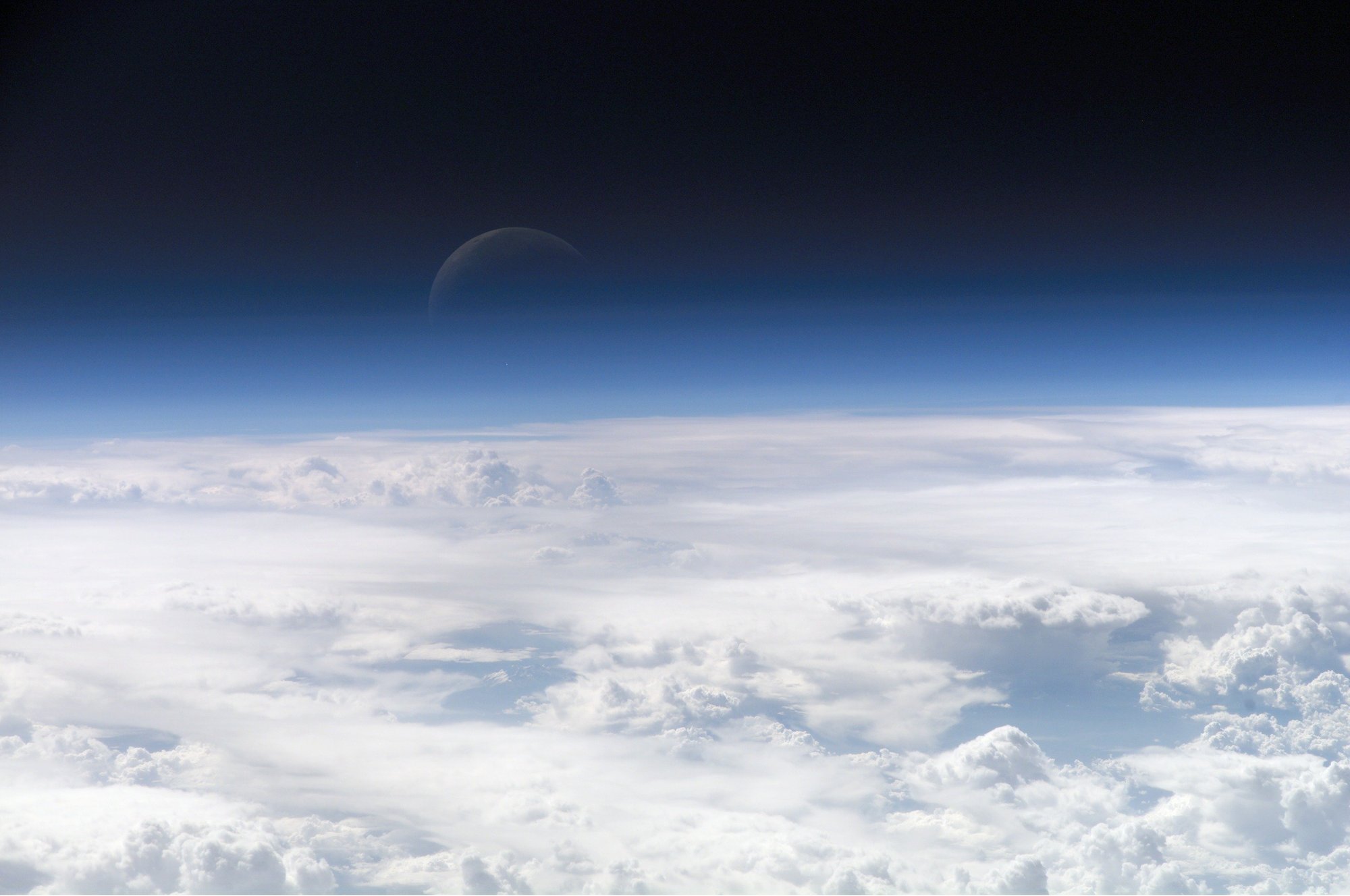
The stratosphere is the second-lowest layer of Earth's atmosphere, lying above the troposphere and below the mesosphere. It begins at roughly 12 kilometers above Earth's surface and extends up to about 50 to 55 kilometers. What makes it so fascinating is that temperature rises with altitude there. Instead of cooling steadily as you climb, the stratosphere gets warmer higher up.
That strange reversal is not a random quirk. It is tied directly to one of the most important features in Earth's atmosphere: the ozone layer.
Why the stratosphere gets warmer with height
The stratosphere contains the ozone layer, a region with relatively high concentrations of ozone. Ozone is still only a tiny part of the atmosphere overall, but in the stratosphere it plays an outsized role. About 90% of all atmospheric ozone is found there, mainly from about 15 to 35 kilometers altitude, with a peak concentration around 32 kilometers.
Ozone and molecular oxygen absorb ultraviolet radiation from the Sun. Ultraviolet, often shortened to UV, is a high-energy part of sunlight with wavelengths shorter than visible light. In the atmosphere, oxygen and ozone absorb almost all radiation with wavelengths shorter than 300 nanometres. When molecules absorb this radiation, they gain energy, and that heats the surrounding air.
This is the key to the stratosphere's unusual temperature profile. Higher parts of the stratosphere are warmed by the absorption of solar ultraviolet radiation, so the temperature increases with altitude. Near the boundary with the troposphere, the tropopause, temperatures may be around −80 °C. Near the top of the stratosphere, temperatures can rise to just below 0 °C.
The ozone layer does more than warm the air
The ozone layer is not just a temperature-maker. It is also part of what makes Earth's atmosphere a protective buffer between the surface and outer space. The atmosphere shields the surface from most ultraviolet solar radiation, and the ozone-rich stratosphere is central to that job.
Without this filtering effect, much more harmful high-energy radiation would reach the surface. In addition to helping block UV, the heat created by ozone absorption changes the whole behavior of the stratosphere.
Why the stratosphere is so calm
Because temperature rises upward in the stratosphere, the layer is very stable. In the troposphere, the surface usually warms the air from below, encouraging vertical mixing as warmer air rises and cooler air sinks. That turning and mixing is one reason the troposphere is full of weather.
The stratosphere works differently. Its upward-warming temperature structure restricts turbulence and mixing. With less vertical motion, it lacks the weather-producing turbulence so common below. That is why the stratosphere is almost completely free of clouds and other forms of weather.
This calmness helps distinguish it sharply from the troposphere. Nearly all atmospheric water vapor is found in the troposphere, and that is where most clouds, storms, and active wind circulation occur. The stratosphere, by contrast, is dry and stable.
There are rare exceptions. Polar stratospheric clouds, also called nacreous clouds, can sometimes appear in the lower stratosphere where the air is coldest. But these are unusual, and they do not change the basic picture: compared with the turbulent world below, the stratosphere is remarkably quiet.
Where the stratosphere fits in the atmosphere
Earth's atmosphere is divided into layers largely by how temperature changes with height. From the ground upward, the main layers are the troposphere, stratosphere, mesosphere, thermosphere, and exosphere.
The stratosphere sits above the troposphere, which stretches from the surface to an average height of about 12 kilometers. The boundary between them is called the tropopause. Above the stratosphere lies the mesosphere, beginning around 50 kilometers.
Even though the stratosphere is far above everyday life, it still contains a meaningful share of the atmosphere's mass. In fact, 99% of the total mass of the atmosphere lies below 30 kilometers, which includes much of the stratosphere. Atmospheric pressure at the top of the stratosphere is only about 1/1000 of the pressure at sea level.
That dramatic drop in pressure helps explain why this layer is so different from the air near the ground. With altitude, both pressure and density decrease, but the stratosphere's temperature behavior makes it stand out from the simpler “colder as you go higher” pattern many people expect.
A layer important to flight, but not to weather
The stratosphere is the highest layer accessible by jet-powered aircraft. Most conventional aviation activity happens lower down in the troposphere, but the stratosphere is still important in aviation because of its relative calm. Since it is largely free of the weather systems that dominate the lower atmosphere, it presents a very different environment from the storm-filled air beneath it.
Jet streams, those narrow fast-moving bands of air that usually form around 9,100 meters, are associated with interfaces between large circulation cells and are closer to the upper troposphere and lower atmosphere below the main body of the stratosphere. The real identity of the stratosphere is not strong weather or moisture, but stability.
Why Earth is special
One of the most striking facts about the stratosphere is that this kind of layer is unique to Earth. Mars and Venus do not have a stratosphere because their atmospheres contain low abundances of oxygen.
That matters because the stratosphere's warming depends on the absorption of ultraviolet radiation by ozone, and ozone is closely tied to oxygen in the atmosphere. Without enough oxygen, this kind of ozone-rich, upward-warming layer does not form in the same way.
So when we talk about Earth's stratosphere, we are not just talking about another atmospheric level. We are talking about a distinctly Earth-like feature, linked to the composition of our air and to the way our planet interacts with sunlight.
Ozone is tiny in amount, huge in effect
A useful perspective is that ozone is a trace gas. Dry air is mostly nitrogen and oxygen, with argon and carbon dioxide making up much smaller portions, plus tiny amounts of many other gases. Ozone is one of those minor ingredients by quantity, yet it has major consequences.
This is a recurring theme in atmospheric science: small amounts can matter enormously if a gas interacts strongly with radiation. Ozone does exactly that. By absorbing ultraviolet radiation, it shapes temperature, stability, and protection from solar energy that would otherwise be more intense at the surface.
In other words, the ozone layer is a good reminder that importance in the atmosphere is not only about abundance. Sometimes a tiny fraction of the air can help define an entire layer of the sky.
The stratosphere and the bigger atmospheric story
Earth's atmosphere allows life to exist and evolve by providing the right chemical and climate conditions. It redistributes heat and moisture, softens temperature extremes between day and night, and protects the surface from much of the danger coming from space.
The stratosphere contributes to that system in a very specific way. It is not the layer of clouds, rain, or everyday breathing air. Instead, it is a high, stable region where ozone transforms incoming ultraviolet radiation into heat and, in doing so, creates one of the atmosphere's most unusual structures.
That single feature, warming upward instead of cooling, changes everything. It suppresses turbulence, limits weather, and makes the stratosphere one of the calmest major layers of the atmosphere. It also highlights how delicately Earth's atmosphere is organized: each layer behaves differently because of the interplay between composition, radiation, pressure, and temperature.
So the next time someone says the atmosphere just gets colder as you go up, you can point to the stratosphere — the layer that breaks the rule, thanks to ozone and sunlight.
Sources
Based on information from Atmosphere of Earth.
More like this
Climb higher in your curiosity like a trip through the stratosphere — download DeepSwipe and soak up knowledge daily.


