Full article · 8 min read
Mount Vesuvius 79 AD: The Warnings People Ignored
The eruption of Mount Vesuvius in 79 AD is often remembered for the destruction of Pompeii and Herculaneum. But one of the most haunting parts of the disaster is how many warning signs came first — and how ordinary they seemed to the people living nearby.
In the days before the eruption, Campania experienced minor earthquakes. Yet these tremors did not trigger mass panic. For local residents, small quakes were familiar. Pliny the Younger wrote that they were “not particularly alarming” because such shaking was frequent in the region. That normality may have been deadly.
The catastrophe that followed would destroy Roman towns, bury whole communities under ash and pyroclastic deposits, and become one of history’s most famous volcanic disasters. But before the darkness, the falling pumice, and the lethal surges, there was a calm that felt routine.
Campania was used to earthquakes
People around the Bay of Naples had good reason to be accustomed to seismic activity. Years before the eruption, a major earthquake struck on February 5, 62 AD and caused widespread destruction, especially in Pompeii. Some of that damage had still not been repaired by the time Vesuvius erupted in 79 AD.
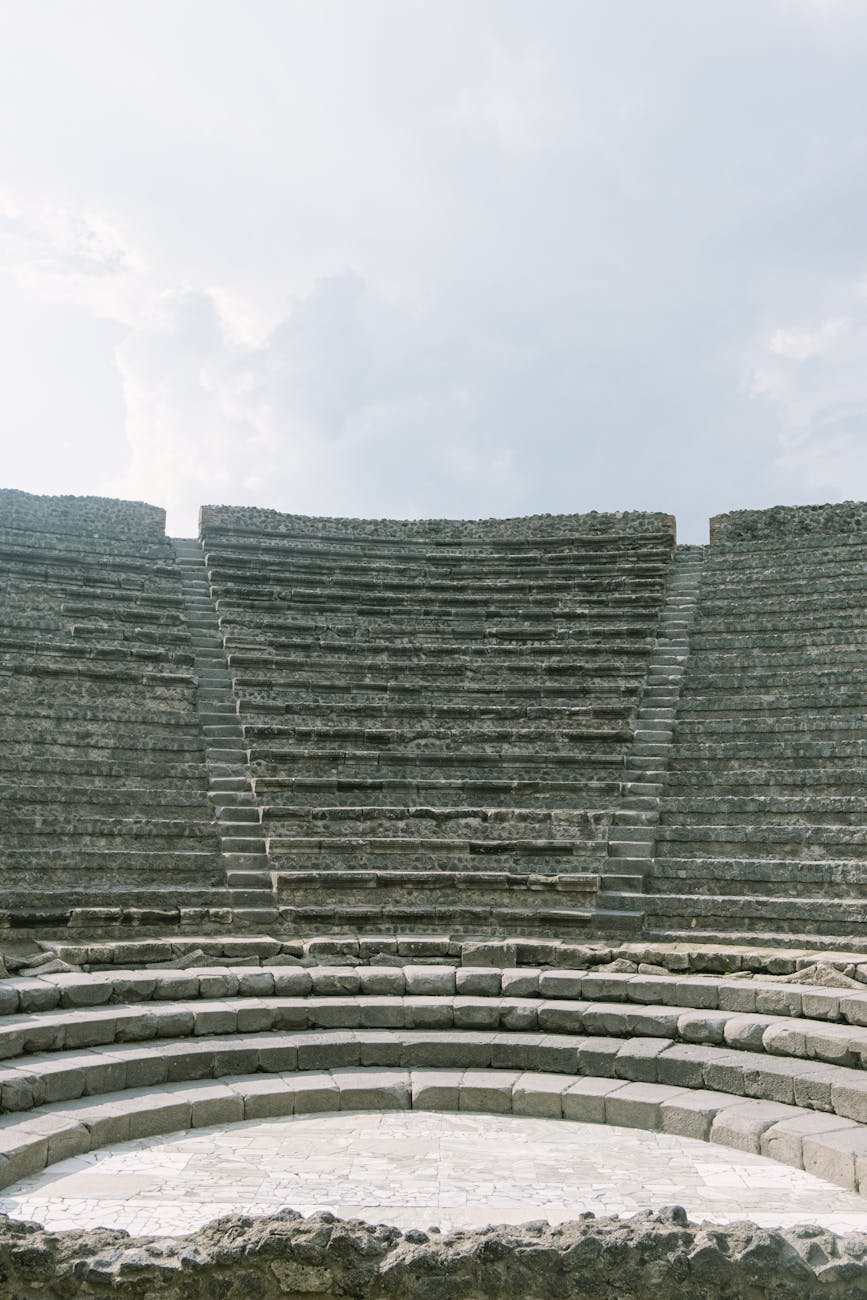
Another smaller earthquake occurred in 64 AD while the emperor Nero was in Naples performing in a public theater. Ancient writers recorded that Nero continued singing through the shaking. According to Tacitus, the theater collapsed shortly after it had been evacuated.
These earlier quakes mattered because they helped shape expectations. If the ground shook and life went on, it was easy to believe the next tremor would also pass. Then, in the four days before the eruption, more minor earthquakes were reported. Even then, the warning was not understood for what it was.
The deceptive calm before disaster
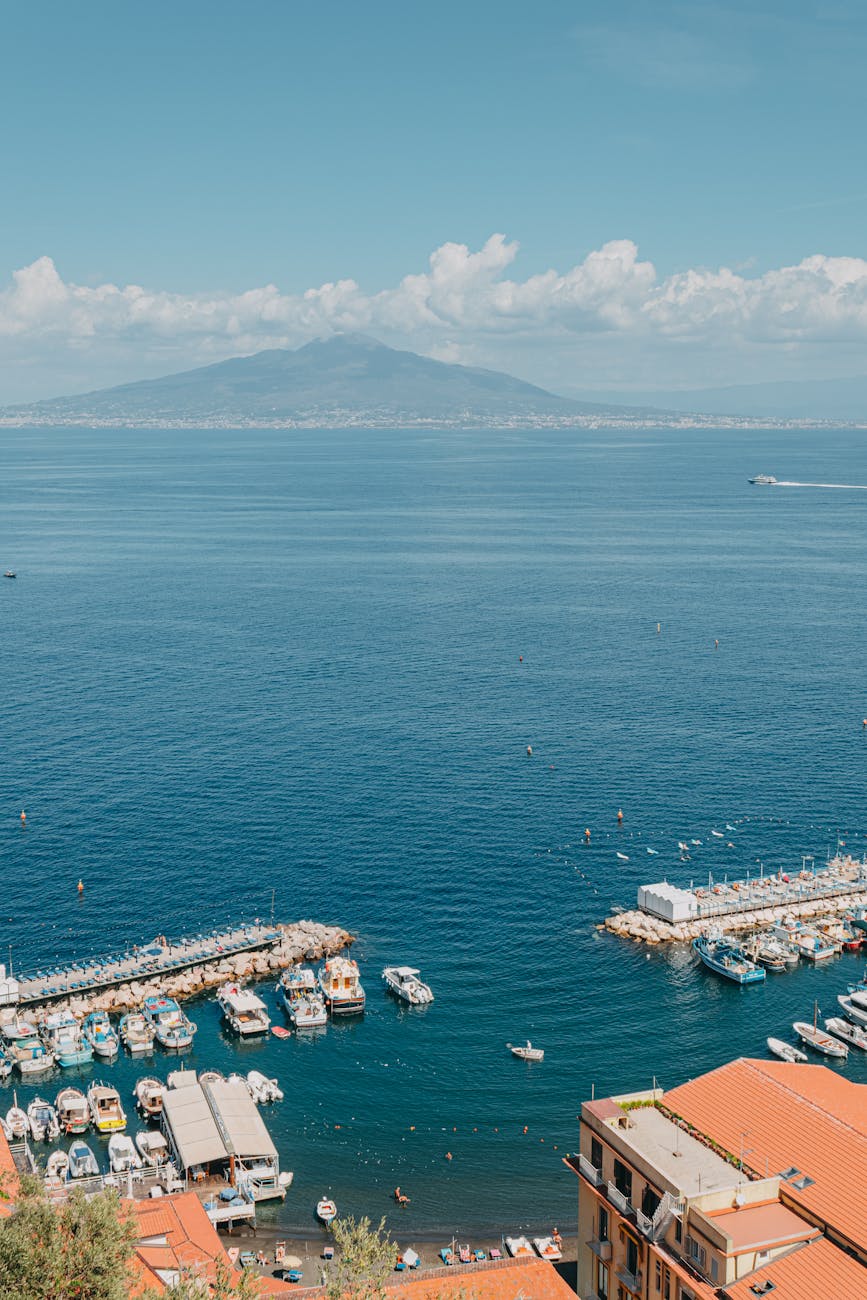
One striking detail from the surviving eyewitness account is that the morning before the eruption seemed normal. Pliny the Younger, who was at Misenum across the Bay of Naples, described no immediate sense that a historic disaster was about to begin.
Then, early in the afternoon, Vesuvius erupted violently. A huge column of ash, pumice, and hot gases shot high into the sky. Ash and pumice began falling across the region. Pumice is a light, porous volcanic rock formed when gas-rich magma cools rapidly. Though it can look harmless compared with flowing lava, falling pumice can pile up heavily on roofs until buildings collapse.
That is exactly what began happening. Over the next hours, rescues and escapes took place as conditions worsened. Earthquakes returned, knocking down walls and killing some people who were already fleeing. A mild tsunami also affected the Bay of Naples.
What had started as another day in a tremor-prone region had become a multi-part disaster: eruption, ash fall, structural collapse, earthquakes, and sea disturbance all layered together.
Why the first phase still gave people a chance
Detailed studies of the deposits left by the eruption suggest that the event unfolded in phases. An initial Plinian phase lasted roughly 18 to 20 hours. The term Plinian refers to a style of eruption marked by a towering column of ash and gas rising high into the atmosphere. The name comes from Pliny the Younger, whose letters preserved the classic description.
During this first phase, pumice and ash fell over a wide area, creating thick deposits, especially toward Pompeii. One reconstruction found that white pumice fell for several hours on the first day, followed by grey pumice for many more hours.
This phase was terrifying, but it still offered a narrow window for escape. Later magnetic studies of materials from Pompeii concluded that the early pumice fall was the last opportunity to flee. After that, the situation changed from dangerous to nearly unsurvivable.
The reason is simple: falling ash and pumice, while deadly in their own way, are not the same as a pyroclastic surge.
The surges that ended escape
After the towering eruption column became unstable, it began to collapse. This produced pyroclastic density currents, often described as pyroclastic flows or surges. These were fast-moving currents of hot gases, ash, and volcanic debris racing along the ground.
In the area near Vesuvius, pyroclastic flows began during the night or early the next day. People saw lights on the mountain and interpreted them as fires. Even at Misenum, far from the volcano, people fled for their lives.
For Pompeii and nearby settlements, the later surges were catastrophic. A rapid, dense, and very hot surge in the early morning of the second day knocked down walls and killed many of those who had remained behind. Researchers concluded that surges 4 and 5 likely destroyed and buried Pompeii.
These surges buried towns under deep layers of fine volcanic material, pulverized pumice, and lava fragments. Herculaneum, Pompeii, and Oplontis received the brunt of this devastation.
What made the surges so deadly
The temperatures involved were extreme. Studies of roof tiles, plaster, and rock fragments from the deposits around Pompeii were used to estimate how hot the currents were. Researchers concluded that the first major surge reaching Pompeii had minimum emplacement temperatures of about 180–220 °C, while the second reached around 220–260 °C. In some parts of the flow environment, temperatures were estimated even higher.
Those numbers matter because they explain why survival became impossible. The study suggested that anyone still in structural refuges could not escape once incinerating gases surrounded the city. Some cooler pockets may have existed in rooms under collapsed roofs, but even there temperatures could still be around 100 °C — the boiling point of water.
In later analysis of the victims, researchers argued that temperatures during the fourth pyroclastic surge were high enough to kill people in a fraction of a second. The twisted postures of some bodies were not signs of long suffering, but the result of heat shock.
This is why the “window to flee” is such an important idea in understanding the disaster. Once the surges arrived, escape was effectively over.
Pompeii and Herculaneum died differently
Although both towns were destroyed, the pattern was not exactly the same.
Pompeii was heavily affected by falling pumice during the earlier phase. A thick layer accumulated, damaging and collapsing buildings. Later pyroclastic surges swept through and buried the city more completely.
Herculaneum, by contrast, was spared the worst of the early tephra fall because of wind direction. Tephra is a general term for volcanic material blasted into the air, including ash and pumice. But Herculaneum was much closer to the volcano and was eventually buried under 23 metres of material deposited by pyroclastic surges.
Evidence from skeletons found in arched vaults near the seashore suggests that many of Herculaneum’s victims died from thermal shock caused by the first surge. Carbonised wood in buildings supports the picture of extremely high heat.
The eyewitness who saw the warning signs unfold
The only surviving firsthand written account comes from Pliny the Younger, who was 17 at the time. From Misenum, about 29 kilometres away, he watched an extraordinarily dense cloud rising above the mountain. He compared it to a pine tree: a tall trunk spreading into branches at the top.
His uncle, Pliny the Elder, commanded the Roman fleet at Misenum. When a messenger arrived from Rectina, a woman near the foot of the volcano who could only escape by sea, he launched a rescue mission.
Meanwhile, the younger Pliny stayed behind. He described tremors that grew serious enough for him and his mother to leave their house for the courtyard. At dawn, after further shaking, the population abandoned the village. He also recorded a strange retreat of the sea from its banks, a sign taken as evidence of a tsunami.
Then came the darkness. A black cloud obscured the light, with flashes shining through it. Ash fell so thickly that Pliny had to shake it off repeatedly to avoid being buried. Yet even at that distance, after the ashfall lessened, he and his mother returned home and waited for news.
His account captures the psychology of disasters as much as the physical events: uncertainty, delay, ordinary habits continuing too long, and danger only gradually becoming undeniable.
Why the warnings were ignored
The most chilling lesson from Vesuvius is that the warning signs were real, but they did not look exceptional enough.
A region used to small tremors did not treat minor earthquakes as a signal to flee. Earlier destructive quakes had been survived. Repairs were ongoing. Daily life continued. Even on the morning of the eruption, nothing seemed out of the ordinary from a distance.
The disaster escalated in stages, and that may have made it harder to grasp. First tremors, then ash, then roof collapses, then more earthquakes, then the sea disturbance, then finally the pyroclastic surges. By the time the deadliest phase arrived, many people had already lost their best chance to escape.
That sequence is what makes the eruption so memorable. It was not only a sudden explosion from a volcano. It was a chain of warnings, partial clues, and missed chances — ending in one of antiquity’s most devastating natural disasters.
A final lesson from Vesuvius
The eruption of 79 AD preserved cities, buildings, and victims in extraordinary detail, which is why it continues to fascinate archaeologists and historians. But beyond the ash and ruins lies a stark human story: familiar danger is easy to dismiss.
In Campania, the ground had shaken before. People had reasons not to panic. That was the trap. The signs were there, but they blended into normal life until normal life was gone.
Sources
Based on information from Eruption of Mount Vesuvius in 79 AD.
More like this
Don’t ignore the warning signs from your curious brain — download DeepSwipe and let knowledge erupt before the window to learn closes.