Full article · 6 min read
Disappearing Act: When Saturn’s Rings Vanish
Saturn is famous for its spectacular rings, but one of the strangest things about them is that they do not always look spectacular from Earth. At certain times, the rings seem to fade away almost completely, making the Solar System’s most recognizable planet look oddly plain.
This is not because the rings are gone. It is a trick of geometry.
Why Saturn’s rings can seem to vanish
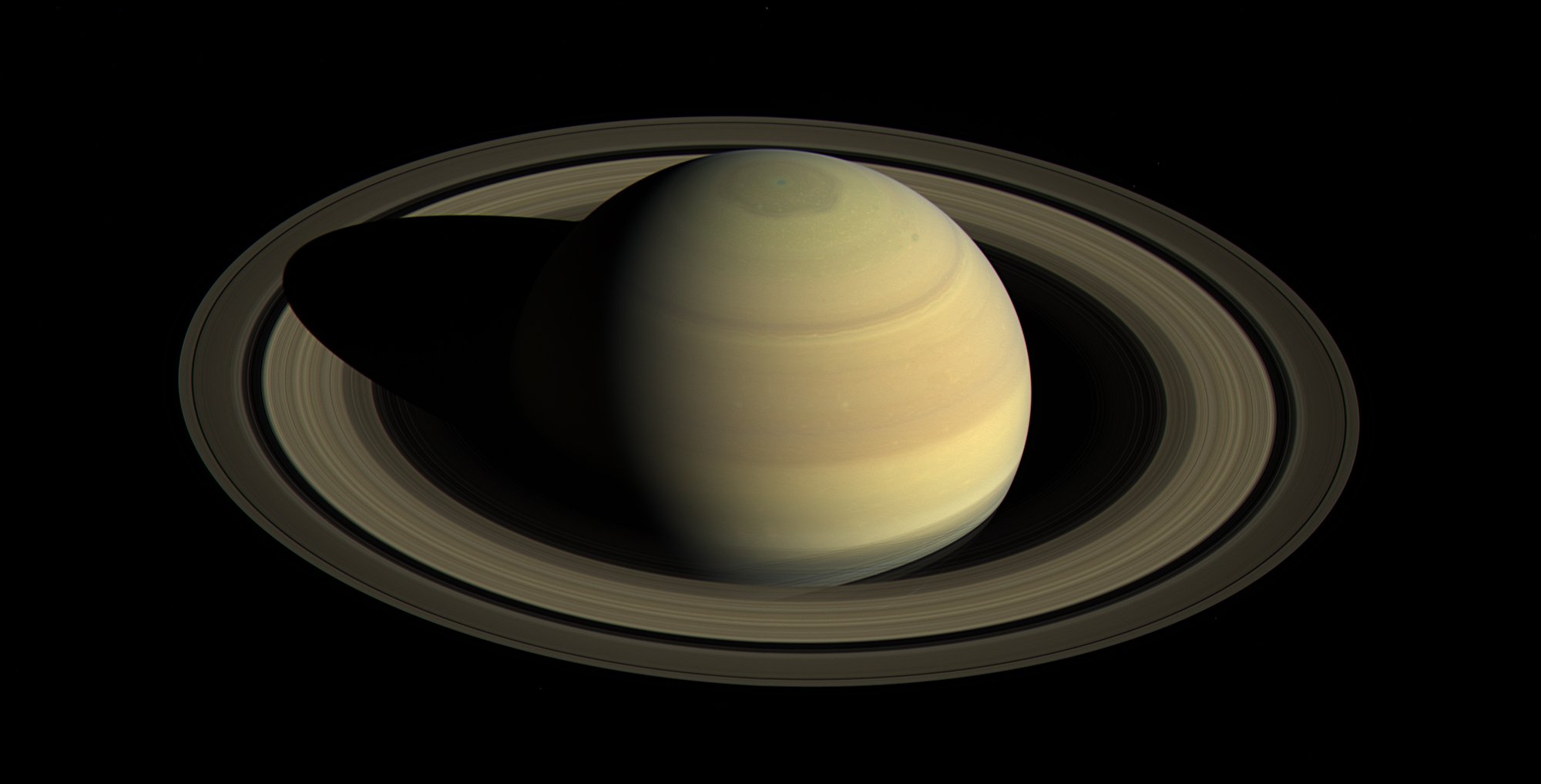
Saturn’s rings form a broad, flat system around the planet’s equator. When Earth passes through the ring plane, the rings are seen edge-on. The ring plane is simply the flat midline of the ring system. From that angle, the rings become so thin in our line of sight that they can briefly disappear from view.
This happens twice every Saturnian year, which works out to roughly every 15 Earth years. Saturn takes about 29.4 years to complete one trip around the Sun, so these ring-plane crossings are rare enough to feel special for skywatchers.
The effect is dramatic because Saturn’s rings are astonishingly thin compared with their enormous width. The main rings stretch from about 6,630 to 120,700 kilometres outward from Saturn’s equator, yet they average only about 20 metres thick. Seen broadside, they look majestic. Seen from the side, they can become nearly invisible.
Thin, wide, and made mostly of ice
The ring system is not a solid disk. It is made mostly of water ice, along with smaller amounts of rocky debris, dust, tholin impurities, and a coating of amorphous carbon. The individual particles range from tiny dust specks to chunks as large as 10 metres.
That combination helps explain why the rings are so bright and so striking when they are tilted toward Earth. Ice reflects sunlight well, making the rings stand out. But when they turn edge-on, their tiny vertical thickness gives us very little illuminated area to see.
Saturn is not the only giant planet with rings, but its ring system is the largest and most visible. That is why the disappearing-ring effect feels so surprising: the best-known feature of the planet can suddenly become its hardest feature to spot.
Ring tilt changes how bright Saturn looks
The apparent brightness of Saturn changes for more than one reason. One major factor is the tilt of the rings relative to Earth and the Sun.
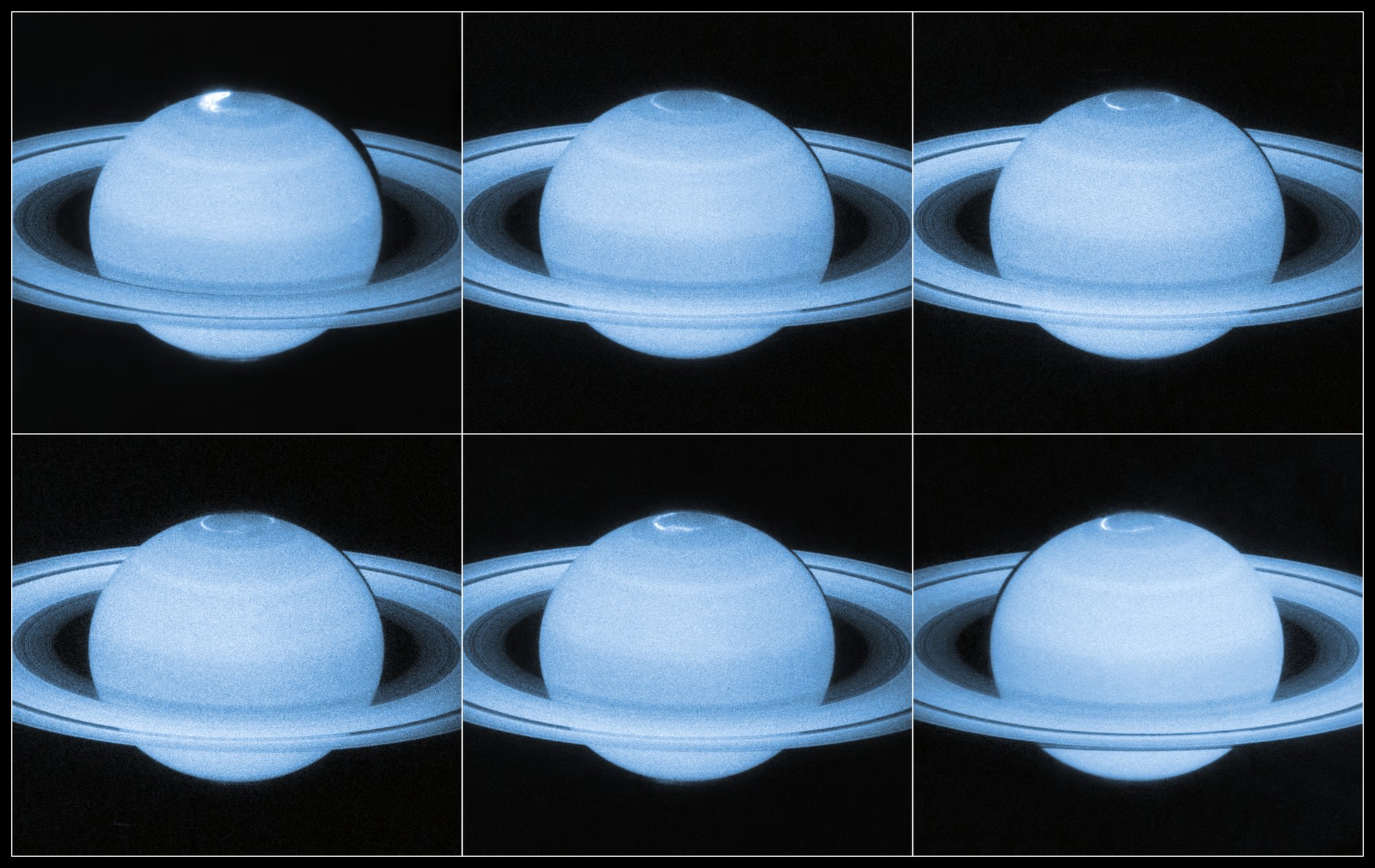
When the rings are opened wide from our point of view, Saturn appears brighter. When the rings are turned close to edge-on, the planet can appear fainter. The average apparent magnitude of Saturn is 0.46, but its brightness varies. The brightest magnitude, −0.55, occurs when the rings are inclined most highly. The faintest magnitude, 1.17, happens when they are least inclined.
So Saturn’s “disappearing act” affects more than just the look of the rings. It changes the whole visual impression of the planet.
The best time to see Saturn
Saturn and its rings are best seen when the planet is at opposition. Opposition is the point when a planet appears opposite the Sun in Earth’s sky. In practical terms, Earth is lined up between Saturn and the Sun, making Saturn appear at its brightest.
A Saturnian opposition happens about every 378 days. Around opposition, Saturn is easier to observe and often becomes a standout object in the night sky, appearing as a bright yellowish point of light to the naked eye.
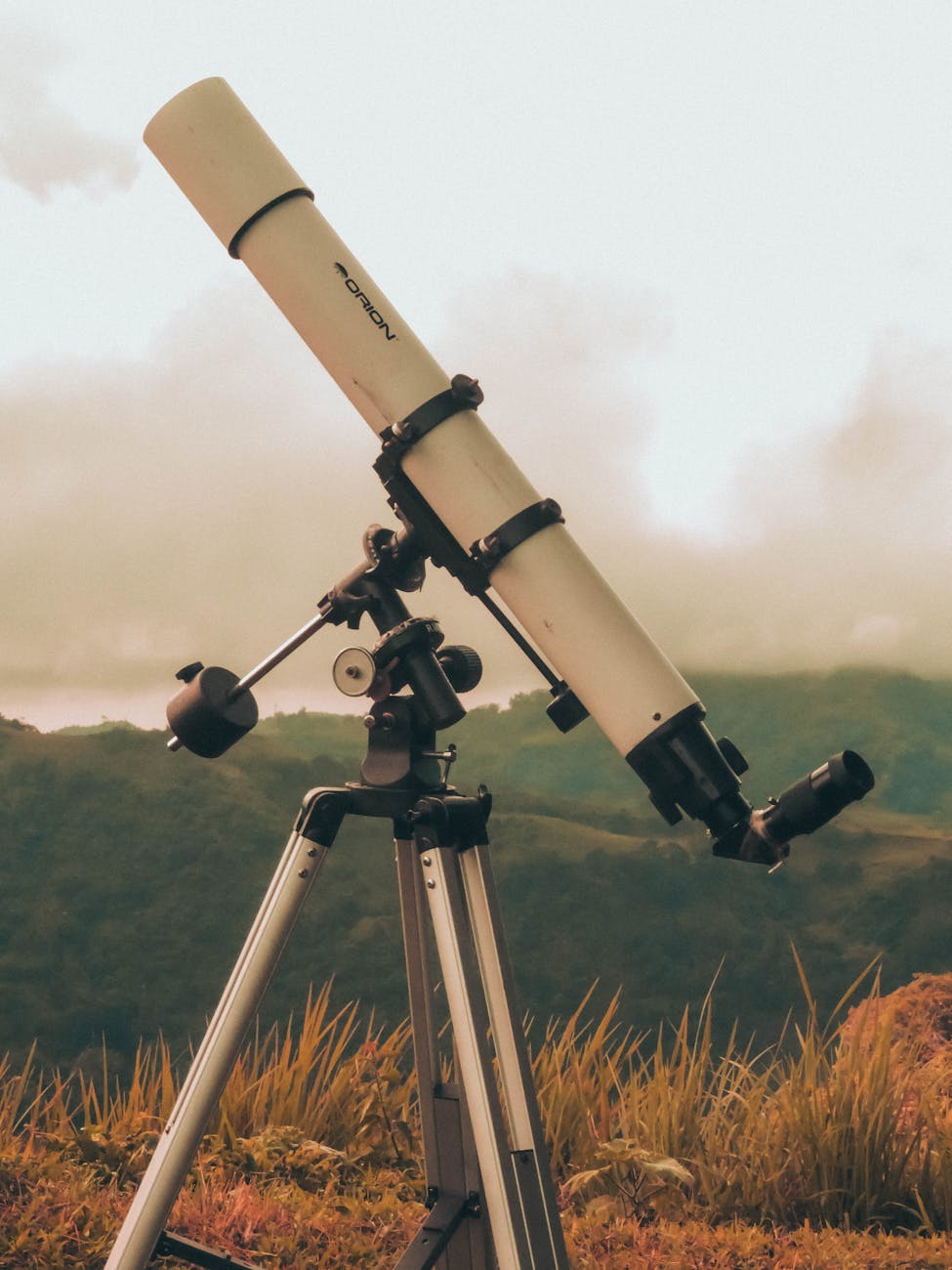
If you want a clear view of the rings themselves, most observers need optical aid. Very large binoculars or a small telescope with magnification of at least 30 times is usually required to resolve the rings clearly.
That means timing matters. Opposition gives you maximum brightness, but ring tilt determines whether you are treated to a full ring display or a near-vanishing line.
Why the rings disappear only briefly
Even during a ring-plane crossing, the rings do not actually go anywhere. Their visibility changes because Saturn and Earth keep moving in their orbits.
Saturn orbits the Sun at an average distance of more than 1.4 billion kilometres, or about 9 AU. An AU, or astronomical unit, is the average distance between Earth and the Sun. Because both planets are constantly moving, the viewing angle of Saturn’s rings slowly changes over time.
As soon as Earth is no longer crossing the ring plane, the rings begin to open up again. First they appear as a narrow line, then a slim ellipse, and eventually the familiar broad ring system returns.
A planet built for spectacle
Even without the rings, Saturn is remarkable. It is the sixth planet from the Sun and the second largest in the Solar System after Jupiter. It is a gas giant made predominantly of hydrogen and helium, with no definite solid surface. Its average radius is about nine times that of Earth, yet it has less than a third of Jupiter’s mass.
Saturn is also the only planet in the Solar System with an average density lower than water. Its pale yellow color comes from ammonia crystals in its upper atmosphere. Winds there can reach 1,800 kilometres per hour, making them some of the fastest planetary winds in the Solar System.
So when the rings temporarily disappear, observers are left with a different kind of beauty: a flattened, pale golden world with subtle cloud bands and a huge planetary presence.
The rings are not alone
Saturn’s ring system is shaped and influenced by nearby moons. Some moons, including Pandora and Prometheus, act as shepherd moons. That means their gravity helps confine ring material and keep parts of the rings from spreading out. Pan and Atlas create weak density waves in the rings.
Saturn itself has at least 274 moons, with 63 officially named. Its largest moon, Titan, is especially notable: it is larger than Mercury, though less massive, and it is the only moon in the Solar System with a substantial atmosphere.
Beyond the bright main rings is the much sparser Phoebe ring, tilted 27 degrees to the others and orbiting in retrograde fashion, meaning it moves in the opposite direction compared with most of Saturn’s major moons and rings.
Moon occultations add another sky show
There is another celestial trick involving Saturn: sometimes the Moon occults it. An occultation happens when one object passes in front of another and hides it from view. From Earth, that means the Moon can appear to cover Saturn in the sky.
These events occur in seasons rather than continuously. Saturnian occultations can happen monthly for about a year, followed by around five years without any. They depend on the alignment of Saturn’s position with the points where the Moon’s orbit crosses the relevant plane in the sky.
So Saturn can be hidden in more than one way. Its rings can vanish because of our viewing angle, and the planet itself can briefly disappear behind the Moon.
A famous sight with a hidden rhythm
To the naked eye, Saturn looks steady and simple: a bright yellowish point among the stars. But through a telescope and over long stretches of time, it becomes a world of cycles and changing appearances.
Its rings widen and narrow. Its brightness rises and falls. Every so often, the Solar System’s greatest ring display slips into near invisibility, only to return again.
That hidden rhythm is part of what makes Saturn so captivating. The planet is not just beautiful. It is dynamic, seasonal, and full of visual surprises for anyone patient enough to keep watching the sky.
Sources
Based on information from Saturn.
More like this
Catch Saturn before the rings pull their disappearing act — download DeepSwipe and keep your universe of facts wide open.