Full article · 6 min read
Could a Supernova Harm Earth?
A supernova is one of the most powerful explosions in the universe: a star suddenly flares with extraordinary brightness, sometimes rivaling the light of an entire galaxy before fading over weeks or months. These blasts are spectacular from afar, but they also raise an unsettling question: what if one happened close enough to Earth?
The short answer is yes, a nearby supernova could affect our planet. But “nearby” in astronomy means surprisingly close. The level of danger depends on the type of supernova and how much energy it releases.
How close would a supernova need to be?
A near-Earth supernova is one close enough to have noticeable effects on Earth’s biosphere. Depending on the kind of explosion and its energy, that danger zone could extend out to about 3,000 light-years.
That sounds enormous, and on a human scale it is. But compared with the size of the Milky Way, it is still a limited neighborhood. Not every exploding star within that distance would cause catastrophe, and the exact effects would vary.
One estimate suggests a Type II supernova would have to be closer than 8 parsecs, or about 26 light-years, to destroy half of Earth’s ozone layer. That is extremely close in galactic terms, and there are no known candidates that near. The situation is more concerning for Type Ia supernovae, which are thought to be potentially the most dangerous if they occur close enough.
Why some supernovae are more dangerous than others
Astronomers classify supernovae by what they see in their light curves and spectra. A light curve is simply a graph of brightness over time. A spectrum is the spread of light into its component wavelengths, which reveals chemical signatures.
Type Ia supernovae come from white dwarf stars in binary systems. A white dwarf is the dense remnant of a star like the Sun after it has exhausted its fuel. In a binary system, two stars orbit each other, and a white dwarf may gain matter from its companion. Under the right conditions, that can trigger runaway nuclear fusion and destroy the white dwarf in a titanic explosion.
These events are especially worrying because white dwarfs in binaries are common and dim. That makes dangerous candidates harder to spot and study in advance. A nearby Type Ia could happen in a system that has not attracted much attention.
Core-collapse supernovae are the other main category. These happen when a massive star can no longer support its core against gravity. The core collapses, and the star may explode. These supernovae can also be hazardous, but the closest known stars that might produce them are still far enough away that an immediate biosphere-scale threat is not expected.
Has Earth already been touched by ancient supernovae?
There are intriguing clues in Earth’s own geological record.
In 1996, scientists proposed that traces of ancient supernovae might be detectable on Earth through unusual metal isotope signatures in rock layers. Later, iron-60 enrichment was reported in deep-sea rock from the Pacific Ocean. Iron-60 is a radioactive isotope associated with supernova production, making it a possible fingerprint of stellar explosions that occurred close enough for debris to eventually reach Earth.
Another clue comes from Antarctic ice. In 2009, elevated levels of nitrate ions were found in ice layers that coincided with the supernovae of 1006 and 1054. Those historic explosions were seen in the sky by human observers, and gamma rays from them could have boosted atmospheric nitrogen oxides, which then became trapped in the ice.
These signals do not mean Earth was devastated. Instead, they suggest that supernovae may leave subtle chemical signatures behind, like distant cosmic fingerprints preserved in stone and ice.
Could a supernova change Earth’s climate?
Possibly. Geological records suggest that nearby supernova events may have increased the number of cosmic rays reaching Earth.
Cosmic rays are high-energy particles traveling through space. Supernova remnants are thought to accelerate a large fraction of the galaxy’s primary cosmic rays. When those particles interact with Earth’s atmosphere, they may influence climate indirectly.
One proposed chain of effects is striking: more cosmic rays could contribute to a cooler climate. A bigger temperature contrast between the equator and the poles would then strengthen winds, increase ocean mixing, and move more nutrients into shallow waters along continental shelves.
That kind of environmental shift could ripple through ecosystems. In fact, nearby supernova events have been linked in geological records to increased biodiversity. Rather than acting as a simple destroyer, a supernova might reshape Earth’s environment in complicated ways, with harmful and beneficial consequences unfolding over long periods.
Supernovae don’t just destroy — they also create
Part of what makes the supernova story so fascinating is that these explosions are both dangerous and essential.
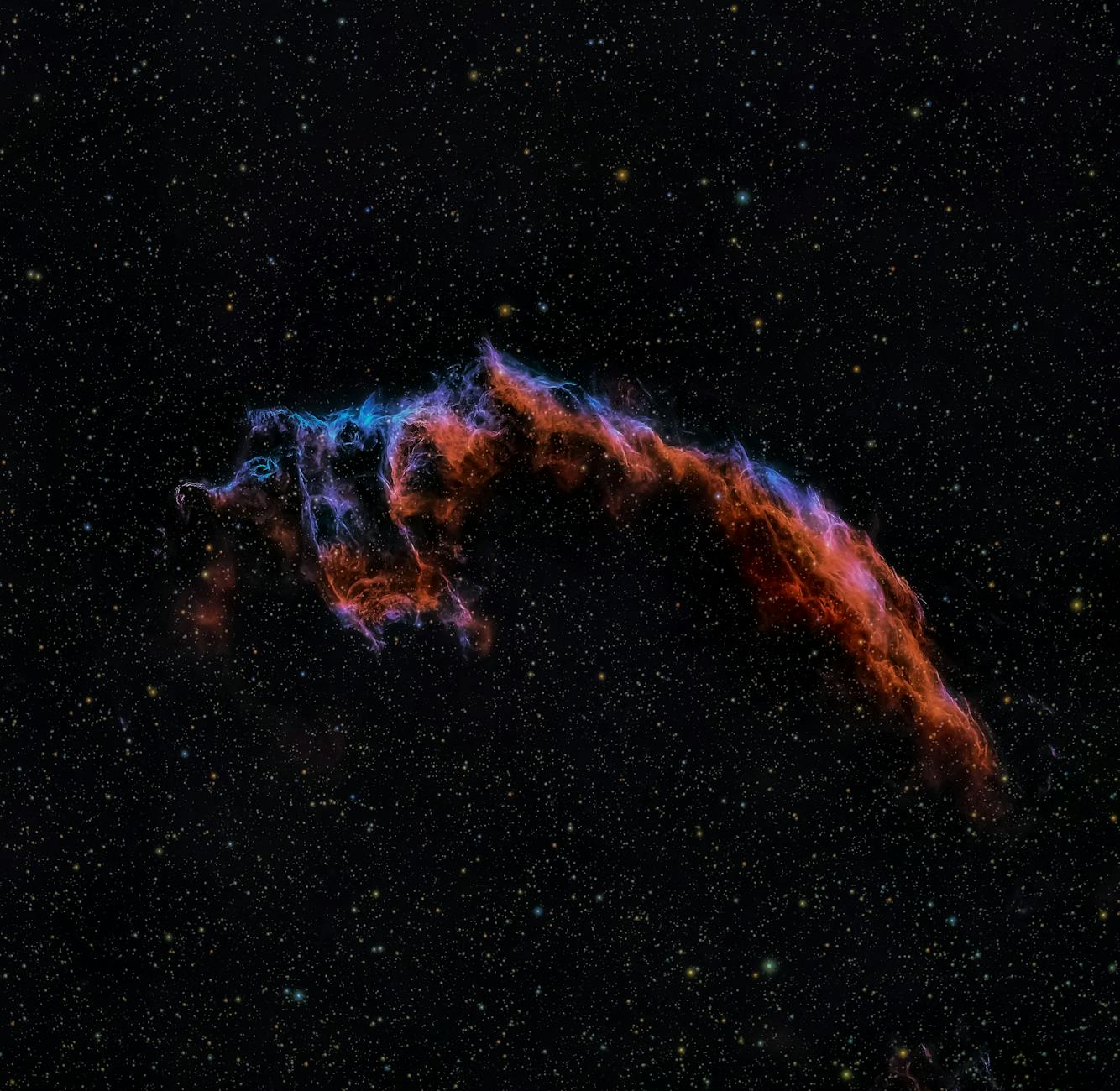
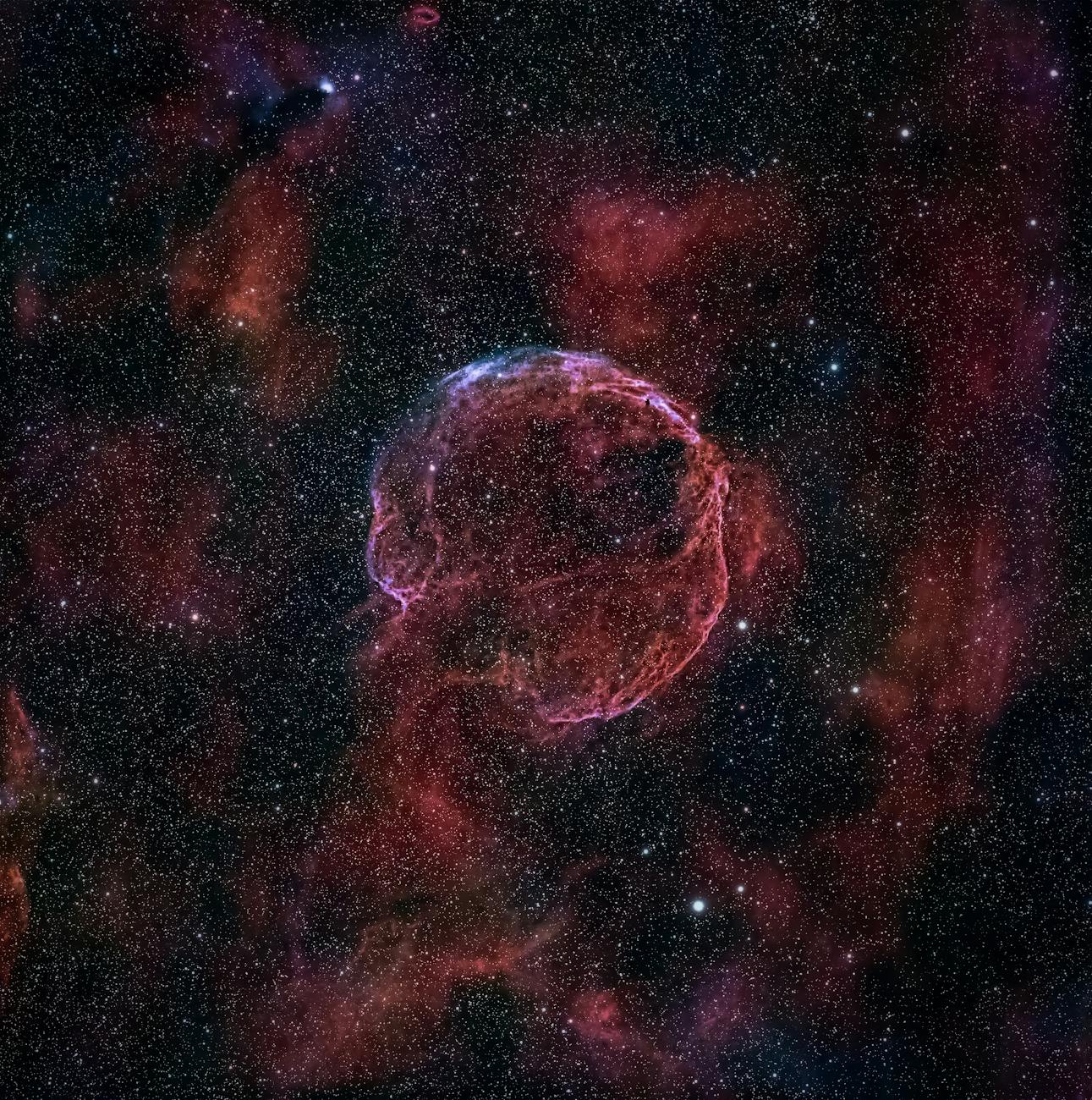
Supernovae are a major source of heavy elements in the interstellar medium, the gas and dust between stars. They spread elements from oxygen through rubidium, helping enrich the raw material from which future stars and planets form. The expanding shock wave from a supernova can even trigger new star formation by compressing nearby molecular clouds.
In that sense, supernovae are part of the universe’s recycling system. The same kind of event that could damage Earth’s atmosphere if it happened too close also helped build the chemically rich cosmos that makes rocky planets possible.
The nearest worrying candidate: IK Pegasi
If Type Ia supernovae are among the riskiest, is there one nearby that we should watch?
The closest known candidate is IK Pegasi, about 150 light-years away. It is a binary system and has often been mentioned in discussions of future supernova danger. But there is no reason for immediate concern: observations suggest it could take as long as 1.9 billion years before the white dwarf accretes enough mass to become a Type Ia supernova.
That timescale is so vast that it removes IK Pegasi from any practical human worry list.
So, should we be worried right now?
Not really.
Supernovae absolutely can affect Earth if they happen close enough. They may alter atmospheric chemistry, leave radioactive and chemical signatures in Earth’s layers, increase cosmic rays, and possibly influence climate and biodiversity. Type Ia explosions are considered especially dangerous at close range, and in principle a supernova could matter from as far as 3,000 light-years away depending on its nature.
But the really severe scenarios require extreme proximity, and no known star currently poses that kind of near-term threat. The closest often-cited candidate, IK Pegasi, is far in the future. For now, supernovae are better thought of as a reminder that Earth lives inside a dynamic galaxy, one where stellar death can leave marks not just in the sky, but in rock, ice, climate, and life itself.
A cosmic warning written in the planet
What makes this topic so gripping is that supernovae are not just abstract explosions in deep space. Their traces may be embedded in Pacific seafloor, locked in Antarctic ice, and echoed in the history of Earth’s climate and biodiversity.
A star can die light-years away and still leave a signature here. That is both humbling and thrilling: the history of life on Earth may carry the imprint of events that began in collapsing stars far beyond our Solar System.
Sources
Based on information from Supernova.
More like this
Swipe through the blast radius of big ideas — download DeepSwipe and explore cosmic stories without waiting 1.9 billion years.