Full article · 7 min read
The Future of the Sun: From Red Giant to White Dwarf
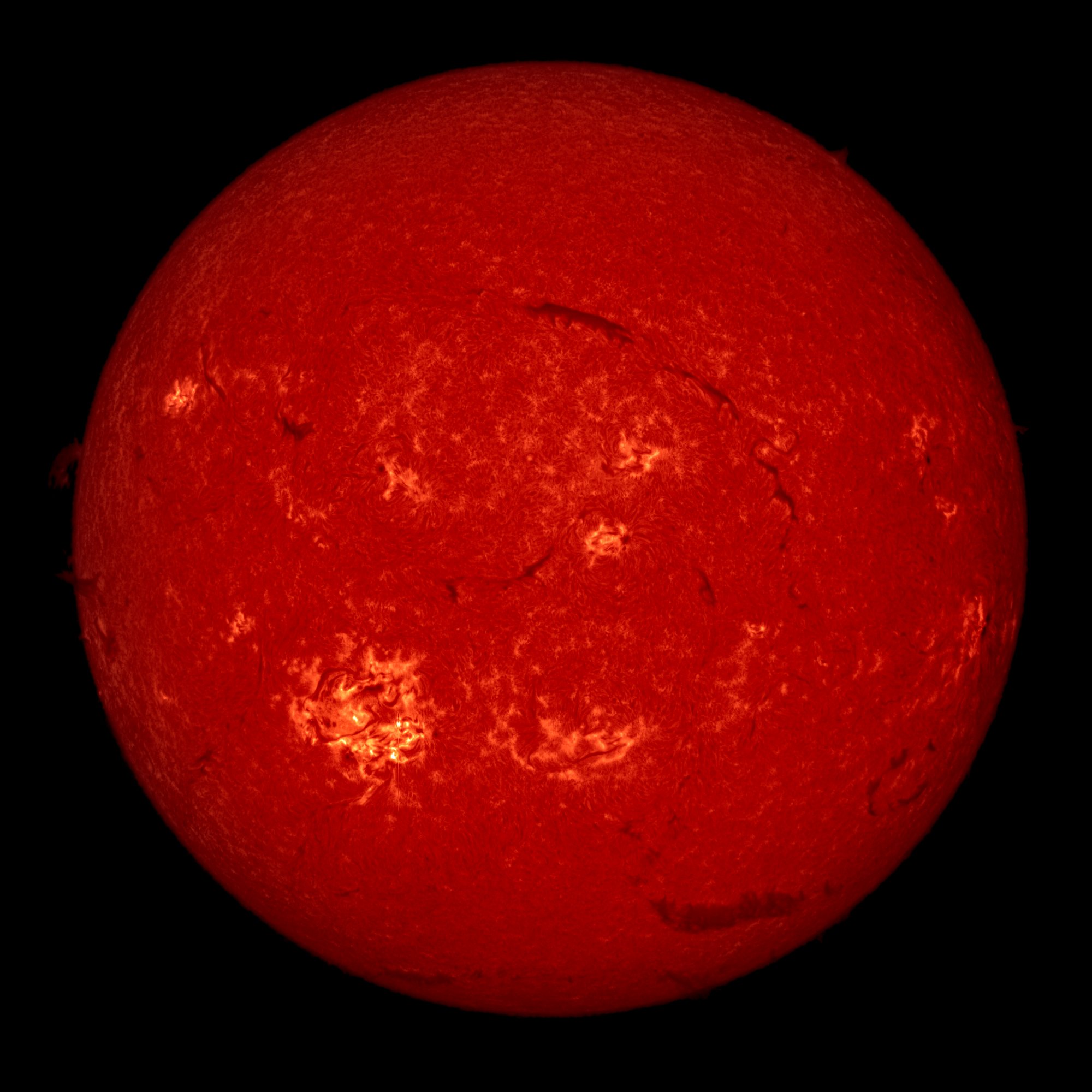
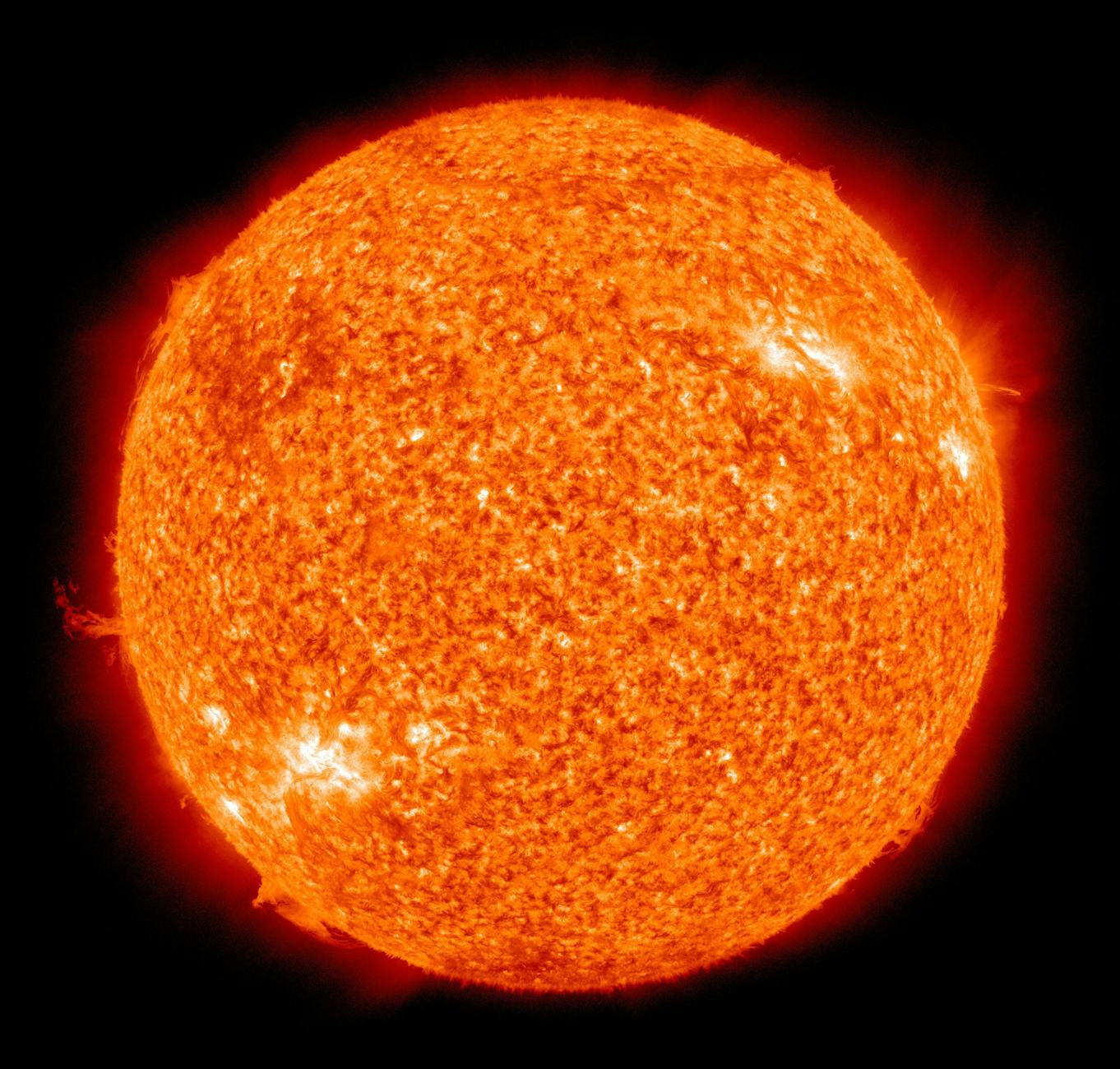
The Sun feels permanent on human timescales, but stars do not stay the same forever. Our star is currently about halfway through its main-sequence life, the long stable era in which it produces energy by fusing hydrogen into helium in its core. That steady fusion is what makes sunlight possible and powers the Sun today.
But this balance will not last forever. When hydrogen fusion in the core eventually runs down, the Sun will not explode as a supernova. It simply does not have enough mass for that kind of ending. Instead, gravity will begin reshaping the Sun from the inside out, pushing it through a dramatic sequence of changes: swelling into a red giant, shedding its outer layers, and leaving behind a dense, fading remnant known as a white dwarf.
Why the Sun stays stable today
Right now, the Sun is held in a balance called hydrostatic equilibrium. That means the inward pull of gravity is matched by outward pressure generated by the intense heat of fusion in the core. In the Sun’s centre, hydrogen is continually fused into helium, releasing enormous amounts of energy.
Every second, the Sun’s core fuses about 600 billion kilograms of hydrogen into helium and converts about 4 billion kilograms of matter into energy. That energy slowly works its way outward through the Sun and eventually escapes as radiation from the photosphere, the visible surface.
This long-lived phase is why the Sun has remained relatively stable for billions of years. But over time, helium builds up in the core. Eventually, the Sun will no longer be able to keep core hydrogen fusion going the way it does now.
The Sun will not become a supernova
Some stars end their lives in spectacular explosions called supernovae. The Sun is not one of them.
Its future is quieter in one sense, but still astonishing. In about 5 billion years, core hydrogen fusion is expected to stop. With no fusion pressure in the core to hold gravity in check, the core will contract. That contraction releases gravitational potential energy, and this change drives the next phase of the Sun’s life.
So the Sun’s ending is not a blast, but a transformation. Its structure will change, its brightness will rise, and its outer layers will expand enormously.
The red giant phase: the Sun swells outward
Once core hydrogen is exhausted, the Sun will leave the main sequence. Over the next billion years, it will first become a subgiant and then a red giant.
A red giant is a star whose outer layers have expanded to a huge size. In the Sun’s case, this swelling will be extreme. As gravitational contraction heats the interior, hydrogen fusion will continue in a shell just outside the core, where hydrogen still remains. That shell fusion adds more energy, causing the Sun’s luminosity to rise dramatically.
Luminosity means the total amount of energy a star gives off. During this red-giant evolution, the Sun’s luminosity is expected to climb to more than 1,000 times its present level.
At the tip of the red-giant branch, the Sun is expected to be about 256 times larger than it is now, with a radius of about 1.19 astronomical units. An astronomical unit, or au, is the average Earth–Sun distance, about 150 million kilometres. So at that stage, the Sun’s swollen outer layers would extend to a distance greater than Earth’s present orbit.
Mercury and Venus are expected to be engulfed
As the Sun expands into a red giant, the inner Solar System will be radically altered. Mercury and Venus are expected to be engulfed and destroyed during this phase.
That result follows from the simple fact that the Sun’s outer envelope will grow vastly larger than it is today. These planets orbit too close to survive the Sun’s expansion.
The red-giant stage is not brief in everyday terms. The Sun is expected to spend around a billion years on the red-giant branch and lose around a third of its mass during that broader era of giant-star evolution.
What happens to Earth?
Earth’s fate is grim as well.
According to the models described here, Earth’s orbit may first expand because the Sun will be losing mass. When a star loses mass, its gravitational pull on orbiting bodies weakens, so orbits can move outward.
But that is not the whole story. The same models say Earth’s orbit would then begin shrinking because of tidal forces and eventually drag from the Sun’s lower chromosphere. Tidal forces are gravitational effects that can transfer energy and alter orbits when two bodies interact strongly enough. The chromosphere is a layer of the Sun’s atmosphere above the photosphere.
In that scenario, Earth is eventually engulfed by the Sun during the tip of the red-giant-branch phase, about 7.59 billion years from now. Mercury and Venus would meet their ends earlier.
So even if Earth’s orbit initially drifts outward, that does not guarantee safety. The later interaction with the Sun’s swollen outer layers changes the outcome.
A violent helium transition inside the Sun
After the red-giant branch, the Sun still has more evolution ahead. Once conditions in the core become right, the degenerate helium core is expected to ignite in what is called the helium flash.
This is a major internal event. It is estimated that about 6% of the core, itself about 40% of the Sun’s mass, will be converted into carbon within minutes through the triple-alpha process.
After this, the Sun will shrink compared with its red-giant peak, becoming around 10 times its current size and about 50 times as luminous as it is today. It will then spend roughly 100 million years continuing helium fusion in the core.
That is not the final stable chapter, though. Once helium in the core is exhausted, the Sun will expand again and enter the asymptotic-giant-branch phase, becoming larger and more luminous once more. It will also become increasingly unstable, with rapid mass loss and thermal pulses that periodically boost its size and brightness.
Shedding the outer layers
Near the end of its giant-star life, the Sun is expected to lose its outer envelope. The exposed hot core will remain, while the expelled material becomes ionised into a planetary nebula.
A planetary nebula has nothing to do with planets in the modern sense. It is a glowing shell of gas cast off by a dying star. In the Sun’s case, the post-asymptotic-giant-branch evolution is expected to be fast, with the luminosity staying roughly constant while the temperature rises.
The planetary nebula phase itself will not last very long by cosmic standards. The nebula is expected to disperse in about 10,000 years.
The white dwarf remnant
What remains after the Sun sheds its outer layers is its final stellar core: a white dwarf.
A white dwarf is a dense, compact leftover core of a dead star. It no longer produces energy through fusion. That is the key change. The Sun’s long fusion-powered life will be over.
Even so, the remnant will not go dark immediately. The final naked core is expected to have a temperature of over 100,000 K and contain about 54.05% of the Sun’s present-day mass. It will continue to glow and radiate heat left over from its previous active life.
This slow cooling is an incredibly long process. The white dwarf may continue cooling for trillions of years before fading toward a hypothetical black dwarf, an extremely dense object giving off negligible energy.
A long ending, not a sudden one
The future of the Sun is a reminder that stellar death does not always mean explosion. For our star, the end is a drawn-out sequence driven by the gradual loss of fusion balance in the core.
First comes core contraction. Then the Sun swells into a red giant and its luminosity rises to more than 1,000 times today’s level. Mercury and Venus are engulfed. According to the models described here, Earth may also ultimately be swallowed after a temporary orbital expansion. After further stages of helium burning and giant-star instability, the Sun will cast off its outer layers and leave behind a white dwarf.
It is a dramatic future, but also a strangely elegant one: the star that has powered life on Earth for billions of years is expected to finish not with a bang, but as a hot, dense ember fading across unimaginable spans of time.
Sources
Based on information from Sun.
More like this
Watch stars evolve faster than the Sun ever will — download DeepSwipe and keep your curiosity in orbit.