Full article · 7 min read
Jupiter and Impacts: Protector—or Peril?
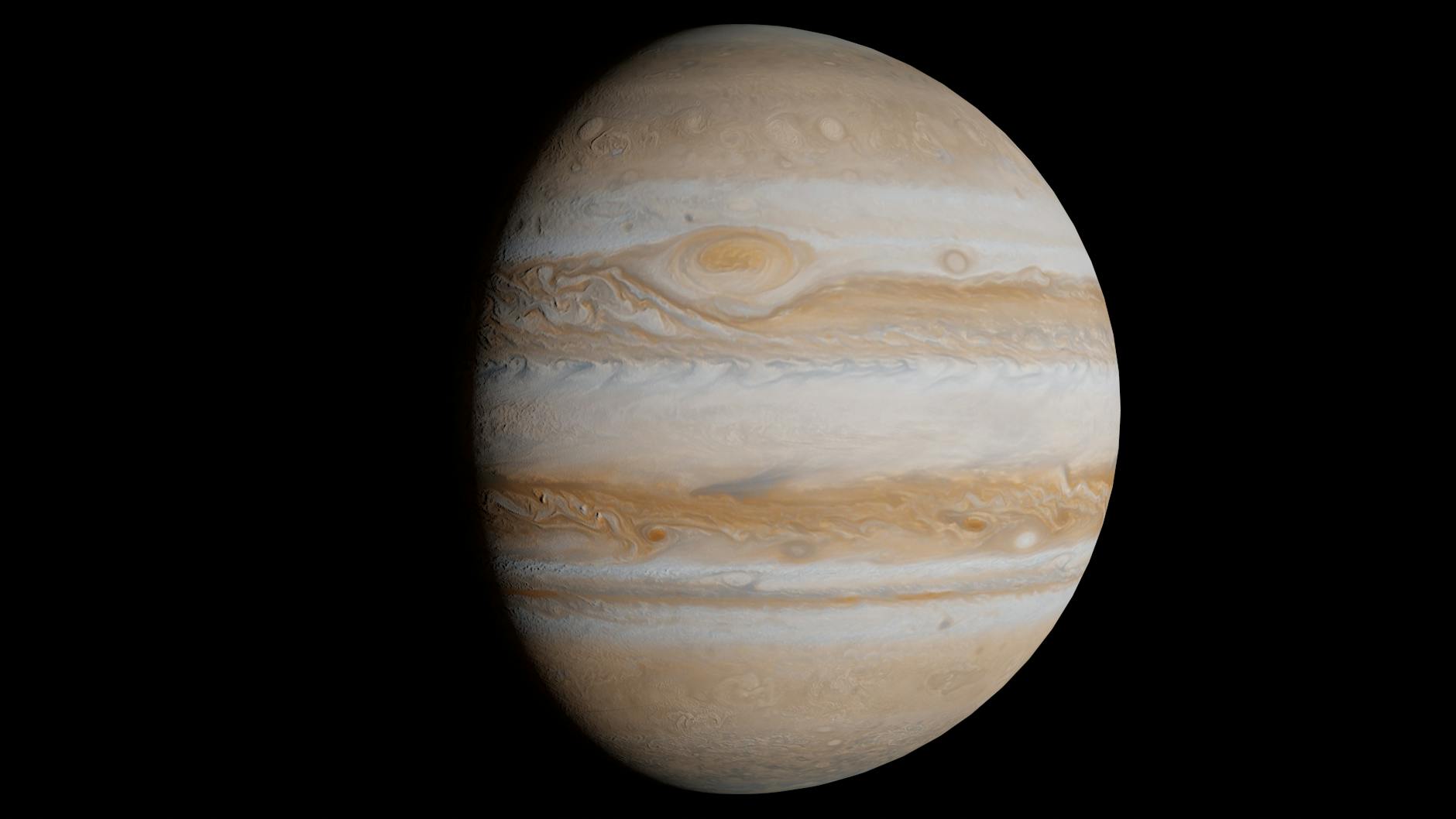
Jupiter is famous for its immense size, bright presence in the night sky, and dramatic storms. But one of its most intriguing roles is less visible: its influence over comets and asteroids moving through the Solar System. For years, Jupiter has often been described as a kind of cosmic shield, a giant planet whose gravity helps clean up dangerous debris before it can threaten the inner planets.
That idea is catchy, but the reality is more complicated.
Because Jupiter is the most massive planet in the Solar System, its gravitational pull is extraordinary. That pull gives it the power to capture, redirect, or fling smaller objects across space. It also means Jupiter itself gets hit a lot. In fact, Jupiter experiences about 200 times more asteroid and comet impacts than Earth, which is why it has been called the Solar System’s vacuum cleaner.
The nickname sounds reassuring. Yet Jupiter’s gravity does not simply remove hazards. It can also send them inward.
Why Jupiter matters so much
Jupiter is the fifth planet from the Sun and the largest planet in the Solar System. Its mass is nearly 2.5 times that of all the other planets combined. With that much mass comes immense gravitational influence, and that influence helps shape the architecture of the Solar System itself.
Jupiter’s orbital plane lies close to the plane followed by many other bodies in the Solar System, and its gravity affects asteroids, comets, and even the broader arrangement of planetary orbits. The asteroid belt shows this clearly: the Kirkwood gaps, which are regions with relatively few asteroids, are mostly caused by Jupiter.
Jupiter also controls swarms of Trojan asteroids, which gather around special points in its orbit called Lagrangian points. These are locations where gravity and orbital motion create relatively stable zones. More than two thousand such Trojan asteroids have been discovered.
This is not a passive planet. Jupiter is constantly tugging on things.
The “vacuum cleaner” idea
Jupiter’s reputation as a protector comes from two main facts. First, it has a huge gravity well, meaning objects that come near it can be pulled in strongly. Second, it sits near the inner Solar System compared with the more distant icy reservoirs that supply many comets.
That combination makes Jupiter a major traffic controller for wandering objects.
Some of those objects collide with Jupiter directly. Others are captured into new paths. Others are ejected from the Solar System entirely. When astronomers talk about Jupiter accreting material, they mean the planet gathers it by pulling it in with gravity. Accretion can happen gradually, and in the case of smaller bodies like comets or asteroids, it can end in impact.
A dramatic example came in July 1994, when Comet Shoemaker–Levy 9 collided with Jupiter. The impacts were closely observed by observatories around the world, as well as by the Hubble Space Telescope and the Galileo spacecraft. The event became widely known because it offered a rare chance to watch a major planetary impact unfold in real time.
Events like that make Jupiter seem like a guardian taking hits on behalf of the rest of the Solar System.
Gravity can protect, but it can also redirect danger
The problem is that gravity is not selective. Jupiter does not only swallow objects. It also deflects and ejects them.
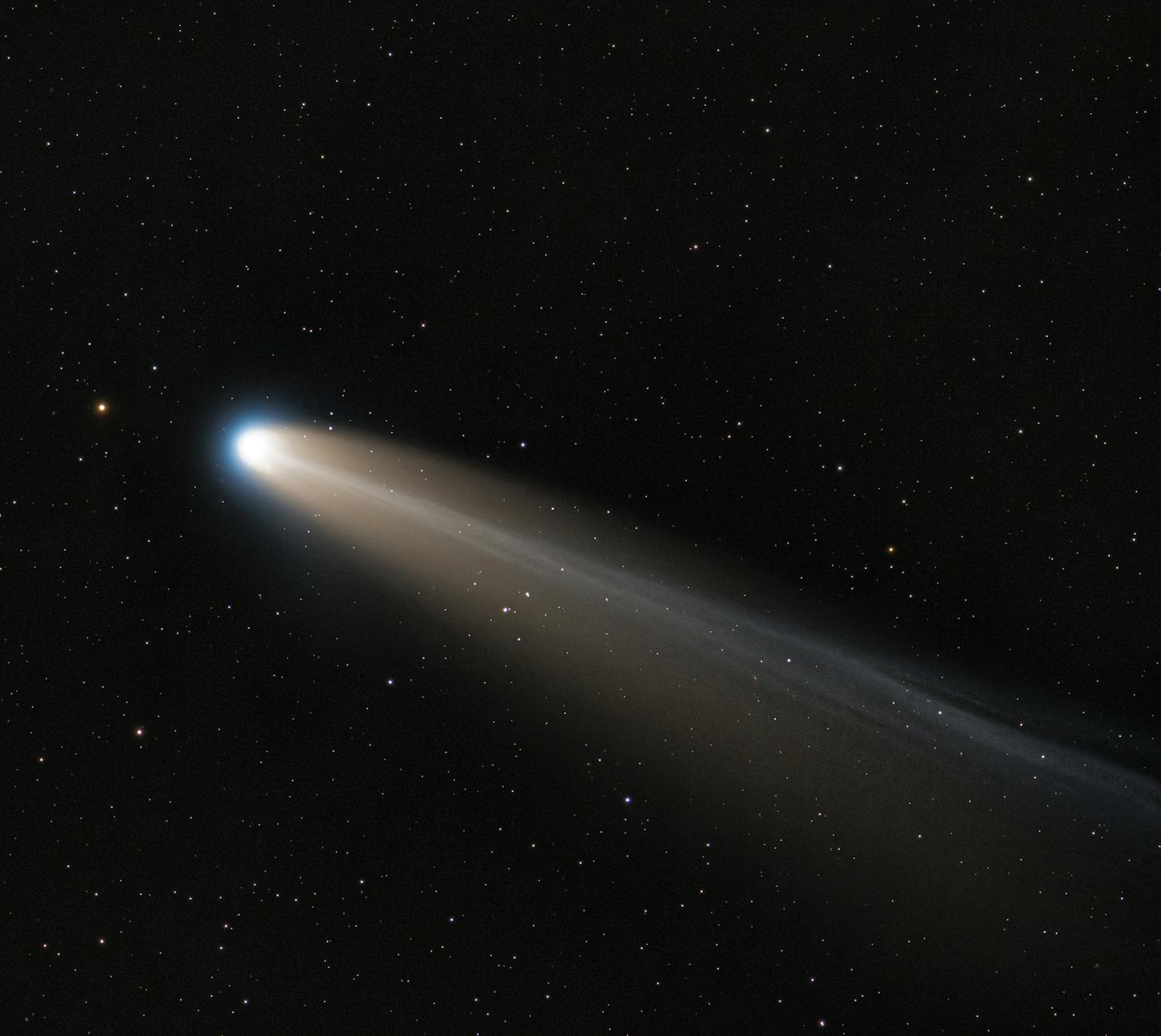
A comet passing through the outer Solar System can have its orbit altered by Jupiter in several ways. It might be drawn inward toward the Sun. It might be thrown outward. It might settle into a shorter orbit after repeated gravitational interactions. This is especially important for the group known as the Jupiter family of comets.
These comets are defined as having a semi-major axis smaller than Jupiter’s. A semi-major axis is a standard way of describing the size of an orbit. Most short-period comets belong to this family. They are thought to form in the Kuiper belt, a wide ring of icy bodies beyond Neptune. During close encounters with Jupiter, they can be perturbed into shorter-period orbits, and regular interactions with the Sun and Jupiter can then make those orbits more circular.
So Jupiter can act like a gatekeeper. But a gatekeeper does not only keep things out. It also determines what gets through.
What simulations suggest
Scientists once believed Jupiter partially shielded the inner Solar System from comet bombardment. That idea made intuitive sense: a giant planet with enormous gravity should sweep up dangerous objects before they get too close to Earth.
However, computer simulations in 2008 suggested that Jupiter does not cause a net decrease in the number of comets passing through the inner Solar System. The reason is surprisingly balanced. Jupiter’s gravity perturbs comet orbits inward roughly as often as it accretes or ejects them.
In simpler terms, Jupiter removes some threats, but it may also create new ones by redirecting objects that otherwise would not have come our way.
That is why the question “Does Jupiter protect Earth?” does not have a simple yes or no answer.
The Kuiper belt and the Oort cloud
Part of the debate depends on where comets come from.
The Kuiper belt is a broad ring of icy objects beyond Neptune. It is thought to be the birthplace of the Jupiter family comets. One view is that Jupiter’s gravity can pull some of these objects into the inner Solar System, potentially increasing the number of comets that cross Earth’s neighborhood.
Another possible source is the Oort cloud, described as a distant, spherical swarm of comets surrounding the Solar System. Some scientists argue that Jupiter may help protect Earth from objects arriving from this far more distant reservoir.
That leaves astronomers with two competing pictures. In one, Jupiter is a danger multiplier for some incoming objects from the Kuiper belt. In the other, it is a protective barrier against comets from the Oort cloud. The issue remains controversial, and the overall verdict is still debated.
Jupiter’s impact record tells a dramatic story
Jupiter’s own history shows how common impacts can be around a giant planet.
Besides the famous Shoemaker–Levy 9 collision, astronomers have searched older records for evidence of earlier impacts. Surveys of historical observations and drawings turned up eight possible examples between 1664 and 1839. A 1997 review concluded that most of these had little or no chance of really being impacts. Still, further investigation suggested that a dark feature discovered by Giovanni Cassini in 1690 may have been an impact scar.
The pattern fits Jupiter’s overall role as a giant gravitational target. More objects are drawn into its vicinity than would be expected for a smaller world like Earth.
Why Jupiter is so effective at stirring up space
Several features make Jupiter especially powerful in this role.
It is enormous, with a diameter about 11 times that of Earth. It has 318 times Earth’s mass. It orbits the Sun at an average distance of 5.20 astronomical units, or AU, where 1 AU is the average distance between Earth and the Sun. That puts Jupiter in a strategic location between the inner planets and many populations of icy outer Solar System bodies.
Jupiter’s gravitational domain extends far beyond the planet itself. It influences asteroid groups, comet families, and the motion of other objects that pass nearby. Its importance is so great that the Solar System’s history may have been shaped by Jupiter’s migration early in its formation. Models described for the early Solar System suggest Jupiter’s movements could have altered the orbits of other bodies and changed how the planets formed.
Even today, Jupiter remains a major dynamical force. It is not just sitting in space being hit. It is constantly reshaping nearby traffic.
The bigger takeaway: Jupiter is both protector and peril
If you want a clean headline, Jupiter can sound like Earth’s bodyguard. If you want the more accurate version, Jupiter is a gravitational powerhouse with mixed consequences.
It certainly absorbs impacts. It certainly ejects some dangerous objects. But it also redirects others inward, and simulations suggest that these effects may cancel out more than many people once assumed.
That is what makes Jupiter so fascinating. It is not simply the hero of the Solar System, nor its villain. It is more like a cosmic bouncer with unpredictable side effects: blocking some intruders, throwing out others, and accidentally sending a few toward the wrong door.
For Earth, that means Jupiter’s presence is probably neither a perfect shield nor a straightforward threat. It is an active, complicated influence that scientists are still trying to fully understand.
And that open question is part of the appeal. The largest planet in the Solar System still refuses to give a simple answer.
Sources
Based on information from Jupiter.
More like this
Is Jupiter a shield or a slingshot? Chase more cosmic mysteries with DeepSwipe — download the app and let gravity pull you into smarter scrolling.


