Full article · 7 min read
House of Wisdom: How Experiments and Medical Knowledge Helped Shape Science
When people picture the history of science, they often jump from Ancient Greece straight to Renaissance Europe. But one of the most important chapters unfolded in medieval Baghdad, where scholarship, translation, and investigation flourished in the House of Wisdom. This was not just a place for preserving ideas. It was also a place where older traditions were studied, improved, and pushed further.
Two names stand out in this story: Ibn al-Haytham, known for using controlled experiments in optics, and Avicenna, whose Canon of Medicine became one of the most influential medical encyclopaedias in history. Together, they represent something powerful: the shift from simply inheriting knowledge to testing, organising, and refining it.
The House of Wisdom and the flowering of study in Baghdad
In the Abbasid capital of Baghdad, the House of Wisdom became a major centre for the study of Aristotelian ideas. Aristotelianism refers to the body of thought associated with Aristotle, the ancient Greek philosopher whose work shaped medieval approaches to nature, motion, causes, and knowledge.
This tradition flourished in Baghdad until the Mongol invasions in the 13th century. During this period, scholars worked with earlier Greek texts that had been preserved and translated into Arabic. These translations did not remain static. They were improved and developed further by Arabic scientists.
That matters because science is not just about isolated discoveries. It often advances when knowledge is transmitted across languages, cultures, and generations. The work done in Baghdad formed part of a much larger chain connecting classical Greek thought, medieval scholarship, and later scientific developments.
Why Aristotelianism mattered
Aristotle’s ideas were central to how many scholars in late antiquity and the Middle Ages examined the natural world. The Aristotelian approach included the famous framework of four causes: material, formal, moving, and final cause. In simple terms, this was a way of asking what something is made of, what shape or structure it has, what brings it about, and what purpose or end it serves.
For centuries, this framework helped scholars think systematically about nature. But medieval scholars did not just repeat Aristotle. Some questioned him, some modified him, and some used his ideas as a starting point for more empirical work.
This is where the scientific significance of Baghdad becomes especially striking. The study of Aristotle flourished there, but it was not limited to passive admiration. It became part of a larger intellectual environment in which investigation could become more rigorous.
Ibn al-Haytham and the power of controlled experiments
One of the clearest examples of this rigor is Ibn al-Haytham, also known as Alhazen. He used controlled experiments in his optical study.
Optics is the study of light and vision: how light travels, how it behaves, and how images are formed. A controlled experiment is an investigation designed so that conditions can be carefully managed, allowing a clearer test of an idea. That kind of method is a major hallmark of science because it helps reduce confusion and makes it easier to identify cause and effect.
In a world where many explanations of nature could remain speculative, controlled experiments marked a crucial step toward a more testable approach. Rather than relying only on reasoning or inherited authority, this method put ideas into contact with observation.
That does not mean earlier traditions were useless. Ancient and medieval thinkers had already built rich systems of knowledge in mathematics, astronomy, and medicine. But controlled experimentation helped create a more disciplined way to check whether explanations actually matched the world.
From speculation to observation
One of the big themes in the history of science is the slow movement from explanation by tradition or pure speculation toward explanation grounded in systematic observation and experiment.
This transition did not happen all at once, and it did not belong to one civilisation alone. Scientific thinking emerged gradually over tens of thousands of years and took different forms around the world. Ancient Egyptians and Mesopotamians contributed to mathematics, astronomy, and medicine. Greek philosophers sought natural explanations without relying on the supernatural. Medieval scholars preserved, translated, and developed earlier learning.
Within that broader story, Ibn al-Haytham’s use of controlled experiments stands out because it reflects an especially clear commitment to testing. It points toward what later became central to the scientific method: making observations, framing explanations, and checking them against reality.
Avicenna and the Canon of Medicine
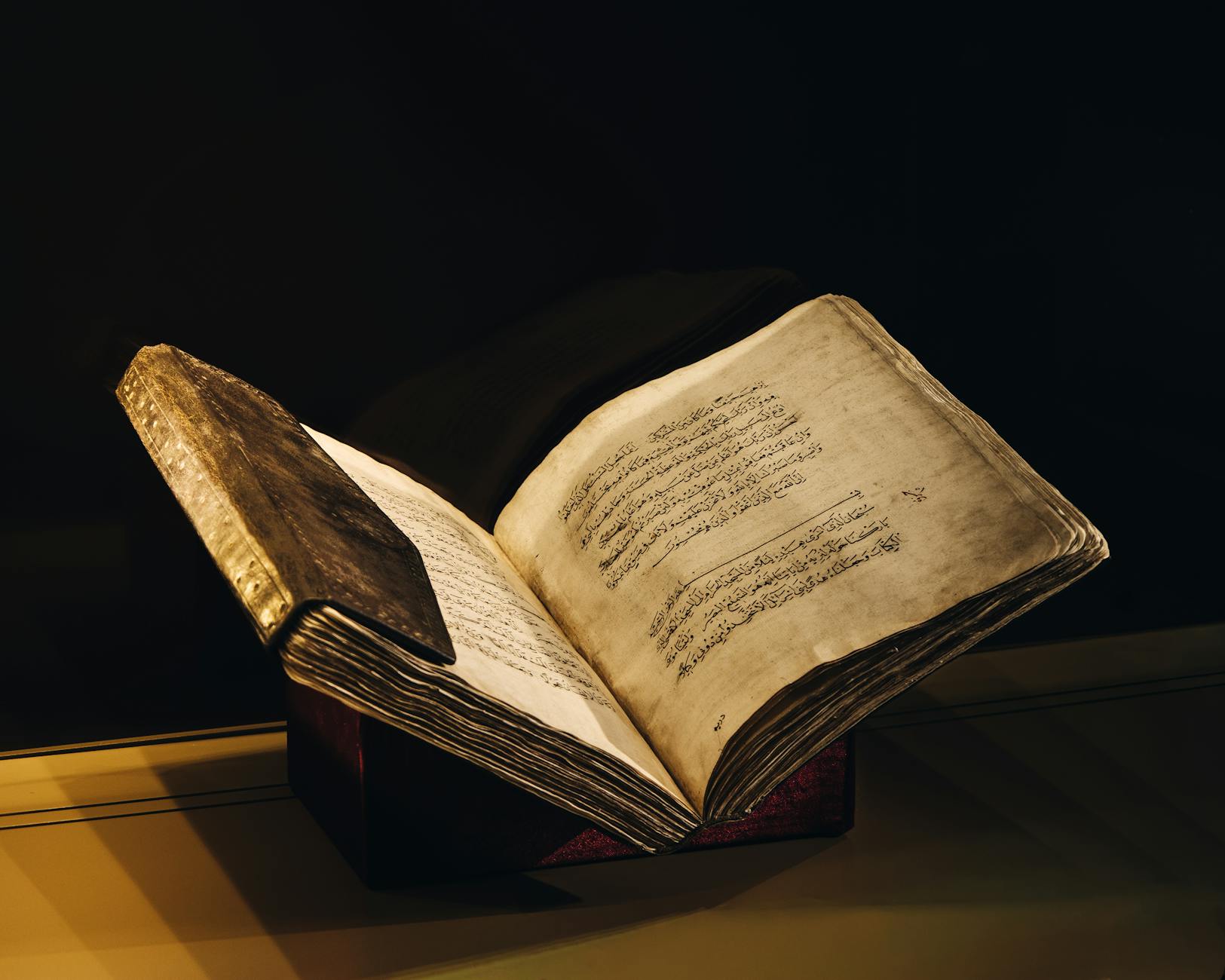
If Ibn al-Haytham represents experiment, Avicenna represents organisation and synthesis on a grand scale. Avicenna compiled The Canon of Medicine, a medical encyclopaedia regarded as one of the most important publications in medicine.
A medical encyclopaedia is more than just a long book. It is an attempt to gather, arrange, and present medical knowledge in a systematic form so that it can be studied and used. In science and medicine, organisation matters almost as much as discovery. Knowledge becomes far more powerful when it can be shared, taught, and applied consistently.
The Canon of Medicine was not merely influential for a few years. It was used until the 18th century. That astonishing longevity shows just how important it became in medical learning.
In an age when universities were emerging and demand for scientific and ancient texts was growing, such a work provided a durable intellectual foundation. It helped preserve and transmit medical knowledge over centuries.
Why the Canon lasted so long
A work does not remain in use for centuries unless it answers a deep need. Medicine has always been one of the most practical sciences because it deals directly with health, illness, diagnosis, and treatment. A major encyclopaedia offered a structured body of knowledge that physicians and students could rely on.
Its long use also fits a broader pattern in the history of science: some of the most transformative contributions are not single dramatic discoveries, but frameworks that organise knowledge so effectively that generations keep returning to them.
Just as scientific journals later became a way to communicate and archive research, earlier encyclopaedic works played a similar role in preserving and distributing understanding. The Canon of Medicine became one of those enduring reference points.
Baghdad’s place in the larger history of science
The story of the House of Wisdom also helps correct a common misunderstanding. Science did not arise in one place at one moment. It developed through an international and cross-cultural process.
Greek works were preserved by the Byzantine Empire, translated into Arabic, improved by Arabic scholars, and later recovered and assimilated into Western Europe during the Renaissance. This flow of ideas helped revive natural philosophy and contributed to the transformation that became the Scientific Revolution.
So the achievements associated with Baghdad were not an isolated detour. They were part of the main road.
The House of Wisdom sits in a critical historical position between classical antiquity and later European science. It represents a period when older ideas were not only saved from loss, but actively studied and developed.
The experimental habit and modern science
Modern science is often defined by its use of testable hypotheses, predictions, observation, and experimentation. The scientific method seeks reproducible explanations of natural events. Scientists form hypotheses, derive predictions, and test those predictions by experiment or observation.
The roots of that approach reach deep into history. Ibn al-Haytham’s controlled experiments in optics are one example of an experimental habit that later became central to science as a whole.
This habit matters because it helps reduce bias and allows knowledge to become more reliable. In modern science, transparency, careful design, peer review, and repeatability are all valued for the same reason: they help separate strong explanations from weak ones.
Seen in that long perspective, medieval Baghdad was not just a storehouse of old books. It was a place where methods of inquiry were sharpened.
A legacy of ideas, experiments, and systems
The House of Wisdom, Ibn al-Haytham, and Avicenna together show three ingredients that repeatedly drive scientific progress.
First, there is preservation: old knowledge must survive. Second, there is organisation: knowledge must be collected and structured, as in The Canon of Medicine. Third, there is testing: ideas must be examined through methods such as controlled experiments.
Those ingredients still define science today. Whether in physics, medicine, or social science, progress depends on building on earlier work, organising evidence, and checking claims against reality.
That is why the legacy of medieval Baghdad remains so compelling. It reminds us that science grows through continuity as much as revolution, and that some of its most important advances came from scholars who refused to choose between learning from the past and testing it anew.
Sources
Based on information from Science.
More like this
Curious like a House of Wisdom scholar? Download DeepSwipe and keep your experiments in knowledge going, one swipe at a time.