Full article · 7 min read
Milky Way: The Black Hole at Our Core
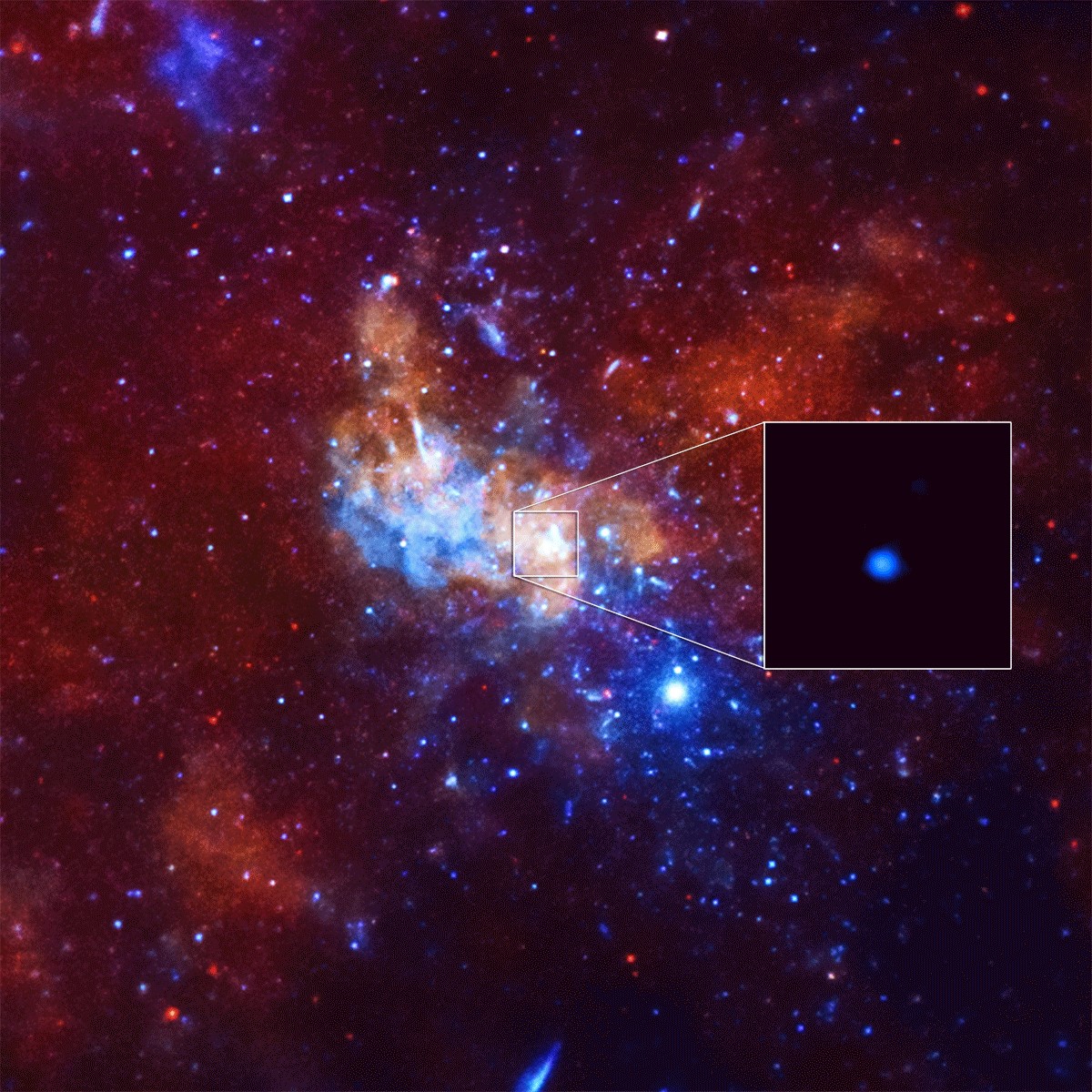
At the heart of the Milky Way lies one of the galaxy’s most fascinating features: a supermassive black hole called Sagittarius A*, usually pronounced “Sagittarius A-star.” It sits at the Galactic Center, the region around the middle of our galaxy, and it marks a place of extreme gravity, crowded stars, and unusual high-energy activity.
Even though black holes are famous for swallowing matter, the one in our galaxy’s core is surprisingly quiet compared with the actively feeding monsters seen in some other galaxies. But “quiet” does not mean inactive. Sagittarius A* is an intense radio source, it occasionally flares dramatically in X-rays, and the region around it is linked to enormous structures stretching far above and below the Milky Way’s disk.
What is Sagittarius A*?
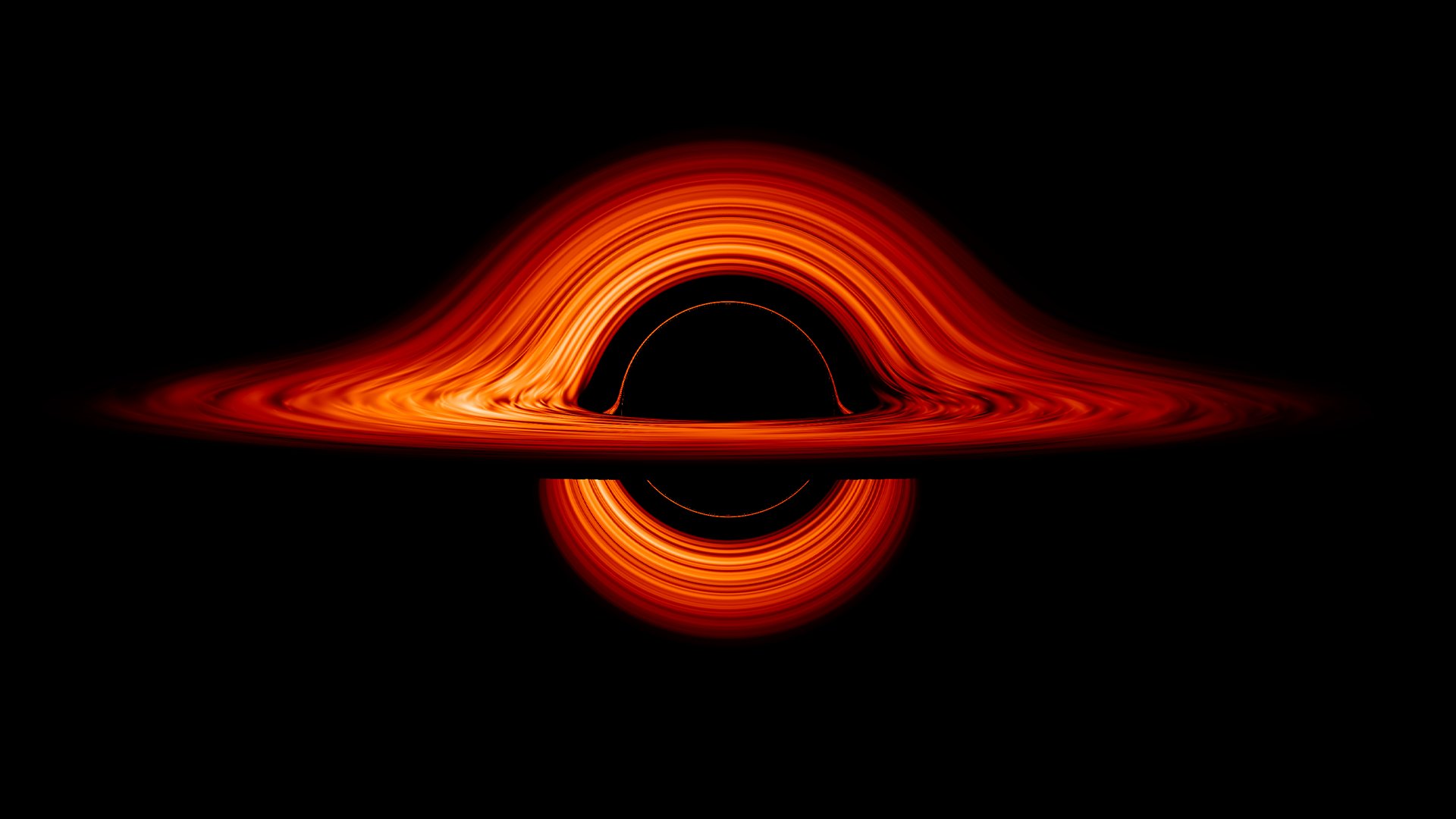
Sagittarius A* is the compact object at the center of the Milky Way best explained as a supermassive black hole. Its mass is estimated at about 4.1 to 4.5 million times the mass of the Sun. That is what makes it “supermassive”: it contains millions of solar masses packed into a very small region.
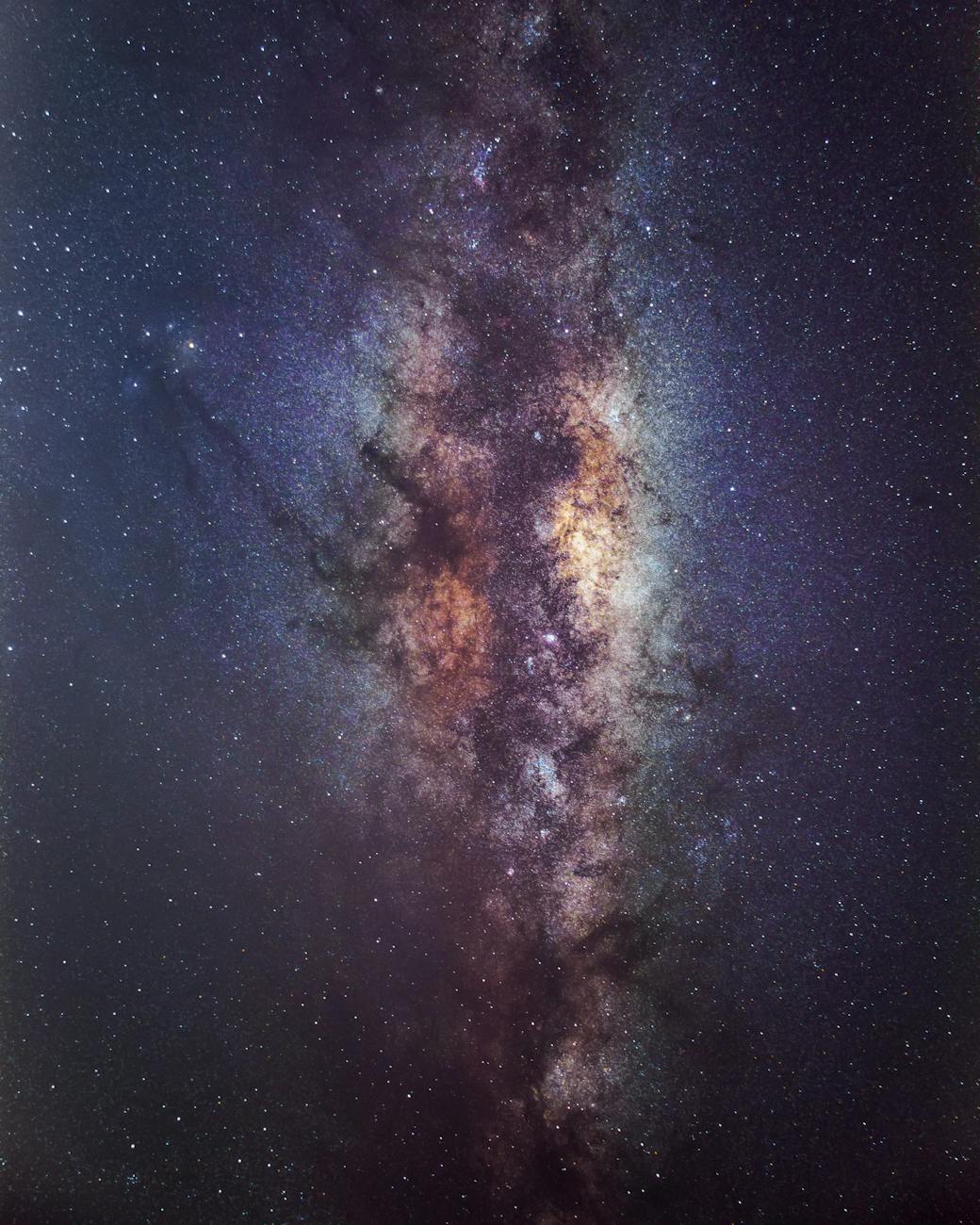
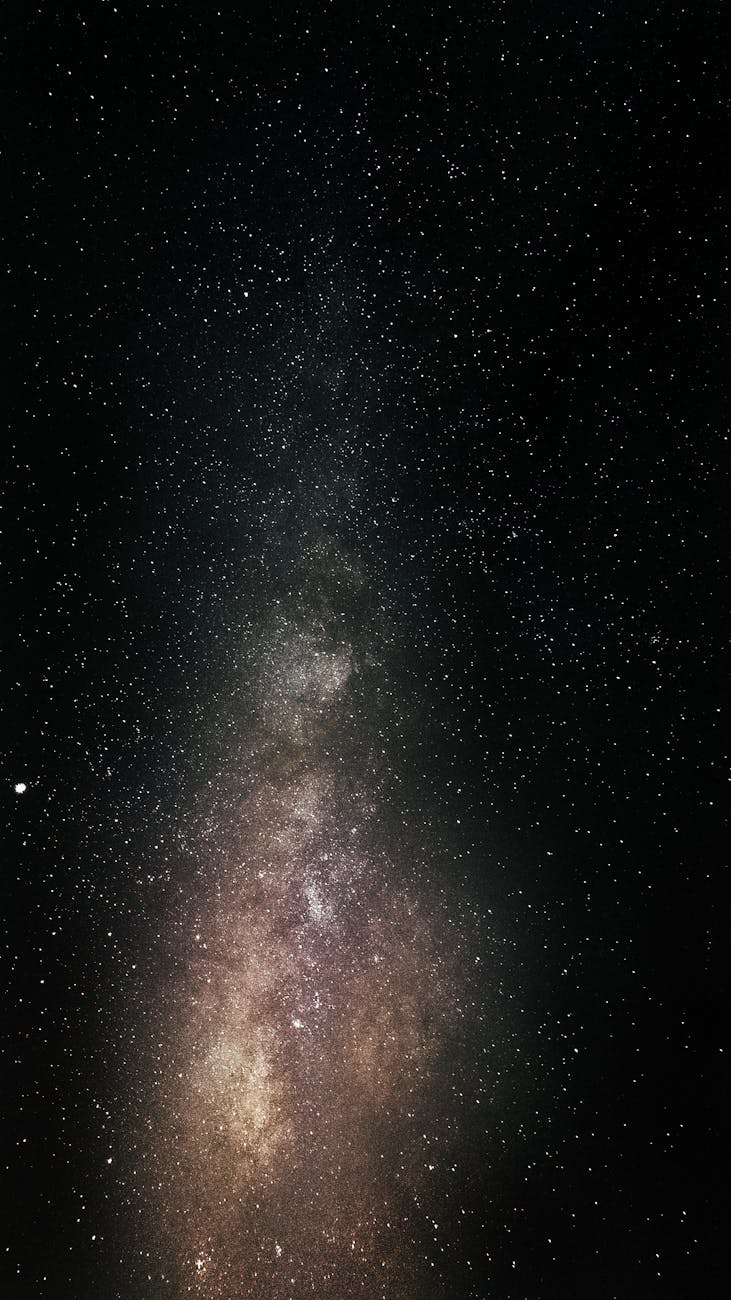
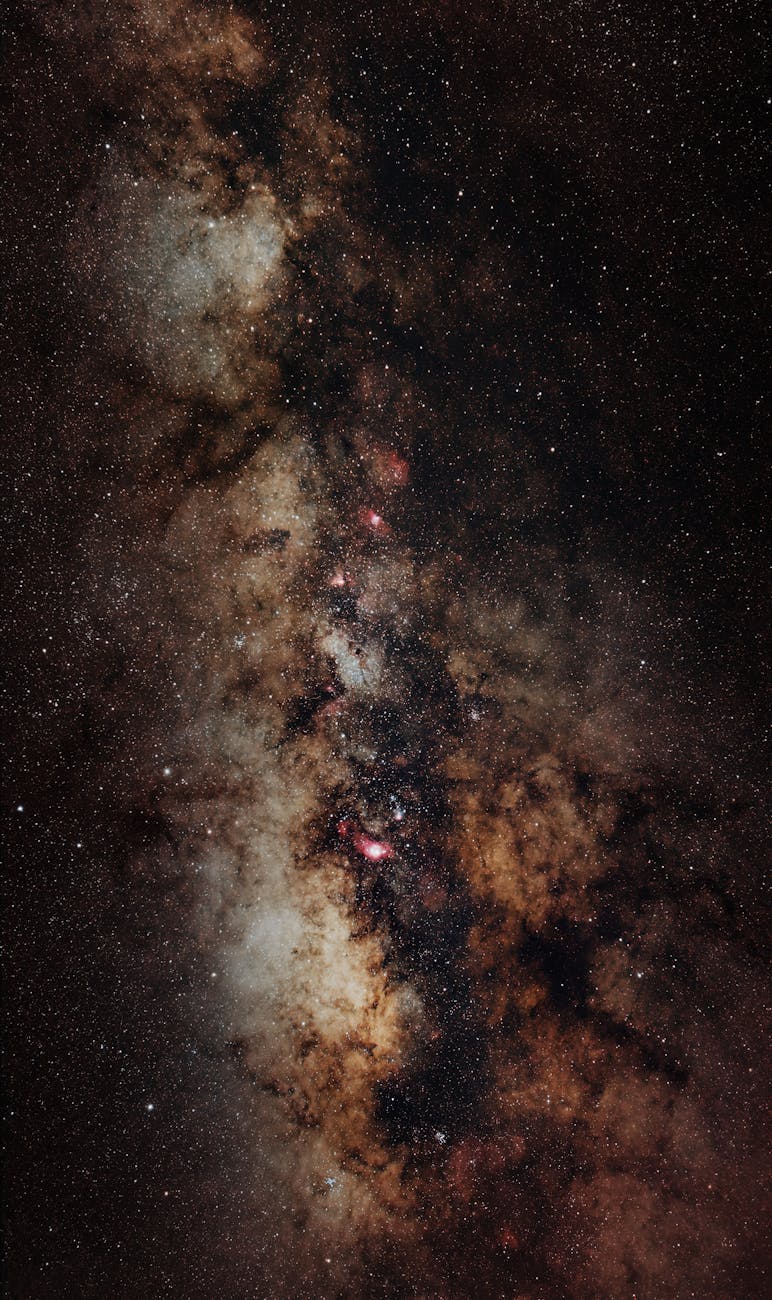
The Galactic Center itself lies in the direction of the constellation Sagittarius, which is why the object carries that name. The center of the Milky Way is also the brightest part of the galaxy’s hazy band as seen from Earth, though dust blocks much of our direct view in visible light.
Around the inner few kiloparsecs of the galaxy is a dense concentration of mostly old stars in a roughly spheroidal region called the bulge. A kiloparsec is an astronomical distance unit equal to 1,000 parsecs, and a parsec is about 3.26 light-years. This means the crowded central region spans many thousands of light-years.
How massive is the black hole in the Milky Way?
The best estimates in the article place Sagittarius A* at about 4.1–4.5 million solar masses. A solar mass is simply the mass of our Sun, used by astronomers as a convenient measuring stick.
That number is enormous on a human scale, but it is still only one part of a much larger galaxy. The Milky Way itself is estimated to contain between 100 and 400 billion stars, and the Solar System sits roughly 27,000 light-years from the center, on the inner edge of the Orion Arm.
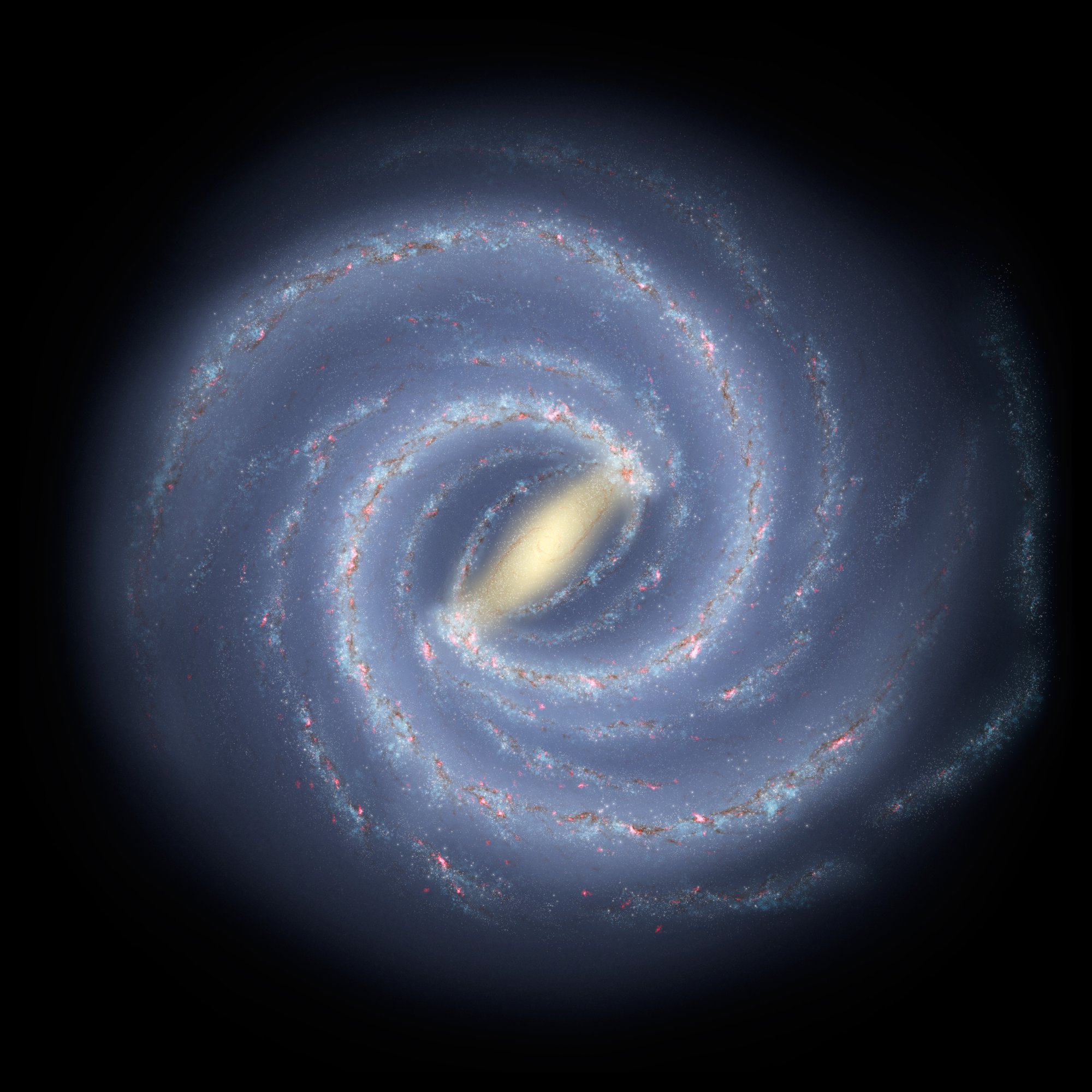
So while Sagittarius A* dominates its immediate surroundings gravitationally, it is only one component of a barred spiral galaxy stretching tens of thousands of light-years across.
A black hole that feeds slowly
One of the most interesting things about Sagittarius A* is how slowly it appears to feed. The estimated accretion rate is about 1×10⁻⁵ solar masses per year. Accretion is the process by which gas and other material fall inward under gravity toward a massive object.
That rate is consistent with what astronomers call an inactive galactic nucleus. In simpler terms, the black hole is not currently blazing with the kind of extreme output seen in galaxies whose central black holes are rapidly consuming large amounts of matter.
Still, the core is far from dull. Observations show that X-ray emission from the central region is aligned with massive stars around the bar and the Galactic ridge, and the area around Sagittarius A* remains one of the most energetic environments in the galaxy.
The Milky Way’s giant gamma-ray bubbles
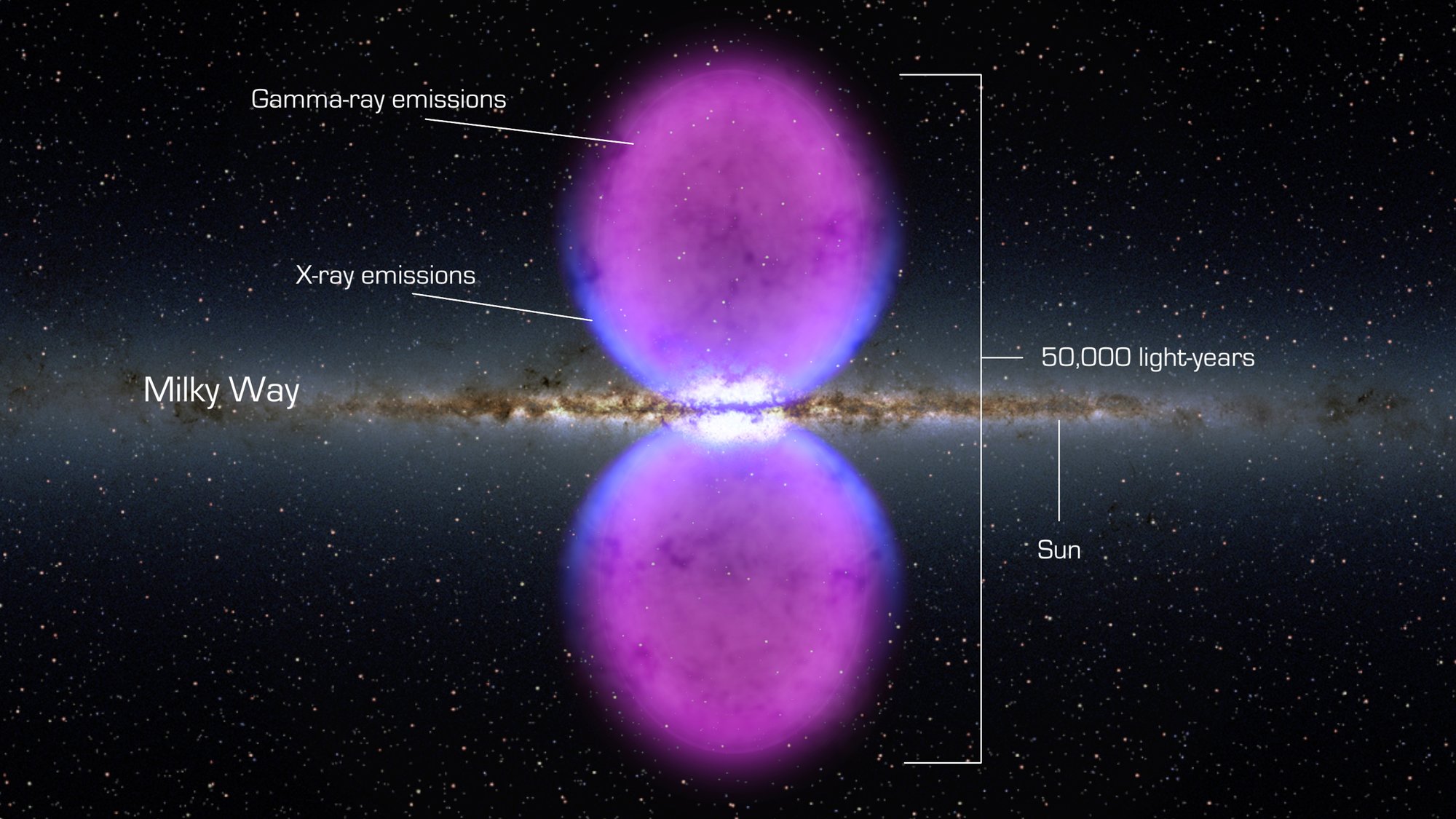
The black hole is not the only dramatic feature near the center. In 2010, astronomers using data from the Fermi Gamma-ray Space Telescope detected two gigantic spherical bubbles of high-energy gamma emission extending north and south of the Milky Way’s core. These are now widely known as the Fermi bubbles.
Each bubble is about 25,000 light-years in diameter, making them colossal structures on a galactic scale. Together they tower above and below the central part of the Milky Way, like enormous glowing scars in high-energy light.
Later radio observations found polarized emission associated with these bubbles. The best interpretation given in the article is that they are a magnetized outflow driven by star formation in the central 640 light-years of the Milky Way. A magnetized outflow is a stream of gas and particles moving outward while carrying magnetic fields with it.
In other words, the galaxy’s center is not just a place where matter falls inward. It can also launch energy and material outward across vast distances.
Sudden X-ray flares from Sagittarius A*
Although Sagittarius A* usually accretes slowly, it can still produce dramatic outbursts. On January 5, 2015, NASA reported an X-ray flare from Sagittarius A* that was 400 times brighter than usual, a record-breaking event.
Possible explanations mentioned in the article include the breakup of an asteroid falling into the black hole or the entanglement of magnetic field lines within gas flowing inward. Both ideas fit the picture of a black hole environment where gravity, hot gas, and magnetic effects combine in unpredictable ways.
These flares matter because they show that even a relatively inactive supermassive black hole can become suddenly much more energetic.
Gamma rays from antimatter encounters
The central region has also been linked with an unusual gamma-ray signal detected since 1970: 511-keV gamma rays coming from the general direction of the Galactic Center. These gamma rays are produced when positrons, the antimatter counterparts of electrons, annihilate with electrons.
Astronomers later found that the distribution of these gamma-ray sources resembles the distribution of low-mass X-ray binaries. That suggests such systems may be sending positrons and electrons into interstellar space, where they slow down and eventually annihilate.
This helps paint the Galactic Center as a place where extreme physics is not limited to one object. It is an environment shaped by black holes, binary systems, radiation, gas, dust, and dense stellar populations.
The first neutrino view of the Milky Way
In June 2023, astronomers reported the first detection of neutrinos coming from the galactic plane of the Milky Way using a new cascade neutrino technique. This created the first neutrino view of our galaxy.
Neutrinos are tiny particles that interact so weakly with matter that they can pass through enormous amounts of it almost unaffected. That makes them very hard to detect, but also incredibly useful: they can carry information from environments that are otherwise difficult to observe.
This milestone adds a whole new way to study the Milky Way. Instead of looking only at visible light, radio waves, X-rays, or gamma rays, astronomers can now begin tracing the galaxy through neutrinos too.
Why the Galactic Center matters
The center of the Milky Way is important because it brings together many of the galaxy’s biggest mysteries in one place. It contains a supermassive black hole, dense stellar populations, high-energy radiation, giant outflows, and signals now seen across multiple kinds of astronomy.
It also reminds us that the Milky Way is not a static island of stars. It is an active, evolving barred spiral galaxy with a structured disk, a bulge, spiral arms, a halo, interstellar gas and dust, and a central engine powerful enough to influence regions far beyond the immediate black hole.
The Sun may be tens of thousands of light-years from the Galactic Center, but the activity there helps define the galaxy we live in.
A quiet monster in a busy core
Sagittarius A* is a striking paradox. It is a black hole with millions of times the Sun’s mass, yet it currently feeds at a low rate. It can appear calm, yet it produces intense radio emission and occasional giant flares. It sits in a region connected to gamma-ray bubbles, X-ray activity, and now even neutrino detections.
So yes, there is a black hole at the center of the Milky Way. But the real story is bigger than that single object. The whole galactic core is a place where gravity, radiation, matter, and motion meet on a scale almost impossible to imagine.
And from our position inside the Milky Way, that makes the center not just distant astronomy, but the hidden heart of our home galaxy.
Sources
Based on information from Milky Way.
More like this
Dive into the galaxy’s hidden core — download DeepSwipe and explore cosmic wonders one swipe at a time.