Full article · 8 min read
Milky Way: Gaia’s Billion-Star Revolution
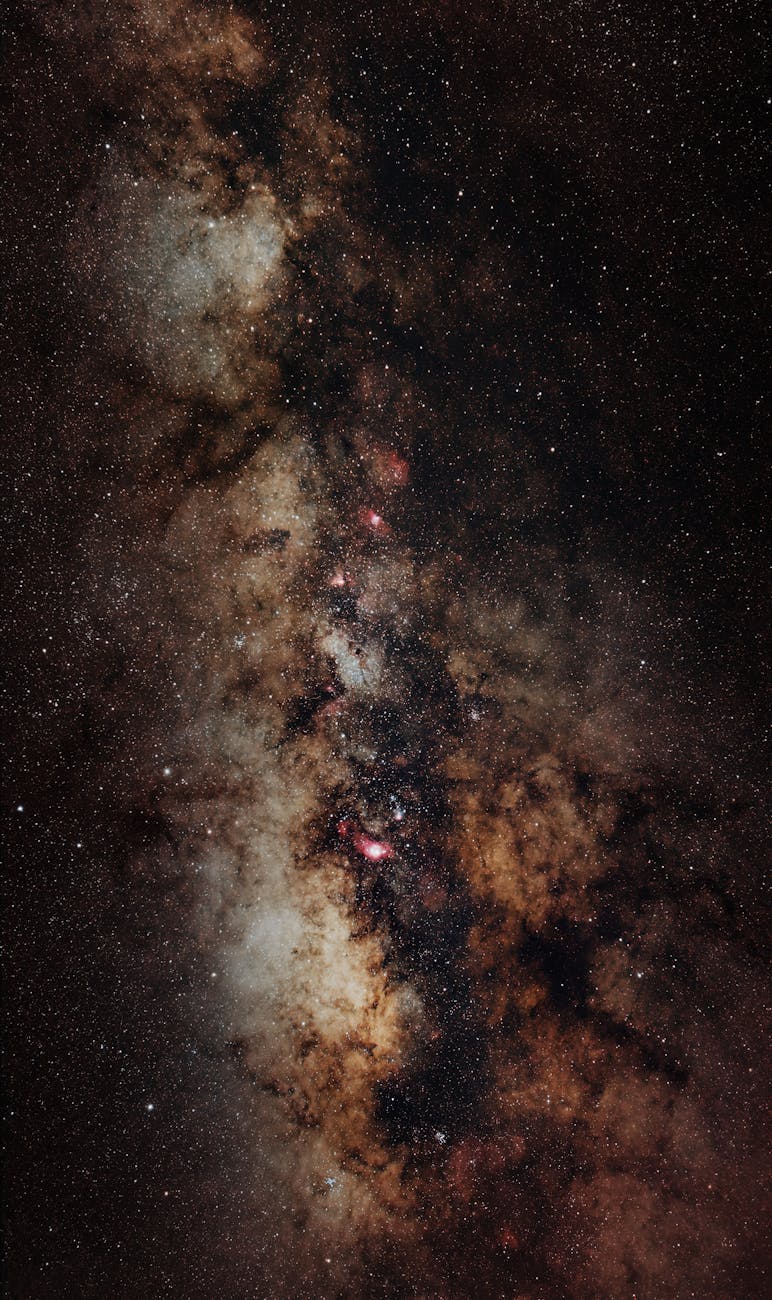
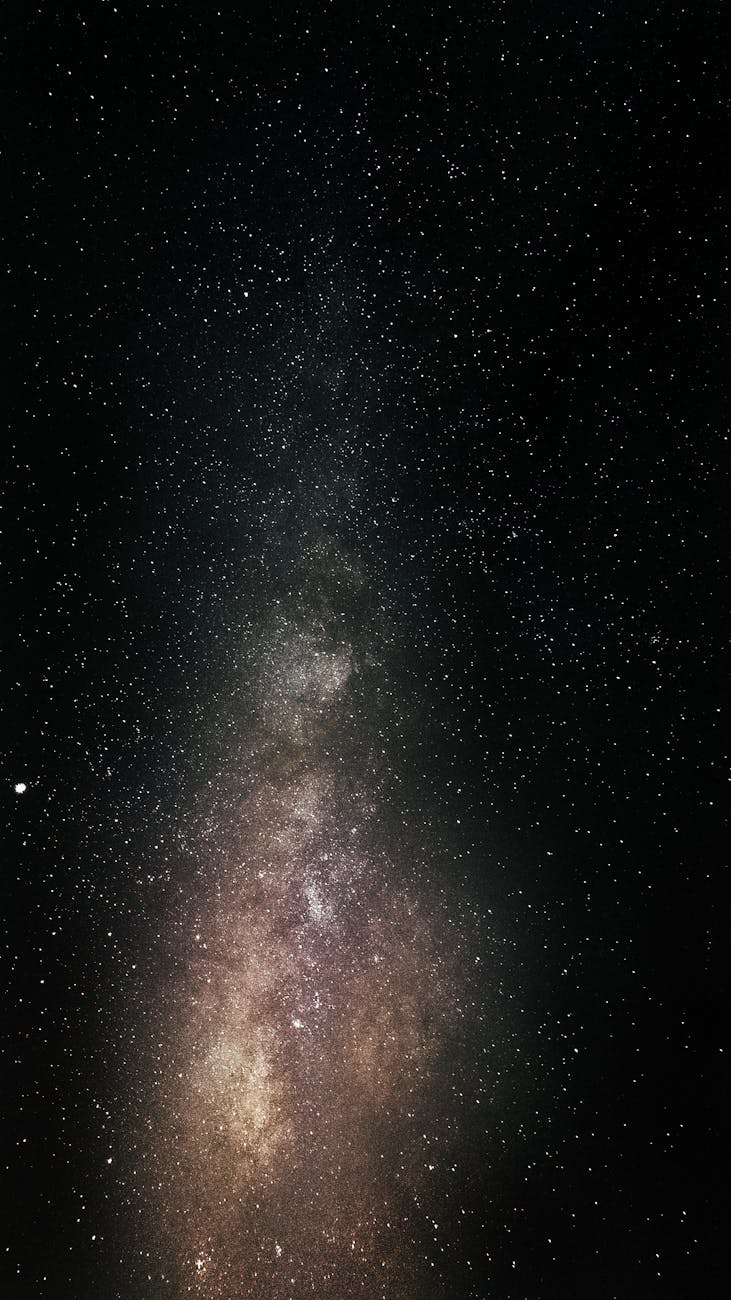
For most of human history, the Milky Way was a glowing mystery: a hazy band of light crossing the night sky. Today, that picture is being transformed by Gaia, a European Space Agency spacecraft that is measuring the positions and distances of stars on an extraordinary scale.
Gaia has pushed stellar observations from about 2 million stars to 2 billion. That leap is not just a bigger star catalog. It is changing how the Milky Way can be mapped, how its motions can be tracked, and how subtle features in the galaxy can finally be seen clearly.
Why Gaia matters
The Milky Way is enormous. It is a barred spiral galaxy containing an estimated 100 to 400 billion stars, and the Solar System sits about 27,000 light-years from the Galactic Center on the inner edge of the Orion Arm. From our position inside the galaxy, understanding the Milky Way is difficult. We do not get an outside view. Instead, astronomers must reconstruct the galaxy from within.
That makes precise measurements incredibly important. A map of the Milky Way is only as good as the distances and motions behind it. Gaia’s job is to supply exactly that.
The spacecraft provides distance estimates by measuring parallax. Parallax is the tiny apparent shift in a star’s position as Earth moves around the Sun. The effect is small, but with enough precision it reveals how far away a star is. Once distances are known, astronomers can build a three-dimensional map rather than a flat-looking sky map.
According to the data described for Gaia, the mission has expanded the measurable volume of space by a factor of 100 in radius and improved precision by a factor of 1,000. That is why Gaia is often described as transformational.
From millions of stars to billions
Earlier generations of astronomy worked with far smaller samples. By the 1990s, about 2 million stellar observations formed the basis for many large-scale studies. Gaia raised that number to around 2 billion.
That difference matters because the Milky Way is not simple. It has a bar-shaped core region, a warped disk of gas, dust, and stars, spiral arms, a central bulge region, a halo of old stars and globular clusters, and multiple satellite galaxies. It also contains structures that are not neat or symmetrical. Arms can branch and merge. The disk is warped along an S-shaped curve. Streams of stars and debris show signs of past interactions.
With only a limited number of stars, many of these patterns are hard to distinguish from noise. With billions of measurements, broad trends become clearer, and faint structures that were once hidden begin to stand out.
This helps astronomers study where stars are, how they move, and how different parts of the galaxy relate to one another.
How Gaia measures the Milky Way
The key to Gaia’s power is precision. Measuring a star’s parallax gives its distance. Repeated observations also reveal how the star moves across the sky.
That matters because the Milky Way is not static. Stars and gas rotate about the galactic center, and that rotation is differential, meaning the rotation period changes with location. In the Milky Way, typical stellar orbital speeds away from the central bulge or outer rim are between 200 and 220 km/s. The Sun itself travels through the galaxy at roughly 220 km/s and takes about 240 million years to complete one orbit of the Milky Way.
If you can measure huge numbers of stellar distances and motions with high precision, you can begin to see not just where the galaxy’s pieces are, but how they are moving together.
That is the real revolution. Gaia is not making a still portrait. It is helping reveal a dynamic system.
The Milky Way’s wobble
One of the most intriguing results linked to Gaia is the detection of a wobbling motion in the galaxy. A 2020 study concluded that Gaia saw this subtle wobble in the Milky Way.
A wobble in the galactic disk means the disk is not simply rotating like a perfectly balanced, rigid wheel. Instead, there may be a more complicated large-scale motion affecting the galaxy’s shape and orientation.
Several possible causes have been proposed:
- torques from a misalignment of the disk’s rotation axis with the principal axis of a non-spherical halo
- accreted matter in the halo acquired during late infall
- nearby, interacting satellite galaxies and their consequent tides
These terms can sound technical, but the basic idea is straightforward.
A torque is a twisting effect that can alter how something rotates. A non-spherical halo means the matter surrounding the Milky Way may not be shaped evenly in all directions. Accreted matter refers to material the galaxy has gathered over time. Satellite galaxies are smaller galaxies that orbit the Milky Way, and tides are the gravitational distortions caused by their pull.
The Milky Way has several satellite galaxies, including the Large and Small Magellanic Clouds. Their interactions with the galaxy are strong enough to be considered in explanations for large-scale distortions and motions.
Why the halo matters
The halo is one of the Milky Way’s most important but least obvious regions. Unlike the bright galactic disk, the halo is a faint, roughly spherical component surrounding the galaxy.
It contains old stars and globular clusters, and there is also evidence for a gaseous halo containing a large amount of hot gas. The hot halo extends for hundreds of thousands of light-years, much farther than the stellar halo. Dark matter is also thought to be distributed in a halo around the galaxy.
When scientists suggest that the Milky Way’s wobble may come from matter in the halo or from a misalignment involving the halo, they are pointing to the fact that the visible disk is only part of the galaxy’s full structure. What happens in the faint outer regions can shape the motion of the brighter inner regions.
Satellite galaxies and galactic tides
Gaia’s wobble result also connects to one of the most dramatic themes in Milky Way history: interaction.
The Milky Way is not isolated. It belongs to the Local Group of galaxies and has many smaller companions. Some dwarf galaxies orbit it today, and some have already been absorbed. The galaxy is also currently accreting material from several small galaxies, including the Large and Small Magellanic Clouds through the Magellanic Stream.
When smaller galaxies pass by or orbit the Milky Way, their gravity can tug on the disk. Those tugs can create tides, ripples, warps, or larger distortions. In fact, the warp of the Milky Way’s disk has been linked to the influence of the Magellanic Clouds, with their effects amplified by a dark matter wake.
So when Gaia detects a wobble, it may be revealing the fingerprint of the Milky Way’s ongoing interactions with its neighbors.
Mapping the magnetic fields
Gaia’s impact is part of a broader sharpening of the Milky Way’s picture. In April 2024, initial studies and related maps involving the magnetic fields of the Milky Way were reported.
Magnetic fields are invisible, but they matter because they are part of the galaxy’s structure and environment. A map of those fields adds another layer to the growing portrait of the Milky Way.
The galaxy is already known to contain stars, planets, gas, dust, a central radio source called Sagittarius A*, spiral arms, a bar, a bulge, a halo, and vast regions of interstellar matter. Adding magnetic-field maps means astronomers are moving beyond simply locating objects. They are beginning to map hidden patterns that shape how the galaxy behaves.
That is why the sense of discovery around Gaia-era astronomy is so strong. The Milky Way is not just being counted. It is being uncovered layer by layer.
A new phase in understanding our galaxy
The history of Milky Way research has always been a story of improved vision. Ancient observers saw a glowing band. Galileo showed in 1610 that it was made of many faint stars. In the 20th century, astronomers learned that the Milky Way was just one galaxy among many. In the 21st century, Gaia is driving another leap.
Its billion-star measurements are turning the Milky Way into a precision map rather than a rough sketch. They are revealing motion, structure, and possible distortions on galactic scales. They are helping astronomers test ideas about the disk, the halo, satellite interactions, and the overall architecture of our home galaxy.
And the work is not finished. If Gaia has already revealed a wobbling disk and helped open the door to new magnetic maps, then the larger promise is clear: the more precisely the Milky Way is measured, the more complex and surprising it becomes.
Our galaxy still appears from Earth as a pale river of light. But behind that glow is a vast rotating system of stars, gas, dust, halo material, satellite companions, and hidden forces. Gaia is showing that even in our own cosmic home, there is still a great deal left to discover.
Sources
Based on information from Milky Way.
More like this
Map your own billion-star curiosity—download DeepSwipe and explore the universe one swipe at a time.