Full article · 7 min read
Milky Way: Why Most People Never See It
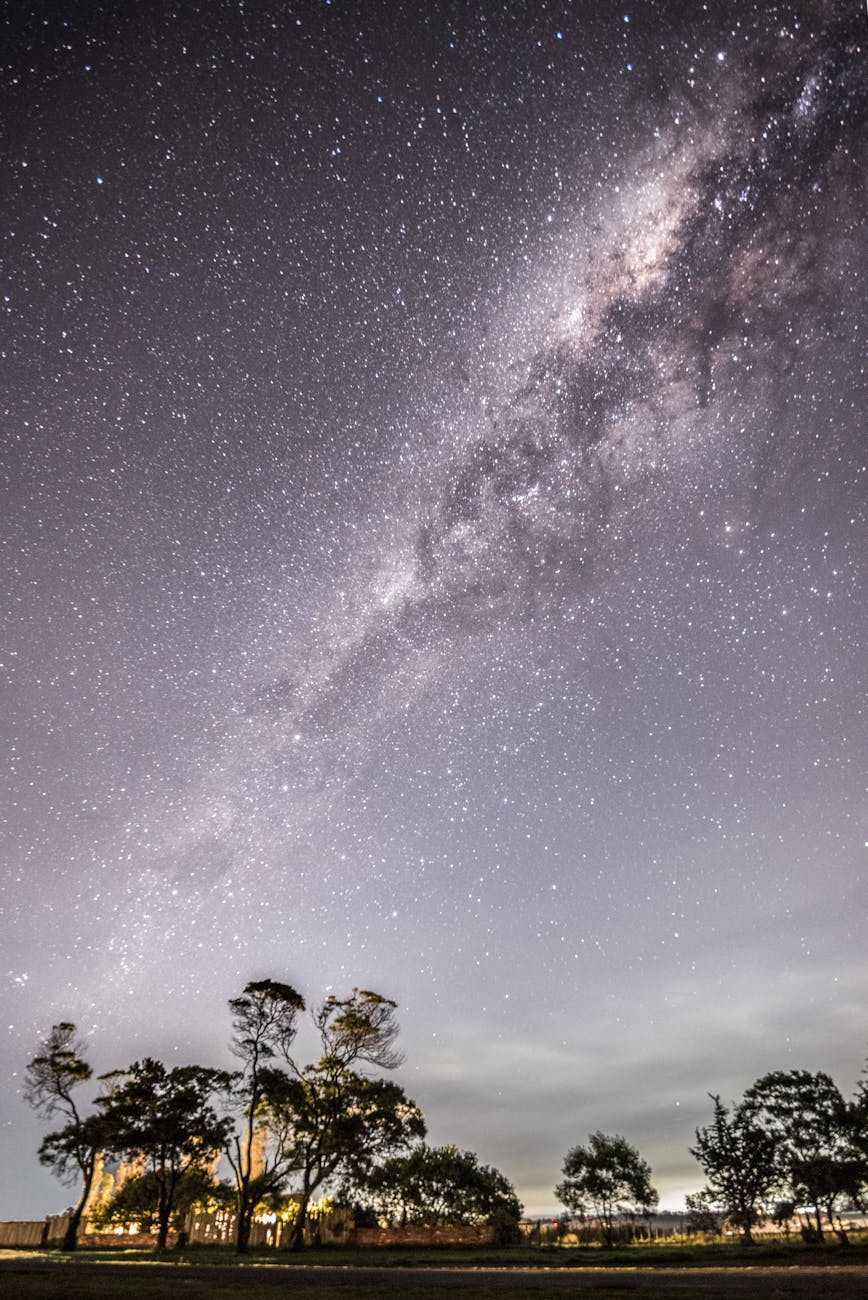
For most of human history, the Milky Way was a familiar sight: a pale, hazy band stretching across a dark night sky like a river of light. Today, for a huge part of the world, that view has faded. More than one-third of Earth’s population cannot see the Milky Way from home because of light pollution.
That is striking, because the Milky Way is not some tiny faint object tucked into one corner of the sky. It is our own galaxy, and every naked-eye star you can see belongs to it. Yet the part people call “the Milky Way” is that milky-looking band of light formed by countless distant stars packed along the galactic plane, too far away to be picked out individually by the unaided eye.
Why the Milky Way is easy to lose
The main reason the Milky Way disappears for so many people is that it has relatively low surface brightness.
Surface brightness means how much light an extended object gives off over each patch of sky. A bright point like a planet or a nearby star can punch through a brighter background, but a broad glow like the Milky Way is much easier to wash out. If the sky itself is glowing from artificial lighting, the galaxy’s faint band simply blends into the background.
The Milky Way is best seen only when the sky is very dark. It needs darkness better than about 20.2 magnitude per square arcsecond to be visible. Under brighter skies, especially in urban and suburban areas, it becomes difficult or impossible to detect. Under rural skies, especially when the Moon is below the horizon, it can become extremely prominent.
This is why people can spend years under city lights without ever realizing that a bright, structured band should span the sky overhead.
What light pollution actually does
Light pollution is artificial light that brightens the night sky. Streetlights, buildings, signs, and other human-made lighting create a luminous background that drowns out faint celestial features.
The Milky Way suffers especially badly because it is not a sharp object. It is a diffuse glow. Once the background sky becomes too bright, the contrast drops and the band effectively vanishes.
Maps of artificial night-sky brightness show just how widespread this effect is: more than one-third of the global population cannot see the Milky Way from their homes due to light pollution. That means one of the most dramatic sights in the sky is now hidden from billions of people.
Moonlight can also reduce visibility. Even in otherwise dark places, a bright Moon can wash out the galaxy’s faint structure. But unlike city glow, moonlight is temporary. Light pollution can erase the view every clear night.
What you are really looking at
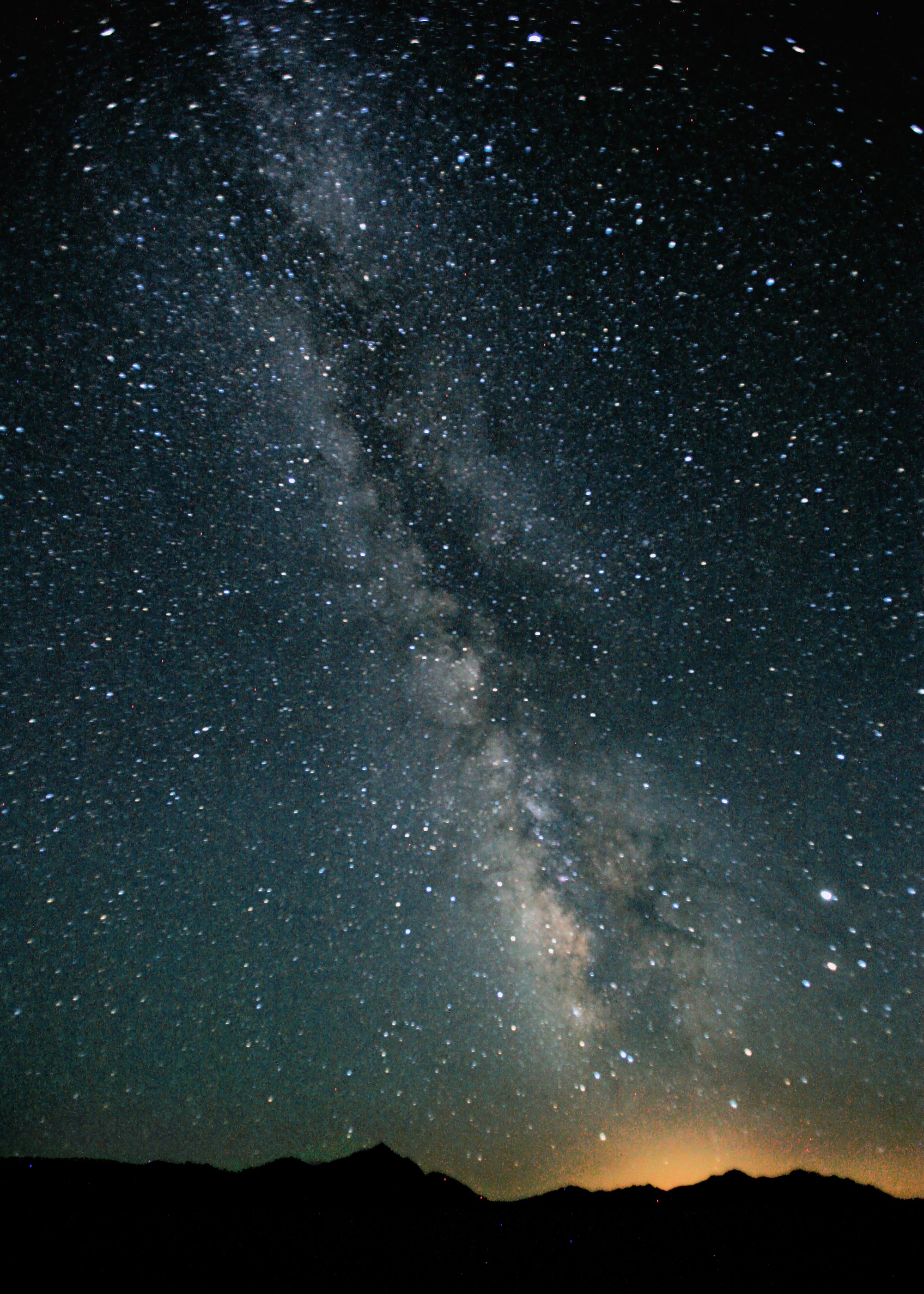
The Milky Way appears as a hazy white band about 30 degrees wide, arching across the sky. Its light comes from the buildup of unresolved stars and other material in the direction of the galactic plane.
The galactic plane is the flat, disk-like midsection of the galaxy. Since we are inside that disk, looking along it means looking through enormous numbers of stars, gas, and dust. That crowded line of sight creates the luminous streak we call the Milky Way.
This also explains why the band is not uniform. Some parts look brighter, some patchier, and some strangely dark.
Brighter regions appear as soft patches called star clouds. These are areas where especially rich star fields stand out. The most conspicuous of these is the Large Sagittarius Star Cloud, part of the galaxy’s central bulge.
The bulge is the dense, bright central hub of the Milky Way, made mostly of old stars and located toward Sagittarius. This direction marks the brightest part of the Milky Way in the sky because it points toward the Galactic Center region.
The dark gaps are not empty
Some of the most dramatic features in the Milky Way are not bright at all. They are dark.
Two famous examples are the Great Rift and the Coalsack. These are not holes where stars are missing. They are regions where interstellar dust blocks the light of more distant stars.
Interstellar dust consists of fine material spread through the space between stars. When enough of it lies along our line of sight, it hides the brighter star fields behind it. Against the glowing band of the Milky Way, that dust shows up as dark lanes and blotches.
The Great Rift is a broad system of dark dust clouds cutting through the Milky Way band. The Coalsack is a prominent dark nebula visible near the Southern Cross. A nebula is a cloud of gas or dust in space, and in this case the cloud is seen because it obscures the starry background behind it.
These dark features make the Milky Way look textured and split, especially in truly dark skies where the contrast is strong.
Where to look for the brightest part
The brightest section of the Milky Way lies toward Sagittarius. In that direction, the band swells with star clouds and the glow of the central bulge.
From Sagittarius, the Milky Way appears to run around the sky toward the galactic anticenter in Auriga before continuing all the way back to Sagittarius again. In this sense, the band circles the sky and divides it into two roughly equal hemispheres.
If you are trying to picture the structure, think of standing inside a giant flattened disk of stars. Looking across the disk produces a bright, crowded band. Looking away from it reveals a darker, less star-packed sky.
That is why the Milky Way appears as a stripe rather than a uniform glow everywhere.
Why rural skies feel completely different
When people first see the Milky Way from a dark site, the reaction is often surprise. Many expect a faint smudge and instead see a broad, detailed structure with bright knots, dark lanes, and visible texture.
That difference comes down to contrast. In dark rural locations, the low surface brightness of the Milky Way is no longer overwhelmed by artificial sky glow. With the Moon below the horizon and a sufficiently dark sky, the galaxy becomes prominent and richly detailed.
Under those conditions, the Milky Way does not just “appear.” It dominates.
This is also why it can seem almost unbelievable that so many people have never seen it. The galaxy has not changed. Our skies have.
A sky once shared by everyone
The Milky Way’s name in Western culture comes from its dim, milky appearance. Across many cultures, it has inspired other names too, including “Birds’ Path,” “Silver River,” “River of Heaven,” “Winter Street,” and “The Road to Santiago.” These names reflect just how visible and culturally important the band once was.
For ancient and premodern observers, the Milky Way was a normal part of the night. Galileo famously resolved its glow into individual stars with a telescope in 1610, confirming that the hazy band was made of vast numbers of faint stars. Long before modern city lighting, people everywhere could look up and see the raw visual evidence that the night sky was crowded with structure.
Today, that everyday relationship with the sky has weakened. In many places, people know the Milky Way mainly from photographs rather than direct experience.
The hidden cost of brighter nights
Losing sight of the Milky Way is not just about missing a pretty view. It means losing access to one of the most immediate ways to understand our place in the universe.
The band in the sky is a direct view into the structure of our galaxy. It reveals that we live inside a flattened system of stars, gas, and dust. It shows the bright central direction toward Sagittarius. It displays dark dust clouds like the Great Rift and Coalsack. And it reminds us that the night sky is not empty blackness dotted with a few stars, but part of a vast galactic system.
For many people, all of that is now hidden by the glow of modern lighting.
The Milky Way is still there every clear night, arching overhead as it always has. But to see it, many people now have to leave the city, wait for the Moon to set, and find a sky dark enough to let our own galaxy return.
Sources
Based on information from Milky Way.
More like this
Escape the light pollution and light up your mind instead — download DeepSwipe to spot brilliant facts every day.


