Full article · 7 min read
Tardigrades Can Learn: What Memory Looks Like in a Tiny Water Bear
Tardigrades are famous for surviving extremes, but one of their most intriguing traits is much smaller and quieter: they can learn.
In laboratory work, the tardigrade species Dactylobiotus dispar was shown to respond to classical conditioning. In simple terms, that means it could learn to connect one signal with another. When a blue light was associated with a small electric shock, the animal learned to curl into its defensive tun state in response to the light. That is a striking result for a creature so small that an adult tardigrade is usually only around half a millimeter long.
This finding suggests that learning does not require a large, elaborate brain. Even an animal with an extremely compact body plan and simple nervous system can change its behavior based on experience.
What is a tardigrade?
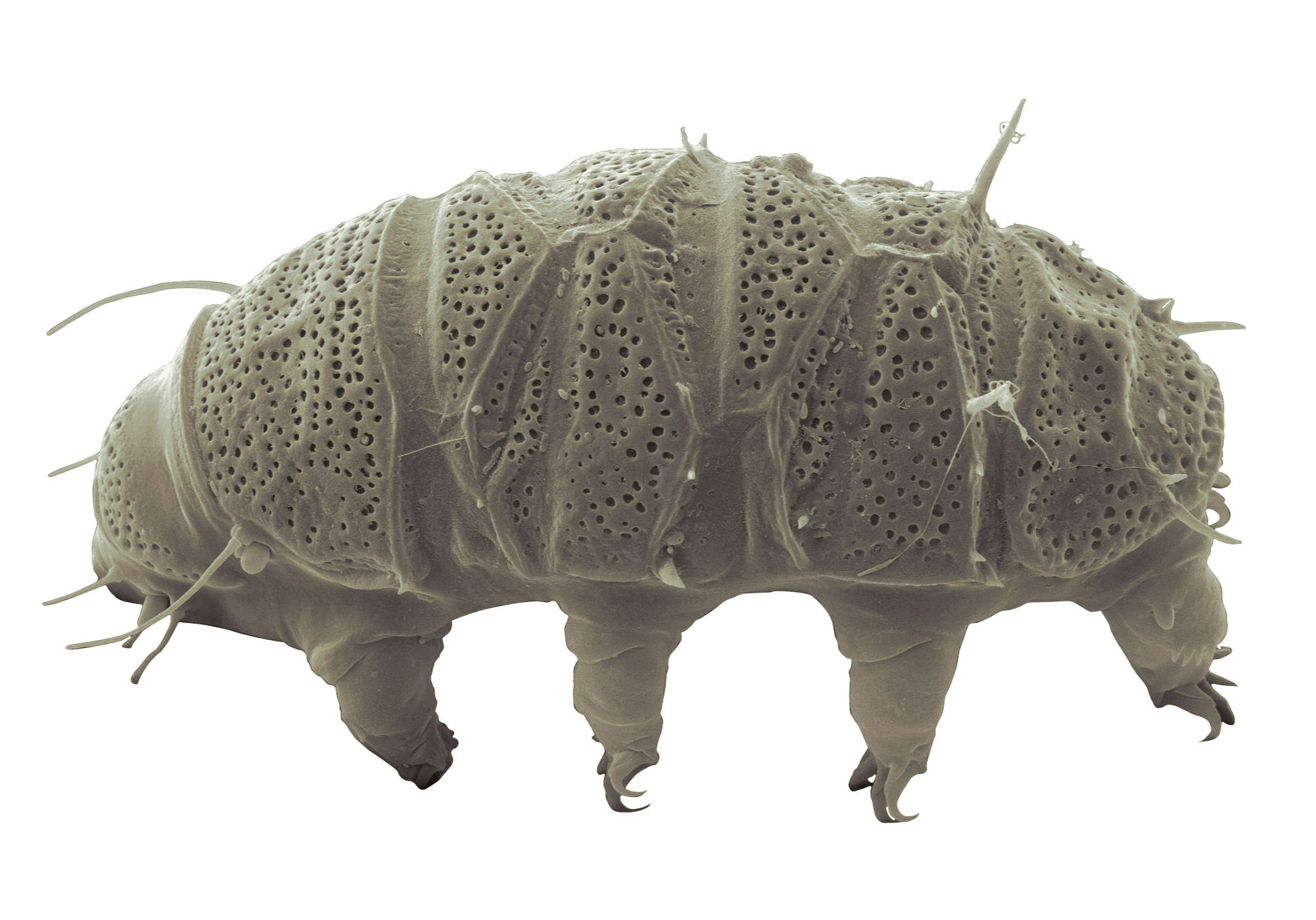
Tardigrades, often called water bears or moss piglets, are eight-legged micro-animals found across an enormous range of habitats. They live on mountaintops, in tropical rainforests, in the deep sea, and in Antarctica. Many species are especially common in damp places such as mosses, lichens, soil, and leaf litter.
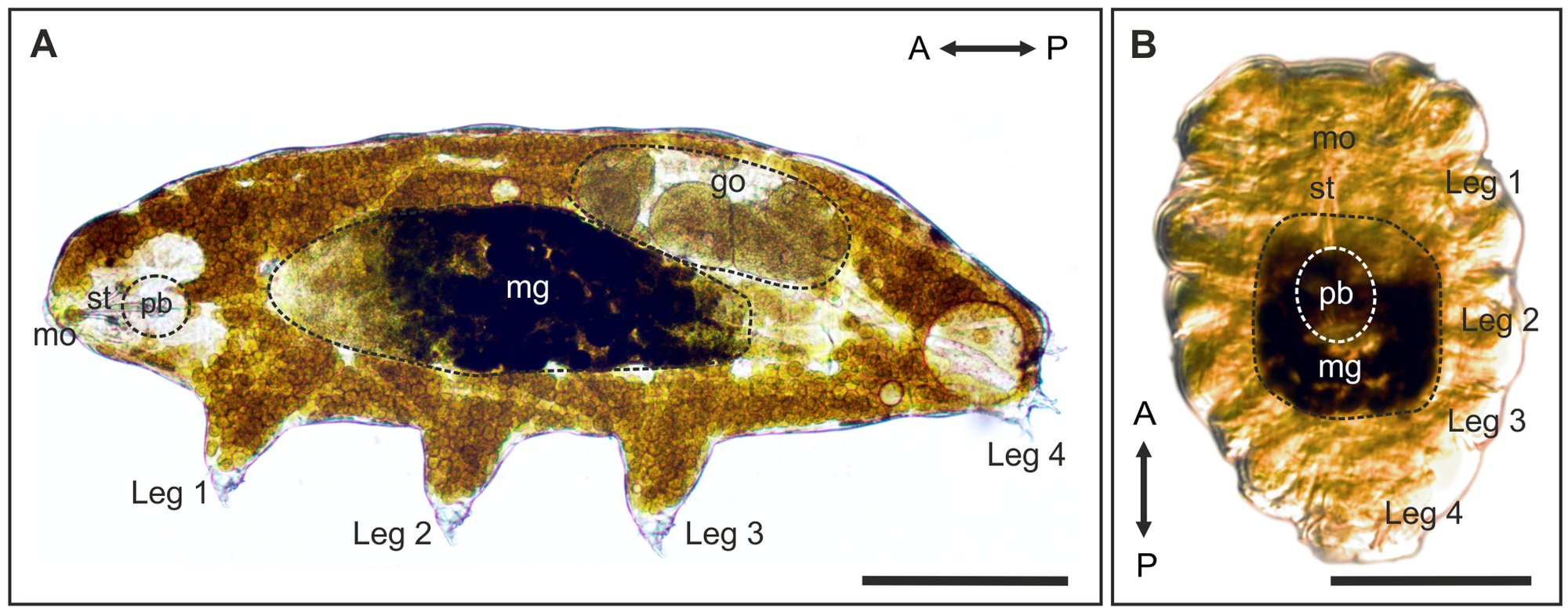
They are short, plump animals with four pairs of hollow, unjointed legs. Each leg ends in claws or, in some species, sticky pads. Their movement is often described as clumsy crawling, which helped inspire the nickname “water bear.” The scientific name Tardigrada means “slow walkers.”
Tardigrades are also accessible to non-specialists. Because they are common in mosses and lichens and can be viewed under a low-power microscope, they are well known to students and amateur scientists.
The surprise: learning in a creature with about 1000 cells
One reason the learning result is so compelling is the sheer simplicity of the animal. Tardigrades are made up of only about 1000 cells in total. Despite that, Dactylobiotus dispar demonstrated behavior that fits the definition of classical conditioning.
Classical conditioning is the same basic kind of learning in which an animal comes to associate a cue with an event. In this case, the cue was blue light and the event was a mild electric shock. After the association was formed, the tardigrade curled into a tun in response to the light.
That matters because it shows the ability to learn is not restricted to animals with large nervous systems. A minimal nervous system can still be enough to detect signals, connect them, and produce a defensive response.
Inside the tardigrade nervous system
Tardigrades do not have a large centralized brain, but they do have real neural wiring.
Their nervous system includes a pair of ventral nerve cords. “Ventral” means on the belly side of the body. Along these cords are paired ganglia for each pair of legs. Ganglia are clusters of nerve cells that help process information locally, somewhat like small control centers.
Near the mouth, the nerve cords end at subpharyngeal ganglia, which are connected to a dorsally located cerebral ganglion. “Dorsal” means on the back side, and the cerebral ganglion is the brain-like nerve cluster in the head.
Tardigrades also possess two eyespots in the brain and several sensory structures on the head, including cirri and clavae. The clavae are small hollow antenna-like structures that may function as chemoreceptors, meaning they may help detect chemical signals.
Put together, this is a compact but functional sensory and processing system. It is simple compared with that of larger animals, yet clearly capable of more than reflex alone.
What is the tun state?
The tun is one of the most famous features of tardigrade biology. In this state, the animal draws in its legs and forms a compact, desiccated body shape. It is a defensive and survival form associated with cryptobiosis, a condition in which metabolism is suspended.
Terrestrial and freshwater tardigrades enter this state when water is unavailable, such as when moss or a pond dries out. In the tun, they can go without food or water for several years. They also become highly resistant to environmental stress.
That is why the learning experiment is so fascinating. The response that was trained was not just a twitch or a minor motion. It involved switching into one of the most dramatic protective states in the tardigrade toolkit.
Why this matters for understanding minimal brains
The behavior of Dactylobiotus dispar hints at an important biological idea: intelligence does not simply scale with size. A very small organism can still process sensory information and alter its future behavior.
The result does not mean tardigrades have human-like thought or complex reasoning. What it does show is that learning can emerge in a very small nervous system. With only limited anatomy and around 1000 cells in the whole body, a tardigrade can still detect a warning cue and prepare for harm.
That makes tardigrades interesting model organisms for thinking about the lower limits of nervous system function. How small can a brain-like structure be and still support learning? The evidence from this species suggests the threshold may be far lower than many people would expect.
More than survival machines
Tardigrades are often celebrated for their resilience. They can survive dehydration, air deprivation, radiation, starvation, extreme pressures, and temperature extremes that would quickly kill most other forms of life. They have even survived exposure to outer space.
But focusing only on toughness can overshadow the fact that they are also active animals with sensory organs, movement, feeding structures, and behavioral flexibility.
They crawl using muscles that move their legs backward and forward, with claws helping them grip surfaces. They feed by sucking fluids from animal or plant cells or by consuming detritus. They use stylets to pierce prey, and pharynx muscles pump fluids into the gut. They reproduce through a variety of methods depending on the species, and their eggs can have striking surface ornamentation.
Seen this way, tardigrades are not just nearly indestructible curiosities. They are tiny animals with real bodies, real neural organization, and at least some capacity to learn from experience.
A tiny learner in a huge world
Tardigrades live almost everywhere: on land, in freshwater, and in the sea. In damp habitats, their numbers can be enormous, reaching over 2 million per square meter on mosses. Their eggs and resistant stages are small and durable enough to be transported long distances by wind or on the feet of other animals.
In those environments, sensing danger and responding quickly could be valuable. Tardigrades can be predators, feeding on prey such as nematodes, and they are also prey for soil arthropods including mites, spiders, and beetle larvae. In a world full of sudden changes and threats, even a simple learned association may make a difference.
How far can tardigrade learning go?
For now, the demonstrated case is specific: Dactylobiotus dispar can be classically conditioned to curl into a tun in response to blue light associated with a small electric shock.
That single result opens many questions. How many kinds of signals can tardigrades learn? How long do they retain a learned response? Do other tardigrade species learn in similar ways, or is this ability stronger in some species than others? And how much neural machinery is truly necessary for memory?
Those limits remain open. But even this one experiment is enough to shift how tardigrades are viewed. They are not only survivors of extremes. They are also evidence that learning can exist in a body almost too small to see.
The big lesson from a microscopic animal
A tardigrade is usually about 0.5 mm long. It has a tiny body, a tiny nervous system, and only about 1000 cells. Yet one species has shown a clear ability to form an association between a sensory cue and an unpleasant event.
That makes tardigrades remarkable for more than their toughness. They show that even a minimal brain-like system can support memory and behavior change. In the study of learning, that is a powerful reminder that small animals can still reveal very big ideas.
Sources
Based on information from Tardigrade.
More like this
Train your brain like a tiny water bear — download DeepSwipe and learn big ideas one swipe at a time.