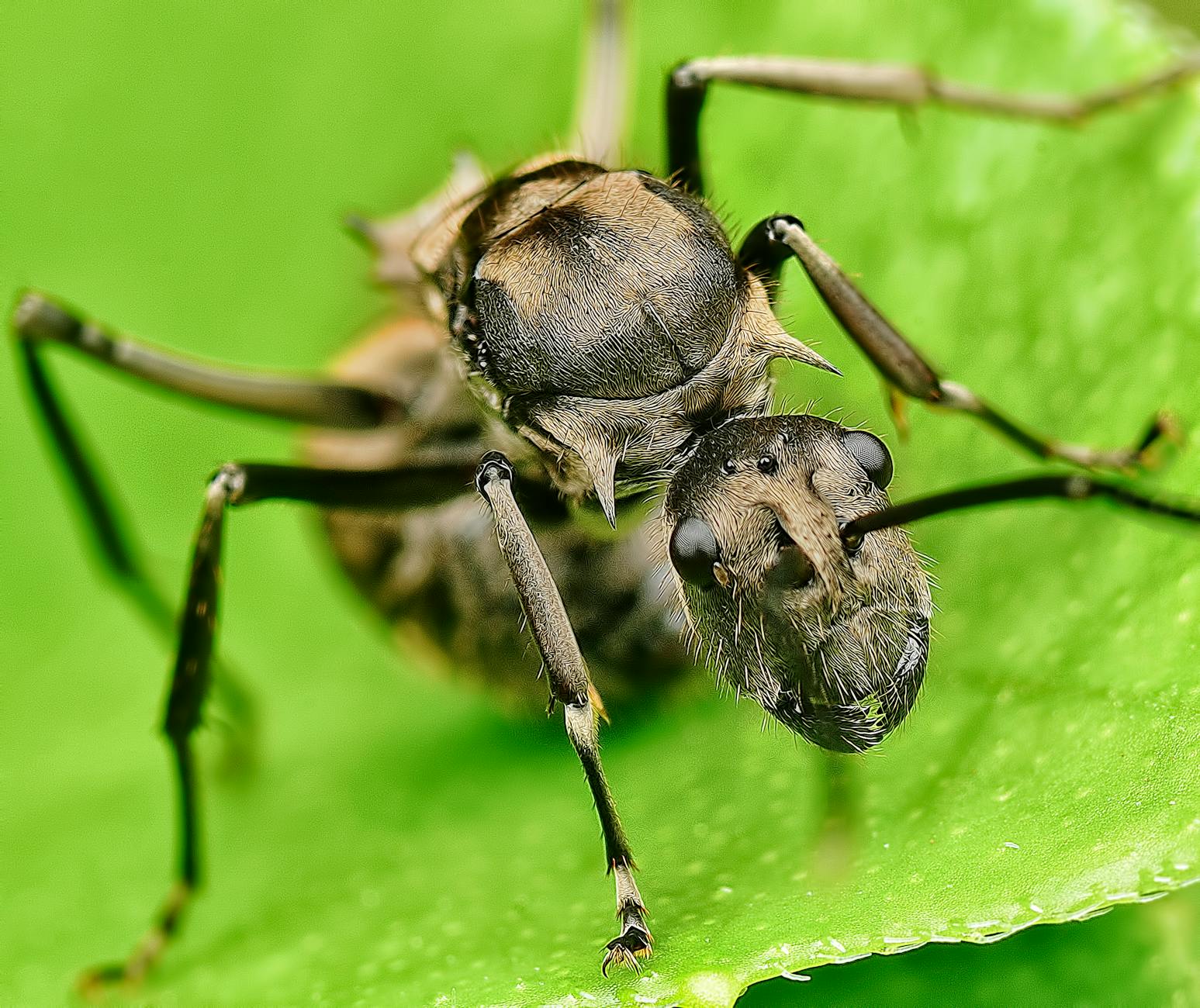
Black Garden Ants and Their Heathland Cousins
In a crack in the patio, under a stone in a field, or along the edge of a path, a small procession of ants is often at work. Many of these everyday encounters belong to one sprawling genus: Lasius.
The Type Species: Lasius niger
At the center of this group stands the black garden ant, Lasius niger. It serves as the type species for the genus—a kind of standard bearer that defines what Lasius is.
These ants are the familiar dark workers you might see forming trails across pavements and garden beds, part of a robust, adaptable species that thrives in human-altered environments.

Life in the Dry Heath
Beyond gardens and pavements, Lasius also rules drier habitats. The cornfield ant, Lasius neoniger, and Lasius alienus are major members that favor heathland and similar dry, open areas.
Their nests anchor the soil, their foraging connects them to plant-sucking insects that produce honeydew, and their colonies become part of the background machinery of the ecosystem—largely unnoticed, but constantly active.
Quiet Diversity Beneath Our Feet
From black garden ants in suburbia to cornfield ants in open country, Lasius species share a basic form but occupy a range of microhabitats. Some live under rocks, some in moist wood, others in grassy hillocks.
To most people, they are just “ants.” Yet even this single genus contains opportunists, builders, and parasites, each adapted to a slightly different slice of the landscape.
The Familiar Face of a Larger Story
Seeing a line of ants in your yard might not feel remarkable. But when those ants are Lasius, you’re looking at a member of a genus that includes garden regulars, moisture-loving nesters, fragrant citronella ants, and even social parasites that steal entire colonies.
The ordinary black worker on the pavement is part of a far richer story—one where the most common creatures around us are also some of the most varied.