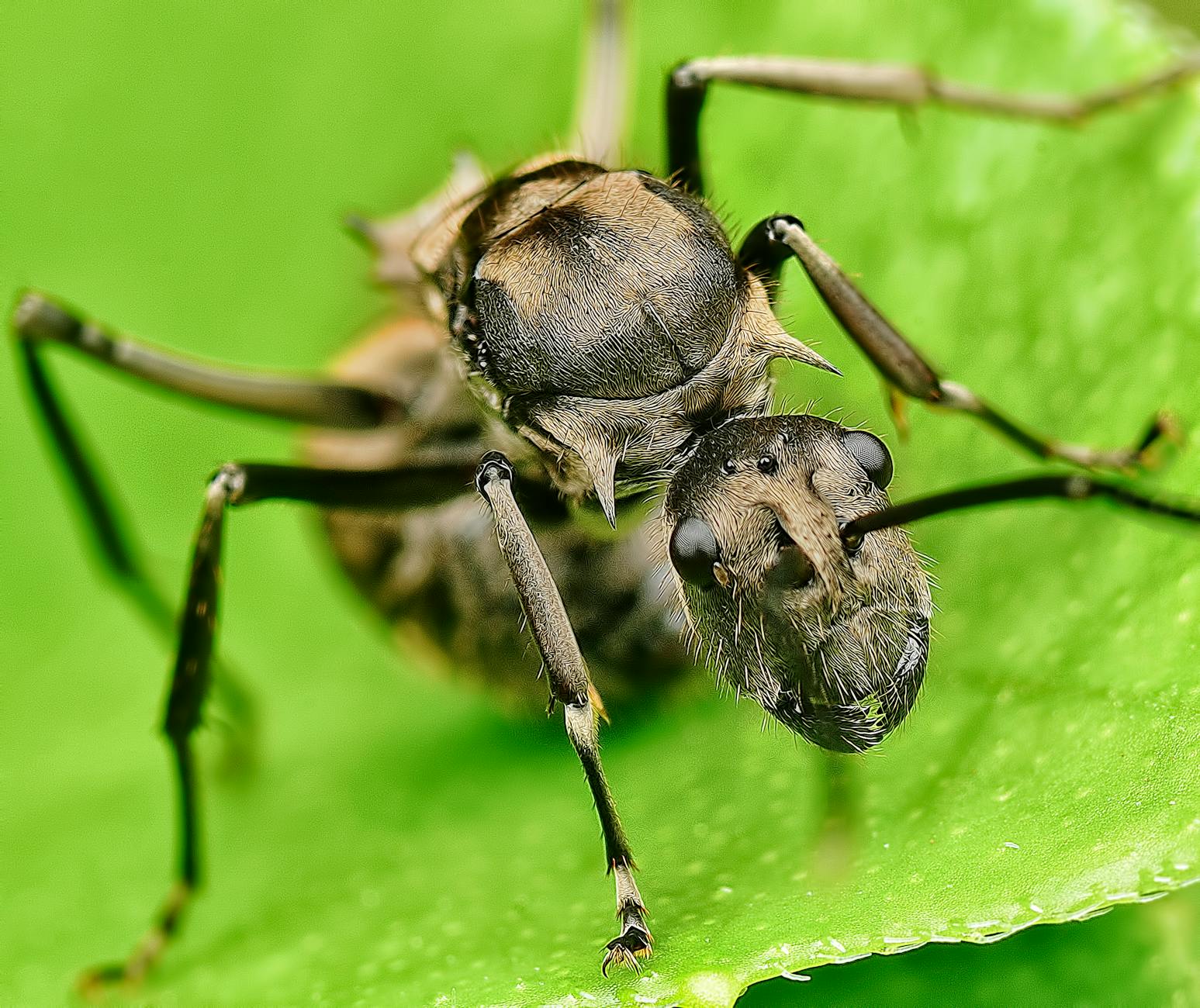
Moisture Ants: The Hidden Tenants in Rotting Wood
Beneath a damp log or inside the softened wood of an old foundation, a miniature city hums along almost unseen. These are the “moisture ants” of the genus Lasius—small, secretive, and surprisingly well adapted to a world of rot.
Life in the Damp
In the United States, many Lasius species that favor wet, decaying environments are collectively known as moisture ants. They choose nests in and around moist, rotting wood and under rocks, taking advantage of material that other creatures might ignore.
When they move into human structures, they typically occupy foundation forms or wood that is already decayed. They’re more symptom than cause: a sign that moisture and rot are present, not the agents of destruction themselves.

Carton Cities of Wood and Sugar
Some species go a step further and build intricate "cartonlike" nests in wet places. These structures are made from tiny fragments of decayed wood, all cemented together with honeydew—a sugary liquid excreted by plant-sucking insects—and secretions from the ants’ mandibular glands.
The result is a paper-like architecture, flexible yet stable, created from rot and sweetness.
Secretive Night Workers
Moisture ant workers are tiny—only 2 to 3 millimeters long—and range in color from yellow to dark brown. They’re monomorphic, meaning workers are all the same general size and shape, giving the colony a uniform look.
They prefer to stay out of sight. Foraging mostly at night, they seek honeydew and other sweet substances, and they may also prey on small insects. By the time most people notice them, it’s often during late summer or fall, when winged males and females suddenly swarm as part of their reproductive flights.
Not the Destroyers You Think
Homeowners often confuse moisture ants with the more infamous carpenter ants. But moisture ants are much smaller, and their thorax—the middle body segment—has a noticeable notch on its top surface, where carpenter ants have a smooth, rounded profile.
Most importantly, moisture ants do not carve into sound wood. They only tunnel through wood that is already decaying. Species like Lasius alienus, Lasius neoniger, and some Acanthomyops members are widespread examples.
The presence of moisture ants is less a disaster than a message from the building itself: the wood was rotting long before the ants arrived.