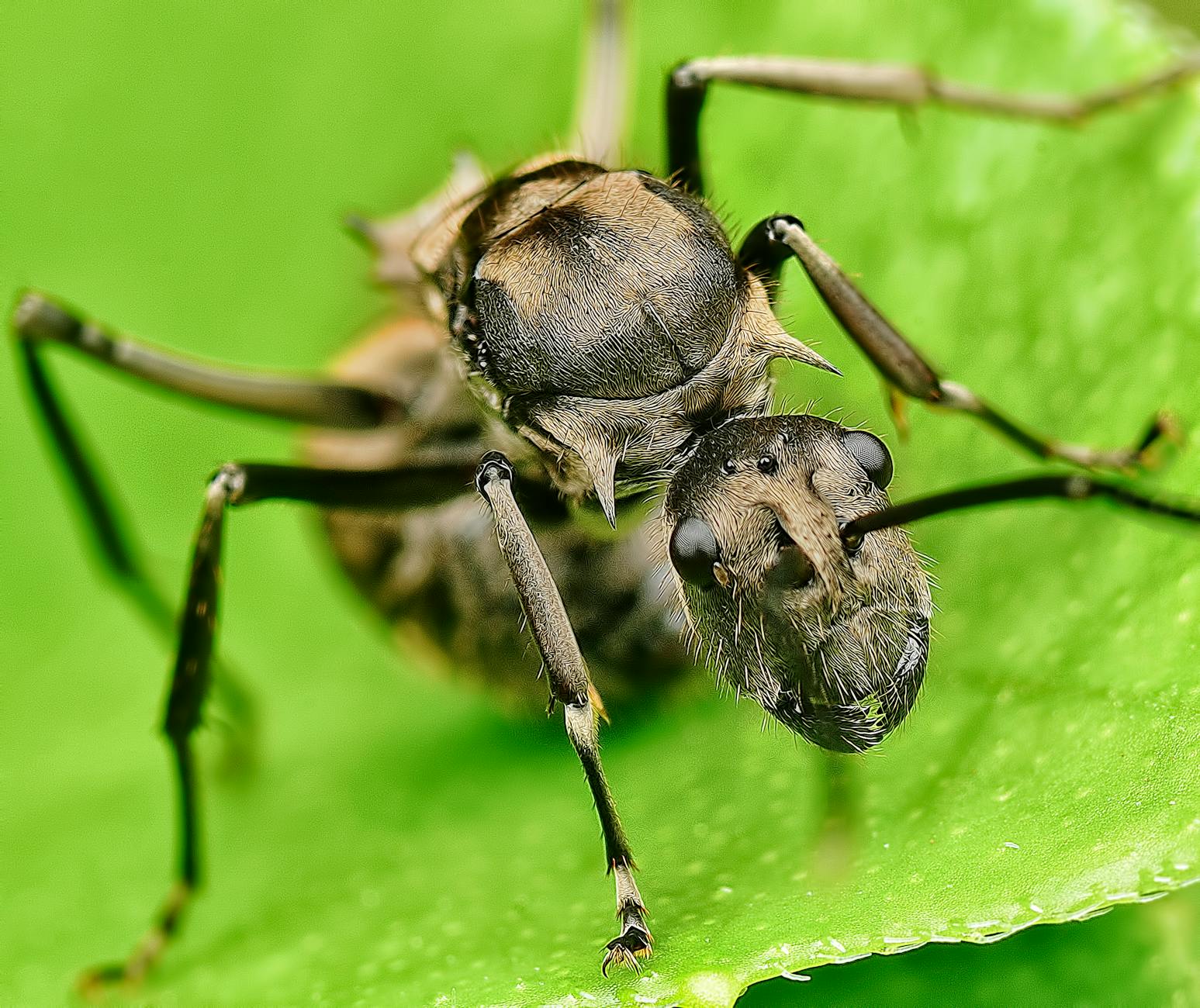
Ant Mounds That Double as Natural Compasses
On cool Alpine mornings, long before smartphones and GPS, goatherds could still find their way. Their guide wasn’t the stars or a magnetic needle—but ant mounds.
The Architects: Lasius flavus
The species behind this quiet marvel is Lasius flavus, a commonly seen member of the Lasius genus. These ants build grassy hillocks in undisturbed pasture, small mounds that blend almost seamlessly into the landscape.
At first glance, they look like gentle bumps in the turf. But look closer—and from the right direction—and a pattern appears.

Always Facing the Dawn
In the Alps, these mounds consistently align to the east. Their orientation is not random: they are positioned to catch the first rays of the rising sun.
For the ants, the benefits are likely practical. Early sunlight can warm the nest more quickly after a cold night, helping regulate temperature inside the mound and kick-starting the daily rhythm of the colony.
But for human observers, this consistent alignment became something more.
Nature’s Compass for Alpine Goatherds
Generations of goatherds learned to read the land. Among their tools was an unexpected one: the hillocks of Lasius flavus. Because these mounds lean toward the sunrise, they provide a stable reference point in terrain where obvious landmarks can be scarce or snow-covered.
A glance at a cluster of mounds could reveal the direction of east, and from that, north, south, and west. All thanks to insects that had no idea they were helping humans navigate.
Shared Landscapes, Quiet Partnerships
The relationship between Alpine goatherds and Lasius flavus is not one of domestication or direct cooperation. The ants build for their own needs; the humans simply learned to interpret the result.
Yet this small detail—the way a grazing pasture doubles as a living compass—shows how closely human life is tied to patterns in the natural world. Even something as small as an ant’s mound can quietly connect daily survival to the steady path of the rising sun.