When Persia destroyed Athens during the second Persian invasion of Greece, the loss was not limited to walls, houses, and temples. The city’s artistic and sacred objects also suffered. Some were smashed where they stood. Others were carried away across the Persian Empire. Centuries later, broken fragments buried in the earth would help tell the story of what happened.
This destruction left behind one of the most haunting kinds of historical evidence: damaged art. Burned buildings can be rebuilt, but shattered statues and stolen monuments preserve the shock of conquest in a more intimate way. In Athens, the ruins themselves became a record of violence, memory, and eventual recovery.
Watch the story on DeepSwipe
Athens Under Persian Attack
Athens was attacked in two phases, in 480 BCE and again in 479 BCE, during the second Persian invasion of Greece. After the Battle of Thermopylae, much of central Greece lay open to the Persian army. The Athenians evacuated their population to Salamis with the help of the Greek fleet, while the Peloponnesians focused their defenses farther south at the Isthmus of Corinth.
That meant Athens was left exposed.
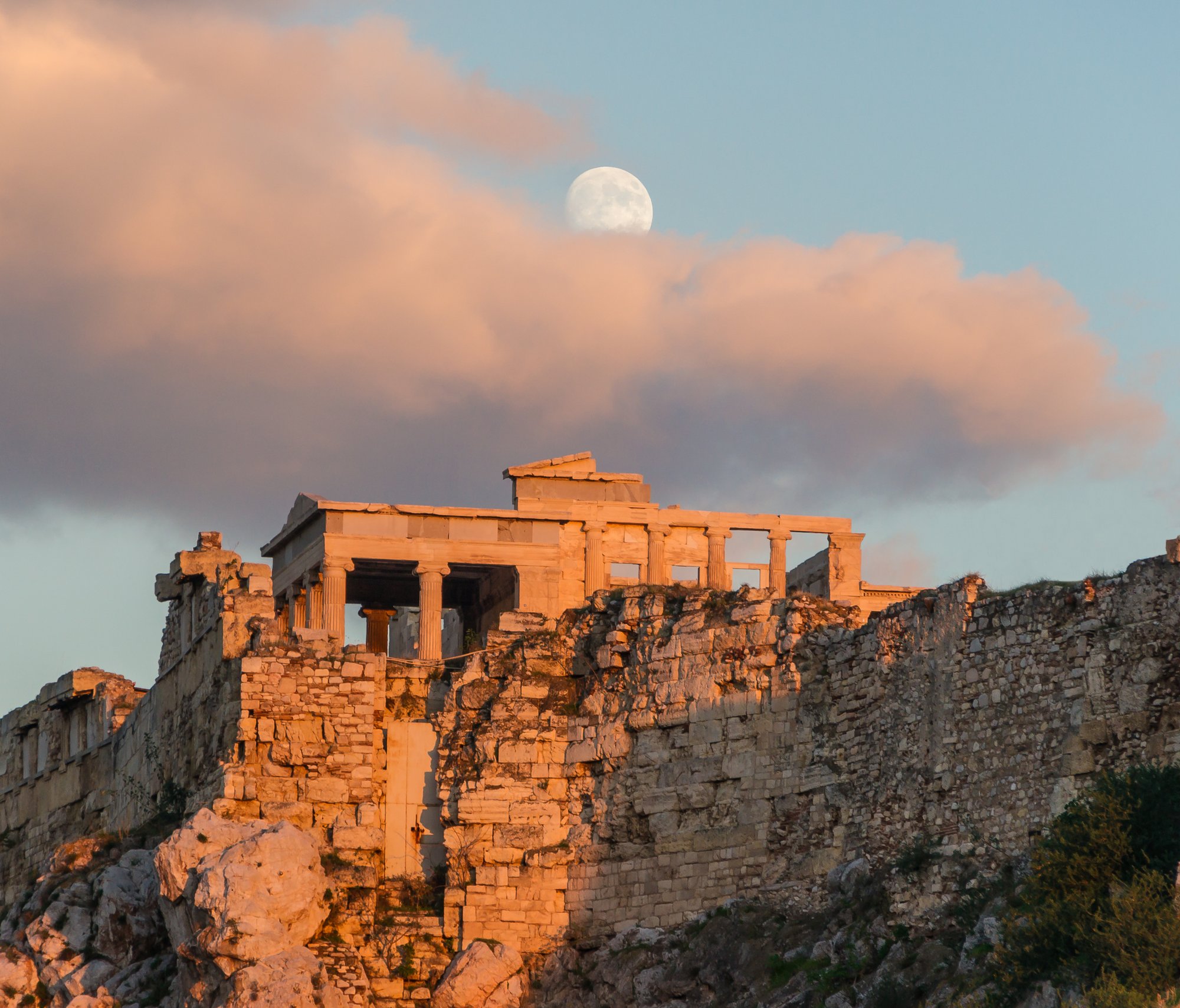
When the Persians first captured the city in September 480 BCE, a small number of Athenians had barricaded themselves on the Acropolis. The Acropolis was the fortified high point of the city and the location of major temples and sacred buildings. They were eventually defeated, and Xerxes ordered the city to be torched. The Acropolis was razed, and key religious structures including the Old Temple of Athena and the Older Parthenon were destroyed.
The Persians withdrew from Attica for a time, but the danger was not over. In 479 BCE, Mardonius returned south after trying and failing to persuade the Athenians to abandon the Greek alliance. The Athenians evacuated again, and the Persians took Athens a second time. This second destruction was even more thorough. What remained standing was burned, overthrown, or demolished.

More Than Buildings Were Lost
The destruction of Athens also meant the destruction and removal of artwork. Temples in the ancient Greek world were not empty shells; they contained offerings, sculptures, inscriptions, and objects of political and religious meaning. When the Persians plundered the temples and burned the Acropolis, they were not simply destroying architecture. They were attacking the symbolic heart of the city.
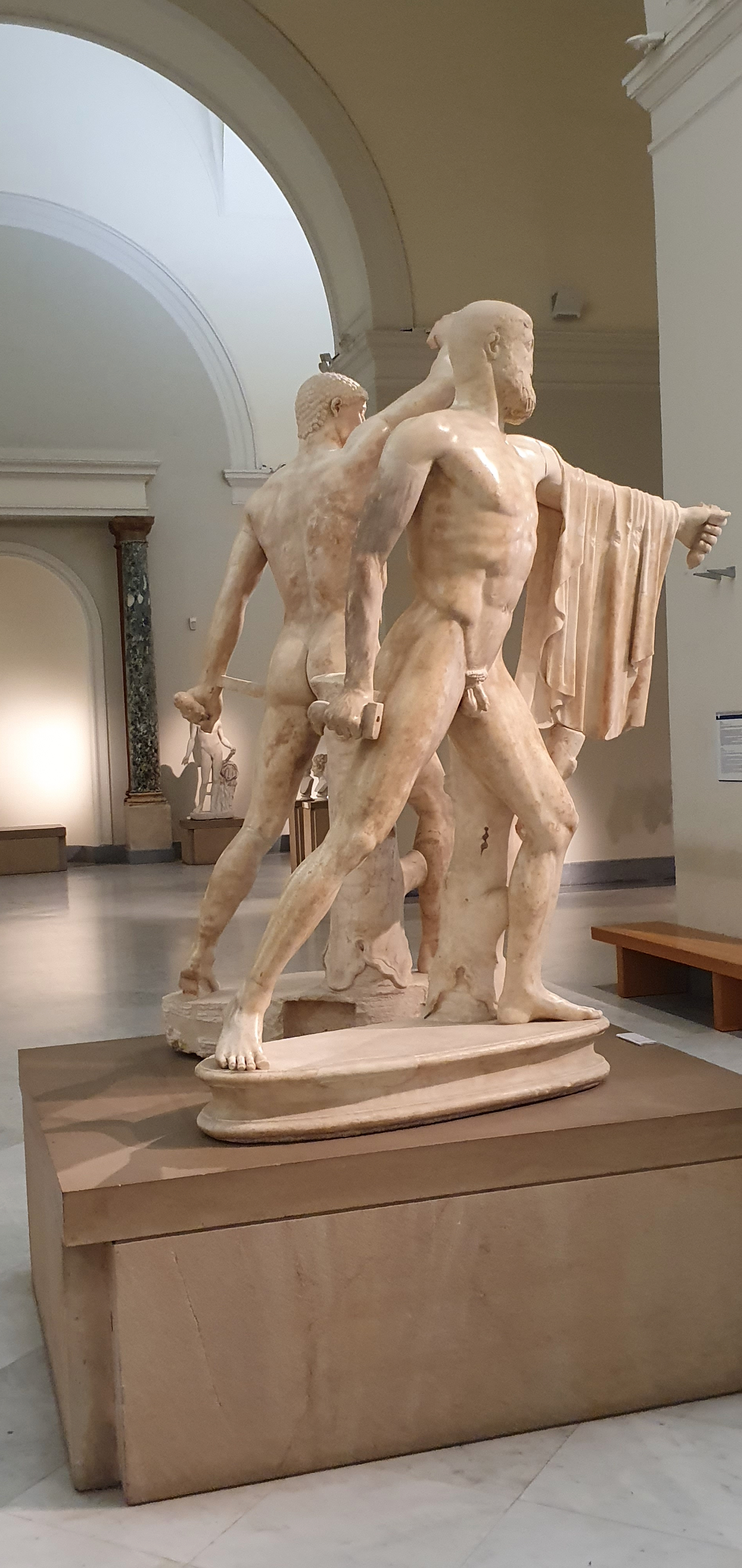
One especially striking example is the bronze statue group of Harmodius and Aristogeiton. This artwork was taken away by Xerxes. Its story gives a vivid sense of how art could become war booty, transported far from the city where it had originally stood.
Bronze statues were particularly valuable. Bronze is a metal alloy, and large bronze monuments required both artistic skill and costly material. Removing such a statue was not just an act of theft; it was also a display of imperial power.
The Statue of Harmodius and Aristogeiton
Among the artifacts taken from Athens was a bronze statue of Harmodius and Aristogeiton. After its removal, it eventually turned up in Susa.
Susa was a major city of the Persian Empire. The fact that the statue was found there shows just how far Athenian treasures could travel after the sack of the city. What had once belonged to Athens had been absorbed into the world of the Achaemenid Empire.
The statue did not remain lost forever. During the Wars of Alexander the Great, it was recovered in Susa and returned to Greece after nearly two centuries. That long journey, from Athens to Persia and then back again, makes it one of the most memorable examples of an artifact displaced by war and later restored.
Its return also shows that the memory of the Persian destruction endured for generations. The assault on Athens was not a short-lived episode forgotten once the walls were rebuilt. It remained part of Greek historical consciousness long afterward.
Perserschutt: The “Persian Rubble”
Not every artwork was carried off. Many were simply smashed.
Archaeologists later uncovered large numbers of damaged statues and fragments on the Acropolis. These remains became known as the Perserschutt, a German term meaning “Persian rubble” or “Persian debris.” The label refers to the mass of broken material left behind by the destruction of Athens and later found in excavations.
This is one of the most powerful archaeological traces of the sack of the city. Instead of relying only on written histories, researchers could see the physical aftermath in stone: vandalized statues, fractured bodies, missing heads, and broken offerings buried in the debris.
The Perserschutt is important because it preserves a moment of crisis. It captures what conquest looked like not in abstract military terms, but in damaged sacred and artistic objects. The ground itself held the evidence.
The Nike of Callimachus
One of the notable statues found among this destruction was the Nike of Callimachus. It had been erected next to the Older Parthenon in honor of Callimachus and the Greek victory at the Battle of Marathon.
Nike is the personification of victory, represented in this statue as a winged woman standing atop an inscribed column. The monument was made of Parian marble, a prized marble used in ancient sculpture, and it stood 4.68 metres tall.
The Persian army severely damaged it. The head of the statue and parts of the torso and hands were never recovered.
That missing material tells its own story. Archaeology often works through absence as much as presence. When a statue survives only in fragments, the breaks themselves become historical evidence. In this case, the damage reflects the violence of the Persian assault on the Acropolis.
Broken Art as Historical Memory
Athens was eventually recovered after the Persian defeat at the Battle of Plataea, where Mardonius was killed. The Athenians then faced the enormous task of rebuilding their city. Themistocles led important reconstruction efforts, especially the repair of defenses. A new wall, later known as the Themistoclean Wall, was built soon after the destruction in hopes of protecting Athens from another invasion.
Some of the rebuilding used spolia, meaning reused building material taken from older structures. The remains of the Older Parthenon and the Old Temple of Athena were incorporated into the Acropolis walls, and some of these reused fragments are still visible in the North Wall of the Acropolis.
This means the city literally rebuilt itself using the wreckage of what had been destroyed. In a sense, Athens preserved its trauma in stone. Damaged temples became part of new defenses, and broken statues remained buried until archaeology brought them back into view.
Why These Lost Artifacts Still Matter
The story of artifacts lost in the destruction of Athens is about more than looting. It reveals how war can target a civilization’s symbols, sacred places, and public memory. A stolen bronze statue found in Susa, a shattered marble Nike, and the buried mass of the Perserschutt all show that the fall of Athens was experienced through art as well as fire.
These objects continued to matter long after 479 BCE. Some remained visible in the rebuilt walls. Some stayed hidden underground for centuries. Some, like the statue of Harmodius and Aristogeiton, made an extraordinary return journey.
Even in fragments, Athens kept talking. Its broken art preserved the memory of destruction, survival, and the city’s determination to rise again.