Amorium: The Byzantine City Marked for Destruction

Amorium was not just another city on the Byzantine map. At its height, it became the largest city in Asia Minor, a region that made up most of modern-day Turkey. That kind of prominence brought wealth, prestige, and military importance — but it also made Amorium impossible for enemies to ignore.

In 838, the Abbasid caliph al-Mu'tasim launched a campaign specifically against Amorium. The city was captured and razed, turning it into one of the most dramatic examples of how political symbolism and geography could seal a city's fate. Amorium’s rise and destruction reveal a hard truth of medieval warfare: the stronger and more famous a place becomes, the more tempting a target it can be.

Amorium stood in Phrygia, in Asia Minor, on the Byzantine military road linking Constantinople with Cilicia. In practical terms, that meant it sat on a major route used for moving troops, supplies, and messages across the empire. A city in that position was far more than a dot on a map. It was a strategic stronghold.

Its importance was not limited to the Byzantine period. Amorium minted its own coins from sometime between 133 BC and 27 BC until the 3rd century AD. Coinage is often a sign that a settlement had achieved maturity and regional significance. It suggests the city already had enough economic and military weight to stand out long before its most famous age.

Even so, Amorium’s greatest rise came later. Although fortified by Emperor Zeno in the 5th century, it did not become truly prominent until the 7th century. At that point, its location in central Asia Minor made it vital in defending Byzantine territory against the armies of the Umayyad Caliphate after the Muslim conquest of the Levant.

DeepSwipe app banner

A Frontier City Under Constant Pressure

Because of where it stood, Amorium was repeatedly drawn into war. It was first attacked by Muawiyah I in 646. It later capitulated to Abd ar-Rahman ibn Khalid in 666 and was occupied by Yazid I in 669 before being retaken by the general Andreas, serving Emperor Constans II.

Over the next two centuries, the city remained a frequent target of raids into Asia Minor. These raids are sometimes called razzias, meaning fast military incursions aimed at attack, plunder, or disruption rather than permanent occupation. Amorium was especially exposed during the great sieges of 716 and 796.

This repeated pressure shows just how exposed and valuable the city was. In dangerous borderland conditions, strategic cities often became both shield and prize. Amorium served as a defensive anchor for the Byzantine Empire, but every defensive strength it possessed also made it a destination for enemy armies.

It became the capital of the theme of Anatolikon soon after. In the Byzantine world, a theme was a military and administrative district, so becoming a thematic capital greatly increased Amorium’s political and military role.

The City That Became a Dynasty’s Symbol

Amorium’s story changed dramatically in the early 9th century. In 820, Michael II, described as an Amorian, became Byzantine emperor and founded the Amorian dynasty. A dynasty is a ruling family line, and this one tied the city directly to imperial power.

That connection helped usher in the city’s greatest prosperity. Amorium became the largest city in Asia Minor, a remarkable status that reflected both its strategic role and its political favor. It was no longer only a fortress or transport hub. It had become a place associated with the ruling house itself.

But that honor came with a cost. Once Amorium was linked so closely to the reigning emperors, it became more than a military objective. It became a symbol. Striking it would damage not only Byzantine defenses but also Byzantine prestige.

The city had already served as a major imperial base before this. In 742–743, Emperor Constantine V used Amorium as his main base against the usurper Artabasdos. That earlier role had already highlighted its importance in internal power struggles. Under the Amorian dynasty, its symbolic value grew even further.

The Catastrophe of 838

In 838, the danger that came with fame finally arrived in full force. Caliph al-Mu'tasim launched a campaign specifically against Amorium. This was not a random raid or an opportunistic strike. The city itself was the intended target.

The result was devastating. Amorium was captured and razed. To raze a city means to destroy it thoroughly, often by tearing down or burning major structures so that its status and defenses are broken. The event was important enough to be recounted in a poem by Abu Tammam, showing that the sack had meaning far beyond the battlefield.

This is what makes Amorium’s fall so striking. Many cities suffered in war, but Amorium was selected because of what it represented. Its status as the hometown of the ruling dynasty had turned it into a political trophy.

Even Destruction Was Not the End

Amorium did not simply disappear after 838. The town was rebuilt, a sign of how valuable the location still was despite the disaster. Yet its troubles were not over. It was burned again by Thamal al-Dulafi in 931.

Even after that, the city remained active at least into the 11th century. That endurance is one of the most fascinating parts of its history. Cities built on strategic routes often proved hard to erase completely because the geography that made them vulnerable also made them useful.

In 1068, the Seljuks Afshin and Ahmedsah attacked Amorium, sacked it, and killed most of its inhabitants. After the Battle of Manzikert, the city was devastated again by the Seljuks. Still, Amorium continued to matter enough that Emperor Alexios I Komnenos defeated the Seljuks there in 1116.

Writers such as al-Idrisi and Hamdallah Mustawfi still described it as an important place in the 12th to 14th centuries. That long afterlife adds a surprising final layer to the story. Amorium was battered again and again, yet it lingered in regional memory and significance for centuries.

The Human Cost: The 42 Martyrs of Amorium

One of the most haunting episodes connected to the sack of 838 came afterward. Forty-two officers and notable figures from Amorium were taken as hostages to Samarra, in present-day Iraq. They refused to convert to Islam and were executed there in 845.

They later became known as the 42 Martyrs of Amorium. Their story shows that the fall of the city was not only a military disaster but also a personal and religious tragedy for many of its people.

Why Amorium Still Matters

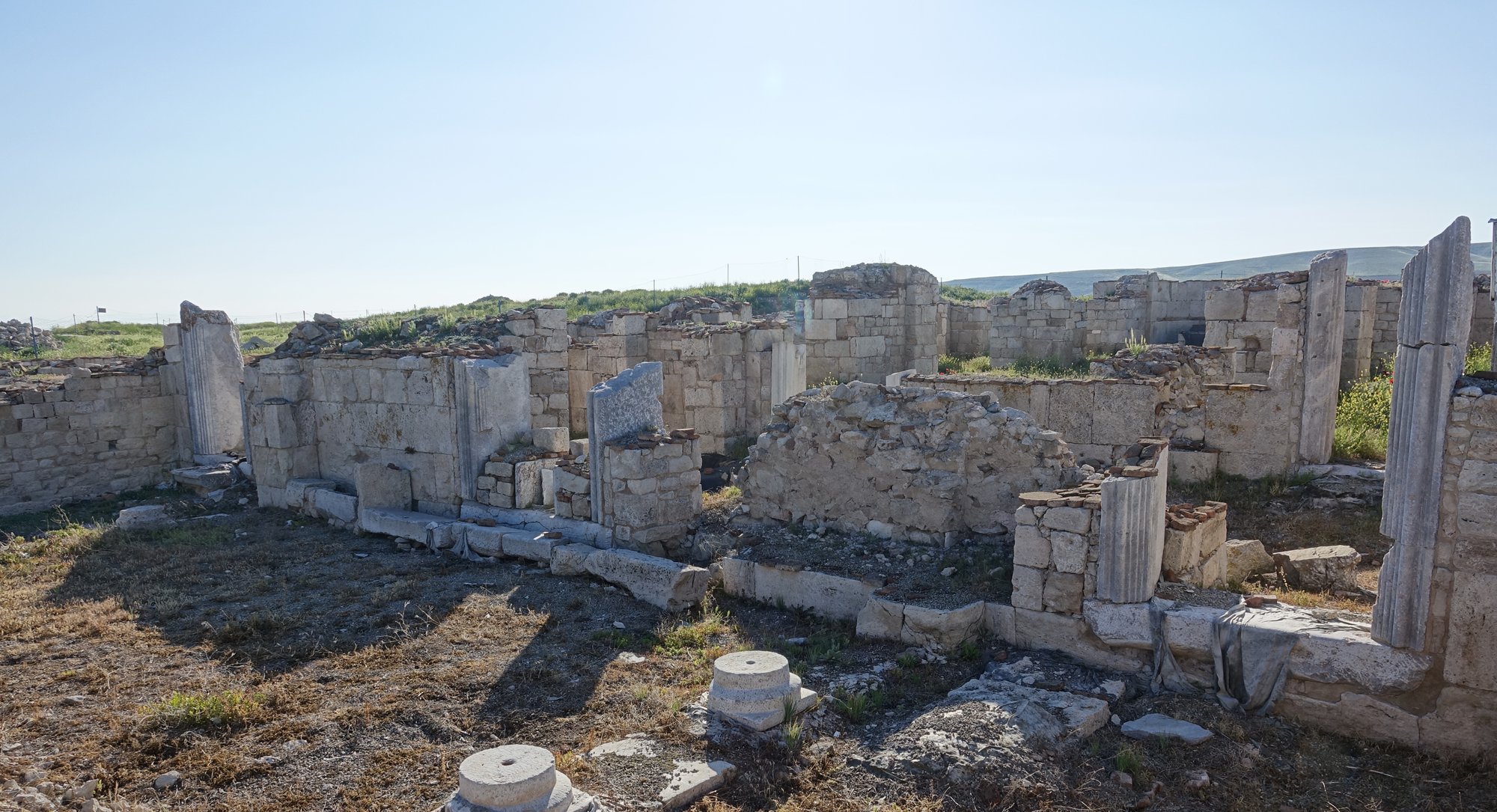
Today, the ruins of Amorium lie under and around the modern village of Hisarköy in Turkey. Excavations and surveys have helped recover parts of its story, especially its Byzantine past. That ongoing archaeological interest reflects the city’s unusual place in history.

Amorium matters because it captures a pattern seen again and again in imperial history. A city rises thanks to location, military value, and political favor. Then those same advantages make it a marked target. Amorium’s glory became its weakness.

And yet, its history is not only about destruction. It is also about survival, rebuilding, and the stubborn persistence of places that sit at the crossroads of power.

Stories About Amorium

Amorium: The Byzantine City Buried Under a Village

Amorium: The Byzantine City Buried Under a Village

Otehr Stories like this

Jewish–Roman Wars in the History of Israel

Jewish–Roman Wars in the History of Israel

Al-Andalus: 781 Years of Muslim Iberia

Al-Andalus: 781 Years of Muslim Iberia

Human History: The Black Death—When Europe Stopped Breathing

Human History: The Black Death—When Europe Stopped Breathing

Roman Britain and Boudicca

Roman Britain and Boudicca

Ancient Rome: Caesar, the Rubicon, and the End of the Republic

Ancient Rome: Caesar, the Rubicon, and the End of the Republic

Who Named Europe? From a Princess to ‘Frangistan’

Who Named Europe? From a Princess to ‘Frangistan’

Literature: When Memory Became Writing

Literature: When Memory Became Writing

Roman roads: Engineering through the impossible

Roman roads: Engineering through the impossible

Elizabeth I and the Spanish Armada

Elizabeth I and the Spanish Armada

Mount Vesuvius 79 AD: Two Styles, One Disaster

Mount Vesuvius 79 AD: Two Styles, One Disaster

Al-Andalus: Where Languages and Faiths Mixed

Al-Andalus: Where Languages and Faiths Mixed

Human Settlement Abandonment

Human Settlement Abandonment

Love cities with dramatic rises and brutal falls? Download DeepSwipe and march through history one unforgettable story at a time.