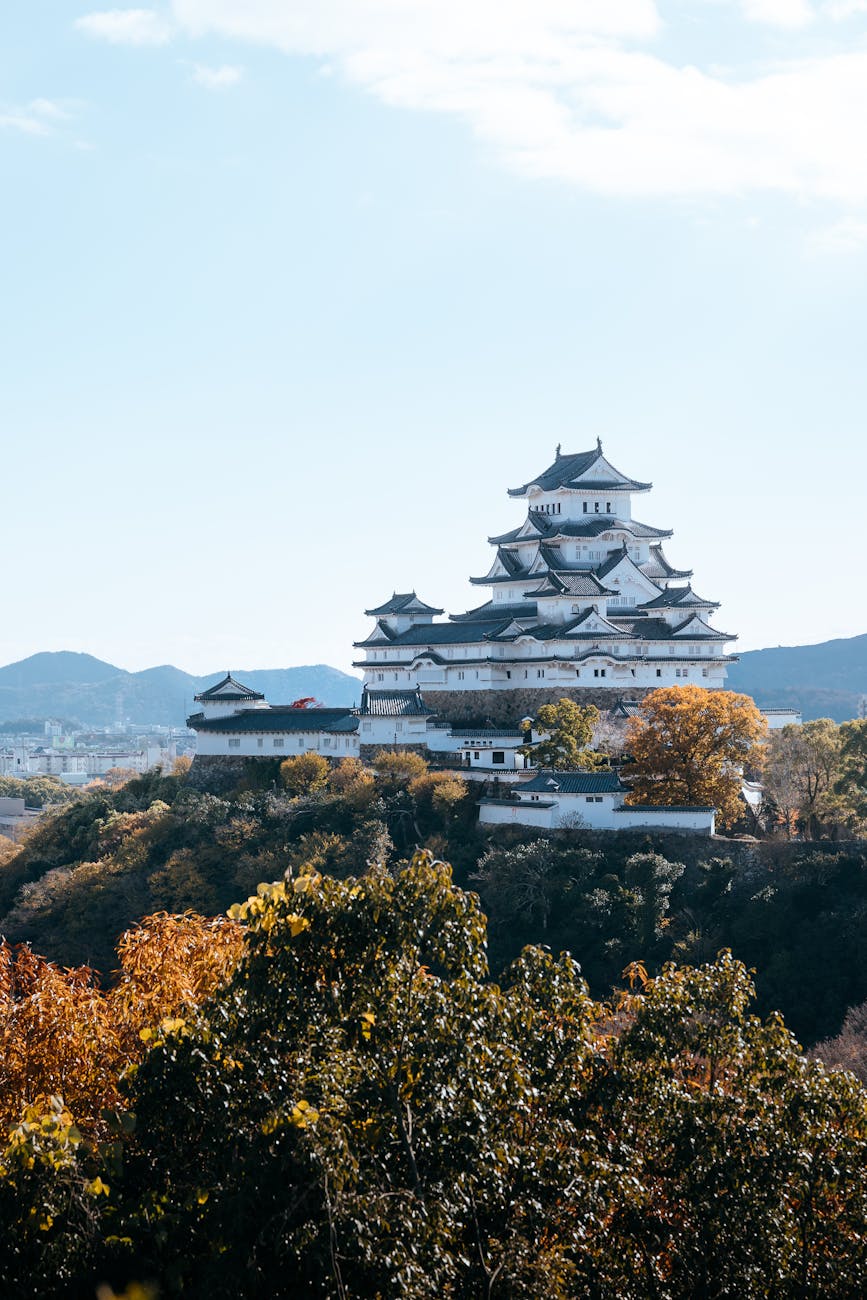
Himeji Castle is famous for its brilliant white exterior, so striking that it is often called the White Egret Castle or White Heron Castle. Rising above Himeyama hill in Himeji, Hyōgo Prefecture, it is celebrated as the finest surviving example of classic Japanese castle architecture. Yet alongside its gates, moats, keeps, and defensive passages, the castle also carries a darker reputation: it is a place of legends, spirits, and unsettling tales that have clung to its walls for generations.
That contrast is part of what makes Himeji Castle so fascinating. It is at once a military masterpiece and a setting for ghost stories. Behind the polished white plaster and elegant silhouette lies a world of haunted wells, supernatural beings, and folklore that turned this fortress into something more than stone and wood.
Watch the story on DeepSwipe
Why Himeji Castle feels like the perfect setting for legends
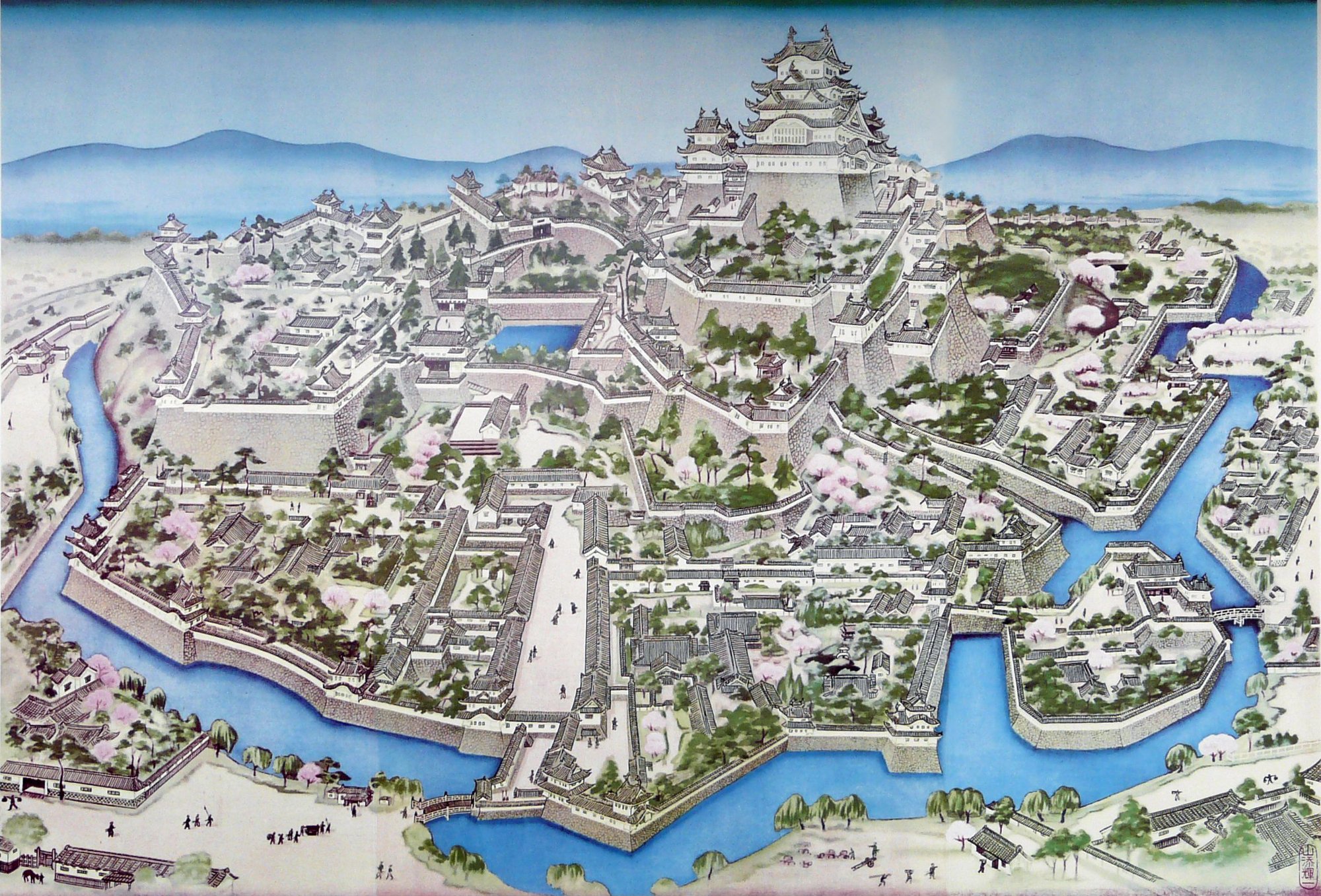
Himeji Castle is not a single building but a vast castle complex made up of 83 structures, including storehouses, gates, corridors, and turrets. The castle seen today was largely rebuilt and expanded between 1601 and 1609 by Ikeda Terumasa, after Tokugawa Ieyasu granted him the site following the Battle of Sekigahara. Later, additional buildings were added by Honda Tadamasa.
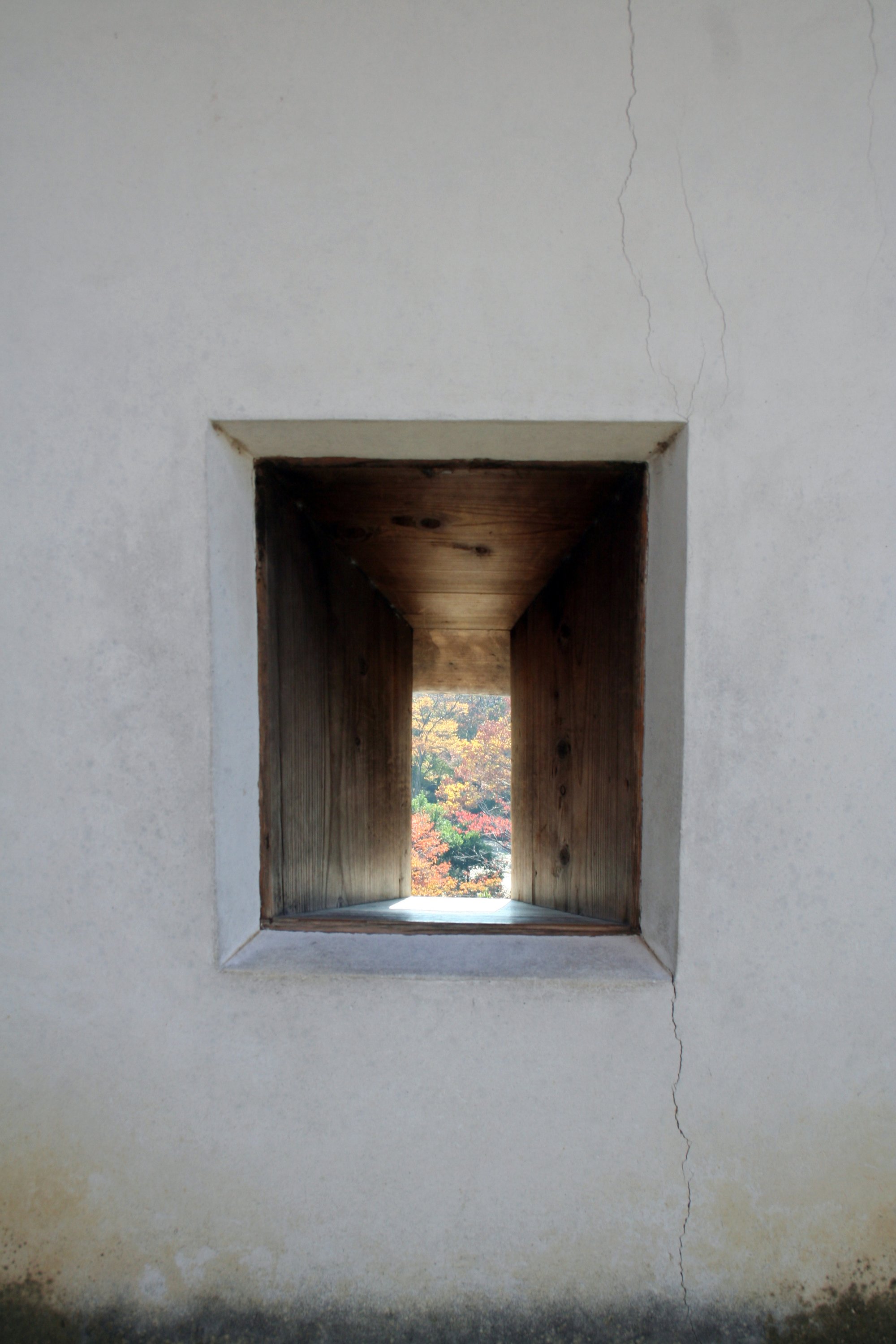
Its design alone helps explain why stories of ghosts and mysterious beings took root here. The complex was built with advanced defensive systems from the feudal period. It included three moats, steep and narrow passages, loopholes for defenders, stone-drop windows, warehouses stocked for siege conditions, and a maze-like approach to the main keep. Intruders could be forced to move in a spiral pattern, watched all the while from above.
Even now, visitors can have trouble navigating the route. That atmosphere of confusion, enclosure, and hidden corners naturally lends itself to folklore. A castle designed to mislead enemies is also the kind of place where people imagine lingering spirits, secret watchers, and stories whispered after dark.

The legend of Okiku’s Well
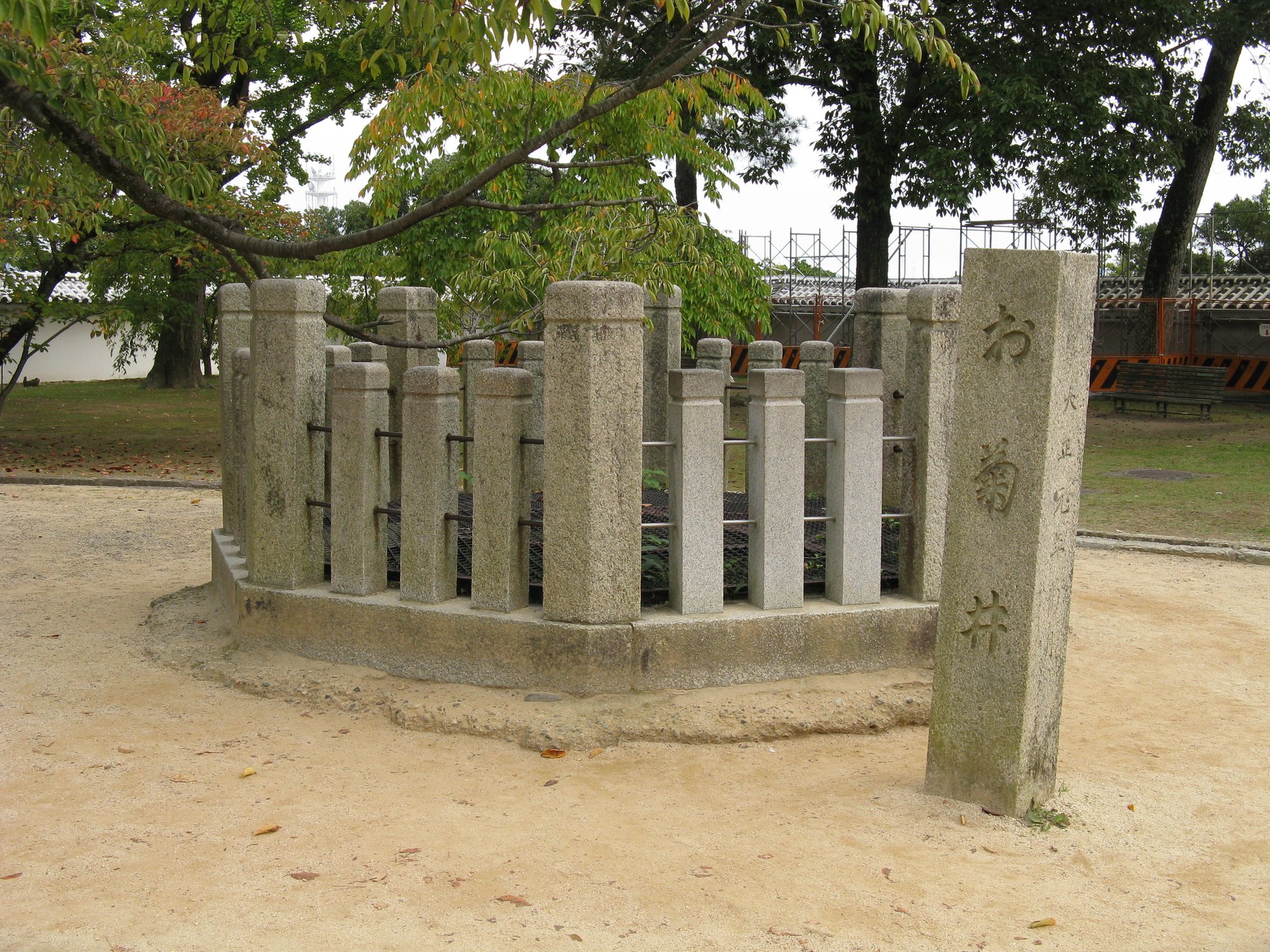
The most famous ghost story connected to Himeji Castle is the tale of Okiku’s Well. This story is linked to a kaidan, a traditional Japanese ghost story. In this Himeji-associated version, known as Banshū Sarayashiki, the castle is said by some to be the real setting of the legend.
According to the tale, a woman named Okiku was falsely accused of losing dishes that were valuable family treasures. She was then killed and thrown into a well. After her death, her ghost was said to haunt the well at night, counting dishes in a despondent tone.
That image is what makes the story so memorable: not a crashing, violent apparition, but a sorrowful voice repeating its count in the darkness. The emotional power of the legend comes from injustice as much as fear. Okiku is not described as a random spirit haunting the grounds for no reason. She is a wronged figure, and her haunting becomes an echo of betrayal and death.
There is a disputed claim that Himeji Castle is the true location of the full legend, and the alleged Okiku’s Well is said to remain in the castle today. Whether taken as folklore, local tradition, or something more eerie, the well has become one of the castle’s most intriguing features.
What makes a “kaidan” so haunting?
The Okiku story is described as a kaidan, which means a Japanese ghost story. These tales are often less about sudden shocks and more about atmosphere, sorrow, and the return of unresolved suffering. In the Himeji version, the horror is tied to repetition: the ghost continues counting night after night, unable to leave behind the moment of accusation and death.
That kind of legend fits Himeji Castle especially well. The castle has survived for almost 700 years and endured events that destroyed so much around it, including the bombing of Himeji in 1945 and the Great Hanshin earthquake in 1995. A place with such long continuity often gathers stories over time. The building remains, and so do the tales.
Osakabehime: the spirit in the tower
Okiku is not the only supernatural presence associated with Himeji Castle. The fortress is also said to be inhabited by Osakabehime, a yōkai who lives in the castle tower.
A yōkai is a supernatural being or spirit from Japanese folklore. In stories, yōkai can take many forms, from eerie creatures to uncanny human-like figures. Osakabehime is described as avoiding humans and even hating them. In some legends, she appears as an old woman, or as a woman in her 30s, dressed in ceremonial twelve-layered kimono.
Her powers make her especially unsettling. She is said to be able to read human minds and control lesser animal-like yōkai known as kenzokushin. That transforms Himeji Castle from merely a haunted place into a supernatural domain, with a powerful being residing high in the structure itself.
The location matters here. Castles are symbols of authority, and the tower is the strongest symbol within the castle. To place Osakabehime in the tower is to imagine the fortress not only guarded by human defenders and clever architecture, but also claimed by something otherworldly.
A castle built for war, remembered for mystery
In times of peace, the tenshu, or main keep, functioned as a storehouse. In times of war, it became a fortified tower. Nearby were the daimyo’s government offices and residences, along with surrounding turrets. The castle was practical, strategic, and imposing.
Its physical details are extraordinary. The main keep stands 46.4 meters high, and together with three smaller subsidiary keeps it forms a striking cluster of towers. The complex contains walls as high as 26 meters, around 1,000 loopholes for firing on attackers, and multiple hidden or enclosed defensive spaces such as stone-throwing platforms and warrior hiding places.
But the very features that made Himeji Castle formidable also help explain why its legends endure. Wells, towers, labyrinthine paths, hidden rooms, and towering walls are the raw material of folklore. A deep well can become the resting place of a ghost. A tower can become the dwelling of a spirit. A route meant to confuse invaders can become, in imagination, a place where the living lose their way and the supernatural takes hold.
More legends inside the white walls
Himeji Castle’s folklore extends beyond Okiku and Osakabehime. Another story tells of the “Old Widow’s Stone,” or Ubagaishi. According to the legend, Toyotomi Hideyoshi ran short of stones while building the original three-story keep. An old woman, hearing of the problem, gave him her hand millstone even though she needed it for her own trade. The story says this inspired other people to contribute stones as well, helping speed construction. A supposed stone associated with the tale can still be seen in one of the castle’s stone walls.
There is also a legend involving Sakurai Genbei, identified in folklore as Ikeda Terumasa’s master carpenter during the construction of the keep. The story says he became deeply distressed because he felt the keep leaned slightly to the southeast. In despair, he climbed to the top and jumped to his death with a chisel in his mouth.
These stories are not all ghost stories in the strict sense, but they add to the castle’s aura. Himeji is not only a monument of architecture; it is a place where memory, rumor, and local imagination have built an invisible second castle made of legends.
The strange power of Himeji’s beauty
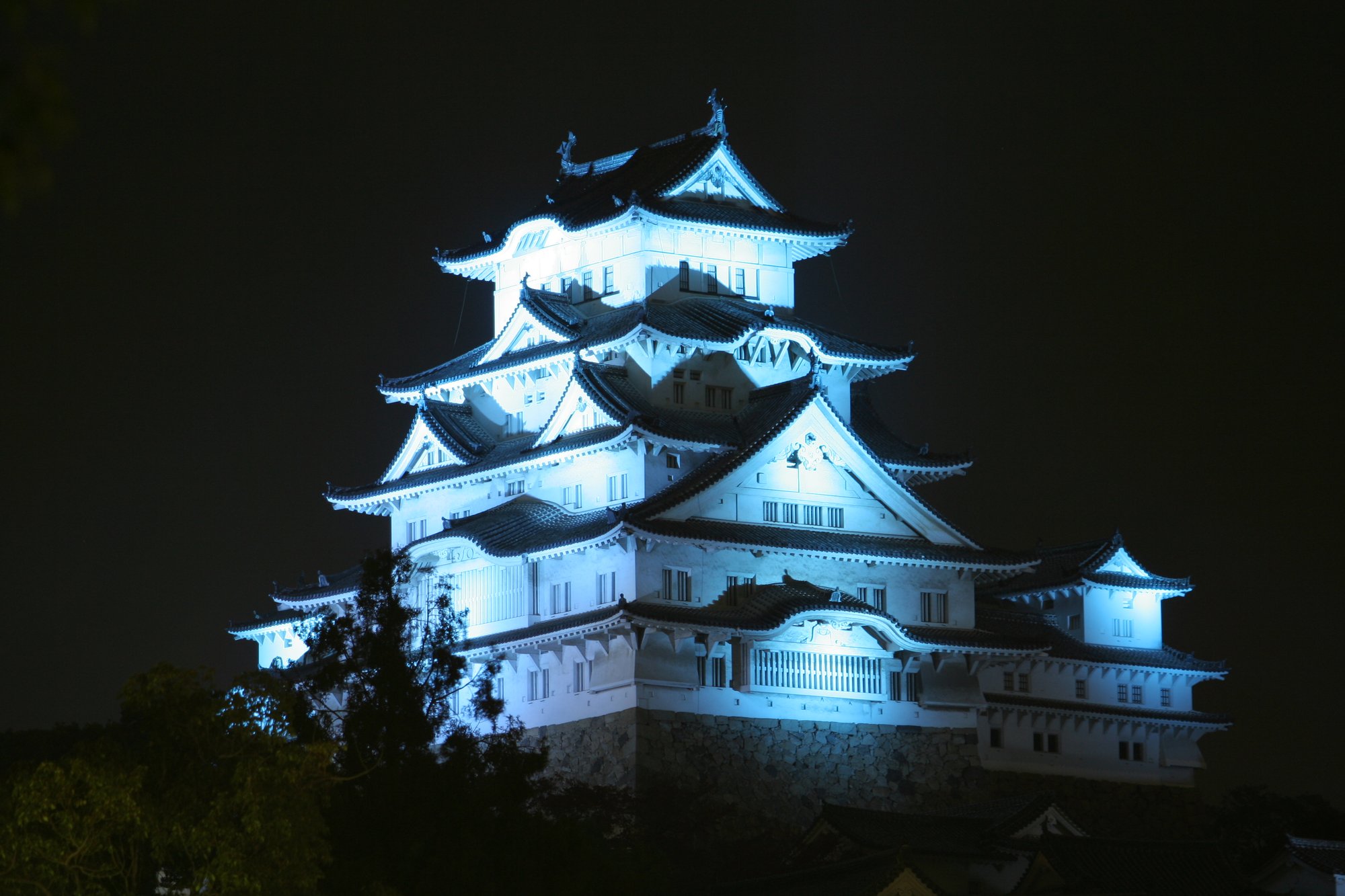
Part of Himeji Castle’s cultural impact comes from its appearance. Its white plaster exterior is one reason it is so admired, and that same whiteness gives the fortress an almost unreal presence. After restoration work that began in 2010 and ended with the castle reopening to the public on March 27, 2015, decades of dirt and grime were removed, restoring the roof to its brilliant white color.
That beauty makes the darker stories stand out even more. A gloomy ruin is expected to have ghost tales. A luminous, elegant, nearly perfect castle with haunting legends is much more memorable. Himeji Castle’s power lies in that dual identity: one of Japan’s greatest historic sites and one of its most atmospheric settings for folklore.
A fortress that outlived disaster and kept its stories
Himeji Castle has repeatedly survived threats that might have erased both the structure and its legends. It escaped demolition in the Meiji period. It survived wartime bombing, including a firebomb that hit the top floor of the castle but failed to explode. It came through the Great Hanshin earthquake virtually undamaged, showing remarkable earthquake resistance.
Because the castle endured, the stories endured with it. The alleged well remains. The tower still rises above the complex. Visitors can still walk the confusing paths and pass through gates that once formed part of a carefully planned defensive maze. That continuity gives the legends unusual staying power. They are attached not to a vanished ruin, but to a real, standing place that people can still visit.
Why the ghost stories still matter
Himeji Castle is a UNESCO World Heritage Site, a National Treasure complex, and the most visited castle in Japan. It is admired for military engineering, preservation, and beauty. Yet for many people, the legends are what make it unforgettable.
A castle can impress the eye with scale and design. A ghost story gives it a voice.
At Himeji, that voice may be Okiku counting from the well in the night, or the silent watch of Osakabehime in the tower above. Either way, the white fortress is remembered not only as a masterpiece of defense, but as a place where history and myth never fully parted ways.