Himeji Castle: Why Japan's White Castle Is So Famous

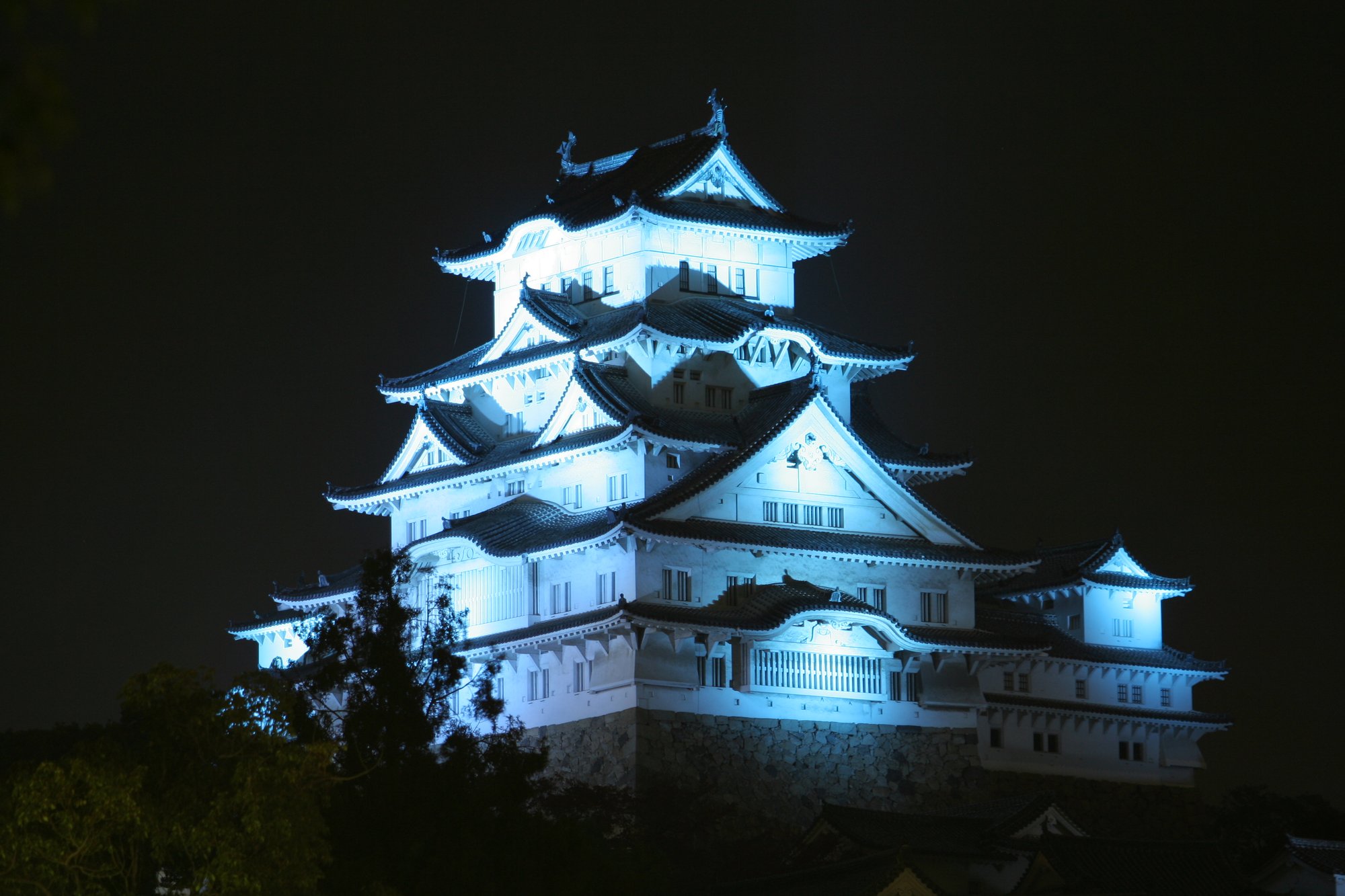
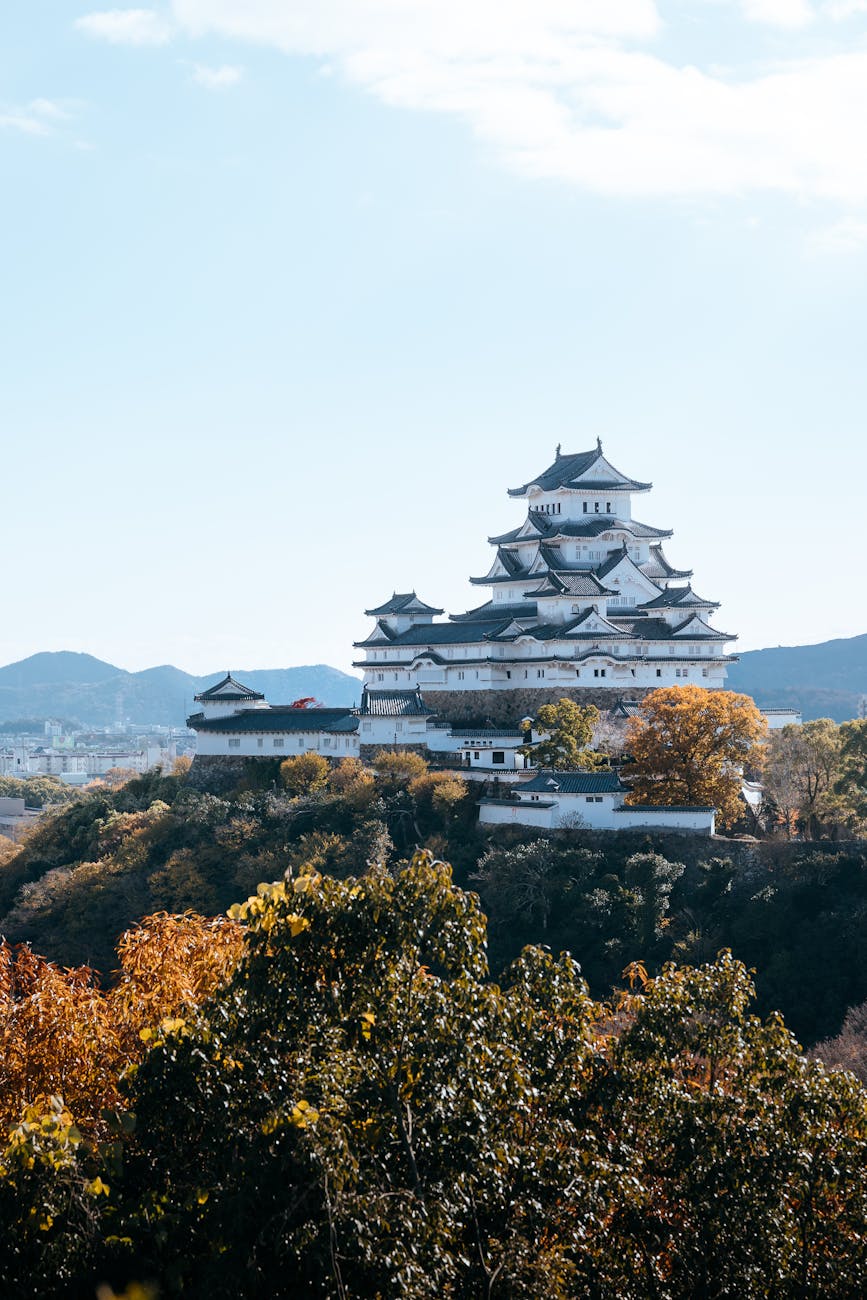
Himeji Castle is one of Japan’s most famous landmarks, and the first reason is obvious the moment you see it: it is strikingly white. Its brilliant exterior gave rise to the nicknames White Egret Castle and White Heron Castle, because its shape and color were thought to resemble a bird lifting into the air.

That graceful appearance can make the castle seem almost delicate. In reality, Himeji Castle is anything but fragile. It is a massive hilltop castle complex in Himeji, in Hyōgo Prefecture, and it is widely regarded as the finest surviving example of prototypical Japanese castle architecture. In simple terms, that means it is often seen as the clearest and best-preserved model of what a classic Japanese feudal castle was supposed to be: elegant in form, but carefully engineered for defense.

Its fame comes from this contrast. Himeji Castle is beautiful enough to earn poetic nicknames, yet practical enough to function as a serious military stronghold.

DeepSwipe app banner

More than one tower: a whole fortified complex

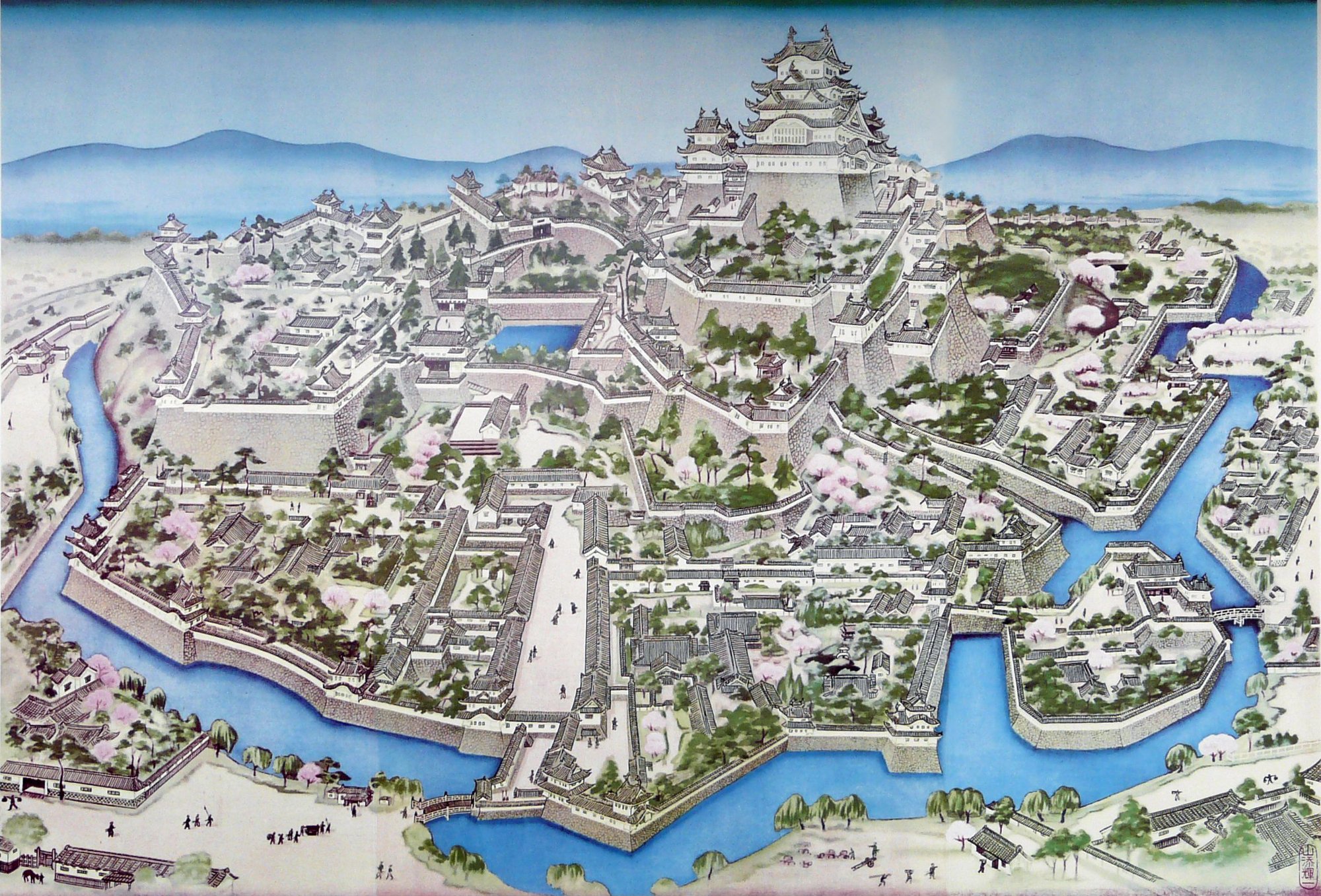
Himeji Castle is not just a single building. It is a network of 83 structures, including storehouses, gates, corridors, and turrets. A turret is a smaller fortified tower attached to or placed around a larger defensive complex. These buildings work together as one castle system rather than standing alone as separate monuments.

The castle sits on Himeyama hill, which rises 45.6 meters above sea level, giving the complex an elevated position. This kind of site is described as hirayama, or a flat hilltop castle style. That means it was built on a hill, but not an extreme mountain peak, allowing both visibility and a large spread of structures.

The overall scale is enormous. From east to west, the castle complex stretches roughly 950 to 1,600 meters, and from north to south, about 900 to 1,700 meters. Its circumference is 4,200 meters, and it covers 233 hectares. That makes it roughly 50 times as large as the Tokyo Dome or 60 times as large as Koshien Stadium.

So when people picture Himeji Castle as a single white tower, they are seeing only the most famous part of a much larger fortified world.

The keep was important, but not for everyday living

At the center of the complex stands the tenshu, or main keep. This is the most visually prominent part of the castle and the structure most visitors associate with the whole site. But its role is often misunderstood.

In times of peace, the keep was mainly used as a storehouse. In times of war, it served as a fortified tower. The daimyo, meaning the feudal lord, did not normally run daily government or family life from the top of the keep. Instead, the lord’s offices and residences were located in groups of single-story buildings near the keep and the surrounding turrets.

This helps explain part of Himeji Castle’s design logic. The keep was a symbol of power and also a final defensive position, but ordinary administration and living took place in neighboring structures.

The main keep itself is impressive in size. It stands 46.4 meters high and reaches 92 meters above sea level. Together with three smaller subsidiary keeps, it forms a dramatic cluster of towers. From the outside, the main keep appears to have five floors, because two upper levels visually blend together. In fact, it has six floors and a basement.

A beautiful exterior hiding practical interior design

Inside, the keep was built with function in mind. The basement alone had special facilities unusual for castle keeps, including lavatories, a drain board, and a kitchen corridor. The first floor covered 554 square meters and was often called the “thousand-mat room” because it had more than 330 tatami mats. Tatami are traditional straw mats used as flooring in Japanese interiors.

The walls on the first floor included weapon racks for matchlocks and spears. At one point, the castle held as many as 280 guns and 90 spears. Higher floors became smaller in area, and some had specialized defensive features. The third and fourth floors had stone-throwing platforms at north and south windows, allowing defenders to observe attackers or drop objects on them. They also contained enclosed rooms called warrior hiding places, where defenders could conceal themselves and attack by surprise.

Even the main structural supports are notable. The keep has two major pillars, one in the east and one in the west. The east pillar was originally a single fir tree, while the west pillar was made of Japanese cypress. During the Shōwa Restoration from 1956 to 1964, a long Japanese cypress from the Kiso Mountains was brought in to replace the old pillar, and after one tree broke, another was taken from Mount Kasagata and the two were joined on the third floor.

All of this reveals a castle that was admired for its looks but built with highly practical intent.

Why the white castle was also hard to attack

Himeji Castle’s elegant surface concealed advanced defensive systems from the feudal period. The castle was designed not just to impress, but to slow, expose, and frustrate attackers.

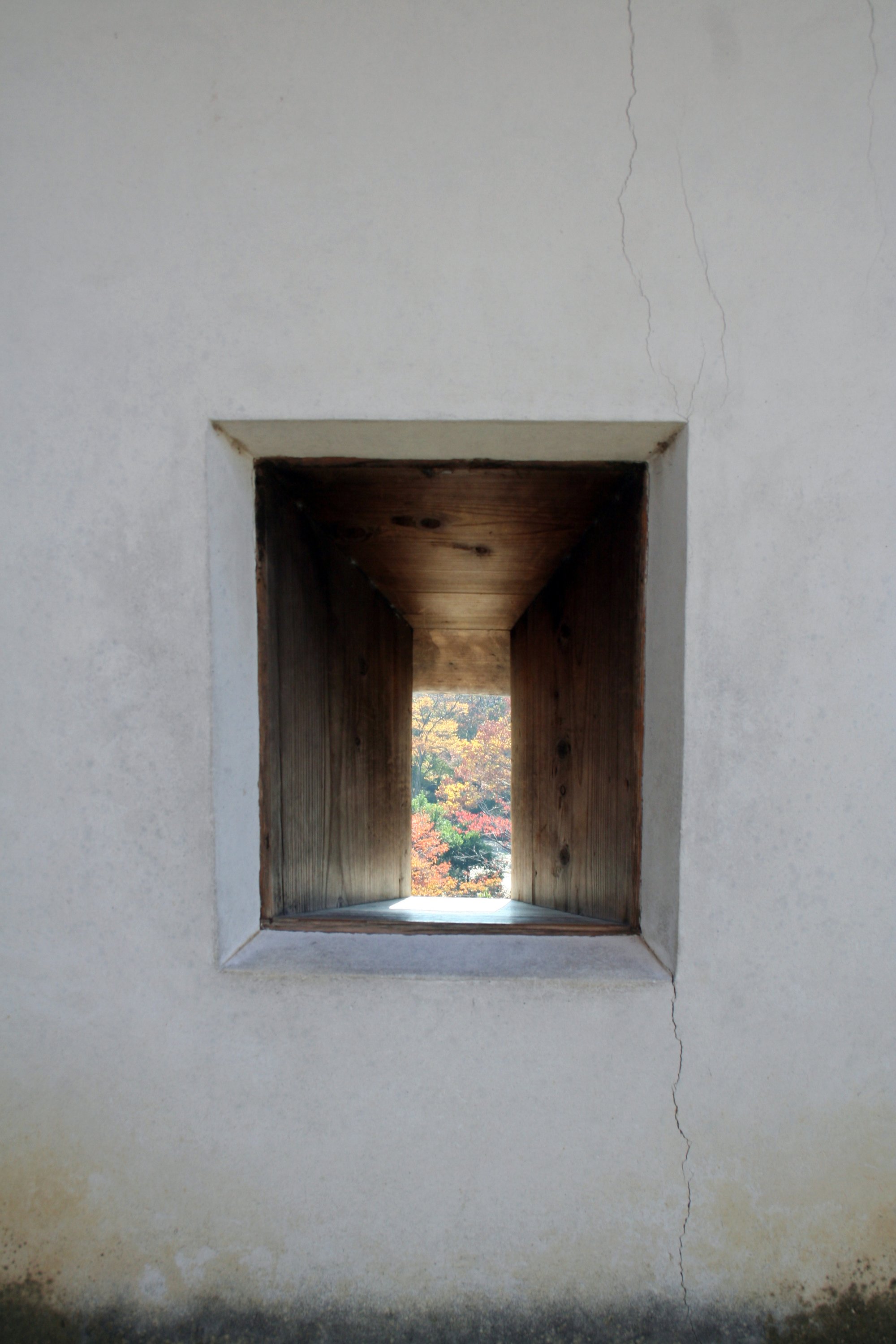
One major feature was the use of loopholes, called sama. These are small openings in walls that allowed defenders armed with tanegashima firearms or bows to fire outward while staying protected. Tanegashima refers to the matchlock guns used in Japan during the feudal era. At Himeji Castle, these loopholes appear in circles, triangles, squares, and rectangles, and about 1,000 of them still remain in the surviving buildings.

There were also angled openings known as stone drop windows. These made it possible to drop stones or pour boiling oil on attackers below. White plaster was used in construction partly because it resisted fire, showing that even the castle’s famous color had a defensive benefit.

The complex also relied on moats. Originally, it had three, though the outer moat is now buried. Parts of the central moat and all of the inner moats still survive. Their average width is 20 meters, with a maximum width of 34.5 meters and a depth of about 2.7 meters. One moat-like pond inside the complex, the Three Country Moat, helped store water for fire prevention.

A maze designed to confuse intruders

Perhaps the cleverest part of Himeji Castle’s military design was not a wall or tower, but the path to the keep itself.

The gates, baileys, and outer walls were arranged to force an approaching enemy into a confusing route that spiraled around the complex. A bailey is an enclosed defensive courtyard within a castle. Rather than allowing a direct rush toward the center, the design made invaders travel longer, steeper, narrower passages while defenders observed them from above.

In some places, the walkways even doubled back on themselves. The straight-line distance from the Hishi Gate to the main keep is only 130 meters, but the actual route is 325 meters. That delay mattered. It gave defenders more time to watch, prepare, and attack.

The castle originally had 84 gates, 15 of them named according to the Japanese syllabary iroha. Today, 21 gates remain intact, 13 of them still bearing those syllabary names.

What makes this especially fascinating is that the system seems to work even now. Although modern visitors follow clearly marked routes, many still have trouble navigating the castle complex.

Built and rebuilt across centuries

The history of Himeji Castle stretches back to 1333, when Akamatsu Norimura built a fort on Himeyama hill during the Genkō War. In 1346, his son Sadanori replaced it with Himeyama Castle. In the 16th century, the site was further remodeled, and in 1561 work was completed under Kuroda Shigetaka.

A major turning point came in 1581, when Toyotomi Hideyoshi significantly expanded the castle and added a three-story keep. Then, after the Battle of Sekigahara in 1600, Tokugawa Ieyasu awarded the castle to Ikeda Terumasa. Ikeda demolished Hideyoshi’s keep and completely rebuilt and expanded the castle from 1601 to 1609, creating the large castle complex seen today. This work is believed to have required 2.5 million man-days of labor.

Later additions were made by Honda Tadamasa from 1617 to 1618, including a special tower for his daughter-in-law, Princess Sen, known as the Dressing Tower.

So the famous white castle is the result of centuries of rebuilding, expansion, and refinement rather than a single burst of construction.

The castle that kept surviving

Another reason Himeji Castle is so famous is not just how it was built, but what it survived.

During the Meiji Period, many Japanese castles were destroyed. Himeji Castle was abandoned in 1871, and some corridors and gates were torn down to make room for army barracks. The entire complex was even slated for demolition, but it was saved through the efforts of army colonel Nakamura Shigeto. A stone monument honoring him was later placed inside the complex near the Hishi Gate.

The castle officially entered military use in the 1870s, and preservation efforts began in 1877. Government funding for a comprehensive restoration did not arrive until 1910.

Then came war. Himeji was heavily bombed in 1945, and much of the surrounding area burned to the ground. Yet the castle survived intact. A firebomb even struck the top floor of the keep but failed to explode.

It survived nature as well. In January 1995, the Great Hanshin earthquake substantially damaged the city of Himeji, but the castle remained virtually undamaged. Its earthquake resistance was so remarkable that even a bottle of sake placed on the altar at the top floor of the keep stayed in place.

Why Himeji Castle still matters today

Himeji Castle is the largest and most visited castle in Japan. In 1993, it became one of the first UNESCO World Heritage Sites in Japan. The area within its middle moat is designated a Special Historic Site, and five structures are designated National Treasures, including the main keep and three small keeps.

The castle underwent major restoration beginning in 2010 and reopened to the public on March 27, 2015. That work removed decades of dirt and grime and restored the roof to its original brilliant white, renewing the appearance that helped make the castle legendary in the first place.

Its influence extends far beyond architecture. Himeji Castle has appeared in films such as You Only Live Twice, Kagemusha, and Ran, and it also stood in for feudal-era Osaka Castle in the television miniseries Shōgun. Its image has appeared in video games, and in 2023 the Lego Group released a 2,125-piece model of it.

Himeji Castle is famous because it brings together things that rarely coexist so perfectly: elegance and intimidation, symbolism and practicality, beauty and survival. It looks like a white bird in flight, but it was built to endure siege, war, fire, and time.

Stories About Himeji Castle

Himeji Castle: The Fortress Built Like a Maze

Himeji Castle: The Fortress Built Like a Maze

Himeji Castle: The Hidden Weapons in Its Walls

Himeji Castle: The Hidden Weapons in Its Walls

Himeji Castle: The Castle That Survived Bombs and Earthquakes

Himeji Castle: The Castle That Survived Bombs and Earthquakes

Himeji Castle: The Ghost Stories Inside Japan's White Fort

Himeji Castle: The Ghost Stories Inside Japan's White Fort

Otehr Stories like this

History of Japan — From Courtly Splendor to Samurai Rule

History of Japan — From Courtly Splendor to Samurai Rule

History of Japan — Kofun Megatombs and the Rise of Yamato

History of Japan — Kofun Megatombs and the Rise of Yamato

History of Japan — Kamikaze: The Storms that Saved a Shogun

History of Japan — Kamikaze: The Storms that Saved a Shogun

History of Japan — Edo’s “Closed Country,” Open Minds

History of Japan — Edo’s “Closed Country,” Open Minds

History of Japan — Nanban Shock: Guns, Jesuits, and Nagasaki

History of Japan — Nanban Shock: Guns, Jesuits, and Nagasaki

History of Japan — The Yayoi Revolution: Rice, Iron, and a人口

History of Japan — The Yayoi Revolution: Rice, Iron, and a人口

Mount Fuji: The Beautiful Volcano Still Active

Mount Fuji: The Beautiful Volcano Still Active

History of Japan — Jōmon Pottery and Japan’s Deep Past

History of Japan — Jōmon Pottery and Japan’s Deep Past

WWII Japan Air Raids: Why Japan Could Not Stop Them

WWII Japan Air Raids: Why Japan Could Not Stop Them

Visual Arts: Why Architecture Counts as Art

Visual Arts: Why Architecture Counts as Art

History of Japan — From Defeat to Economic Superpower

History of Japan — From Defeat to Economic Superpower

History of Japan — When the Military Took the Wheel

History of Japan — When the Military Took the Wheel

Take the winding path to smarter scrolling — download DeepSwipe and explore stories as brilliantly built as Himeji Castle.

Himeji Castle: Why Japan's White Castle Is So Famous | DeepSwipe