Full article · 6 min read
How Energy Moves Through Ecosystems
If you have ever wondered why food chains rarely go on forever, the answer is energy. Ecosystems run on a constant flow of energy, but that energy does not move upward efficiently. At each step in a food web, a large share is lost before the next organism can use it. That simple fact helps explain why plants are so important, why top predators are relatively few, and why decomposers are essential to life on Earth.
Energy Enters Through Photosynthesis
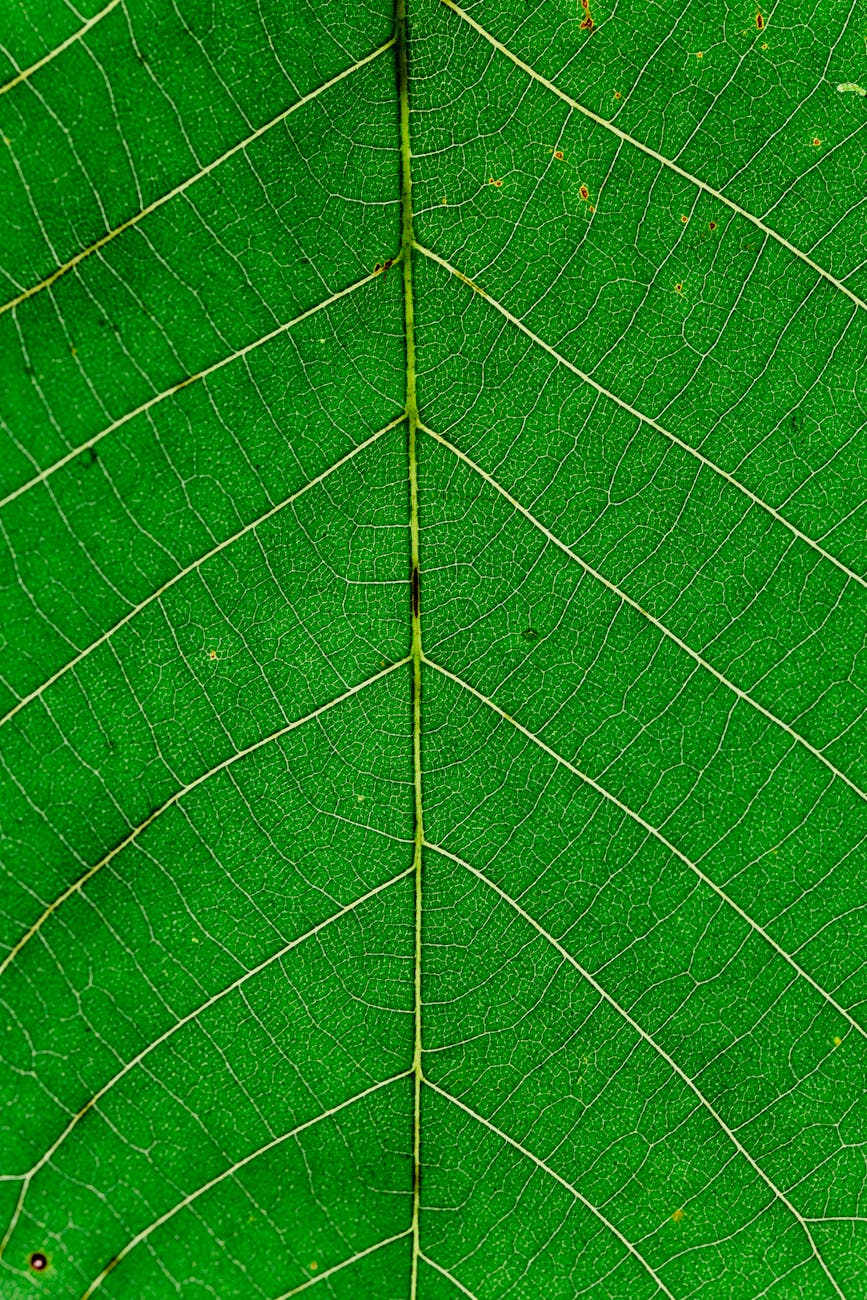
The starting point for most ecosystem energy is the sun. Energy enters ecosystems through photosynthesis, a process used by plants and other organisms to convert light energy into chemical energy. That chemical energy is stored in carbohydrate molecules such as sugars, which are synthesized from carbon dioxide and water.
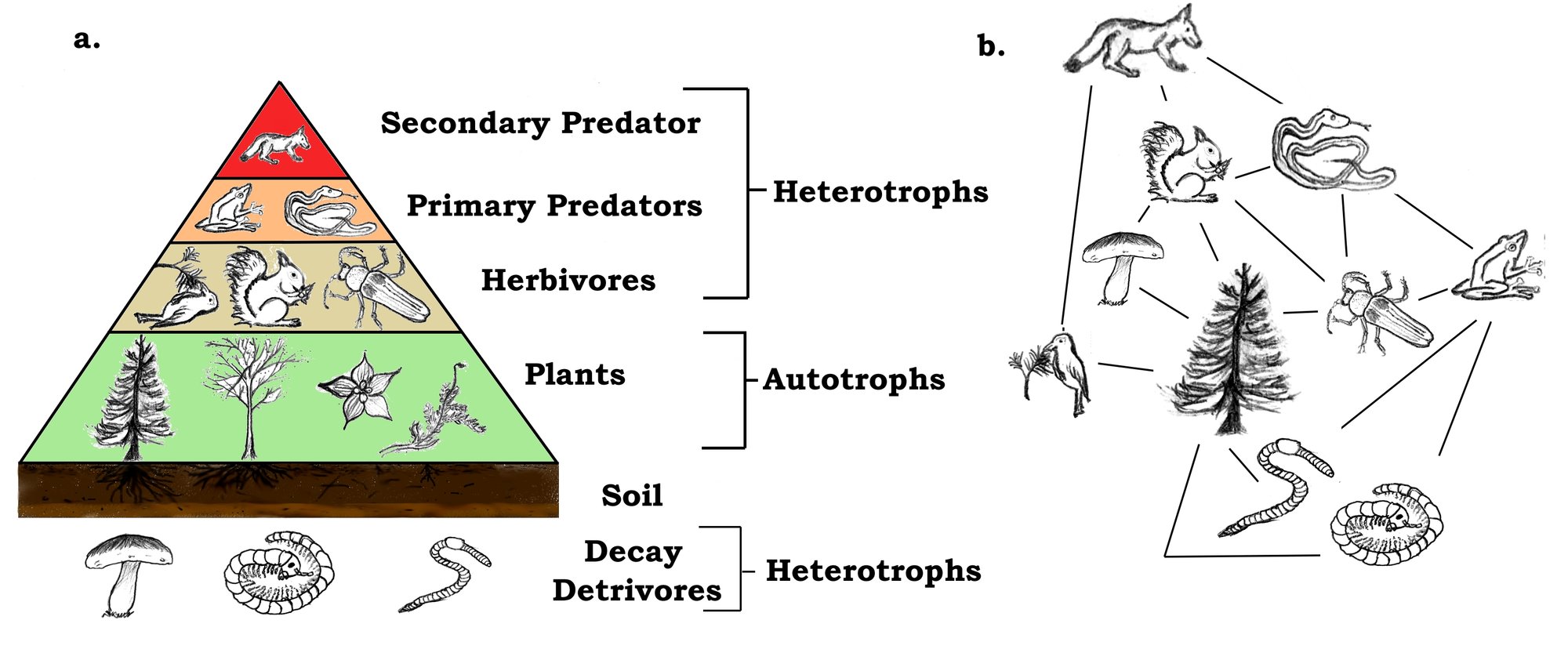
In ecological terms, plants are primary producers, also called autotrophs. These organisms convert energy and inorganic material into organic compounds that the rest of the community can use. Once that energy is built into plant tissue, it becomes available to herbivores, which are primary consumers. Carnivores that eat herbivores are secondary consumers, and organisms that eat those consumers can become tertiary consumers.
This step-by-step arrangement is what biologists call trophic levels. A trophic level is one position in a food chain or food web. Producers occupy the lowest level, and consumers feed upward from there.
Why Only About One-Tenth Moves Upward
One of the most important ideas in ecology is that only a small fraction of energy at one trophic level becomes biomass in the next. Biomass means the organic material that makes up living organisms. On average, the total amount of energy incorporated into the biomass of a trophic level per unit of time is about one-tenth of the energy of the trophic level that it consumes.
That means if plants capture a certain amount of energy, only about ten percent of that energy is incorporated into the biomass of the herbivores that eat them. Then only about ten percent of that amount is incorporated into the biomass of the next level, and so on.
This is why food webs have a practical limit. As energy moves through the system, less and less remains available for higher trophic levels. The result is that ecosystems can support many producers, fewer herbivores, and usually even fewer top predators.
Where the Missing Energy Goes
So what happens to the other ninety percent?
Most of it does not simply vanish, but it does not become new biomass for the next trophic level. A large share is lost as heat from metabolism. Metabolism is the set of chemical reactions in an organism that allow it to maintain structure, grow, reproduce, and respond to the environment. These reactions require energy.
Cells release usable energy mainly through cellular respiration. In this process, chemical energy from nutrients is converted into adenosine triphosphate, or ATP, which powers cellular processes. ATP is often described as the cell’s energy currency because it provides energy for the work cells need to do. During respiration and other metabolic activity, some energy is released as heat.
The rest of the missing energy often remains in waste and dead material. Not every part of an organism gets eaten, digested, or converted into the tissues of the next consumer. Leaves fall, animals excrete waste, and organisms die. All of that material still contains matter and some remaining energy, but it no longer moves to the next trophic level in the ordinary predator-prey pathway.
Decomposers Keep Ecosystems Running
This is where decomposers become indispensable. Decomposers feed on waste products and dead bodies of organisms. By breaking down dead organic matter, they release carbon back to the atmosphere and facilitate nutrient cycling by converting nutrients stored in dead biomass back to a form that can be readily used by plants and other microbes.
That role is so important because ecosystems depend on both energy flow and nutrient cycling. Energy moves through a system, entering largely through photosynthesis and then passing from one organism to another. Nutrients, by contrast, are reused. If dead material simply piled up without being broken down, ecosystems would lose access to those reusable materials.
Decomposers help prevent exactly that. They keep nutrients moving back into the ecosystem so producers can build new tissue again. In this way, death is not separate from life in ecology. It is part of the system that allows life to continue.
Food Webs Are More Than Simple Chains
People often picture energy flow as a straight line: plant to herbivore to carnivore. Real ecosystems are usually more complicated. Species interact in communities, and these interactions form food chains and food webs. A community is a group of populations of species occupying the same geographical area at the same time.
Within these communities, organisms can be consumers, resources, or both. Omnivores, for example, can consume at multiple trophic levels. Decomposers connect to nearly every part of the system because all organisms eventually produce waste or die.
These many links help create intricate food webs. Even so, the basic rule remains the same: each transfer upward tends to pass along only about one-tenth of the energy as biomass.
Ecosystems Depend on Both Living and Nonliving Parts
An ecosystem is the community of living organisms together with the nonliving components of their environment, such as water, light, temperature, atmosphere, acidity, and soil. These living and nonliving parts are linked through nutrient cycles and energy flows.
That means energy flow is not just about who eats whom. It also depends on environmental conditions that affect photosynthesis, growth, decomposition, and survival. Water, for instance, is fundamental to life and serves as an effective solvent, helping dissolved substances come into contact and participate in the chemical reactions that sustain life. Light is needed for photosynthesis. Temperature can affect the rate of metabolic reactions. All of these factors shape how energy enters and moves through ecosystems.
Why Energy Flow Matters
Understanding energy flow helps explain some of the most visible features of the natural world. It explains why plants form the foundation of most ecosystems. It explains why there is less living material at higher trophic levels. It explains why decomposers are not just cleanup crews, but central players in ecological stability.
It also shows why ecosystems are networks of process rather than collections of isolated organisms. Plants capture energy. Animals move matter and energy by feeding on plants and on one another. Decomposers break down what is left, returning carbon to the atmosphere and recycling nutrients. Together, these interactions keep ecosystems functioning.
In short, every bite matters, but every bite also loses energy. That loss shapes the structure of food webs, the balance of populations, and the continuous recycling that keeps life going.
Sources
Based on information from Biology.
More like this
Climb the food web of knowledge — download DeepSwipe and turn every swipe into energy for your brain.