Full article · 8 min read
Europe the Forest: Then and Now
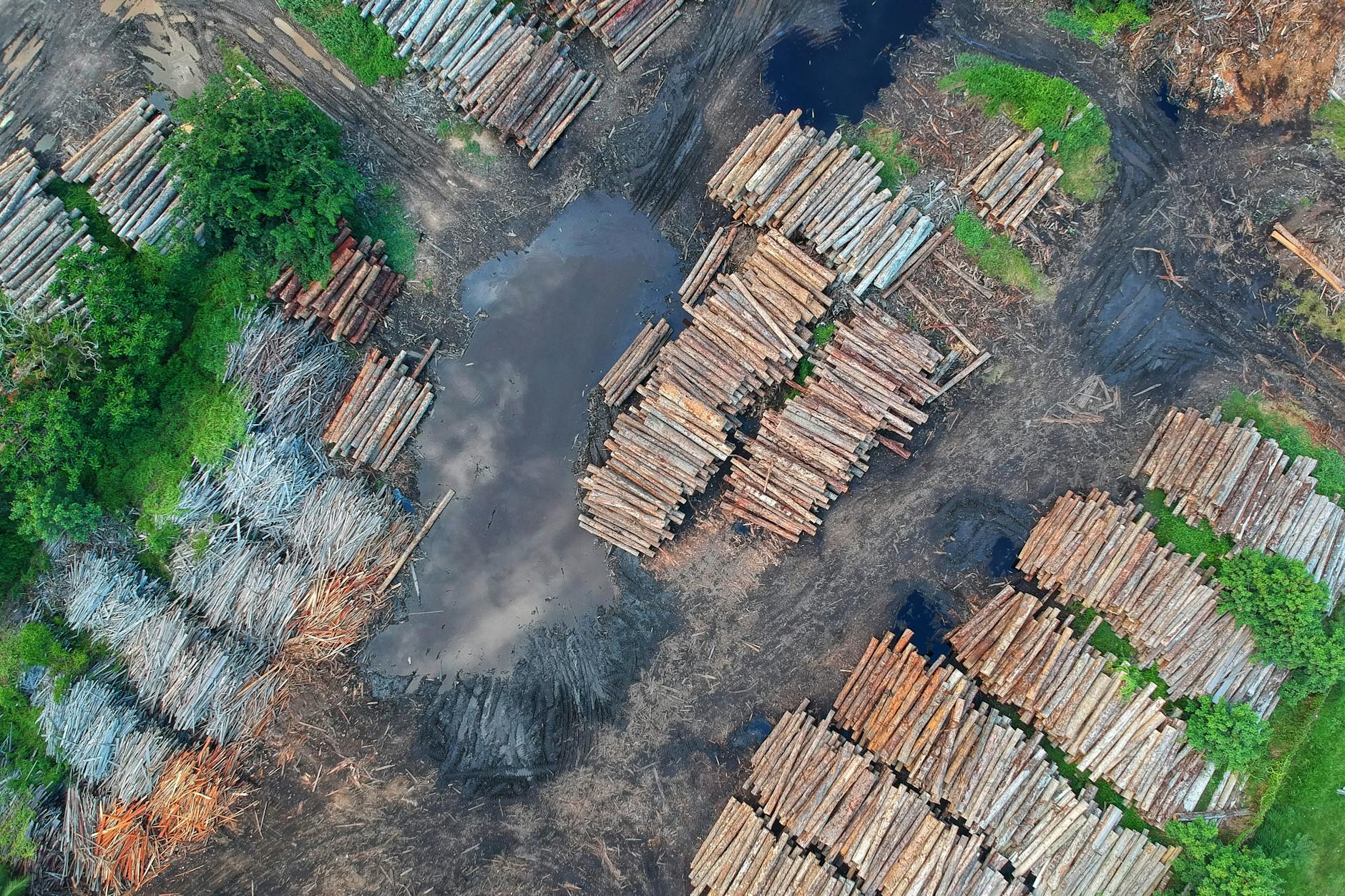
Europe is often imagined as a patchwork of cities, farms, mountains, and coastlines. But for a very long stretch of time, much of it was something else: forest. Possibly 80–90% of Europe was once covered by trees, from the Mediterranean Sea all the way toward the Arctic Ocean. That immense woodland world did not vanish overnight. It was gradually transformed through centuries of deforestation, grazing by livestock, and changes in how land was used.
Today, Europe still has over a quarter of its land area under forest. Yet that headline number hides a more complicated story. In many places, the forests that remain are very different from the ones that once dominated the continent.
When Europe was mostly woodland
The idea of Europe as a largely forested continent may sound surprising, but the conditions for tree growth have long been favorable across wide areas. Europe’s main natural vegetation cover is mixed forest. In the north, ocean influences such as the Gulf Stream and North Atlantic Drift help warm the continent. In the south, the climate is warm but generally mild, though summer droughts are common in Mediterranean areas.
Mountains also shape where forests thrive. Some mountain chains, including the Alps and the Pyrenees, run east to west and help affect how moist air moves inland. Others, such as the Scandinavian Mountains, Dinarides, Carpathians, and Apennines, run more north to south. Rain often falls more heavily on the side facing the sea, where forests can grow well, while the opposite side may be far less favorable.
Before large-scale agriculture and long-term landscape change, forest stretched across most of the continent. But Europe’s plants and animals have lived side by side with agricultural peoples for millennia. That long relationship changed the natural environment profoundly.
How the forest shrank
Over centuries, people cut down vast areas of woodland. Forests were cleared and many parts of mainland Europe were grazed by livestock at some point in time. This combination of tree cutting and grazing disrupted the original plant and animal ecosystems.
That helps explain why the phrase forest cover can be misleading. A place may still look green on a map, but not all green areas are equal. Europe lost over half of its original forests through centuries of deforestation. In Western Europe especially, the truly natural forest that remains is tiny.
The contrast is stark: in Western Europe, the amount of natural forest is just 2–3% or less. In Western Russia, it is 5–10%. So while forests certainly still exist across Europe, forests that remain close to their older, less altered state are much rarer than many people realize.
What kind of forests are left?
Europe still contains a wide variety of forest types.
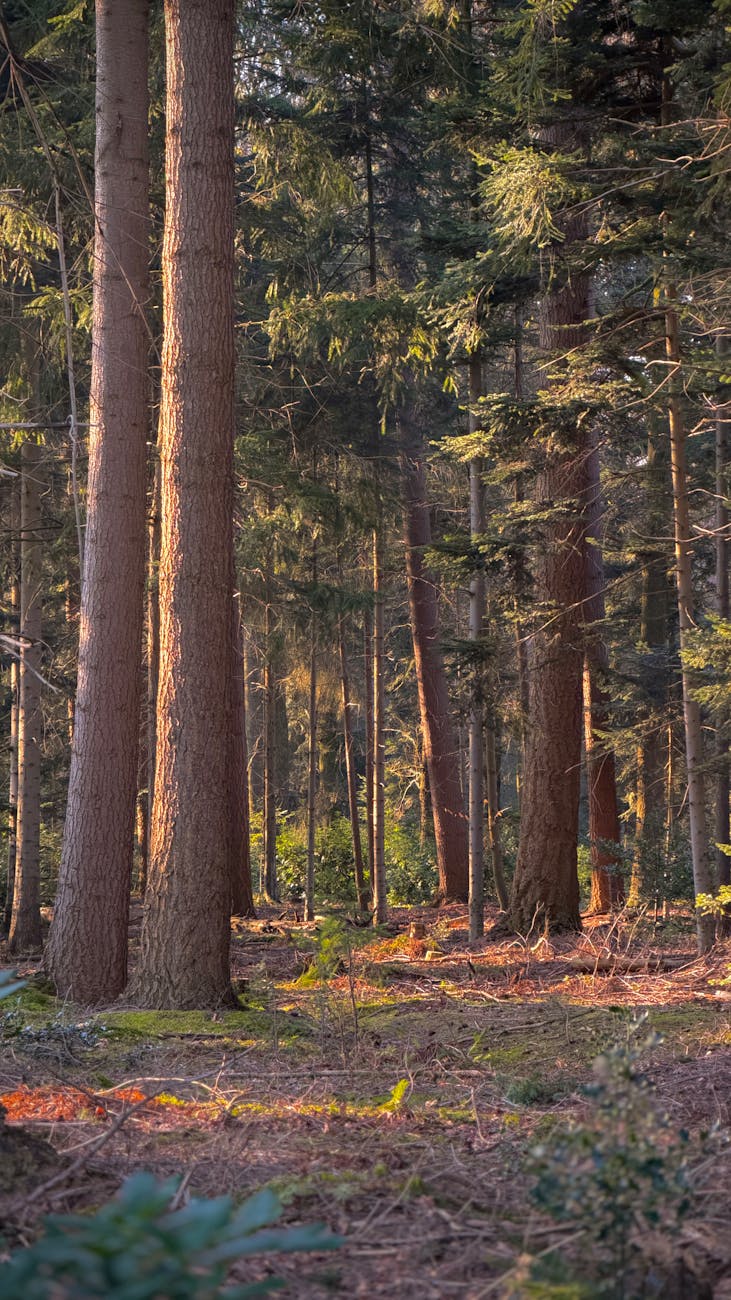
In temperate parts of the continent, mixed forests of broadleaf and coniferous trees dominate. Broadleaf trees are those with wide, flat leaves, such as beech and oak, which are especially important in central and western Europe. Coniferous trees are cone-bearing trees, usually with needles rather than broad leaves, such as spruce and pine.
Further north, the taiga appears. Taiga is a vast forest zone dominated by trees like spruce, pine, and birch. In Russia and extreme northern Scandinavia, the taiga gradually gives way to tundra as the Arctic is approached.
In the Mediterranean, the picture changes again. Olive trees are widely planted and well adapted to dry conditions, while Mediterranean cypress is also common in southern Europe. In semi-arid Mediterranean regions, scrub forest appears instead of denser woodland.
So Europe’s forests were never all one kind of forest. They varied with latitude, rainfall, mountains, and proximity to the sea. But across these different environments, one broad fact remains: there used to be much more natural forest than there is now.
The plantation problem
One reason Europe can seem greener than it really is, ecologically speaking, is that many lost natural forests have been replaced not by diverse woodland, but by plantations.
During recent times, deforestation has slowed and many trees have been planted. That sounds like simple good news, but there is a catch. In many areas, monoculture plantations of conifers have replaced the original mixed natural forest.
A monoculture means planting just one species over a large area. These plantations are often made up of fast-growing conifers because they grow quicker and are useful for timber production. From an economic point of view, that makes sense. From an ecological point of view, it is a compromise.
These tree plantations now cover vast areas of land, but they offer poorer habitats for many European forest-dwelling species. Species that evolved in mixed, structurally varied forests often need more than just trees. They need a mixture of tree species, different ages of growth, dead wood, understory plants, and varied forest structure. A more uniform plantation may be easier to manage, but it supports less biodiversity.
That is why a forest of one fast-growing species is not the same as a mixed forest shaped by natural processes over long periods of time.
Why mixed forests matter
Diverse forests tend to shelter more life. This is one of the key reasons the loss of natural forest matters. A mixed forest can provide many kinds of habitats at once. Different tree species create different light conditions, soils, nesting spots, and food sources. Layers of vegetation can support birds, mammals, insects, fungi, and other organisms in ways that simpler plantations often cannot.
By contrast, a monoculture plantation may look dense and healthy from a distance, but it is a more limited environment. The article notes that these plantations offer poorer habitats for many species that require both a mixture of tree species and diverse forest structure.
In other words, the issue is not just how many trees Europe has. It is also what kinds of forests those trees form.
A continent of sharp contrasts
Europe’s forest story is not uniform. Some countries are heavily forested, while others have very little tree cover.
Finland is the most forested country in Europe, with 77% of its land area covered by forest. Iceland stands at the other extreme, with just 1% forested area, the smallest percentage in Europe.
That contrast alone shows how varied the continent is. Geography helps explain part of this. Europe includes everything from the taiga of Scandinavia and Russia to the cork oak forests of the western Mediterranean. It also includes islands and regions with very different environmental histories.
Even within forested regions, the quality and character of woodland can be radically different. A country with extensive tree cover may include large managed forests, while another may have only fragments of old natural habitat left.
Human influence everywhere
One of the most striking features of Europe’s ecology is how deeply human activity is woven into it. With the exception of Fennoscandia and northern Russia, few areas of untouched wilderness remain, apart from various national parks.
That means Europe’s forests are not just natural landscapes. In many places, they are historical landscapes shaped by farming, timber cutting, settlement, and grazing over thousands of years. Even where trees remain, the forest may carry the imprint of countless human decisions.
This long human influence also helps explain what happened to Europe’s wildlife. The distribution of animals has been heavily affected not just by glaciation during the most recent ice age, but also by people. Deforestation and hunting pushed many large animals back into smaller and more fragmented habitats. Brown bears, for example, were once found in most parts of Europe, but their habitats became increasingly restricted.
Forests are therefore part of a larger story: when woodland changes, animal life changes with it.
Europe is still forested, but not as before
It would be wrong to say Europe has no forests left. The continent still has broadleaf and mixed forests, the taiga of Scandinavia and Russia, mixed rainforests of the Caucasus, and cork oak forests in the western Mediterranean. Tree planting has also helped slow deforestation in recent times.
But it would also be wrong to imagine that modern forest cover means Europe has simply kept its ancient woodland heritage intact. Over half of the original forests disappeared. In Western Europe, natural forest survives only in tiny proportions. Many landscapes that appear forested today are simplified plantations rather than rich, mixed ecosystems.
So the real story of Europe’s forests is not simply loss or survival. It is transformation.
Seeing the continent differently
To think of Europe as once being 80–90% forest is to see the continent in a new way. Beneath the roads, farms, capitals, and industrial regions lies a much older ecological identity. Europe was, to a remarkable extent, a continent of trees.
What remains is still significant: more than a quarter of Europe is forested. But the difference between forest quantity and forest quality matters enormously. A mixed natural forest and a monoculture plantation may both count as forest on paper, while offering very different living conditions for plants and animals.
That makes Europe’s forest story a useful reminder. Landscapes are not static. They are shaped over centuries, and the choices people make about land use can completely redefine an entire continent’s ecology.
Sources
Based on information from Europe.
More like this
Swipe back into Europe’s deep roots — download DeepSwipe and grow your knowledge forest one fact at a time.