Full article · 7 min read
Agriculture Automation in the Field: How Farming Is Becoming Smarter
Agriculture has always been shaped by tools. Over time, farming moved from manual labor to animal traction, then to motorized mechanization, and now toward digital systems and AI-driven robotics. That shift is changing how fields are planted, monitored, and harvested.
Agricultural automation refers to the use of machinery and equipment in farm operations to improve diagnosis, decision-making, or the actual performance of tasks. In simple terms, it means using technology not just to do physical work, but also to help decide what work should be done, when, and how precisely. The goal can be to reduce drudgery, improve timing, or make farm work more accurate.
From tractors to intelligent machines
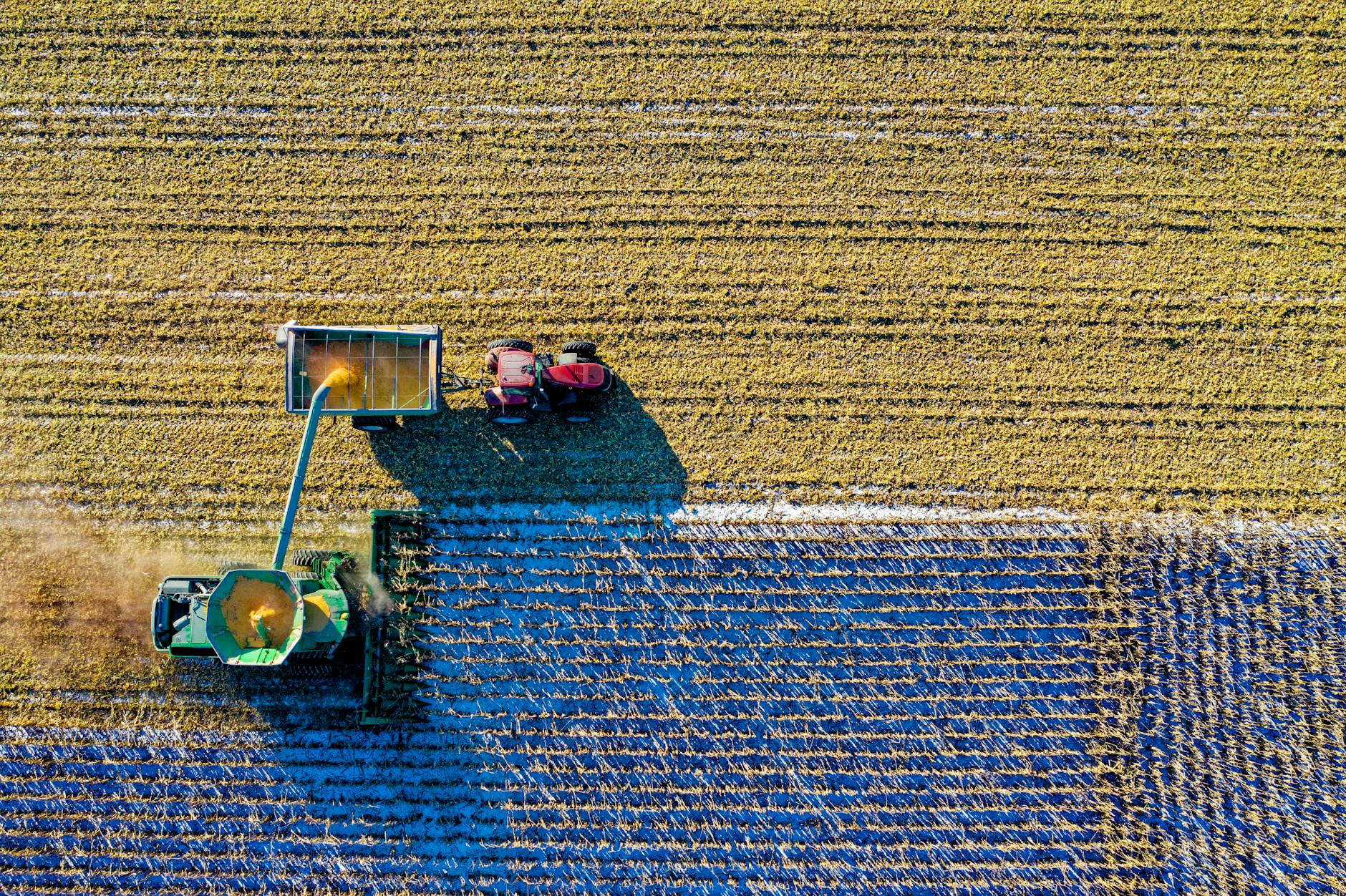
The story of farm automation did not begin with robots. It began with the long transition from hand tools to animal power, then to engines and mechanized equipment. Motorized mechanization automated tasks such as ploughing and milking, making farming more productive and less dependent on sheer human muscle.
Today, that process is entering a new phase. Digital equipment can now automate diagnosis and decision-making, not just movement or force. A conventional tractor, for example, can be converted into an automated vehicle that sows a field on its own. That is a major leap from traditional mechanization, because the machine is no longer simply powered — it is guided.
This is why the move toward automation in agriculture is often described as a progression: manual tools, animal traction, motorized mechanization, digital equipment, and finally robotics with artificial intelligence.
What AI and automation actually do on farms
Some of the most visible examples of agricultural automation are drones, autonomous crop robots, and automated tractors.
Drones can gather information over fields, helping farmers monitor conditions and automate input application. An input is something added to support production, such as water or fertilizer. Instead of treating an entire field the same way, digital systems can help apply resources more efficiently.
Autonomous crop robots can carry out tasks such as seeding and harvesting. Seeding means placing seeds into the soil for future growth, while harvesting is the collection of mature crops. These are among the most labor-intensive stages of crop production, so automation here can have a major effect.
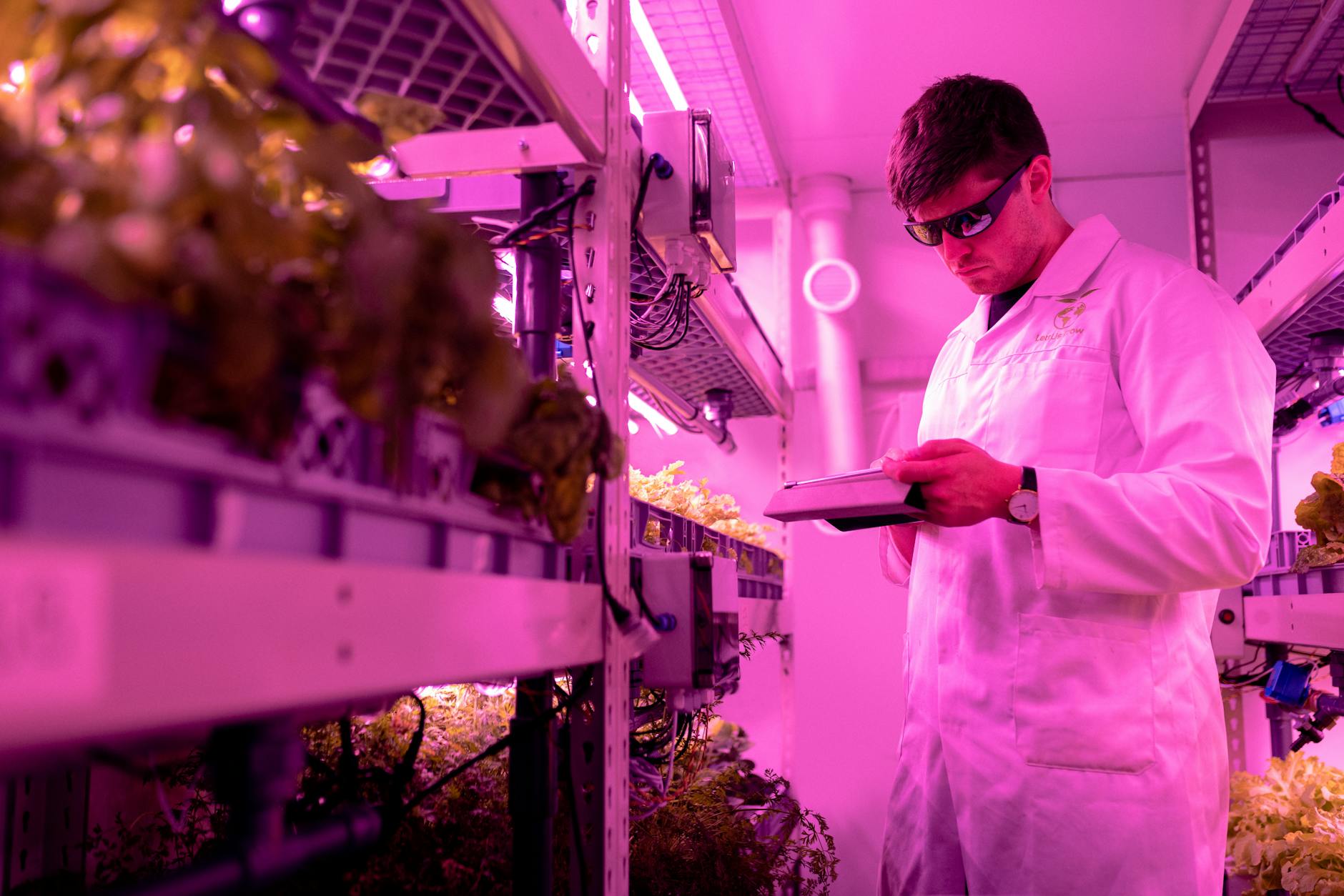
Automation also appears in less obvious places. The technology does not need to be a walking robot or flying drone to count. Static systems, such as robotic milking machines, are also part of agricultural automation. So are digital sensors that automate diagnosis by measuring conditions and helping farmers respond at the right moment.
Precision agriculture often uses these tools. The basic idea is simple: use detailed information to manage fields more accurately. That can mean monitoring water status, adjusting input use, and improving efficiency when resources are limited.
Why farmers automate
One major reason is timing. Farm work often depends on narrow windows: sow too early or too late, irrigate at the wrong moment, or miss a harvest window, and yields can suffer. Automation can improve timeliness by helping tasks happen when they need to.
Another reason is reducing drudgery. Farming can involve hard, repetitive, and physically demanding work. Automation can take over some of those burdens, especially tasks that are difficult to sustain over long hours.
There is also the issue of precision. Digital systems can help producers use water and other inputs more efficiently. In conditions where resources are increasingly constrained, especially under pressure from climate change, that can be valuable. Automation used for sensing and early warning can also help farmers deal with the uncertainty and unpredictability of weather conditions.
Why adoption is uneven
Although farm automation is advancing, it is not spreading at the same pace everywhere.
Motorized mechanization has increased significantly across much of the world in recent years, but sub-Saharan Africa is identified as the one region where adoption of motorized mechanization has stalled over past decades. That does not mean farming has stopped changing there, but it does show that access to mechanized tools is highly uneven.
More advanced automated systems are also unevenly distributed. Global sales of automatic milking systems have increased, but adoption is thought to be concentrated mostly in Northern Europe and likely almost absent in low- and middle-income countries. Automated feeding machines for cows and poultry also exist, though evidence on how widely they are being adopted remains limited.
This uneven pattern matters because agricultural technology does not spread automatically. Adoption depends on conditions such as labor availability, local needs, and whether a technology fits the surrounding agrifood system.
The labor question: help or harm?
Automation in agriculture brings a real trade-off. It can reduce labor needs for newly automated tasks, but that does not tell the whole story.
When some jobs are automated, new labor demand can appear elsewhere, such as in equipment operation and maintenance. Automation can also support employment indirectly by allowing producers to expand output and by creating other jobs in agrifood systems.
This is especially relevant in places facing scarcity of rural labor, including high-income countries and many middle-income countries. In those settings, automation may help farms keep operating when workers are hard to find.
But the picture changes in labor-abundant regions. If automation is pushed aggressively, for example through government subsidies where there is already a large rural workforce, it can lead to labor displacement and falling or stagnant wages. The burden is likely to fall most heavily on poor and low-skilled workers.
So the central question is not whether automation is good or bad in the abstract. It is whether it is introduced in a way that matches local economic realities.
Automation and climate pressure
Climate change is already affecting agriculture through changes in temperature, rainfall, and weather extremes such as storms and heat waves. It also affects pests, diseases, and water availability. Farming systems are under pressure to produce food in conditions that are becoming less predictable.
Automation can help farmers adapt. Digital tools that monitor water status can improve water management. That matters because agriculture represents 70% of freshwater use worldwide, and in many regions water resources are under growing strain. Precision technologies can automate water use more efficiently, which may be increasingly important where rainfall is insufficient or variable.
Automation can also improve diagnosis. Early warning systems and sensing technologies can help farmers respond to changing field conditions before problems grow worse. In a climate where uncertainty is rising, faster and more accurate information can be a major advantage.
Beyond the hype
It is easy to imagine agriculture automation as a future of fully robotic farms, but the reality is broader and more practical. Agricultural automation includes any technology that improves diagnosis, decision-making, or farm operations through machinery and equipment. Sometimes that means a self-driving tractor. Sometimes it means a drone collecting field data. Sometimes it means a milking system that stays in one place.
The common thread is that farm technology is becoming more capable of sensing, deciding, and acting. That makes modern agriculture not only more mechanized, but more data-driven.
Still, automation does not erase the deeper challenges of farming. Agriculture remains sensitive to soil degradation, water stress, climate change, and economic pressures. Technology can help manage these problems, but it does not remove them.
The future of farming is selective, not uniform
Agriculture has never been one single system, and automation will not arrive in one single form. Different regions have different labor markets, infrastructure, and farming needs. Some will adopt advanced robotics quickly. Others may rely longer on simpler forms of mechanization. In many places, the key issue will be whether automation complements human work or replaces it in damaging ways.
What is clear is that farming is entering a new technological phase. As digital tools, sensors, drones, and autonomous machines spread, fields are becoming places not just of cultivation, but of computation and control. The farm of the future may still grow wheat, rice, or vegetables the old-fashioned biological way — but it will increasingly be managed by systems that can see, measure, and act with remarkable precision.
Sources
Based on information from Agriculture.
More like this
Plant smarter ideas in your mind — download DeepSwipe and harvest a fresh field of knowledge every day.