Full article · 8 min read
Small Farms vs Giant Landholders: Who Really Feeds the World?
When people picture global agriculture, they often imagine enormous fields, giant machines, and vast industrial operations stretching to the horizon. But the global food story is more surprising than that. A huge share of the world’s farms are very small, and together they produce a remarkably large portion of the food people eat.
Small farms may take up only a modest slice of agricultural land, yet they remain central to food production, rural life, and the wider economy around farming. At the same time, the world’s largest farms dominate land ownership and shape the way agricultural landscapes are organized. That contrast makes one question especially important: if small farms feed so many people, why is so much farmland concentrated in so few hands?
The remarkable power of very small farms
As of 2021, small farms produced about one-third of the world’s food. That is an astonishing figure when you consider how little land many of these farms actually use.
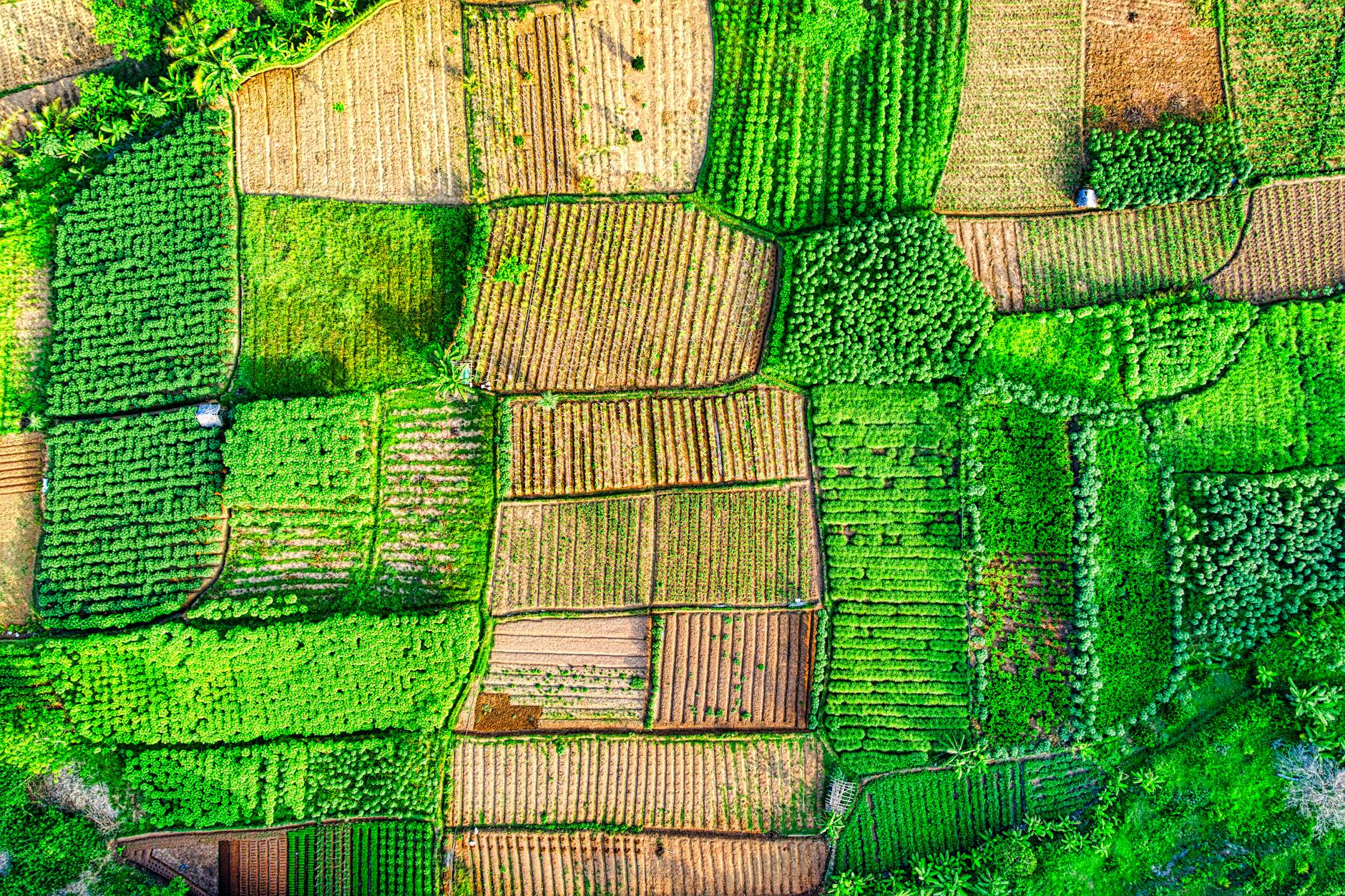
The vast majority of small farms are one hectare or smaller. A hectare is 10,000 square meters, often described as roughly the size of a soccer field. That means many farms helping feed the world are operating on areas that sound tiny compared with the giant estates that often dominate public imagination.
This matters because it challenges the assumption that only very large farms are responsible for feeding the planet. In reality, food production is spread across millions of smallholders working relatively small plots.
The term smallholder usually refers to farmers managing small pieces of land, often relying heavily on family labor. These farms are often closely tied to local communities and rural economies. Even when they are not large in area, they can still be highly important in terms of food supply.
Most farms are small
Globally, five out of every six farms are smaller than 2 hectares. A hectare is about 2.5 acres, so 2 hectares is about 4.9 acres. In other words, the overwhelming majority of the world’s farms are modest in size.
Yet these farms occupy only around 12% of all agricultural land. That contrast is the heart of the small-farm-versus-giant-landholder story. Most farmers operate on very little land, while a tiny minority control most of it.
This is one of the clearest examples in agriculture of how farm numbers and land distribution are not the same thing. If you count farms, small ones dominate. If you count land, large ones dominate.
The giant landholders
Only 1% of farms worldwide are larger than 50 hectares, which is about 120 acres. But those relatively few farms encompass more than 70% of the world’s farmland.
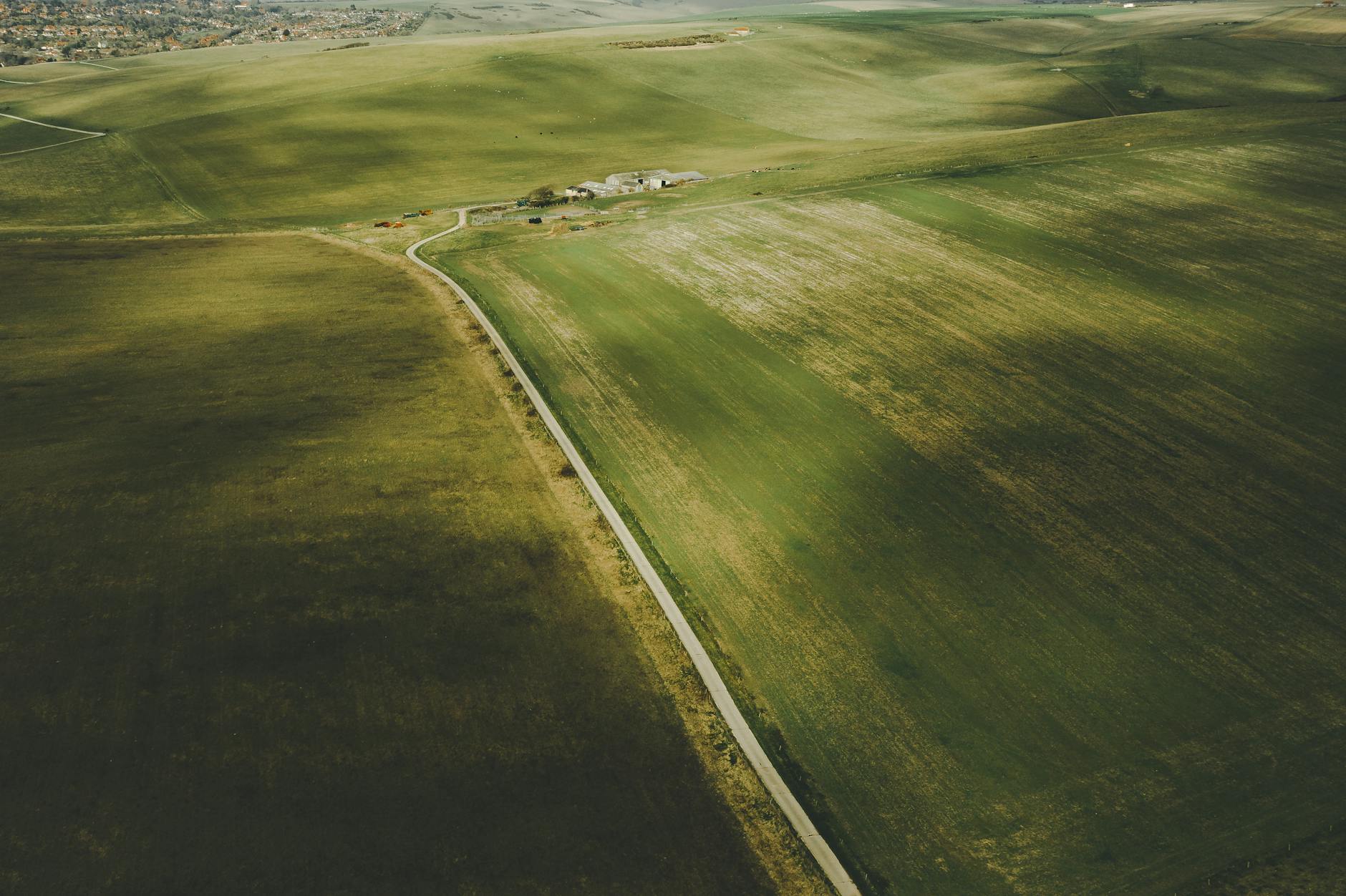
That means the global map of agriculture is heavily shaped by large landholders. They are few in number, but they control most of the land base.
The concentration becomes even more striking at the very largest scale. Nearly 40% of all global agricultural land is found on farms larger than 1,000 hectares, or about 2,500 acres. These are truly vast operations, and they hold an outsized influence over agricultural production systems, land use, and rural landscapes.
So the global picture looks like this: many tiny farms, relatively little land; very few giant farms, enormous land control.
Why land concentration matters
Land is not just space. In agriculture, land is power.
Who controls farmland helps determine what gets grown, how it is grown, and how agricultural systems affect the environment and rural society. Farms and farming strongly influence rural economics and shape rural communities, affecting not only people who work directly in agriculture but also the businesses that support them.
That means the structure of landholding has consequences far beyond farm boundaries. Large farms can shape regional markets and landscapes simply because of the scale of land they manage. Smallholders, meanwhile, often play a major role in food production despite operating with far less land.
This tension helps explain why farm size is not just a technical detail. It is a social and economic issue as well.
Feeding people vs controlling land
The contrast between food output and land control is what makes this topic so compelling.
Small farms produce about one-third of the world’s food, even though farms under 2 hectares occupy only around 12% of agricultural land. That suggests a world in which food production is not determined by land area alone.
Meanwhile, large farms dominate total land use. Farms greater than 50 hectares account for more than 70% of global farmland, and the biggest farms hold an especially large share. This tells us that agricultural land is highly concentrated even though farming itself is numerically dominated by small operations.
In simple terms: the people producing food and the people controlling land are not always the same groups at the same scale.
Agriculture is bigger than food alone
Understanding the importance of small and large farms also requires seeing agriculture as more than just crop growing. Agriculture includes cultivating the soil, planting, raising, and harvesting food and non-food crops, as well as livestock production. Broader definitions can also include forestry and aquaculture.
Agricultural products include foods, fibers, fuels, and raw materials. Food categories include cereals or grains, vegetables, fruits, cooking oils, meat, milk, eggs, and fungi. Fibers include materials such as cotton and wool. Raw materials can include rubber and timber.
Globally, agriculture produces approximately 11 billion tonnes of food, 32 million tonnes of natural fibers, and 4 billion cubic meters of wood. So when land is concentrated, the effects go beyond dinner plates. They also affect materials, rural employment, and industries connected to farming.
A system with deep historical roots
Agriculture was a key factor in the rise of sedentary human civilization. Farming domesticated plants and animals created food surpluses that allowed people to live in cities. Humans were gathering grains at least 105,000 years ago, while early farmers began planting them around 11,500 years ago.
Over time, agriculture emerged independently in at least 11 regions of the world. Sheep, goats, pigs, and cattle were domesticated around 10,000 years ago. This long history matters because it reminds us that farming has never been one single system. It has always involved diverse crops, animals, places, and scales.
That diversity still exists today, even though in the 20th century industrial agriculture based on large-scale monocultures came to dominate agricultural output.
A monoculture is a system in which one cultivar or crop is planted over a large area. This can simplify production, but low biodiversity in such systems can lead to heavier use of pesticides and fertilizers. That is one reason modern agriculture has greatly increased yields while also contributing to ecological and environmental damage.
The modern pressure on farms of every size
Today’s agriculture operates under enormous pressure. It must produce food, support livelihoods, and respond to environmental stress at the same time.
Agriculture is both a cause of and sensitive to environmental degradation. Issues linked to farming include biodiversity loss, desertification, soil degradation, depletion of aquifers, deforestation, agricultural pollution, and contributions to climate change. These problems can also reduce crop yields.
Agriculture uses 70% of freshwater worldwide. Water scarcity is becoming a growing challenge as demand rises and some aquifers are depleted. Climate change is also affecting agriculture through changes in temperature, rainfall, weather extremes, pests, and diseases.
These pressures affect farms differently depending on their size, resources, and location. But they matter to both smallholders and giant landholders, because both are part of the same global food system.
Small farms, big workforce
Agriculture employed 873 million people in 2021, equal to 27% of the global workforce. It remains especially important in low-income countries and in sub-Saharan Africa.
This is another reason the small farm story matters. Agriculture is not only about land and output. It is also about work, families, and livelihoods. Around the world, women make up a large share of the agricultural workforce, including 47% in sub-Saharan Africa. Small-scale farming and family labor are woven into the social fabric of many rural regions.
So when people ask who feeds nations, the answer is not just about acreage. It is also about labor, local knowledge, and the millions of people working plots that may be small in size but enormous in importance.
The question behind the numbers
The global farm map contains a striking paradox. Most farms are small. Most land is not.
Small farms, many of them no larger than a hectare, produce about one-third of the world’s food. Yet a tiny share of farms controls most farmland, with just 1% of farms larger than 50 hectares holding more than 70% of it.
That is why the debate over agriculture is not only about production. It is also about land distribution, rural power, and the future of food systems. Smallholders help feed the world. Giant landholders shape the terrain on which that food system operates.
And that makes one issue impossible to ignore: in agriculture, size is never just about size.
Sources
Based on information from Agriculture.
More like this
Swipe through food facts like a small farm punching above its weight — download DeepSwipe and grow your knowledge daily.