Full article · 7 min read
Agriculture and the Birth of Civilization
Human history changed when people stopped relying only on hunting and gathering and began producing food in a more deliberate way. Farming did more than fill stomachs. It created food surpluses, and those surpluses helped make settled life possible. Once communities could stay in one place and reliably feed more people, cities, social complexity, and civilization could grow.
That long turning point did not happen overnight. It unfolded over tens of thousands of years, with early people gathering wild grains long before they planted them, and with different regions of the world developing agriculture independently.
Before farming, people were already gathering grains
One of the most striking parts of agriculture’s story is how long the prelude lasted. Humans were gathering wild grains at least 105,000 years ago. That means people had been collecting and eating useful plants for an immense span of time before anything like established farming emerged.
Planting came much later. Nascent farmers began planting grains around 11,500 years ago. In other words, the move from foraging to farming was not a sudden invention but a gradual shift. Communities first relied on wild stands of useful plants, harvested what nature provided, and only later began to plant what they had once merely collected.
Scholars describe this transition as a period of intensification and increasing sedentism. Sedentism means living in one place more permanently rather than moving frequently. As people stayed longer in productive environments, they became more closely tied to local plant resources. Over time, wild stands that had been harvested started to be planted, and those plants gradually became domesticated.
Domestication is the long process by which a wild species is shaped by human use and selection. In plants, that means people kept favoring the forms that were most useful to them, eventually producing crops that differed from their wild ancestors.
A surprising early glimpse near the Sea of Galilee
The agricultural story also includes tantalizing early hints. In the Paleolithic Levant, about 23,000 years ago, cereal cultivation of emmer, barley, and oats has been observed near the Sea of Galilee.
That date is astonishing because it comes far earlier than the broader transition to established farming. It suggests that experimentation with cultivation happened long before agriculture became the main basis of human life. In that sense, the fields near the Sea of Galilee look like a preview of the future: an early glimpse of practices that would later transform the world.
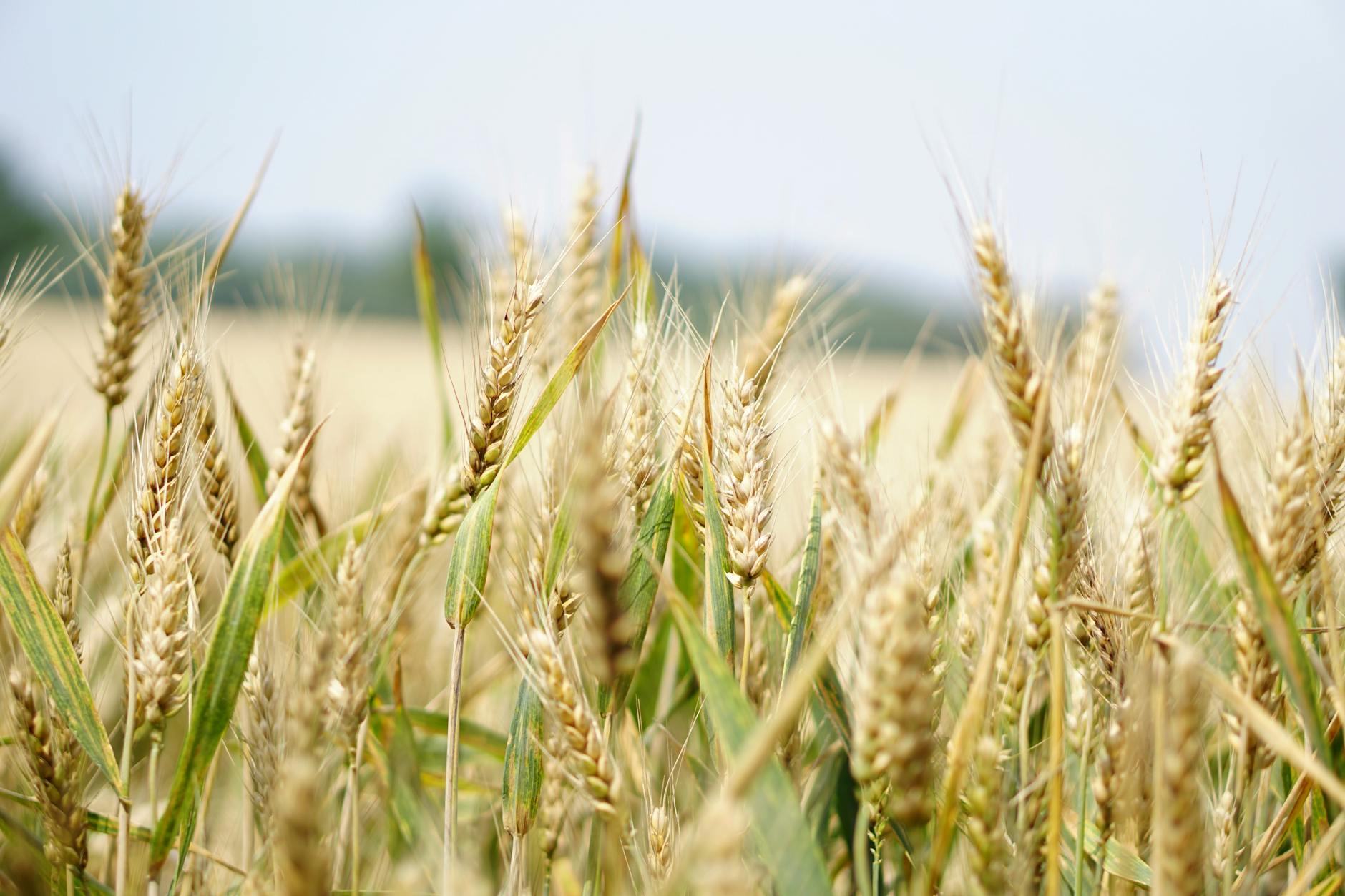
Emmer is an ancient kind of wheat, and barley and oats are cereals as well. Cereals are grasses grown for their edible grains, and they became some of the most important staple foods in human societies.
Farming began in many places, not just one
Agriculture was not invented once and then copied everywhere. Plants were independently cultivated in at least 11 regions of the world. That makes agriculture one of humanity’s great repeated innovations.
Different parts of the world developed their own agricultural traditions with different crops and animals. Rice was domesticated in China between 11,500 and 6200 BC, with the earliest known cultivation from 5700 BC. In the Andes of South America, the potato was domesticated between 10,000 and 7,000 years ago, along with beans, coca, llamas, alpacas, and guinea pigs. In Mesoamerica, wild teosinte was bred into maize, or corn, from 10,000 to 6,000 years ago. Sugarcane and some root vegetables were domesticated in New Guinea around 9,000 years ago. Sorghum was domesticated in the Sahel region of Africa by 7,000 years ago.
This wide geographic spread matters because it shows that the basic idea of agriculture emerged wherever people found ways to manage plants and animals intensively enough to support settled communities.
The domestication of animals changed human life too
The rise of civilization was not only about crops. Animal domestication was a major part of the transformation. Sheep, goats, pigs, and cattle were domesticated around 10,000 years ago.
The article gives more detailed regional timing as well. Sheep were domesticated in Mesopotamia between 13,000 and 11,000 years ago. Cattle were domesticated from the wild aurochs in areas of modern Turkey and Pakistan some 10,500 years ago. Pig production emerged across Eurasia, including Europe, East Asia, and Southwest Asia, where wild boar were first domesticated about 10,500 years ago.
Domesticated animals provided more than meat. In agricultural societies, animals also supplied milk, eggs, wool, and labor. Working animals later helped cultivate fields, harvest crops, and transport farm products. That made agriculture more productive and helped support larger settled populations.
Why food surplus mattered so much
A food surplus means producing more food than a household or small group immediately needs to survive. That extra production changes everything.
When food is more dependable and more abundant, not everyone has to spend all their time searching for it. Larger populations can be supported. Settlements can become permanent. Specialized roles can emerge, because some people can focus on crafts, trade, religion, administration, or construction while others produce food.
This is why agriculture was a key factor in the rise of sedentary human civilization. By farming domesticated plants and animals, people created the conditions for villages, then towns, then cities. The shift did not guarantee an easy life, but it allowed human societies to become far larger and more complex than hunting and gathering alone could usually sustain.
Rivers, tools, and the first farming civilizations
Once agriculture took hold, some of the earliest major civilizations grew around fertile river systems. In Eurasia, the Sumerians began living in villages from about 8000 BC, relying on the Tigris and Euphrates rivers and a canal system for irrigation. Irrigation means supplying water to land artificially when rainfall is not enough or not reliable.
Ancient Egyptian agriculture relied on the Nile River and its seasonal flooding. Farming there began in the predynastic period at the end of the Paleolithic, after 10,000 BC. Key crops included wheat and barley, along with flax and papyrus.
Agricultural tools also evolved. Ploughs appear in Sumerian pictographs around 3000 BC, and seed-ploughs around 2300 BC. In the Indus Valley civilization, archaeological evidence points to an animal-drawn plough from 2500 BC. In China, by the late 2nd century, heavy ploughs with iron ploughshares and mouldboards had been developed and later spread westward across Eurasia.
These developments made farming more efficient and helped societies cultivate more land, support more people, and build more complex institutions.
The agricultural transition was gradual, not a single revolution overnight
It is tempting to imagine a dramatic moment when humanity simply “invented farming.” The real story is slower and more layered. People first gathered wild foods. Some communities became more settled. Wild stands of useful plants were harvested more intensively. Those plants then began to be planted. Over time, both plants and animals were domesticated.
This gradual process explains why there can be evidence of early cultivation, such as near the Sea of Galilee, long before agriculture became the dominant way of life in many regions. It also explains why agriculture emerged independently in multiple centers of origin.
The rise of farming was one of history’s great turning points not because it happened instantly, but because once it spread, it reshaped human existence on a massive scale.
Civilization followed the field
Agriculture is often described simply as cultivating soil, planting, raising, and harvesting crops and livestock. But historically, it was much more than a way to produce food. It was a system that let humans settle, expand, and organize themselves in new ways.
Gathering grains stretches back at least 105,000 years. Planting begins around 11,500 years ago. Cultivation appeared in at least 11 separate world regions. Animal domestication accelerated around 10,000 years ago. And in places like the Levant near the Sea of Galilee, there were even earlier signs that people were experimenting with cereal cultivation.
Put together, these developments explain one of the biggest changes in human history: civilization did not emerge apart from farming. It grew from it.
Sources
Based on information from Agriculture.
More like this
Plant a new idea every day — download DeepSwipe and harvest bite-sized knowledge.