Full article · 8 min read
Indigenous Farming Innovations That Redefined What Agriculture Can Be
When people hear the word agriculture, they often picture ploughed fields, grain crops, and fenced livestock. But the history of farming is far broader and far more inventive. Across the world, Indigenous peoples developed sophisticated ways to shape landscapes, grow food, and manage water long before industrial agriculture or large-scale mechanization. These systems show that agriculture has never been just about planting rows of crops. It has also included wetlands, forests, lakes, fire, and carefully designed relationships between species.
Agriculture in its broadest sense includes cultivating useful plants and raising animals, and broader definitions can also include forestry and aquaculture. That larger view helps make sense of Indigenous innovations that do not fit the narrow image of a farm field but clearly involved deliberate, productive land and water management.
Chinampas: Artificial Islands That Turned Water Into Farmland
Among the most striking Indigenous agricultural systems were the Aztec chinampas. These were artificial islands built in shallow lakes. Rather than treating wetlands as unusable space, chinampa farming transformed them into highly productive agricultural landscapes.
A chinampa was essentially a raised farming platform created from mud and plant material. This is one reason the system continues to fascinate historians and readers alike: it shows how agriculture can be engineered into places that seem unsuitable for conventional farming. Instead of draining a lake entirely, farmers worked with shallow water conditions and built land where they needed it.
This was not an isolated trick or a curiosity. It formed part of a larger pattern of Indigenous agricultural ingenuity in the Americas. The Aztecs also developed irrigation systems, terraced hillsides, and methods of fertilizing soil. Chinampas fit naturally into that broader approach: they were part landscape design, part water management, and part food production.
The appeal of chinampas today is easy to understand. They combined construction, ecology, and farming in a single system. Even from a modern perspective, creating productive plots from lake shallows sounds almost futuristic. Yet it was achieved centuries ago.
Maya Wetland Farming: Canals and Raised Fields in Swampland
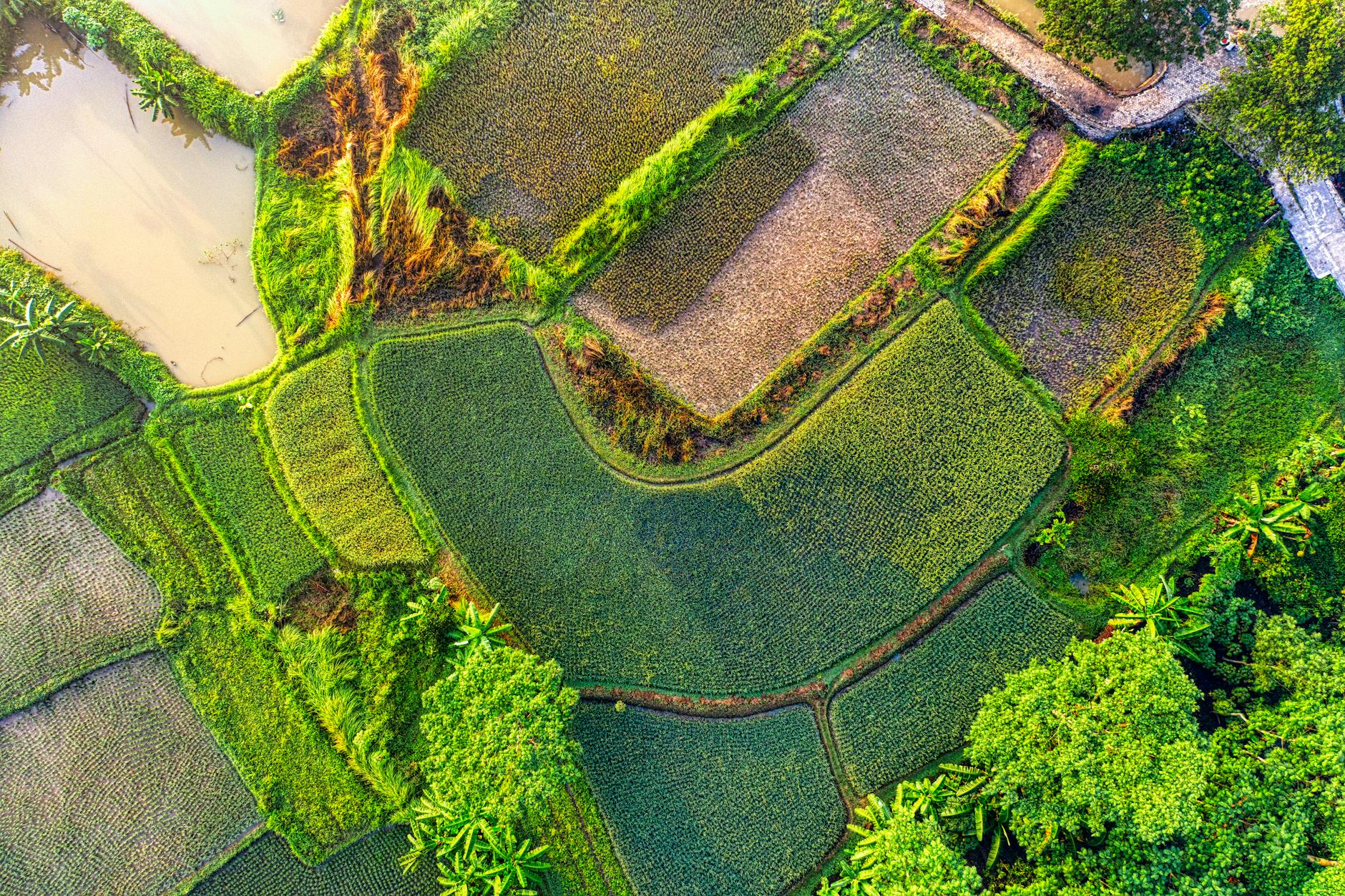
The Maya took a similarly bold approach to difficult environments. Rather than seeing swamps as barriers, they used extensive canal and raised field systems to farm swampland from 400 BC.
A raised field is exactly what it sounds like: an elevated planting area built above the surrounding wet ground. Canals are water channels, which can help move, store, or redirect water. Together, these methods allowed cultivation in places where uncontrolled water could otherwise make farming impossible.
This kind of system reveals a central truth about agriculture: successful farming often depends on water management as much as on seeds. In many parts of the world, irrigation and other water-control systems were major turning points in agricultural history. The Maya example shows that Indigenous farmers were also masters of hydrology in practice, even if they did not describe it in modern scientific language.
Like chinampas, Maya wetland farming challenges the idea that agriculture must happen only on dry, open land. Swamps, lakeshores, and seasonally wet areas could be made productive through careful design. That is a powerful reminder that farming has always included adaptation to local geography.
Fire-Stick Farming: Using Controlled Burning as a Farming Tool
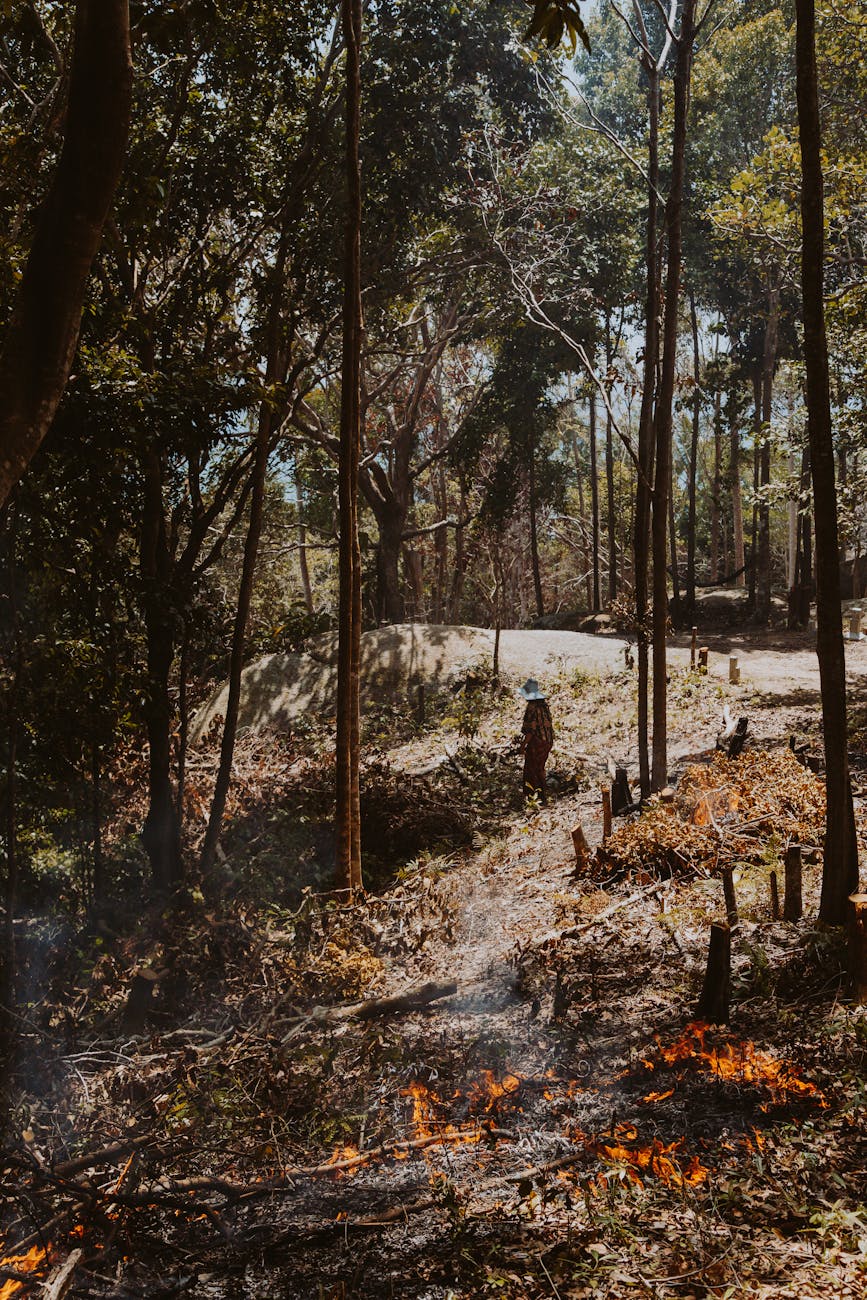
One of the most misunderstood agricultural techniques in history is the use of fire. Indigenous Australians practiced systematic burning, likely to enhance natural productivity in what is often called fire-stick farming.
This did not mean random destruction. It refers to repeated, controlled, low-intensity burning used to shape the environment. The result was a fire pattern that helped sustain a low-density agriculture in loose rotation, sometimes described as a kind of “wild” permaculture.
Permaculture is the idea of designing productive landscapes to function more like ecosystems. In this context, the phrase helps explain why fire-stick farming was so effective: the goal was not simply to clear land once, but to influence plant growth and landscape conditions over time.
The article notes that Indigenous Australians were long assumed to have been nomadic hunter-gatherers, but evidence shows more systematic land management. Scholars have also pointed out a practical reason for this kind of burning: hunter-gatherers still need productive environments. In New Guinea, where forests have few food plants, early humans may have used selective burning to increase the productivity of wild karuka fruit trees. That is a striking example of how human societies could manage plant resources without relying on the modern stereotype of permanent ploughed agriculture.
What makes fire-stick farming so remarkable is that it blurs the line between cultivation and ecosystem management. It suggests that agriculture can include helping useful plants and animals thrive by shaping the wider landscape, not just by planting seeds in rows.
The Three Sisters: Companion Planting as Ecological Design
In North America, Indigenous farmers developed one of the best-known examples of companion planting: the Three Sisters. The three crops were winter squash, maize, and climbing beans.
Companion planting means growing species together because they support one another. The Three Sisters system is a classic agricultural partnership. Instead of monoculture, where a single crop is planted across a large area, this is a form of polyculture, meaning multiple crops grown together.
That distinction matters. The spread of industrial agriculture led to large-scale monocultures, which often reduce biodiversity and can encourage pests to build up, increasing dependence on pesticides and fertilizers. The Three Sisters system represents a very different logic. It is based on diversity and mutual support within one field.
The enduring fascination of the Three Sisters lies in its elegance. It is simple to describe, yet it reflects deep agricultural knowledge. Indigenous farmers understood that different species could share space productively rather than compete in a destructive way. This is agriculture not as domination of nature, but as arrangement and cooperation.
The system also fits into a much wider Indigenous agricultural story in North America. Indigenous peoples of the East domesticated crops such as sunflower, tobacco, squash, and Chenopodium. In the Southwest and the Pacific Northwest, people practiced forest gardening and fire-stick farming, using regional fire management to maintain productive landscapes. The Three Sisters sits within this much broader tradition of experimentation and ecological intelligence.
Eel Farming and Fish Traps: Agriculture Beyond the Field
Perhaps the most eye-opening Indigenous innovation is the idea that agriculture is not limited to crops on land at all. The Gunditjmara and other groups in Australia developed eel farming and fish trapping systems from some 5,000 years ago.
This matters because broader definitions of agriculture include aquaculture, which is the farming of aquatic organisms. Once that wider definition is accepted, fish and eels belong in the story of agriculture just as much as grains and vegetables do.
The Gunditjmara example expands the imagination of what a farm can be. Instead of ploughs and furrows, there were engineered systems for managing aquatic food sources. Instead of dry fields, there were water-based food landscapes. It is a vivid reminder that food production has taken many forms across history.
The article also notes evidence of intensification across Australia over that period. In two regions of Australia, early farmers cultivated yams, native millet, and bush onions, possibly in permanent settlements. Taken together with eel farming and fish trapping, this points to a complex agricultural picture that does not fit old assumptions about simplicity or passivity.
Why These Indigenous Systems Still Matter
These farming innovations are historically important for more than their age. They reveal several big ideas about agriculture that still feel relevant.
First, agriculture has many forms. It includes not just arable farming, but also water systems, forest management, and animal production. Indigenous practices like chinampas, raised fields, fire-stick farming, and eel farming fit within that larger scope.
Second, successful farming is deeply local. Cropping systems vary depending on geography, climate, resources, and the culture and philosophy of the farmer. That principle is visible everywhere in these examples. Swamps led to raised fields and canals. Shallow lakes led to chinampas. Fire-prone landscapes led to controlled burning. Aquatic environments led to eel farming and fish traps.
Third, biodiversity can be an asset. In contrast to monocultures, systems like the Three Sisters show how multiple species can be combined productively. The same broader lesson appears in landscape-scale methods that work with ecological processes rather than trying to erase them.
Finally, these systems challenge narrow definitions of innovation. Agricultural technology does not begin with engines, synthetic fertilizers, or robotics. Human societies have been developing ingenious agricultural solutions for thousands of years using the materials, species, and environments around them.
A Bigger, Smarter View of Farming
From artificial islands in shallow lakes to controlled burning, from swamp canals to eel traps, Indigenous farming innovations show that agriculture has always been more creative than the textbook version. These systems were not side notes to agricultural history. They were highly adapted, productive ways of securing food and shaping landscapes.
If modern readers are surprised by the idea of farming with fire, building gardens on water, or treating fish as crops, that surprise says more about our narrow image of agriculture than about the past. The real history of farming is richer, more diverse, and far more inventive.
Sources
Based on information from Agriculture.
More like this
Grow your curiosity like a chinampa on water — download DeepSwipe and cultivate a smarter feed every day.