Full article · 7 min read
Jōmon Pottery and Japan’s Deep Past
Japan’s earliest history begins far earlier than kingdoms, samurai, or written records. In the deep prehistoric past, people were already living across the Japanese archipelago, moving through forests and coastlines, crossing water, making tools, and eventually creating something astonishing: some of the world’s oldest known ceramics.
The Jōmon period is especially remarkable because it challenges a common assumption about human history. Pottery is often associated with farming villages, food storage, and settled life. But in Japan, pottery appeared among a people who were predominantly hunter-gatherers. That makes Jōmon society one of the most intriguing examples of how complex human communities could become even before large-scale agriculture took over.
Before the Jōmon: Japan’s earliest inhabitants
The first human inhabitants of the Japanese archipelago have been traced back to the Paleolithic, around 38,000 to 39,000 years ago. Evidence of human habitation has been dated to 32,000 years ago in Okinawa’s Yamashita Cave and as far back as 20,000 years ago on Ishigaki Island’s Shiraho Saonetabaru Cave.
Very little physical evidence survives from these earliest people because Japan’s acidic soils tend to break down bone remains. Even so, archaeologists have uncovered clues showing that Paleolithic people were present and active. Among the most striking finds are unique edge-ground axes in Japan dated to more than 30,000 years ago. An edge-ground axe is a stone tool whose cutting edge has been ground smooth and sharp, rather than simply chipped. These tools may be evidence of the first Homo sapiens in Japan.
There is also evidence that these early inhabitants likely arrived by sea on watercraft. That alone makes Japan’s deep past feel especially dramatic: prehistoric people crossing stretches of water to reach islands, then adapting to a landscape of mountains, forests, and coastlines.
They were not living in an empty world, either. Evidence suggests that Paleolithic inhabitants of Japan interacted with and butchered now-extinct megafauna. Megafauna means very large animals, and in prehistoric Japan these included the elephant Palaeoloxodon naumanni and the giant deer Sinomegaceros yabei.
What makes the Jōmon period so unusual?
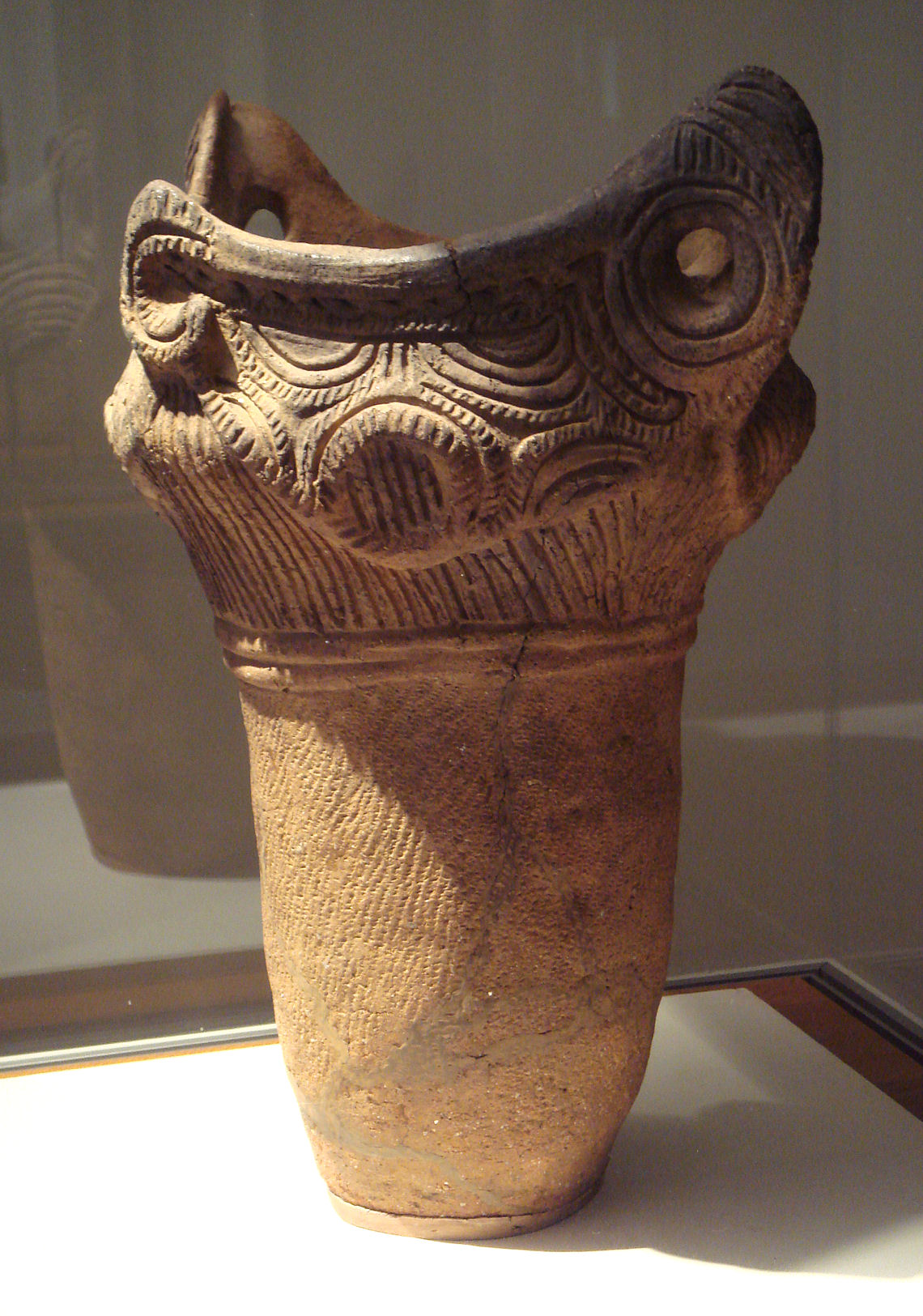
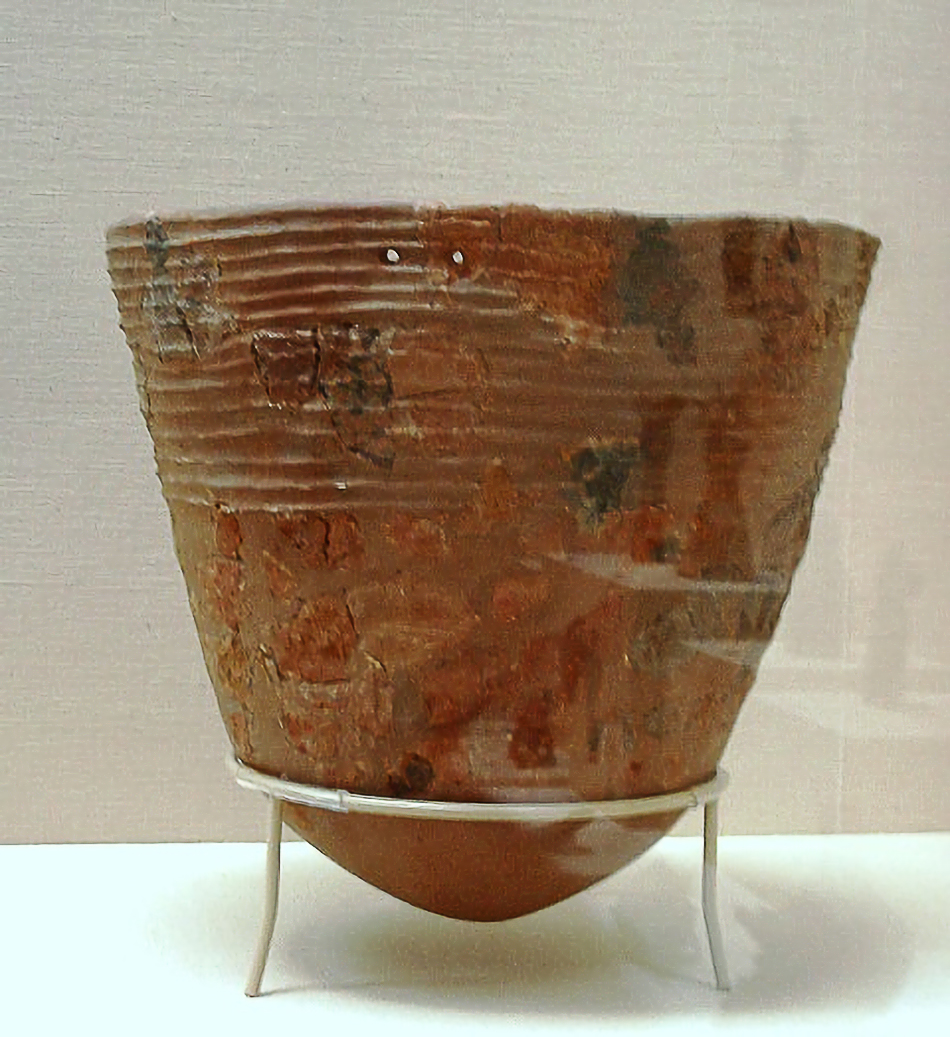
The Jōmon period spans from roughly 13,000 BC to about 1000 BC. It takes its name from a defining artistic feature: cord-marked pottery. The term Jōmon means “cord-marked.”
What makes this period so memorable is the combination of three things: hunter-gatherer life, long-term settlement, and sophisticated ceramic production. Jōmon people were predominantly hunter-gatherers, yet they achieved a considerable degree of sedentism and cultural complexity.
Sedentism means living in one place for long periods instead of constantly moving from camp to camp. In many parts of the world, this kind of settled life is tightly linked to agriculture. But Jōmon communities show that people could become relatively settled without depending on full-scale farming.
That is why Jōmon history stands out. It shows that permanent or semi-permanent communities, creative traditions, and technical skill did not always have to wait for rice fields or metal tools.
The world’s oldest known ceramics
One of the most fascinating achievements of the Jōmon people is their pottery. Jōmon period hunter-gatherers crafted the world’s oldest known ceramics around 14,500 BC. Jōmon pottery is generally accepted to be among the oldest in East Asia and the world.
This is an extraordinary fact because ceramics are not simple objects to make. Pottery requires people to recognize the properties of clay, shape it carefully, and control fire well enough to harden it. In other words, it reflects experimentation, patience, and shared knowledge.
The earliest Jōmon pottery was not merely accidental baked clay. It became a recognizable style and tradition. That means prehistoric communities were passing techniques down across generations, refining them, and using pottery as part of daily life.
How cord-marked pottery was made
The best-known visual feature of Jōmon ceramics is right in the name: the cord marks impressed into the wet clay. The pottery style characteristic of the first phases of Jōmon culture was decorated by pressing cords into the surface before firing.
The shaping process itself was ingenious. Potters would roll clay into rope-like lengths, coil them upward to form a jar or bowl, and then bake the vessel in open fire. This coiling method allowed makers to build containers gradually, layer by layer, instead of carving them from a single lump.
The cord-marking was more than decoration in the modern sense. It gave the vessels a distinctive texture and identity, and it became the signature look of an entire prehistoric culture. Even thousands of years later, those impressed patterns remain one of the clearest ways archaeologists identify Jōmon ceramics.
Settled hunter-gatherers with cultural complexity
The Jōmon period is not only important because of pottery. It also reveals that prehistoric Japan supported communities with impressive social and cultural depth.
Although Jōmon people were predominantly hunter-gatherers, they reached a considerable degree of sedentism. That suggests some groups were living in long-term settlements rather than constantly moving. A society does not have to be agricultural to be organized, skilled, or culturally rich, and the Jōmon period is a powerful example of that.
The phrase “cultural complexity” can sound abstract, but here it points to the existence of developed techniques, traditions, and forms of material culture. Pottery itself is part of that complexity. So is the evidence of long-term habitation. Together, they show a prehistoric world that was inventive and stable enough to sustain sophisticated practices over long stretches of time.
A maritime world in prehistoric Japan
Japan’s deep past was also shaped by the sea. Early humans likely arrived by sea on watercraft, which means that movement across water was part of the story from the beginning.
This matters because the Japanese archipelago is a chain of islands, and living there required adaptation to maritime geography. The finds from Okinawa and Ishigaki Island show that human presence extended far beyond a single central region. Even in prehistory, people were navigating and inhabiting island spaces.
That maritime dimension adds another layer to the story of Jōmon life. These were not isolated inland communities cut off from movement or exchange. They belonged to a world where coastlines, islands, and sea travel were central realities.
The turning point after Jōmon
The Jōmon period was eventually followed by the Yayoi period in the first millennium BC, when major new inventions were introduced from Asia. Around the 3rd century BC, Yayoi people from the continent immigrated to the Japanese archipelago and introduced iron technology and agricultural civilization.
This brought major change. The Yayoi introduced rice cultivation and metallurgy, along with bronze and iron weapons and tools. They also introduced weaving and silk production, new woodworking methods, glassmaking technology, and new architectural styles. Their agricultural civilization helped their population grow rapidly.
For Jōmon communities, this was a turning point. The expansion of the Yayoi gradually supplanted the Jōmon, though it also appears to have involved fusion with the indigenous Jōmon, resulting in a small genetic admixture. In other words, the story was not a simple disappearance but a transformation of the human landscape of Japan.
Why Jōmon pottery still matters
Jōmon pottery matters not just because it is old, but because it changes how we think about prehistory. It shows that technological creativity can emerge in hunter-gatherer societies. It shows that settled life can develop without full agricultural dependence. And it preserves, in fired clay, the fingerprints of people who lived in Japan thousands of years before the first written reference to the archipelago appeared in the Chinese Book of Han in the first century AD.
The cord-marked vessels of the Jōmon period are a reminder that deep history is not empty time. It is full of experimentation, movement, adaptation, and artistry. Long before emperors and capitals, people in Japan were already building traditions durable enough to survive for millennia.
That is what makes Jōmon pottery so compelling. It is not just ancient cookware. It is evidence of one of humanity’s earliest ceramic traditions, created by communities who were settled, skilled, and surprisingly complex in a world before farms dominated the landscape.
Sources
Based on information from History of Japan.
More like this
Crack open the past like a Jōmon pot shard — download DeepSwipe and fire up your daily dose of history.