Full article · 8 min read
Human Settlement: From Tiny Clusters of Homes to Vast Built Landscapes
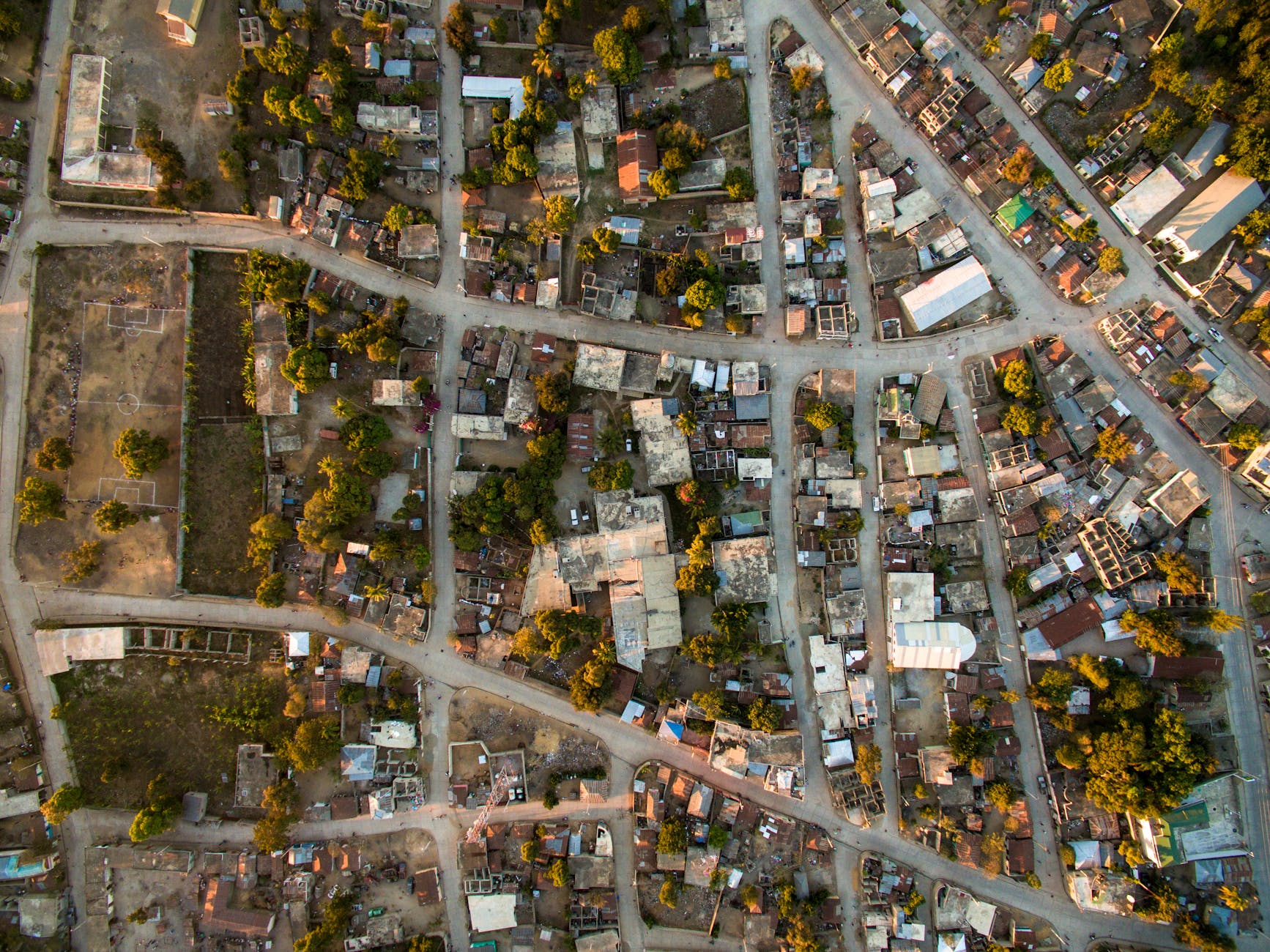
A human settlement is any place where people live together as a community. That sounds simple, but the idea covers an enormous range. A settlement might be just a few dwellings grouped in one spot, or it might be a giant city surrounded by extensive urbanized areas. In everyday terms, it includes everything from homesteads, hamlets, and villages to towns and cities.
What makes settlements so interesting is that they are not just collections of houses. They are living landscapes shaped by human needs, movement, labor, and history. They show where people chose to stay, how they organized space, and what they built to make daily life possible.
A settlement can be tiny or enormous
One of the most important things to understand is that a settlement does not need to be large. A small cluster of homes can count as a settlement just as much as a major city does. The term simply refers to a community of people living in a particular place.
This broad definition matters in geography, statistics, and archaeology because it lets researchers describe human habitation at many scales. A settlement can be rural or urban, compact or spread out, ancient or modern. Some are dispersed, meaning homes and buildings are spread over a wider area. Others are nucleated, meaning buildings are clustered closely together.
These patterns are part of what landscape history studies. In that field, scholars look at the form, or morphology, of settlements. Morphology here means the shape and arrangement of a place. Looking at whether a settlement is dispersed or nucleated can reveal how people used land and organized community life.
Settlements can also be ranked in a settlement hierarchy. This is a way of ordering places by size, importance, or centrality. Centrality refers to how important a place is as a center for surrounding areas. But these labels are not universal. A place called a town in one country might be considered a village in another, while a large town somewhere else may be treated as a city.
A settlement is more than houses
When people imagine a settlement, they often picture homes first. But a settlement conventionally includes much more than dwellings. It includes the constructed features that support daily life and shape the surrounding land.
That can mean roads for movement and connection, enclosures and field systems tied to land use, boundary banks and ditches that define space, ponds and parks, woodlands, windmills and watermills, manor houses, moats, and churches. In other words, a settlement is a whole human-made environment.
Some of these terms may sound old-fashioned, but they reveal how broad the idea really is:
Understanding the built landscape
Roads are obvious enough, but other features deserve explanation. Enclosures are areas of land marked off for specific use. Field systems are the organized patterns of agricultural land around a community. Boundary banks and ditches are earthworks or dug lines used to separate land or define limits.
Windmills and watermills were structures that used wind or flowing water as power. Manor houses were large residences associated with landed estates. A moat is a ditch, often filled with water, surrounding a building or site. Churches often served not only religious purposes but also as major landmarks within a settlement.
Taken together, these features show that settlements are not only where people sleep. They are places where people work, travel, worship, manage land, and build systems that support a community over time.
This is why, in geospatial predictive modeling, a settlement is described as a city, town, village, or other agglomeration of buildings where people live and work. An agglomeration simply means a grouping or clustering together, in this case of buildings and people.
Settlements begin with movement
The process of settlement involves human migration. Before people stay somewhere, they must arrive there. This link between movement and permanence is one of the most fundamental parts of settlement history.
A settlement may also have known historical properties, such as the date or era when it was first settled, or the date it was first settled by particular people. That means settlements can be tracked not only as places on a map, but also as moments in human history.
The earliest geographical evidence of a human settlement comes from Jebel Irhoud, where early modern human remains of eight individuals date to the Middle Paleolithic around 300,000 years ago. The oldest remains of constructed dwellings are huts made of mud and branches from around 17,000 BC at the Ohalo site near the Sea of Galilee, now underwater. Later, the Natufians built houses in the Levant around 10,000 BC. Settlements such as villages become much more common after the invention of agriculture, and the oldest found is Jarmo in Iraq.
These examples show a long progression: from early human presence, to constructed dwellings, to houses, and then to more common village life after agriculture changed how people lived.
Why some settlements disappear
Not all settlements survive. Some vanish, and the reasons can be dramatic. War, erosion, and the fall of great empires can all result in abandoned settlements. These lost places often leave behind relics that become valuable for archaeological study.
A relic is an object, ruin, or trace from the past. In archaeology, such remains can reveal how people once lived, built, worked, and organized their communities. That is why abandoned settlements are so important. They are not just empty spaces; they are records of human life.
The term abandoned populated places is even used as a formal feature designation in some geographic databases. In some cases, structures remain easily accessible, as in a ghost town. A ghost town is an abandoned settlement with intact features, and some become tourist attractions.
A settlement may become a ghost town for several reasons. The economic activity supporting it may fail. Government action, such as building a dam that floods the town, can force abandonment. Natural or human-caused disasters, including floods, uncontrolled lawlessness, or war, can also drive people away.
Interestingly, a place may still look like a ghost town and yet still be defined as a populated place by government entities. The term is also sometimes used more loosely for places that still have residents but far fewer than they did in the past.
Settlements in a rapidly urbanizing world
Human settlement today is increasingly urban. According to World Urbanization Prospects 2025, 45% of the world’s 8.2 billion people now live in cities, compared with 20% in 1950. Another 36% live in towns and semi-urban areas, while only 19% live in rural regions.
The same report projects that nearly 3 billion people will be added between 2025 and 2050, and two-thirds of that growth will happen in urban areas. Megacities, meaning cities with populations over 10 million, are expected to reach 33 in 2025, which is four times the number in 1975.
At the same time, built-up land has expanded nearly twice as fast as population growth since 1975. Per capita urban land use has increased from 44 square meters to 63 square meters, largely due to economic and infrastructure demands.
These numbers highlight an important truth: settlement is not just about population totals. It is also about the physical spread of built environments.
How settlements are counted and classified
Different countries and agencies define settlements in different ways. In Australia, a populated place is defined as a named settlement with a population of 200 or more persons. In Croatia, population is recorded in units called settlements, or naselja. In Sweden, the term localities is used for densely populated places and is commonly translated into English as urban areas.
In the United Kingdom, urban settlement is used to denote an urban area in census analysis. In Scotland, settlements are groups of one or more contiguous localities, identified according to population density and postcode areas.
In the United States, the U.S. Geological Survey distinguishes among populated places, census areas, and civil divisions. A populated place is a place or geographic area with clustered or scattered buildings and a permanent human population, such as a city, settlement, town, or village. It is usually not incorporated and has no legal boundaries by definition. A census area is drawn for statistical purposes. A civil division is a political or administrative unit, such as a county, township, or borough.
This helps explain why the idea of a settlement can seem slippery. The lived place, the statistical area, and the legal unit are not always the same thing.
Mapping where people live
Modern technology has transformed how settlements are studied. In geospatial predictive modeling, settlements are analyzed as places where buildings and people cluster. Geospatial means relating to specific locations on the Earth’s surface.
One major system for this work is the Global Human Settlement Layer, or GHSL. This framework produces global spatial information about human presence over time. It creates built-up maps, population density maps, and settlement maps.
To do this, it uses evidence-based analytics and a mix of data sources, including fine-scale satellite imagery, census data, and volunteered geographic information. The processing is done automatically to report objectively and systematically on populations and built-up infrastructure. The framework also follows an open and free data and methods access policy.
This kind of mapping makes it easier to see not only where people live now, but also how settlement patterns change across time.
Why settlements matter
Settlements are one of the clearest ways to read human history on the land. They show movement, permanence, design, work, faith, defense, agriculture, growth, and decline. A settlement can be a tiny cluster of buildings or a giant urban region, but in every case it tells a story about how people made a place livable.
And when a settlement disappears, that story does not vanish entirely. Roads, ponds, banks, churches, mills, and ruins can remain as clues. Whether thriving or abandoned, settlements are the footprints of human community.
Sources
Based on information from Human settlement.
More like this
From ghost towns to megacities, human settlement is full of stories — download DeepSwipe and explore where people leave their mark.