Full article · 8 min read
Comets: Why They Once Sparked Panic in the Sky
For most of human history, a bright comet was not a beautiful astronomy event. It was a warning.
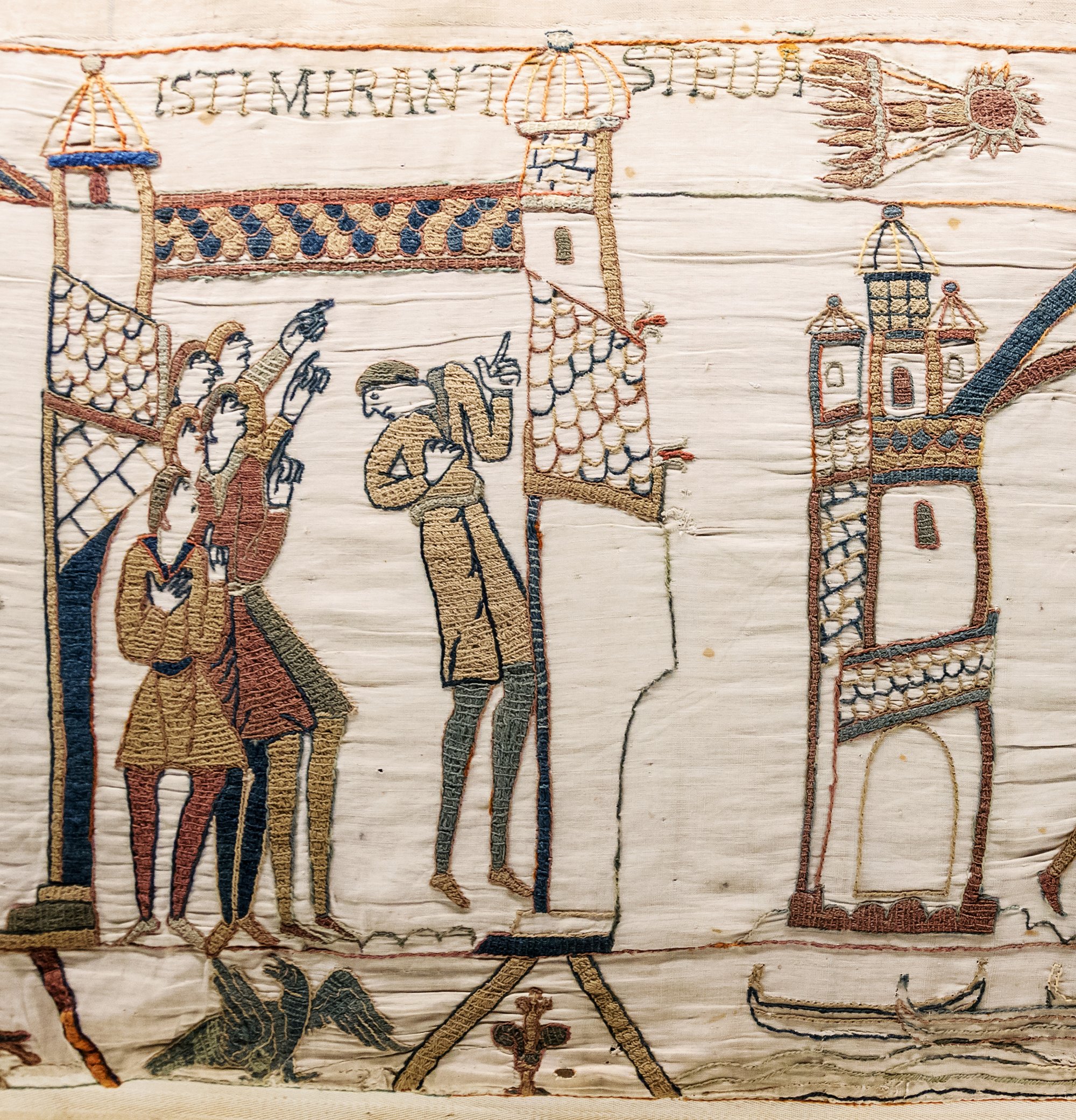
Long before comets were understood as icy bodies orbiting the Sun, many people saw them as signs of divine anger, political upheaval, plague, famine, or war. Their sudden appearance made them especially unsettling. Unlike the stars, which kept familiar patterns, a comet could blaze into view unexpectedly, grow a glowing coma and tail, and then vanish again. To earlier observers, that made comets feel like messages.
The fear they inspired reached remarkable heights in Europe between 1200 and 1650 CE, when comets were often treated as acts of God and signs of impending doom. Bright apparitions in the sky could trigger sermons, pamphlets, prophecies, and public anxiety on a huge scale.
Why comets looked so ominous
A comet can become visible when it passes close enough to the Sun for warming to trigger outgassing. This is the release of gas from the comet’s nucleus, the solid core made of ice, dust, and rocky material. Outgassing creates a coma, a huge but extremely thin atmosphere surrounding the nucleus, and often a tail of gas and dust stretching away from the Sun.
To a modern reader, that sounds like a natural physical process. To people in earlier centuries, it looked eerie and disruptive. A comet was not fixed in the heavens like the constellations. It could appear suddenly, change brightness, and carry a dramatic, hair-like tail across the sky. Even the word comet ultimately comes from a Greek term meaning “long-haired,” reflecting how strange these objects looked.
Because some comets can become bright enough to be seen without a telescope, they stood out powerfully in a night sky that people watched far more closely than most do today. A particularly bright example could dominate public imagination for weeks.
Comets as omens of punishment and disaster
From ancient sources, it is clear that people had noticed comets for millennia. But for a very long time, they were commonly interpreted as bad omens. In the Western tradition especially, comets became closely tied to fear.
In Europe, fear of comets was strongest from 1200 to 1650 CE. During that era, a comet was often seen not just as a sign of misfortune, but as a warning sent from heaven. People connected them to deaths of rulers, catastrophes, and divine judgment.
One striking example came after the Great Comet of 1618. The following year, Gotthard Arthusius published a pamphlet declaring that the comet was a sign that the Day of Judgment was near. He listed page after page of disasters associated with comets: earthquakes, floods, changes in river courses, hail storms, hot and dry weather, poor harvests, epidemics, war, treason, and high prices. This is exactly the kind of thinking that made comets so terrifying. Any calamity could be folded into the comet’s meaning.
The logic was powerful because it was flexible. If crops failed, the comet had foretold it. If disease spread, the comet had warned of it. If political unrest followed, the comet was blamed again. Since disasters happen regularly in human societies, people could always find some event to connect to the bright object in the sky.
Religion, sin, and heavenly anger
Comets were not only seen as omens; they were often framed as instruments of judgment.
Even as scientific astronomy slowly advanced, astrological and religious interpretations remained influential. In 1578, the German Lutheran bishop Andreas Celichius described comets as “the thick smoke of human sins,” kindled by the fiery anger of the Supreme Heavenly Judge. That image captures the worldview perfectly: a comet was not just a passive sign, but a visible expression of moral corruption and punishment.
A year later, Andreas Dudith pushed back with a sharp reply: if comets were caused by human sins, they would never be absent from the sky. His criticism shows that by the late 16th century, not everyone accepted the old explanations. Still, fear remained widespread.
The Great Comet of 1680 and the biblical Flood theory
One of the most dramatic examples of comet panic came from the Great Comet of 1680.
By 1700, many scholars had begun to conclude that disasters happened whether a comet appeared or not. That should have reduced fear. But a new idea revived it.
In 1711, William Whiston used Edmond Halley’s records of comet sightings to argue that the Great Comet of 1680 had a periodicity of 574 years and had caused the worldwide flood described in the Book of Genesis by pouring water onto Earth. This was a remarkable claim: not just that a comet symbolized catastrophe, but that a comet had physically produced one of the greatest disasters in sacred history.
That argument helped renew fear for another century. The comet became more than a sign from heaven. It became a direct threat to the world.
The 1910 Halley’s Comet scare
Comet panic did not vanish with modern science. It simply changed form.
In 1910, spectroscopic analysis of Halley’s Comet detected cyanogen in its tail. Spectroscopy is a method of splitting light into its component colors to identify the chemical fingerprints of substances. It was a scientific tool, but the public reaction was anything but calm.
Because cyanogen is a toxic gas, the discovery triggered alarm when Earth passed through the comet’s tail. Newspapers helped inflame the fear. People bought gas masks, “anti-comet pills,” and even “anti-comet umbrellas.”
This episode is especially revealing because the panic was fueled by science reporting rather than by medieval prophecy. The comet was still frightening, but now the language was chemical instead of theological. The pattern stayed the same: a rare object appeared in the sky, experts announced something unusual about it, sensational stories spread, and the public rushed to protect itself.
The fear became so memorable that the 1910 passage of Halley’s Comet remained one of the most famous examples of mass anxiety linked to astronomy.
From atmospheric omen to object in space
Part of the reason comet fear lasted so long is that people did not always agree on what a comet even was.
Aristotle believed comets were atmospheric phenomena rather than objects in space. That idea remained influential for centuries. If a comet belonged to the changing, imperfect region near Earth, it made sense to treat it as part of earthly events and disasters.
Later thinkers challenged that view. In the 1st century CE, Seneca the Younger argued that comets could not simply be atmospheric, noting their regular movement and questioning Aristotle’s logic. But it took much longer for stronger evidence to emerge.
In the 16th century, Tycho Brahe and Michael Maestlin used parallax measurements of the Great Comet of 1577 to show that comets must exist beyond Earth’s atmosphere. Their measurements implied the comet was at least four times farther away than the Moon. That was a major turning point. It moved comets out of the realm of weather, smoke, and divine vapors and into the wider cosmos.
Isaac Newton later described comets as compact and durable solid bodies moving in orbit, with tails made of thin streams of vapor heated by the Sun. Edmond Halley then applied Newton’s methods to comet sightings and successfully predicted the return of the comet now known as Halley’s Comet.
These advances helped transform comets from supernatural warnings into natural objects governed by physical laws.
Why fear survived even after science improved
Even once comets were understood better, they remained emotionally powerful.
Part of that comes from how they appear. A bright comet is rare, unpredictable to ordinary observers, and visually dramatic. Great comets can become bright enough to dominate public attention. Historically, that made them perfect screens for human worries.
Part of it also comes from timing. When a comet appears during an era of war, disease, or political instability, people naturally connect the two. The comet seems to explain events that already feel frightening.
And sometimes the fear was reinforced by genuine discoveries. Comets do contain real gases and dust. Their tails are real. Their spectra can reveal chemicals. They can even break apart, as happened with Comet Shoemaker–Levy 9 before its fragments collided with Jupiter in 1994. So while the old belief that comets send punishments was wrong, comets are not imaginary threats invented by superstition. They are real celestial bodies with real physical effects.
That mix of spectacle, rarity, and scientific mystery has kept them culturally potent for centuries.
Panic in the sky, wonder in hindsight
Today, comets are more likely to inspire fascination than terror. We know they are small icy Solar System bodies that can develop a coma and tail when heated near the Sun. We know many short-period comets come from beyond Neptune, while long-period comets are thought to originate in the distant Oort cloud. We know spacecraft have visited them, sampled them, and even landed on one.
But the older history of comet fear still matters. It shows how humans respond when something dazzling and unfamiliar appears overhead. We search for meaning. We connect it to our fears. We build stories around it.
That is why comets once caused panic in the sky: not only because they were bright and strange, but because they arrived at the crossroads of astronomy, religion, politics, and imagination. For centuries, a comet was never just a comet.
Sources
Based on information from Comet.
More like this
Don’t panic at the next thing in the sky—understand it. Download DeepSwipe and turn cosmic fear into cosmic facts.


